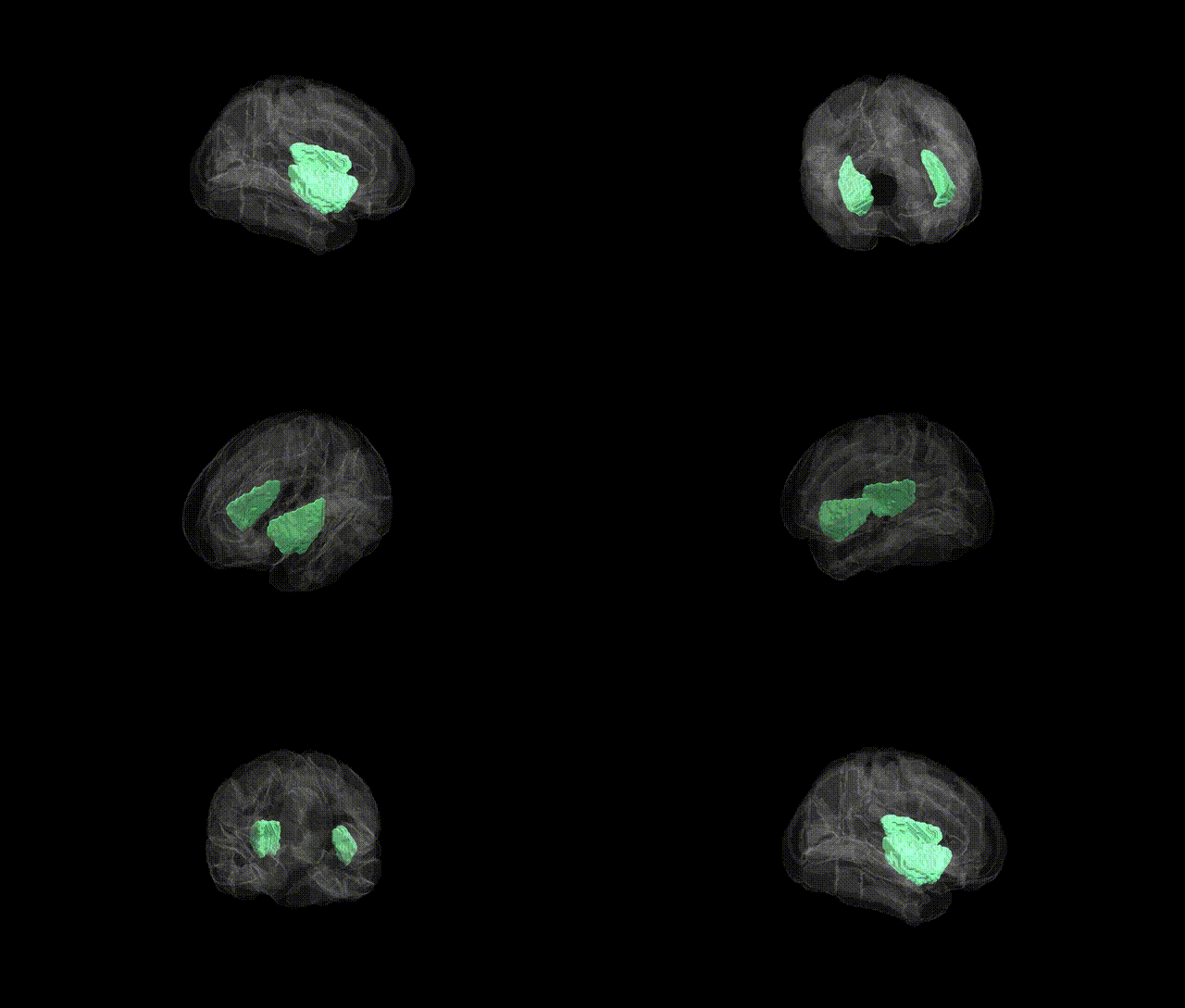
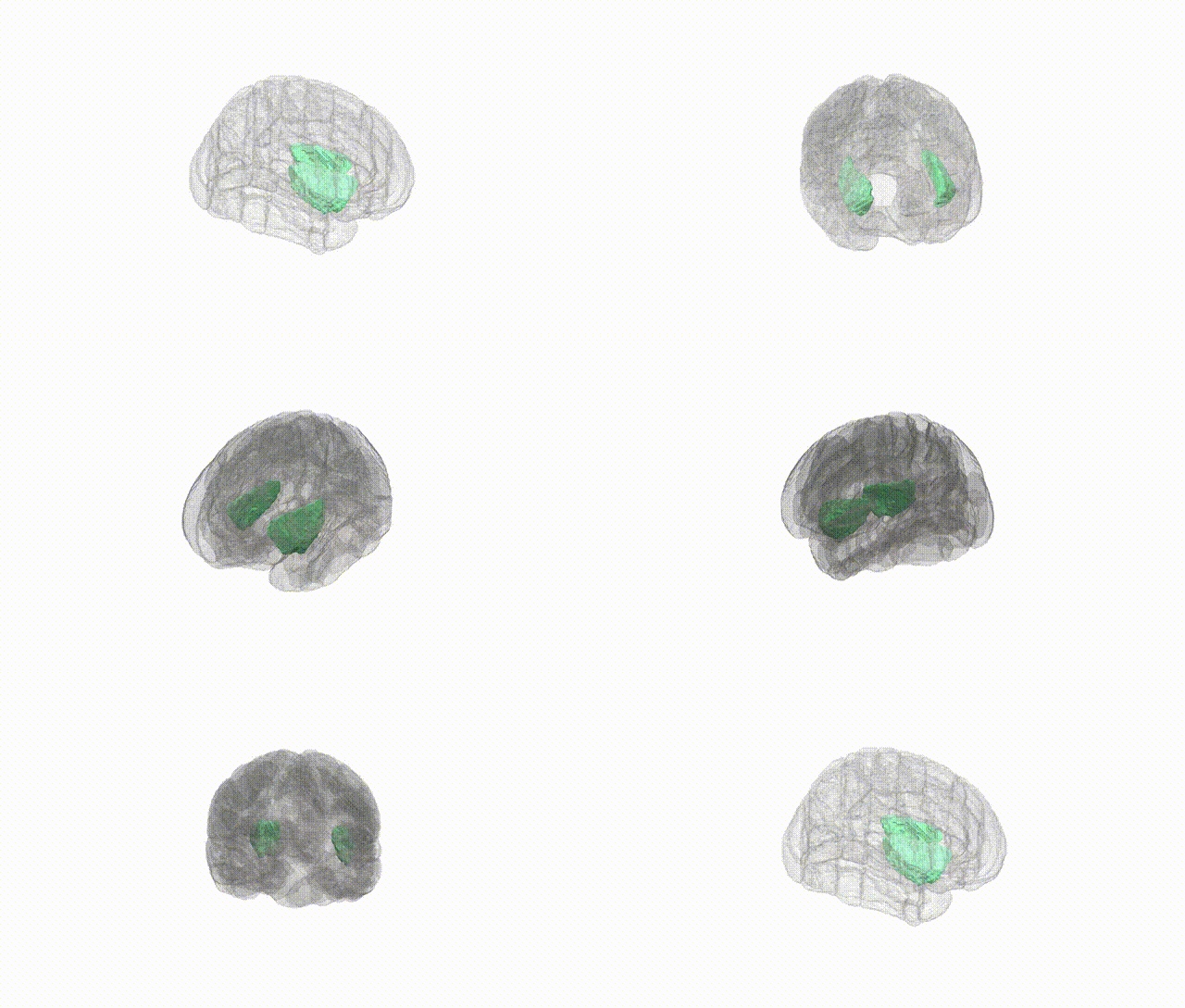
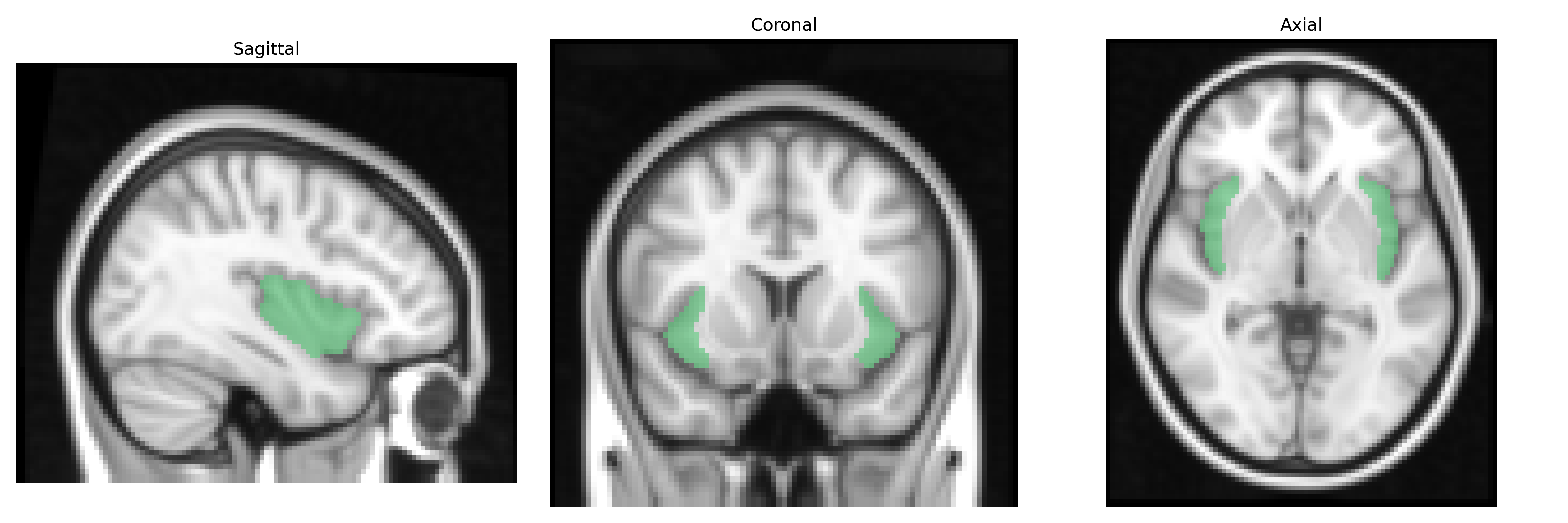
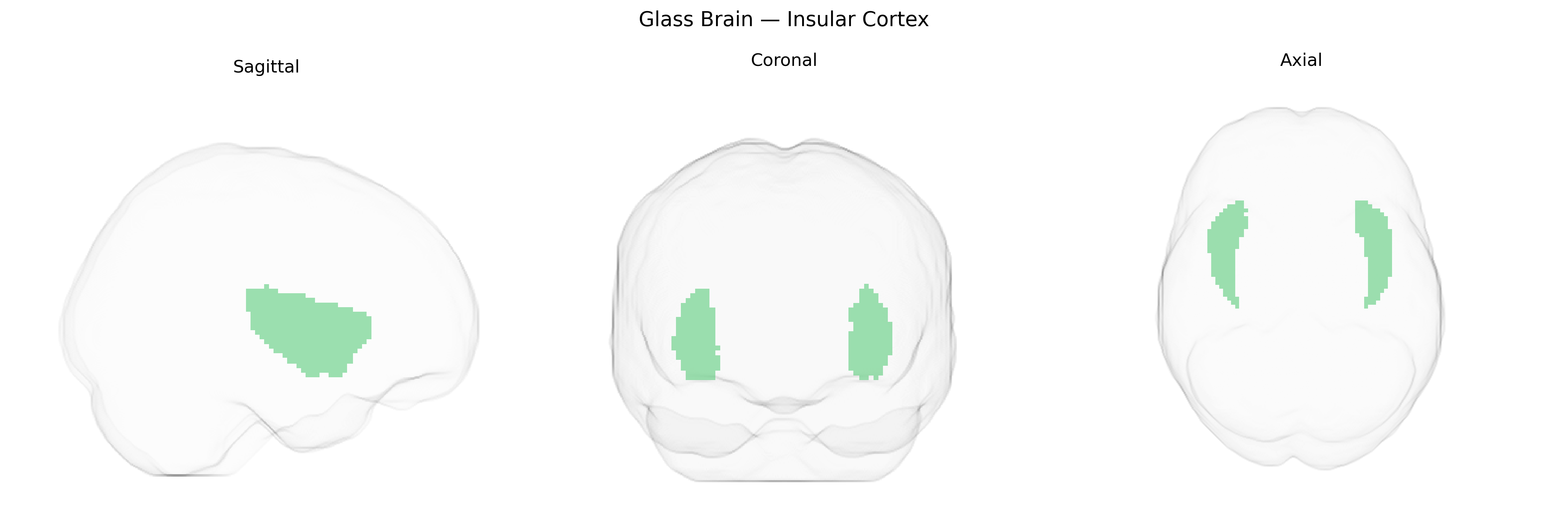
The bilateral insular cortex, as defined in the HarvardOxford cort maxprob thr25 2mm Atlas, comprises the left and right insula buried within the lateral sulcus and covered by the opercula of the frontal, parietal, and temporal lobes. Structurally, it is organized into anterior and posterior subdivisions, with the anterior insula heavily interconnected with limbic and prefrontal regions and the posterior insula more closely linked to somatosensory and visceral pathways. Functionally, the insular cortex is crucial for interoceptive awareness, integration of autonomic and visceral information, pain processing, gustatory perception, and emotional and social-cognitive processes, contributing to salience detection and the coordination of large-scale brain networks. Its bilateral representation reflects symmetrical roles in integrating sensory, affective, and homeostatic signals across hemispheres. Insular cortex
The bilateral insular cortex, as defined in the Harvard-Oxford cortical atlas, has been implicated in numerous genetic and genome-wide association studies through its roles in interoception, emotion, salience processing, and addiction. Variants in genes affecting dopaminergic and serotonergic signaling (e.g., DRD2, SLC6A4, HTR1A) and glutamatergic pathways (e.g., GRIN2B) have been associated with insular structure and function, particularly in relation to substance use disorders, nicotine dependence, and alcohol use, where insular volume and activity show heritable components and genetic correlations with addiction risk. Polygenic risk scores for major depressive disorder, bipolar disorder, and schizophrenia consistently associate with altered insular cortical thickness and connectivity, with large GWAS and imaging-genetics consortia (such as ENIGMA and UK Biobank studies) identifying insula-related endophenotypes linked to common psychiatric risk loci (e.g., within CACNA1C, ZNF804A, and complement pathway genes). Insular morphology is also influenced by common variants associated with general brain structure and cortical metrics (e.g., in genes like HMGA2, IGF1, and various loci near WNT signaling and neurodevelopmental regulators), and insular changes have been observed in genetic studies of autism spectrum disorder, anxiety, pain sensitivity, obesity, and cardiovascular traits, reflecting the region’s integrative role in autonomic control and subjective bodily states. Collectively, GWAS and candidate-gene findings indicate that insular cortex measures are moderately heritable, share genetic architectures with multiple neuropsychiatric and behavioral phenotypes, and serve as intermediate imaging phenotypes linking common genetic variation to complex disorders involving salience, interoception, and affect regulation.
Overview generated by GPT-4o (2026).
Region ID: 2
Hemisphere: bilateral
Atlas: HarvardOxford cort maxprob thr25 2mm
Full Quality Version: Download MP4
Full Quality Version: Download MP4
Wali Sidiqyar*, Gaurav Rudravaram*, Elyssa M. McMaster, Trent M. Schwartz, Adam M. Saunders, Kurt G. Schilling, Bennett A. Landman "Introducing SPINS: A Shared Public Visualization Library of Neuroanatomical Structures." Medical Imaging with Deep Learning- short paper
This resource is licensed under CC0 1.0 Universal (Public Domain).