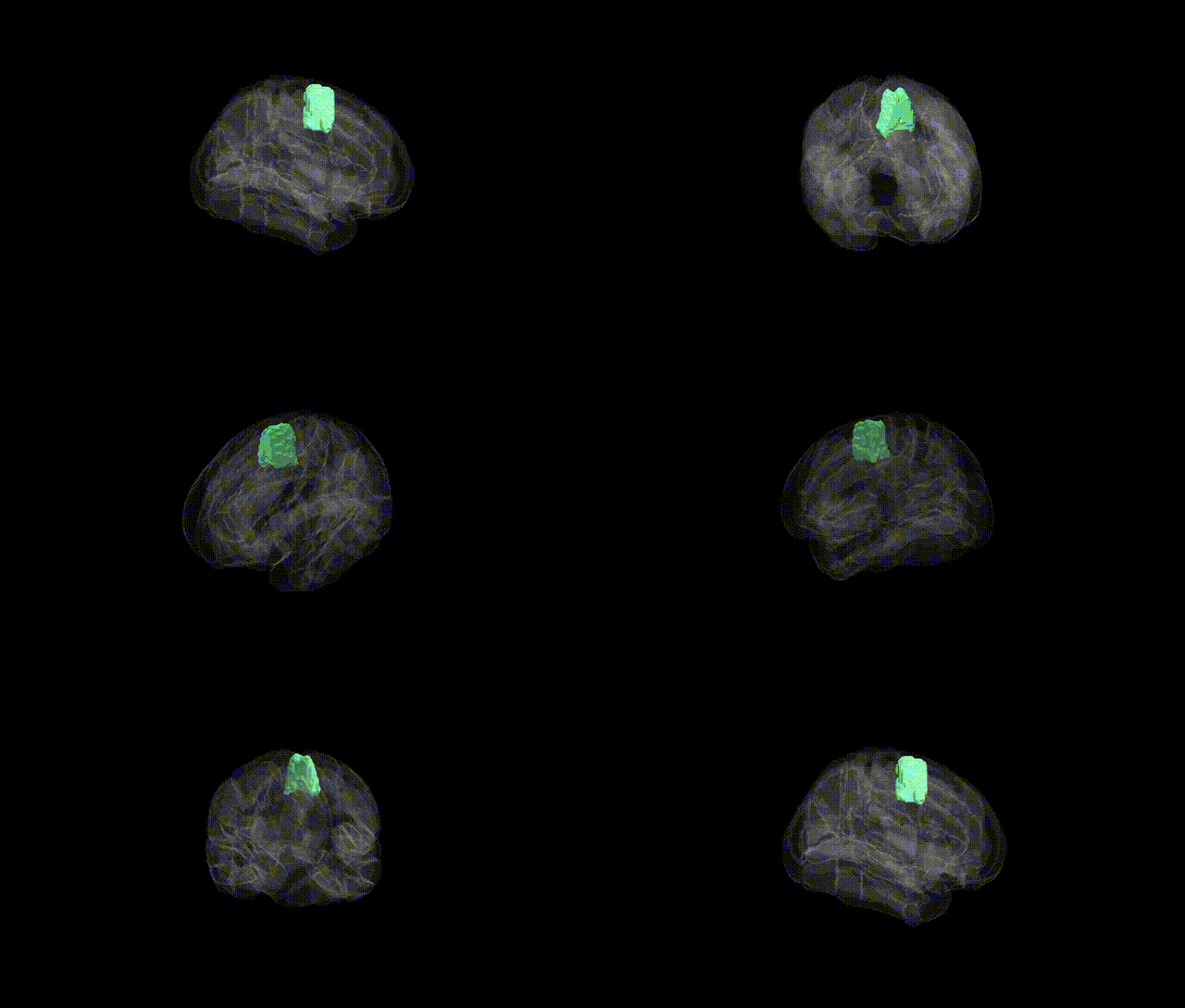
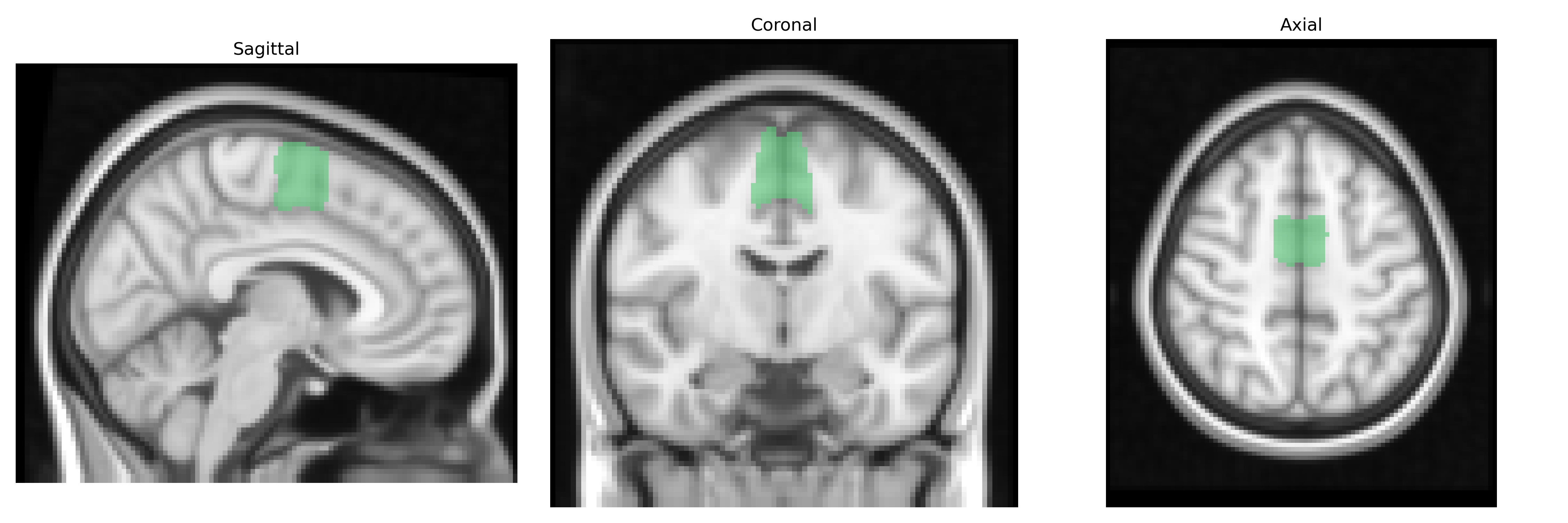
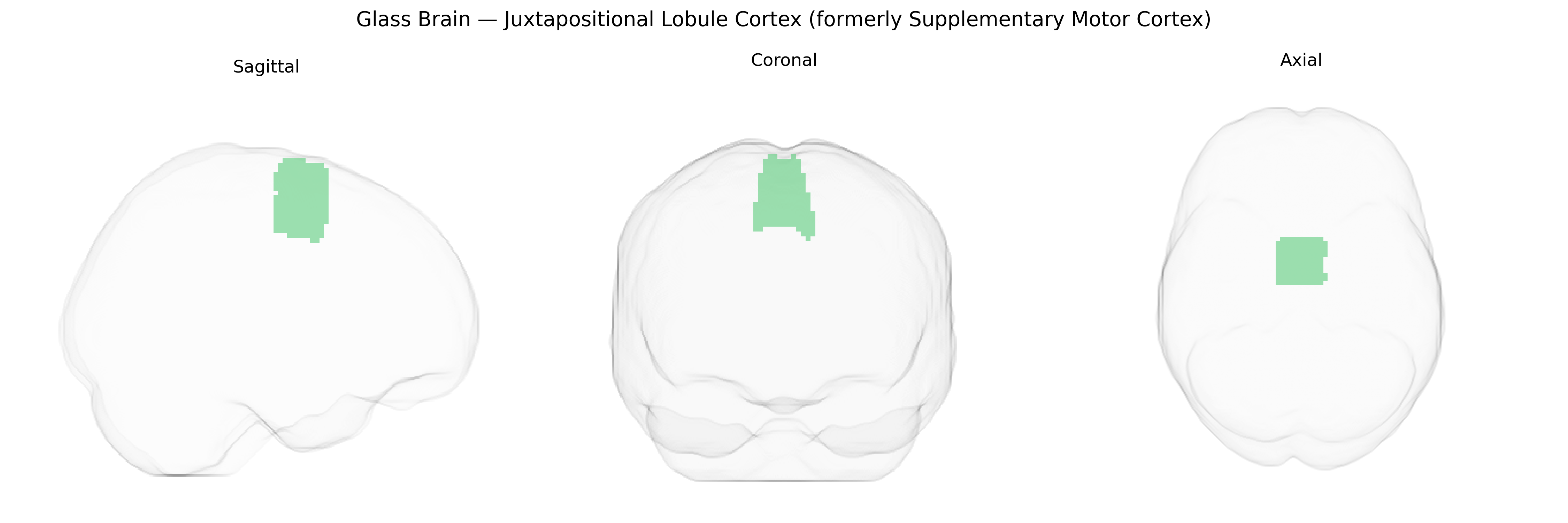
The bilateral Juxtapositional Lobule Cortex (formerly Supplementary Motor Cortex) is a medial frontal lobe region located on the dorsal surface of the hemisphere anterior to the primary motor cortex, forming part of the superior frontal gyrus and bordering the paracentral lobule. It is functionally involved in higher-order motor control, including initiation, planning, sequencing, and coordination of voluntary movements, particularly those that are internally generated rather than triggered by external stimuli. This region contributes to bimanual coordination, motor imagery, and aspects of action selection, and is frequently engaged in tasks requiring complex motor programs and temporal organization of movements. It is also implicated in motor-related aspects of speech and in preparatory activity preceding movement, with dysfunction associated with disorders such as akinetic mutism and some forms of apraxia. There is no direct Wikipedia article for the Juxtapositional Lobule Cortex; a closely related and encompassing structure is the Supplementary Motor Area.
The bilateral Juxtapositional Lobule Cortex (formerly Supplementary Motor Cortex) is implicated in genetically influenced motor planning, action sequencing, and higher-order control processes, and several GWAS and imaging-genetics studies have linked variants to structural and functional properties of this region as part of broader motor and cognitive networks. Common variants near genes involved in neurodevelopment (such as those in axon guidance, synaptic plasticity, and cortical patterning pathways) have been associated with global and regional cortical thickness and surface area measures that include medial frontal motor territories encompassing this cortex, as shown in large consortia like ENIGMA and UK Biobank-based studies. Polygenic risk for Parkinson’s disease, schizophrenia, ADHD, and autism spectrum disorder has been correlated with alterations in supplementary motor and adjacent medial frontal activation and connectivity, suggesting shared genetic architecture affecting motor initiation, inhibitory control, and self-generated action. GWAS of motor-related traits (such as reaction time, general psychomotor speed, and aspects of speech and language production) have identified loci whose functional annotation points to expression in medial frontal motor regions, including this cortex, though these signals are typically not region-specific and arise within distributed networks. In addition, genetic influences on resting-state networks, especially the sensorimotor and fronto-parietal networks, show loadings in areas that include the Juxtapositional Lobule Cortex, indicating that heritable variation in large-scale brain organization partly manifests in this region’s connectivity profile rather than through single locus–region mappings. Overall, known genetic associations for this territory are largely indirect, emerging from broad cortical morphology, connectivity, and neuropsychiatric risk studies rather than targeted GWAS focused specifically on the Juxtapositional Lobule Cortex as defined in the HarvardOxford cortical atlas.
Overview generated by GPT-4o (2026).
Region ID: 26
Hemisphere: bilateral
Atlas: HarvardOxford cort maxprob thr25 2mm
Full Quality Version: Download MP4
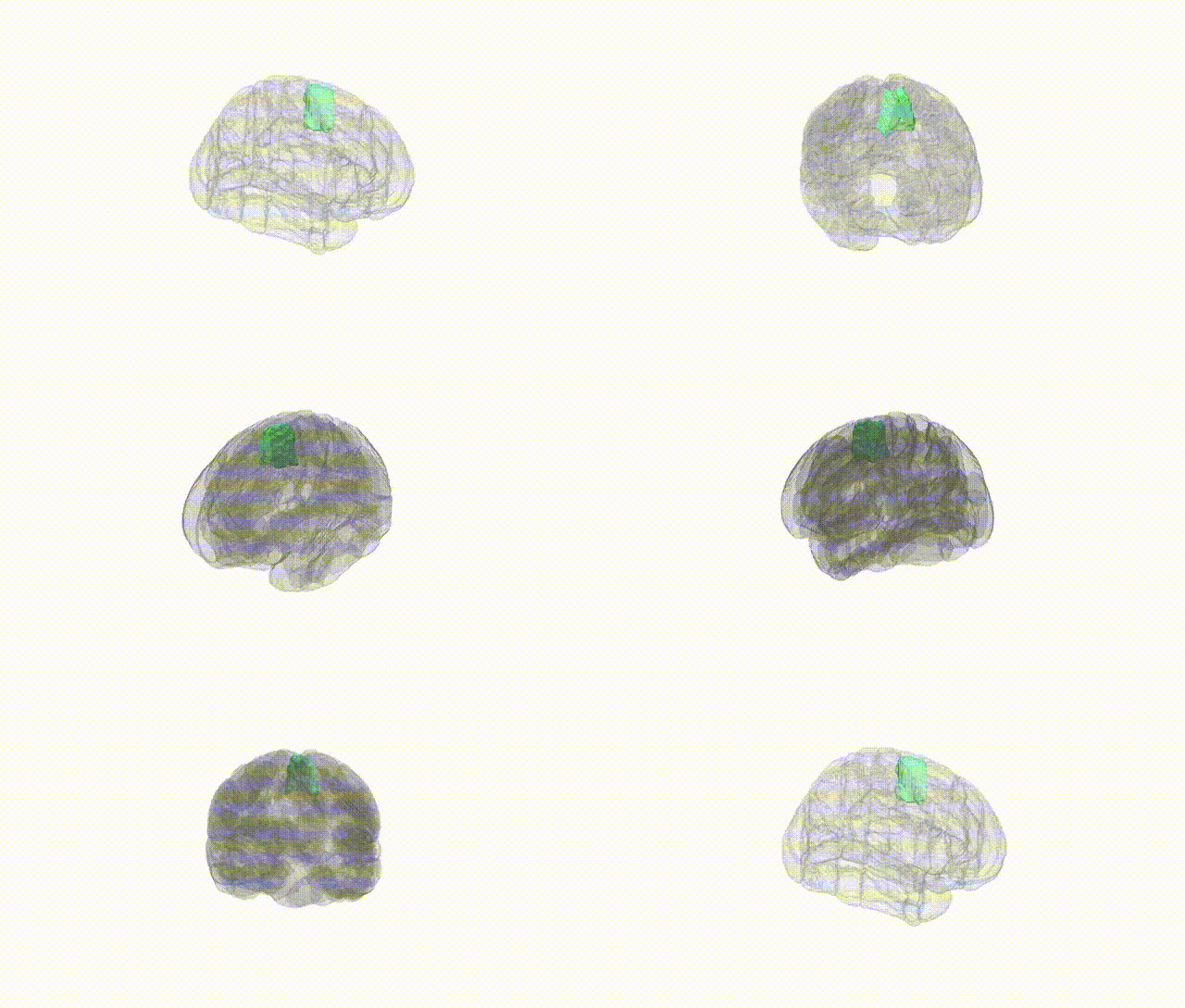
Full Quality Version: Download MP4
Wali Sidiqyar*, Gaurav Rudravaram*, Elyssa M. McMaster, Trent M. Schwartz, Adam M. Saunders, Kurt G. Schilling, Bennett A. Landman "Introducing SPINS: A Shared Public Visualization Library of Neuroanatomical Structures." Medical Imaging with Deep Learning- short paper
This resource is licensed under CC0 1.0 Universal (Public Domain).