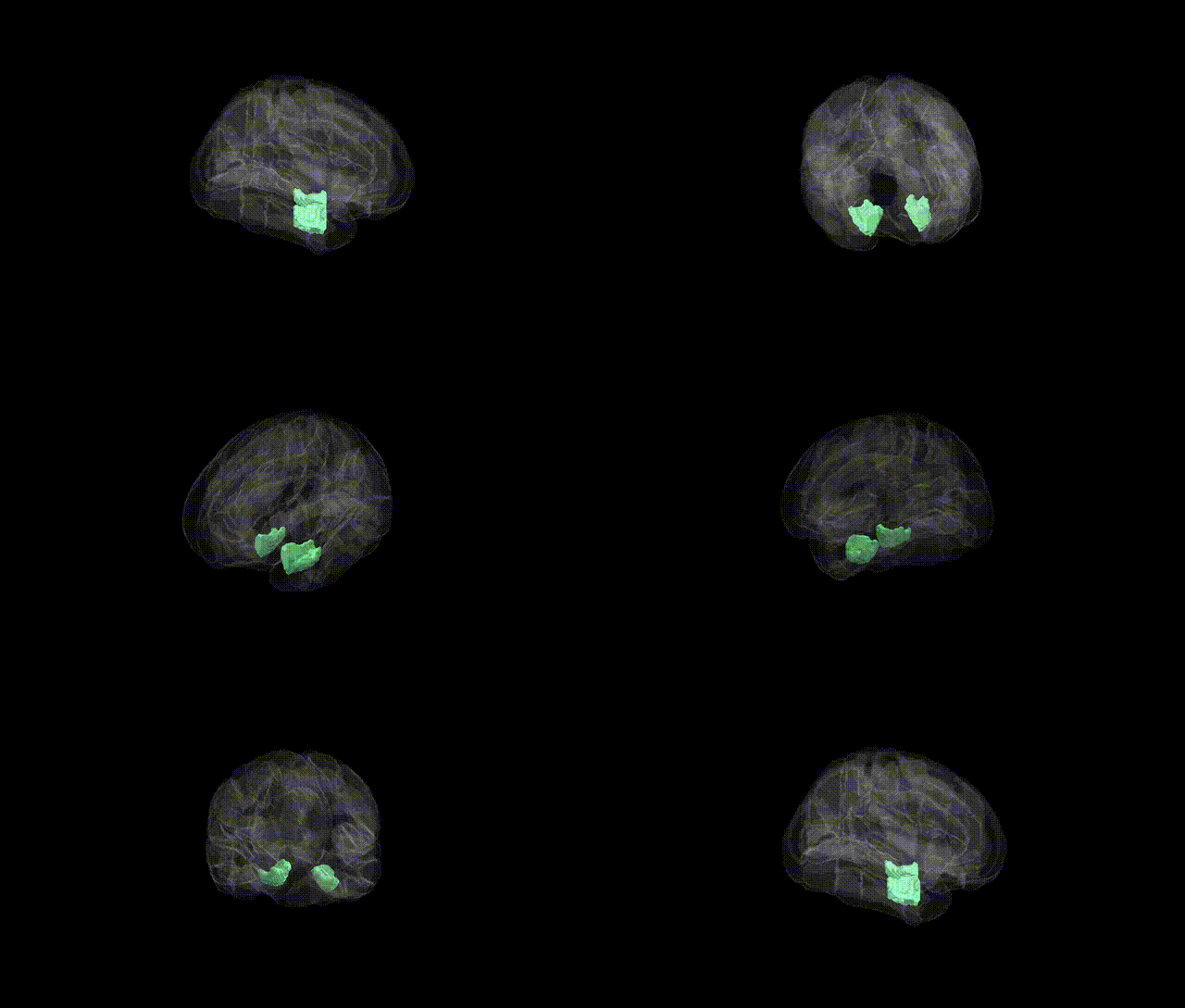
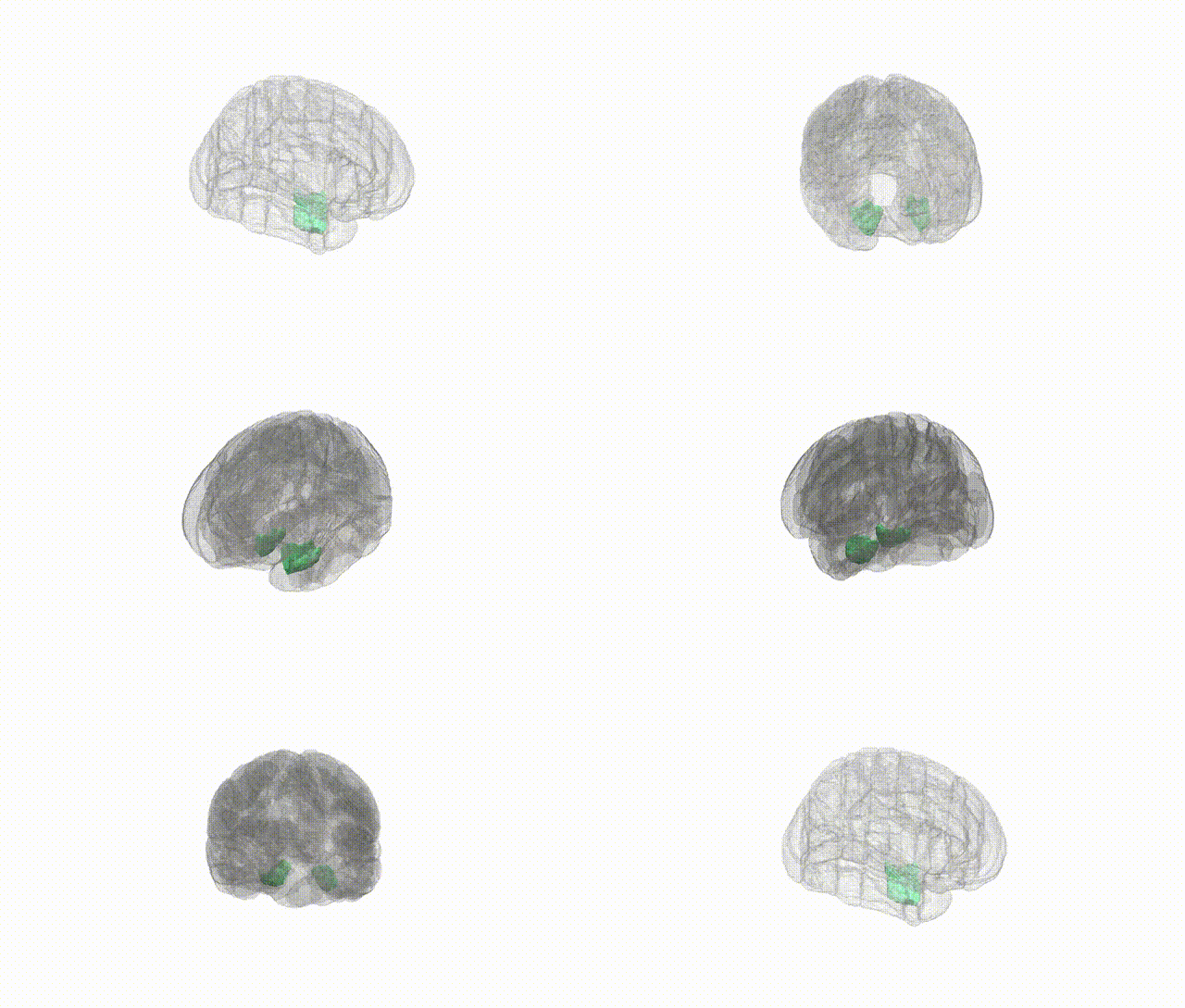
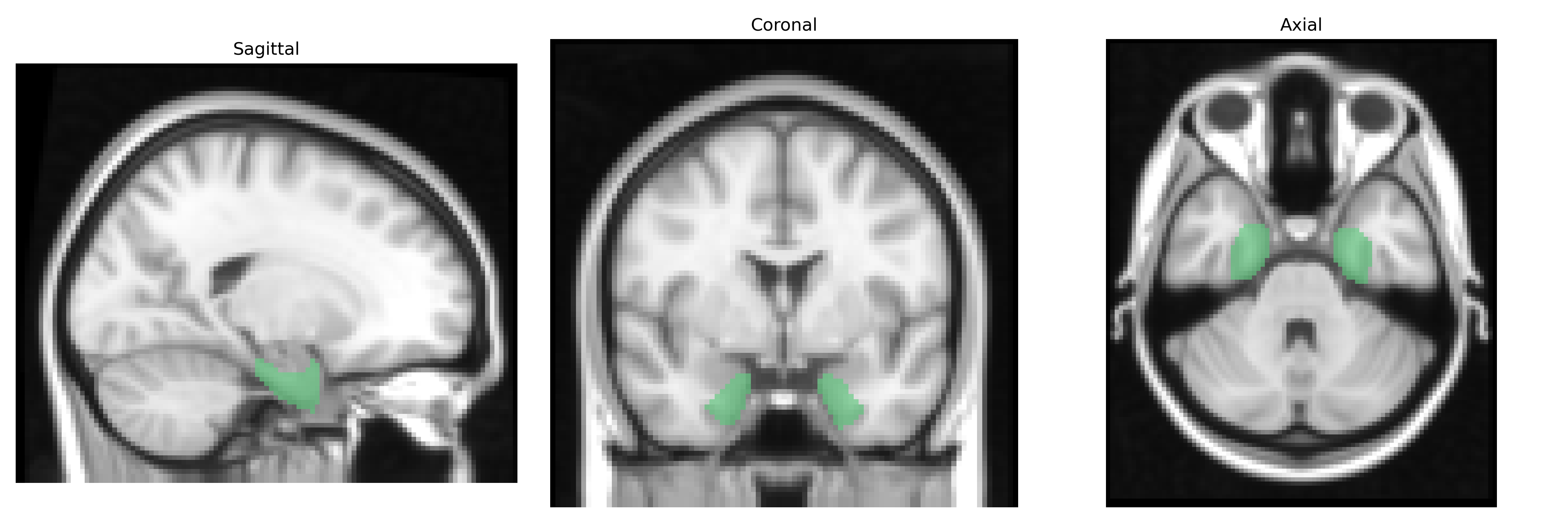
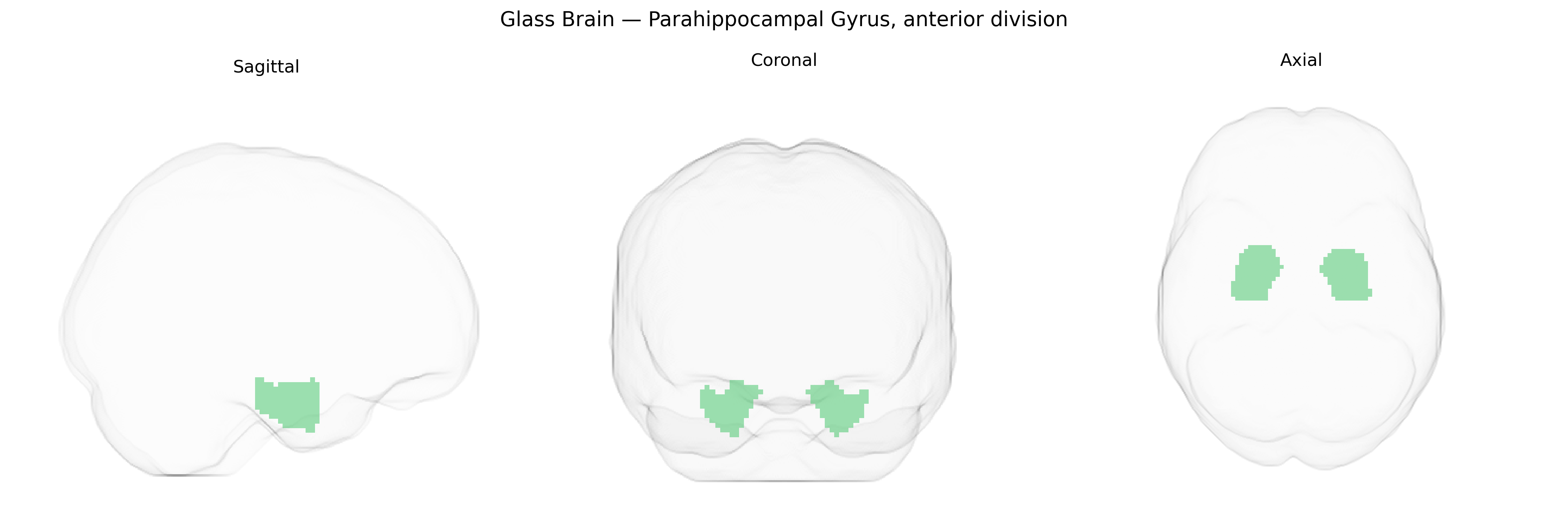
The bilateral Parahippocampal Gyrus, anterior division, as defined in the Harvard-Oxford cortical maxprob atlas (2 mm, 25% threshold), refers to the rostral portion of the parahippocampal gyrus situated in the medial temporal lobe, adjacent to the hippocampal formation and extending toward the entorhinal cortex. This region is structurally composed of allocortical and periallocortical tissue and is heavily interconnected with the hippocampus, amygdala, and association cortices, supporting functions in episodic memory, spatial and contextual processing, and scene recognition. It participates in encoding and retrieval of contextual information and in integrating multimodal sensory inputs into coherent environmental representations, contributing to navigation and memory-guided behavior. There is no direct Wikipedia article specifically for the “Parahippocampal Gyrus, anterior division” as defined by the Harvard-Oxford atlas; a closely related structure is the broader parahippocampal gyrus: Parahippocampal gyrus.
The bilateral parahippocampal gyrus, anterior division—an anterior medial temporal lobe structure central to contextual memory, scene processing, and emotional encoding—has been repeatedly implicated in genetic studies of brain structure and neuropsychiatric traits. Large-scale imaging–genetics consortia (e.g., ENIGMA, UK Biobank) report that parahippocampal volume and cortical thickness show significant SNP-based heritability and polygenic influences, with loci near or within genes related to synaptic plasticity, neurodevelopment, and neurodegeneration (including variants in or near APOE, SORL1, BIN1, CLU, and other Alzheimer’s disease–associated loci) contributing to individual differences in anterior medial temporal anatomy. GWAS of regional brain volumes have identified parahippocampal-related signals that partially overlap with genetic architectures of hippocampal volume, episodic memory performance, and general cognitive function, indicating shared polygenic influences on medial temporal circuits. In clinical genetics, parahippocampal structural and functional alterations are linked via polygenic risk scores or specific risk variants to Alzheimer’s disease, other dementias, schizophrenia, major depressive disorder, and post-traumatic stress disorder, consistent with its role in memory and affective processing; for example, higher polygenic risk for Alzheimer’s or schizophrenia associates with reduced parahippocampal volume or altered connectivity in several cohorts. Genetic variants affecting glutamatergic signaling, synaptic scaffolding, and axonal guidance have also been associated with parahippocampal morphology or activation patterns, suggesting that common neurodevelopmental pathways underlie interindividual variation in the anterior parahippocampal region and its vulnerability across multiple neuropsychiatric and neurodegenerative conditions.
Overview generated by GPT-4o (2026).
Region ID: 34
Hemisphere: bilateral
Atlas: HarvardOxford cort maxprob thr25 2mm
Full Quality Version: Download MP4
Full Quality Version: Download MP4
Wali Sidiqyar*, Gaurav Rudravaram*, Elyssa M. McMaster, Trent M. Schwartz, Adam M. Saunders, Kurt G. Schilling, Bennett A. Landman "Introducing SPINS: A Shared Public Visualization Library of Neuroanatomical Structures." Medical Imaging with Deep Learning- short paper
This resource is licensed under CC0 1.0 Universal (Public Domain).