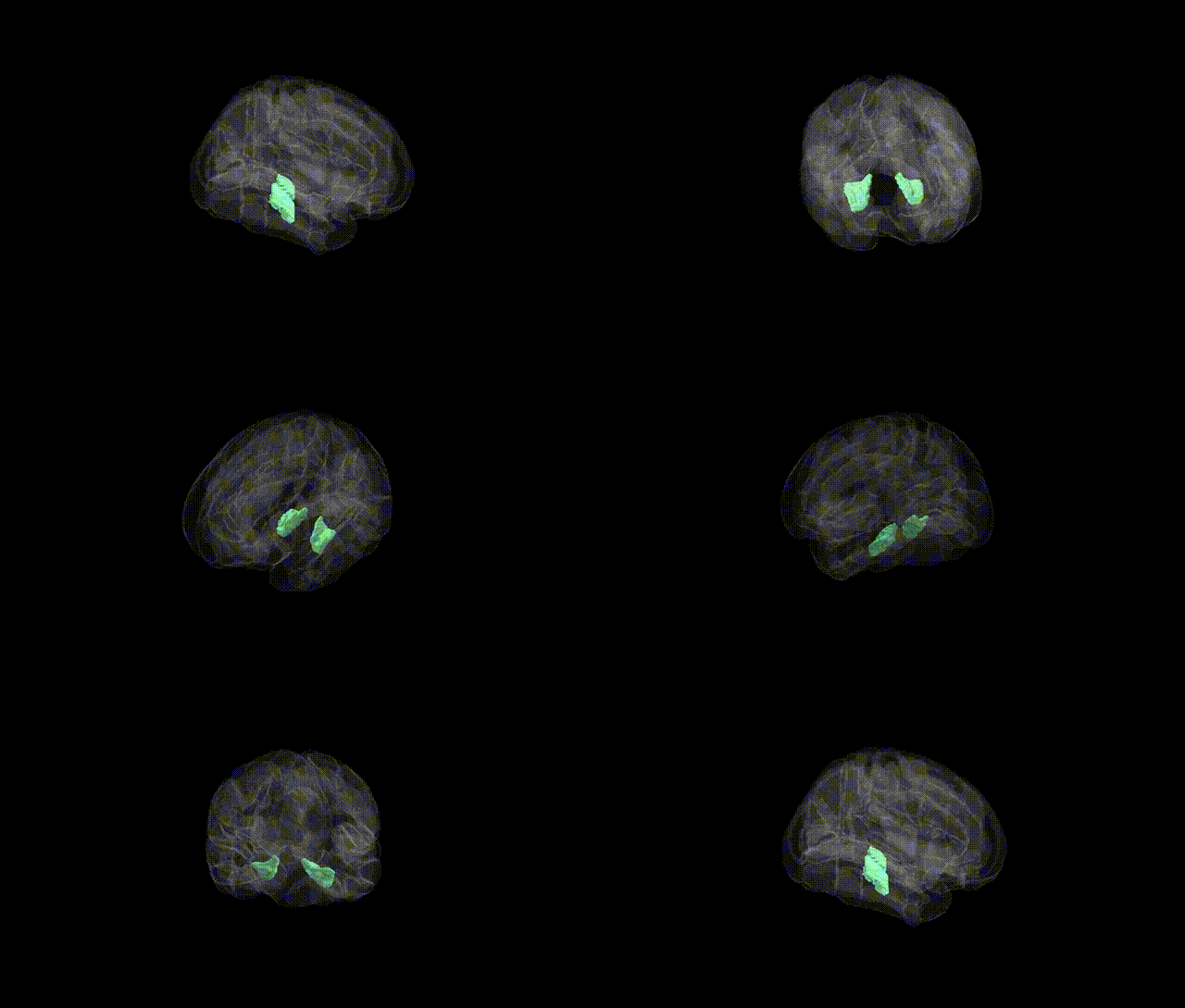
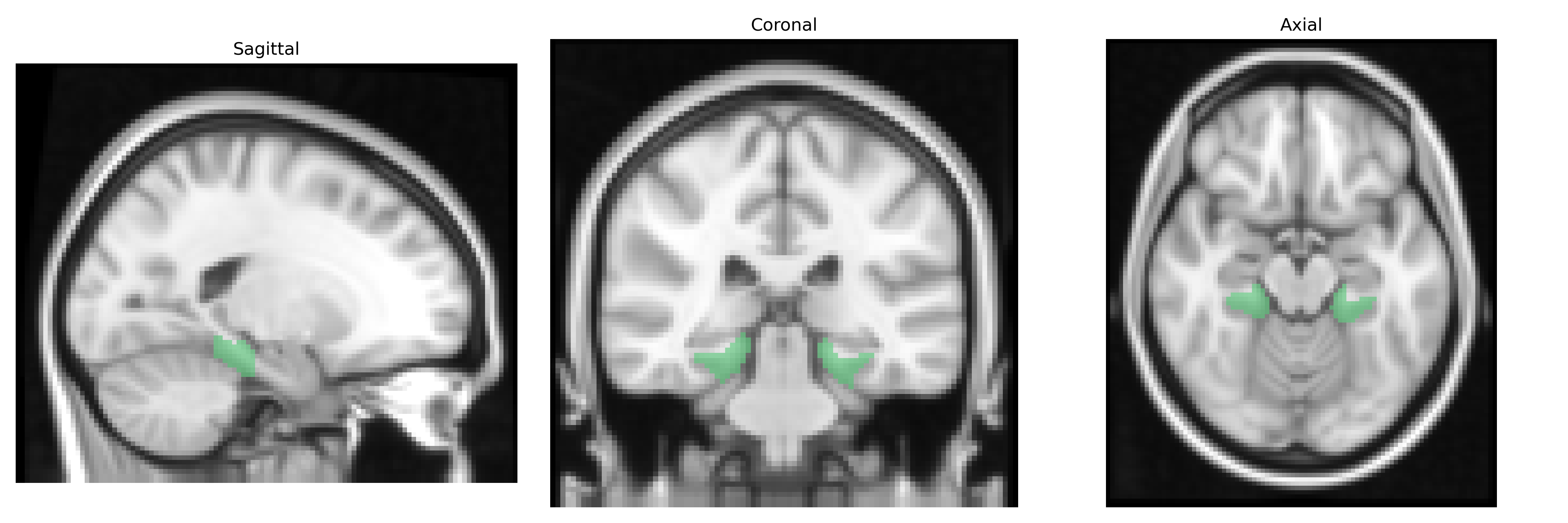
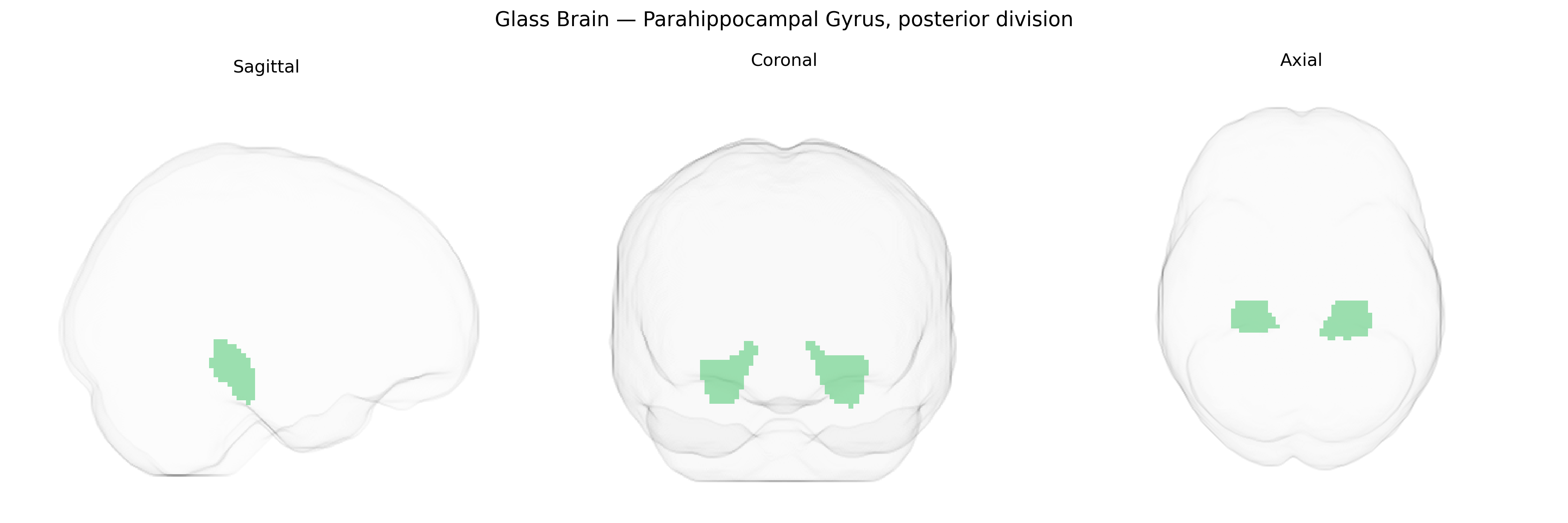
The bilateral Parahippocampal Gyrus, posterior division, as defined in the Harvard–Oxford Cortical Structural Atlas (maxprob, thr25, 2 mm), encompasses the caudal portion of the parahippocampal gyrus in the medial temporal lobe of both hemispheres, adjacent to the hippocampus and extending toward the lingual gyrus and fusiform gyrus. This region participates in higher-order multimodal association processes, including contextual and episodic memory encoding, spatial navigation, and scene processing, and closely interfaces with the hippocampal formation and broader limbic circuitry. Cytoarchitectonically, it contains areas such as parahippocampal cortex that receive convergent input from unimodal and polymodal association areas and project to hippocampal subfields, supporting integration of environmental and mnemonic information. Although the exact posterior division label is atlas-specific, it corresponds to the caudal parahippocampal territory involved in visuospatial and contextual representation. There is no direct Wikipedia article for this specific atlas-defined posterior division; a related article is Parahippocampal gyrus.
The bilateral parahippocampal gyrus, posterior division—encompassing medial temporal lobe cortex critical for contextual memory and scene processing—has been implicated in multiple genetic studies through both imaging genetics and GWAS of neuropsychiatric and cognitive traits. Variants in genes involved in synaptic plasticity, neurodevelopment, and glutamatergic signaling (including BDNF, APOE, COMT, and several MHC and complement pathway loci such as C4) have been associated with structural and functional measures in this region, particularly parahippocampal volume and activity during memory tasks. Large-scale GWAS of brain imaging phenotypes (e.g., ENIGMA, UK Biobank) have identified common variants near genes such as KIAA0319, DLG2, and TESC that associate with medial temporal lobe and parahippocampal morphology, linking these genetic influences to general cognitive ability, educational attainment, and memory performance. The parahippocampal gyrus shows heritable variation and is consistently implicated in genetic risk for Alzheimer’s disease (APOE ε4 and multiple AD risk loci), schizophrenia and psychosis (common variants in synaptic and immune-related genes), major depression, and anxiety-related traits, with GWAS-based polygenic risk scores for these disorders predicting alterations in parahippocampal structure and connectivity. Additionally, GWAS of traits such as spatial navigation, scene imagery, and episodic memory performance have reported associations that converge on medial temporal and parahippocampal circuitry, suggesting this region is a key anatomical substrate through which diverse genetic risk factors exert effects on memory, context processing, and vulnerability to neuropsychiatric disease.
Overview generated by GPT-4o (2026).
Region ID: 35
Hemisphere: bilateral
Atlas: HarvardOxford cort maxprob thr25 2mm
Full Quality Version: Download MP4
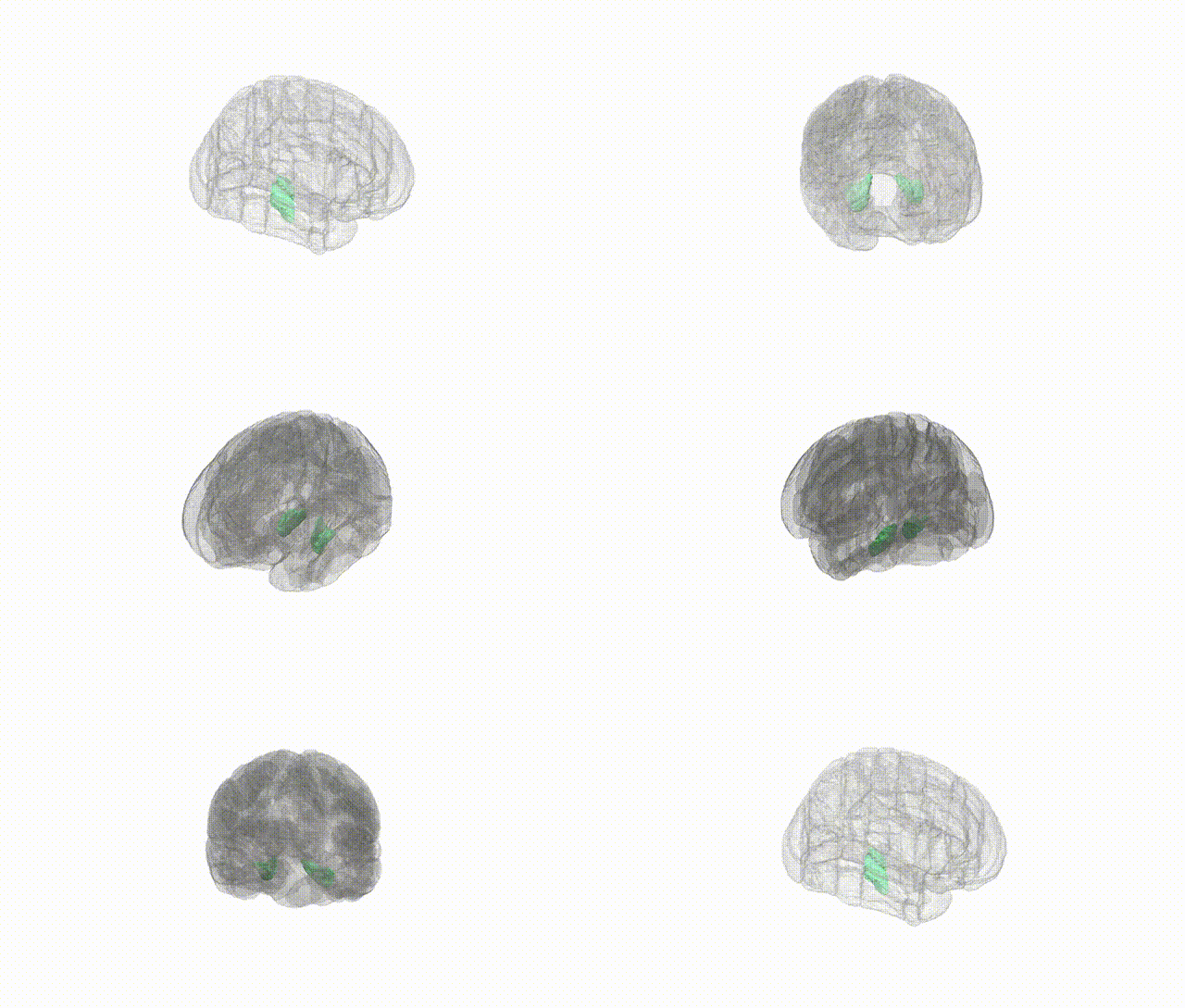
Full Quality Version: Download MP4
Wali Sidiqyar*, Gaurav Rudravaram*, Elyssa M. McMaster, Trent M. Schwartz, Adam M. Saunders, Kurt G. Schilling, Bennett A. Landman "Introducing SPINS: A Shared Public Visualization Library of Neuroanatomical Structures." Medical Imaging with Deep Learning- short paper
This resource is licensed under CC0 1.0 Universal (Public Domain).