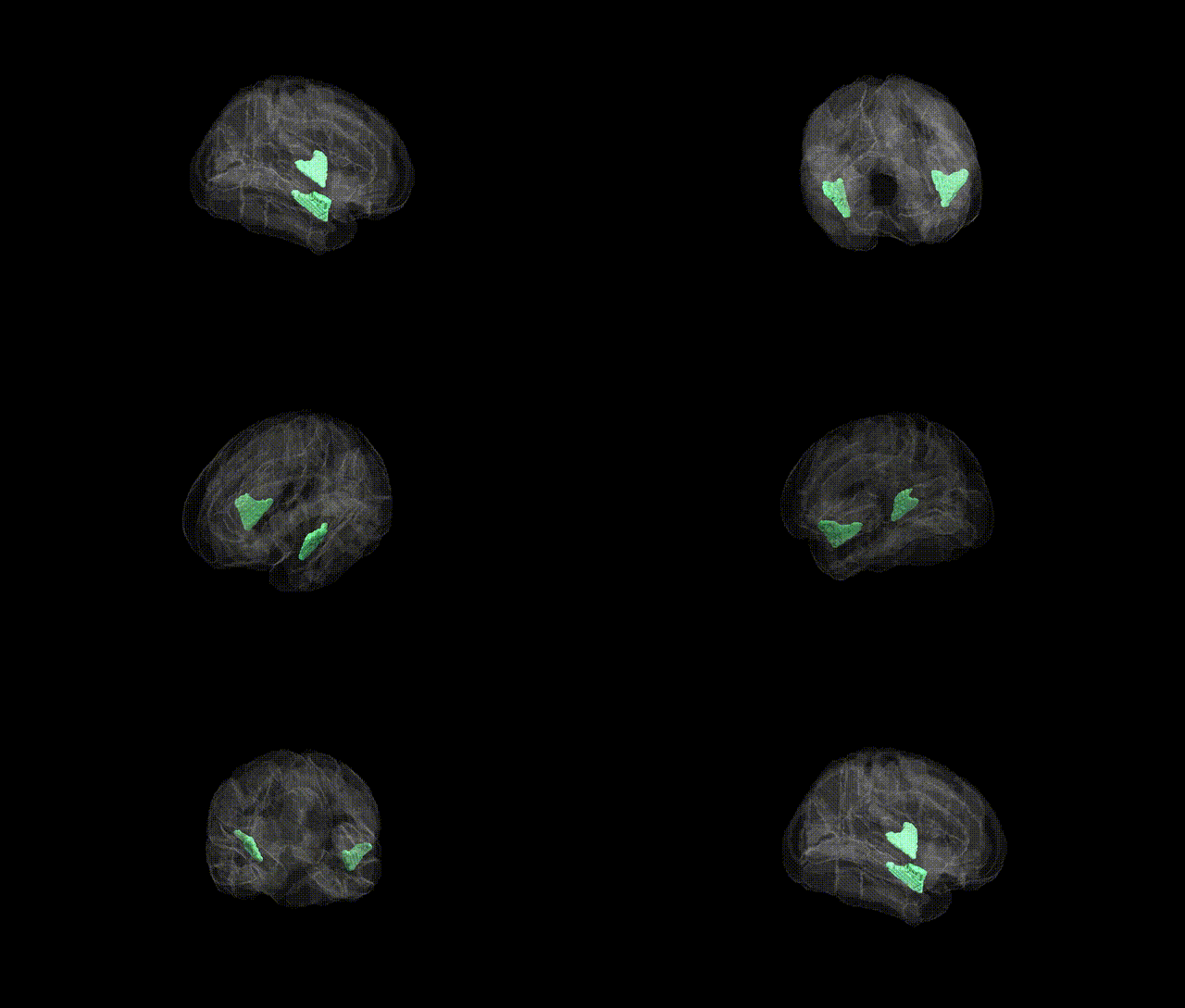
The bilateral Planum Polare is an anterior portion of the superior temporal gyrus, located rostral to Heschl’s gyrus on the superior surface of the temporal lobe and forming part of the anterior auditory association cortex. It is situated within the temporal plane bordering the superior temporal sulcus and contributes to higher-order auditory processing, including aspects of auditory object recognition, spectral and temporal analysis of sounds, and integration of complex acoustic information. The Planum Polare is closely connected with other auditory and multimodal association areas, including the Planum Temporale and regions of the superior temporal sulcus, and shows functional specialization for processing speech, music, and environmental sounds. There is no direct Wikipedia article for Planum Polare; a closely related structure is the Superior temporal gyrus.
The bilateral Planum Polare, a superior temporal lobe region anterior to Heschl’s gyrus involved in higher-order auditory and language processing, has been implicated in several genetic and GWAS-based associations, though often under broader labels such as anterior superior temporal gyrus or temporal pole rather than the specific Harvard–Oxford Planum Polare label. Structural and functional variation in this area has been linked to common polymorphisms in genes associated with cortical development and synaptic function (for example, CNTNAP2, FOXP2-related networks, and glutamatergic and GABAergic pathway genes) in studies of language, speech, and auditory processing. Large-scale imaging–genetics consortia (e.g., ENIGMA, UK Biobank) have identified heritable components of temporal lobe surface area and thickness in regions overlapping Planum Polare, with genome-wide significant loci in genes involved in neuronal migration, axon guidance, and cortical arealization (such as loci near HMGA2, WNT and FGF pathway genes), although these findings are usually reported at the level of broader temporal parcels. Genetic associations involving this region have also been reported in disorders with prominent language and social-communication phenotypes, including autism spectrum disorder, schizophrenia, specific language impairment, and dyslexia, where risk variants in synaptic, neurodevelopmental, and immune-related genes show convergent effects on temporal lobe structure and function; however, Planum Polare–specific associations are typically inferred from ROI-based or voxelwise imaging–genetics analyses rather than locus-by-locus mapping directly to this atlas-defined region.
Overview generated by GPT-4o (2026).
Region ID: 44
Hemisphere: bilateral
Atlas: HarvardOxford cort maxprob thr25 2mm
Full Quality Version: Download MP4
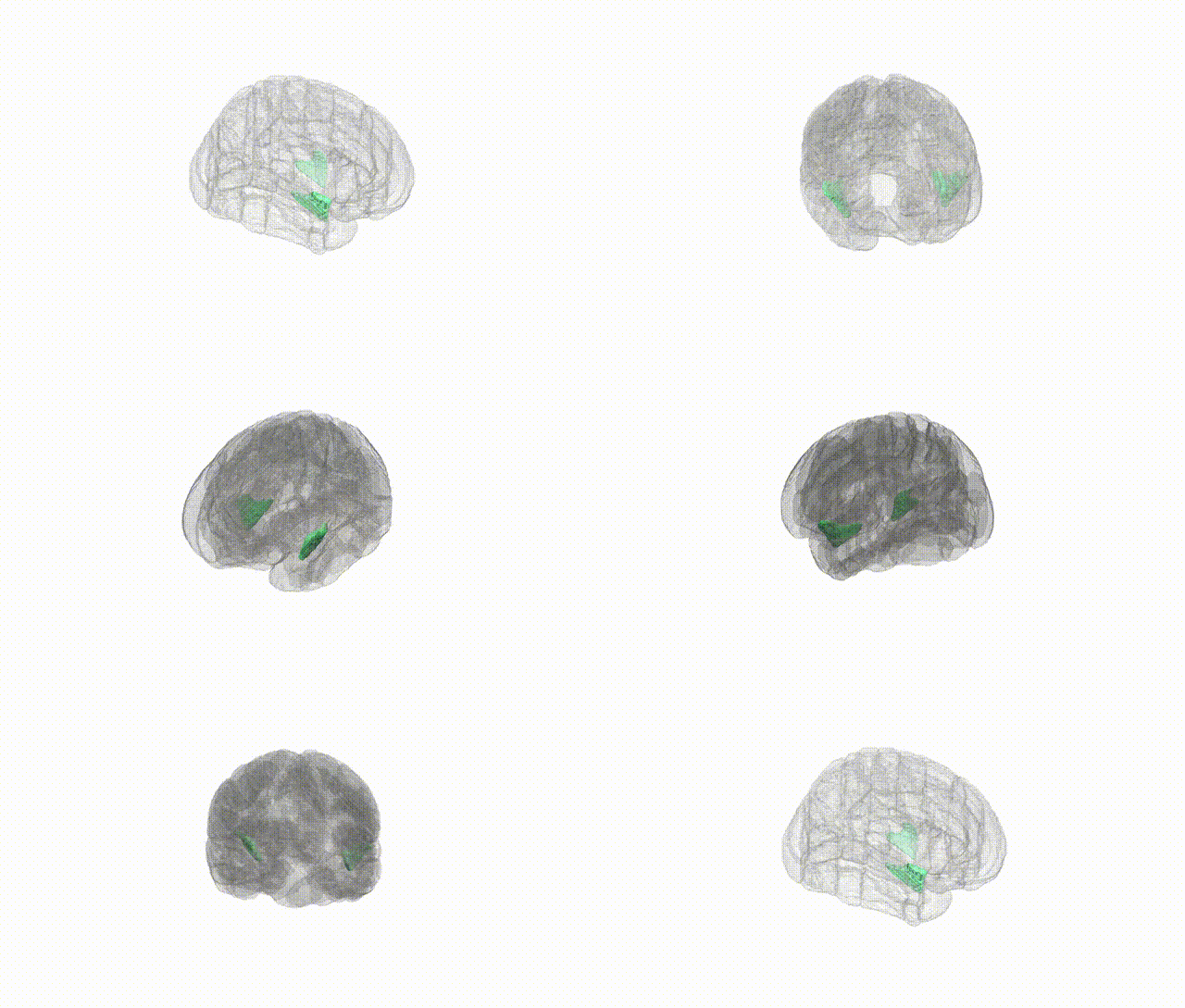
Full Quality Version: Download MP4
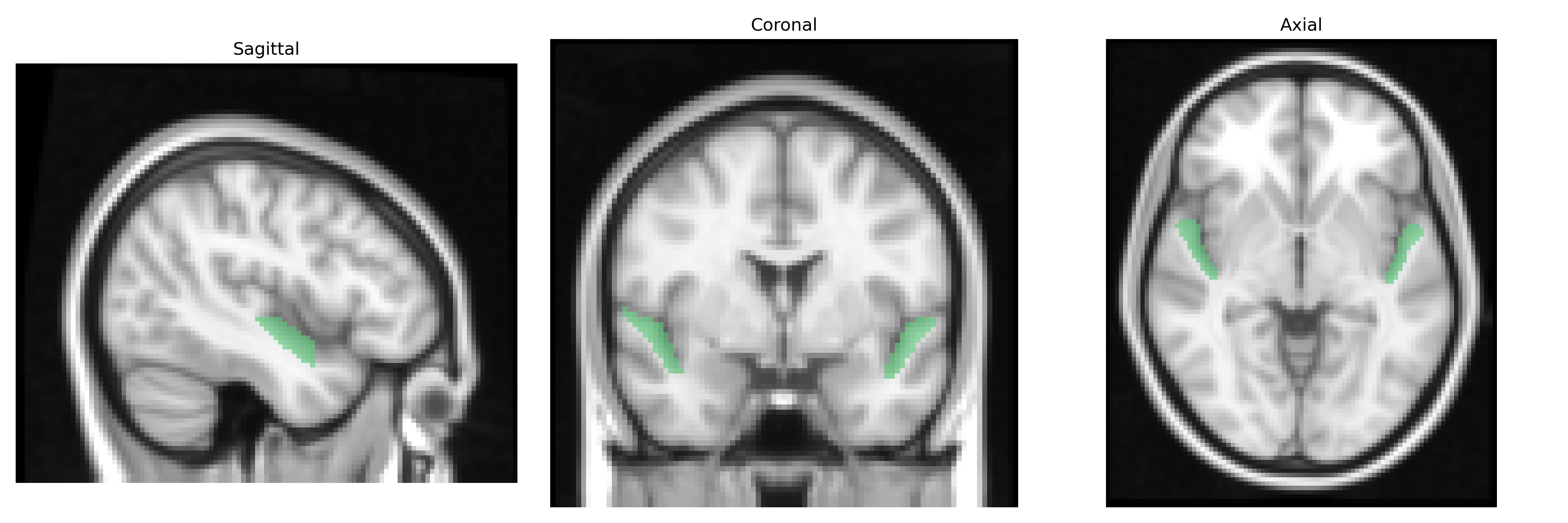
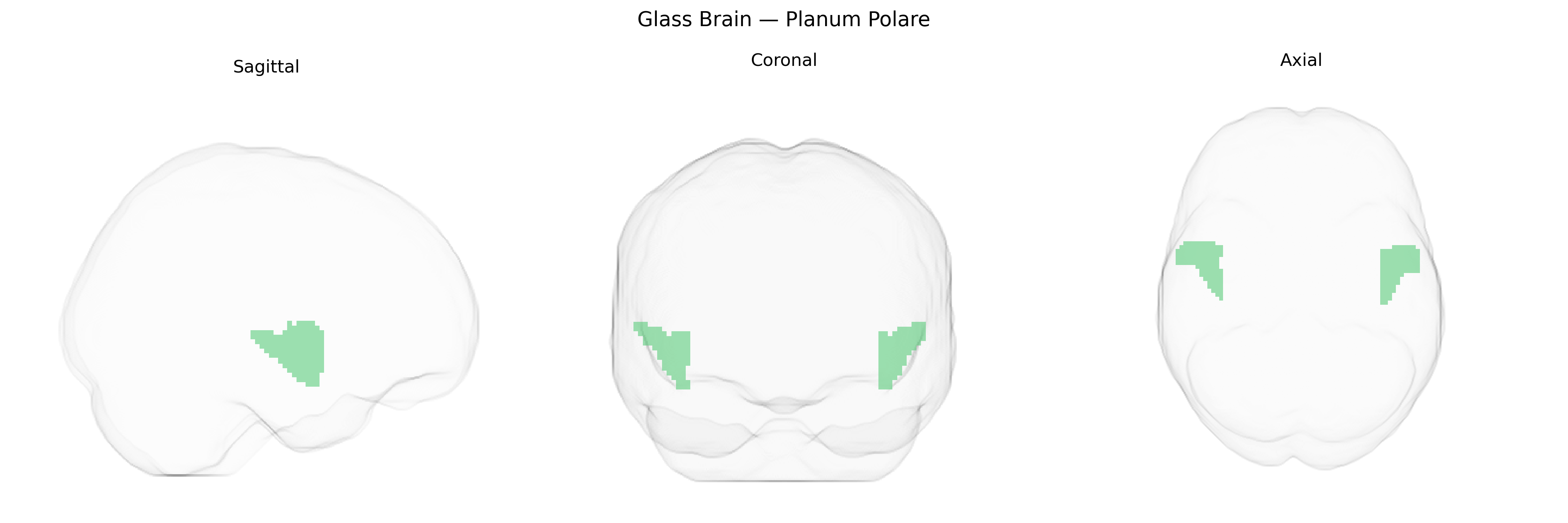
Wali Sidiqyar*, Gaurav Rudravaram*, Elyssa M. McMaster, Trent M. Schwartz, Adam M. Saunders, Kurt G. Schilling, Bennett A. Landman "Introducing SPINS: A Shared Public Visualization Library of Neuroanatomical Structures." Medical Imaging with Deep Learning- short paper
This resource is licensed under CC0 1.0 Universal (Public Domain).