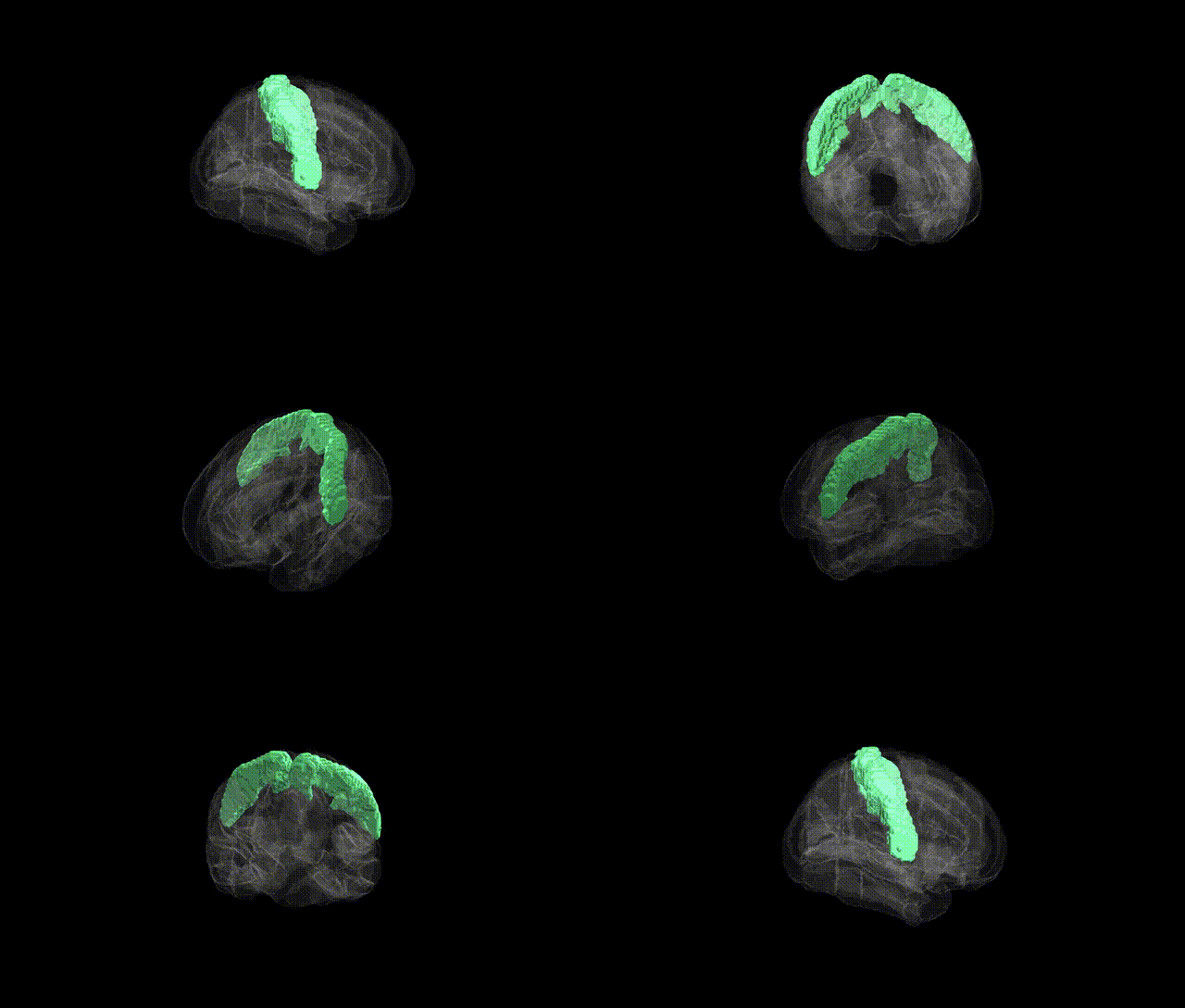
The bilateral postcentral gyrus, corresponding to the primary somatosensory cortex (S1, Brodmann areas 3, 1, and 2), is a cortical region located in the parietal lobe immediately posterior to the central sulcus. It receives dense thalamocortical input from the ventral posterior nuclei of the thalamus and is organized somatotopically, forming the sensory homunculus in which different parts of the body surface are represented in discrete cortical territories. Neurons in this region are primarily involved in processing tactile information, proprioception, and nociceptive input, and contribute to the perception of touch, pressure, vibration, temperature, and body position. The postcentral gyrus integrates these inputs to support sensorimotor coordination and higher-order somatosensory processing via connections with secondary somatosensory cortex, posterior parietal cortex, and motor areas. There is no direct Wikipedia article specific to “Postcentral Gyrus” as a standalone entry; a closely related and encompassing structure is the primary somatosensory cortex: Primary somatosensory cortex.
The bilateral postcentral gyrus, corresponding largely to primary somatosensory cortex in the Harvard-Oxford Cortical atlas, has been implicated in several genetic and GWAS-based associations spanning neurodevelopmental, neuropsychiatric, and sensorimotor traits. Neuroimaging GWAS from large cohorts (e.g., ENIGMA, UK Biobank) have identified common variants in genes involved in neuronal development, synaptic signaling, and axon guidance (such as C4A/B within the MHC region, BDNF, MAPT, and multiple loci near glutamatergic and GABAergic genes) that are associated with cortical thickness, surface area, or gyrification of somatosensory regions including the postcentral gyrus. Schizophrenia, autism spectrum disorder, ADHD, and major depressive disorder polygenic risk scores have been linked to structural and functional changes in the postcentral gyrus, suggesting that shared genetic architectures for these disorders influence somatosensory cortex morphology and activation patterns. GWAS of chronic pain, tactile sensitivity, and related somatosensory phenotypes (e.g., fibromyalgia, migraine, musculoskeletal pain) have further connected risk variants in inflammatory, ion-channel, and neuroplasticity pathways (including genes like SCN9A and CACNA1A, among others) to altered postcentral gyrus activity or structure. Additionally, motor and coordination-related traits, such as hand skill and fine motor performance, show associations with variants that co-vary with postcentral and adjacent precentral gyrus measures, highlighting the region’s role as a genetically modulated hub for integrating somatosensory and motor information.
Overview generated by GPT-4o (2026).
Region ID: 17
Hemisphere: bilateral
Atlas: HarvardOxford cort maxprob thr25 2mm
Full Quality Version: Download MP4
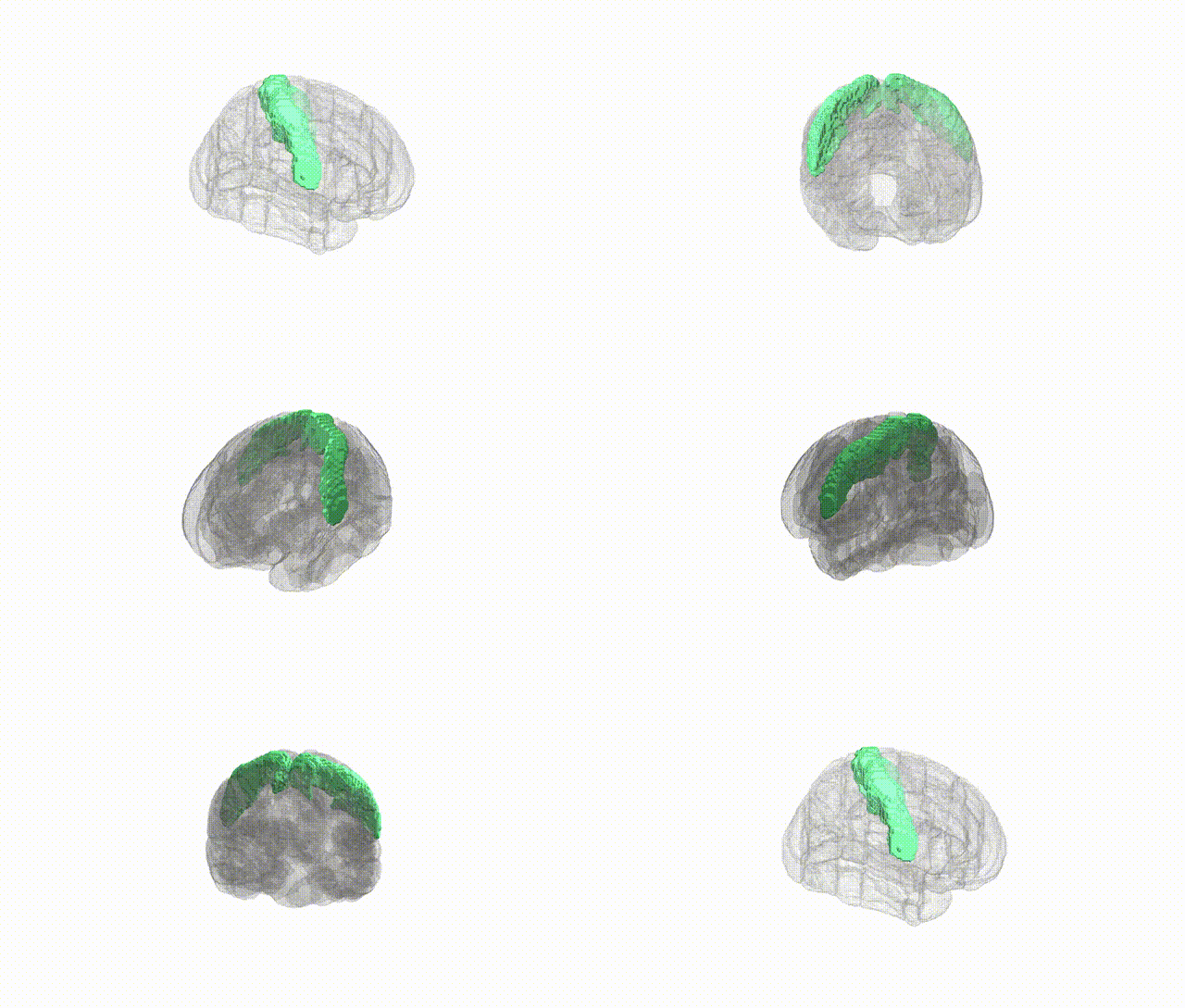
Full Quality Version: Download MP4
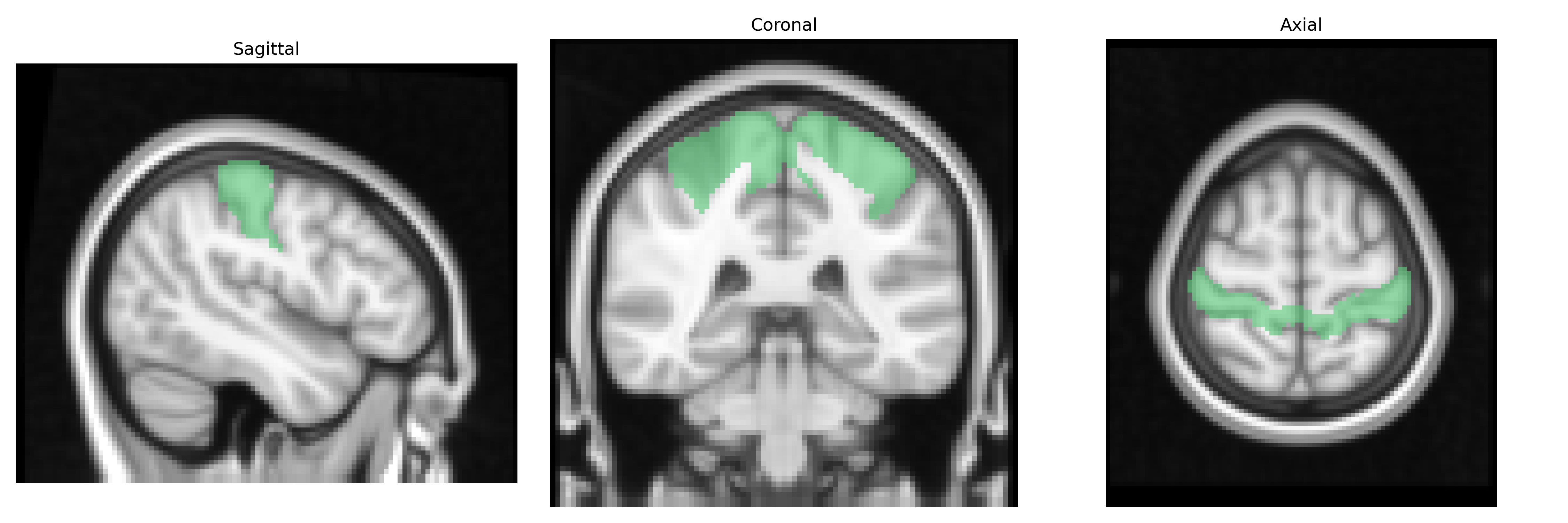
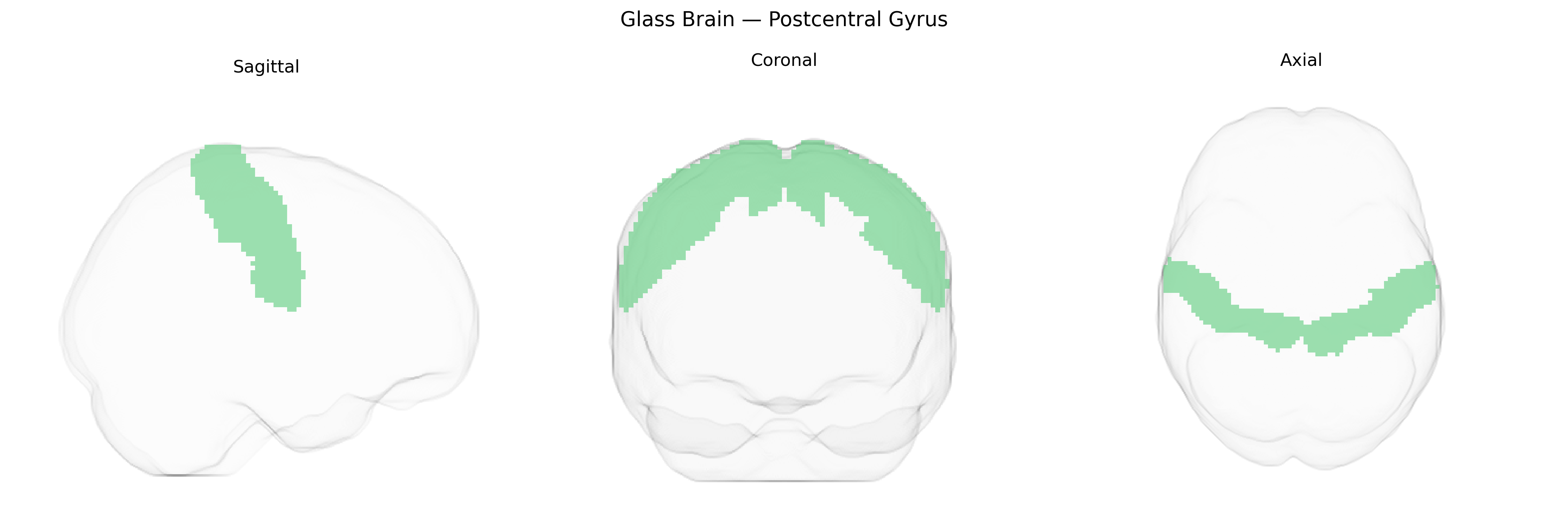
Wali Sidiqyar*, Gaurav Rudravaram*, Elyssa M. McMaster, Trent M. Schwartz, Adam M. Saunders, Kurt G. Schilling, Bennett A. Landman "Introducing SPINS: A Shared Public Visualization Library of Neuroanatomical Structures." Medical Imaging with Deep Learning- short paper
This resource is licensed under CC0 1.0 Universal (Public Domain).