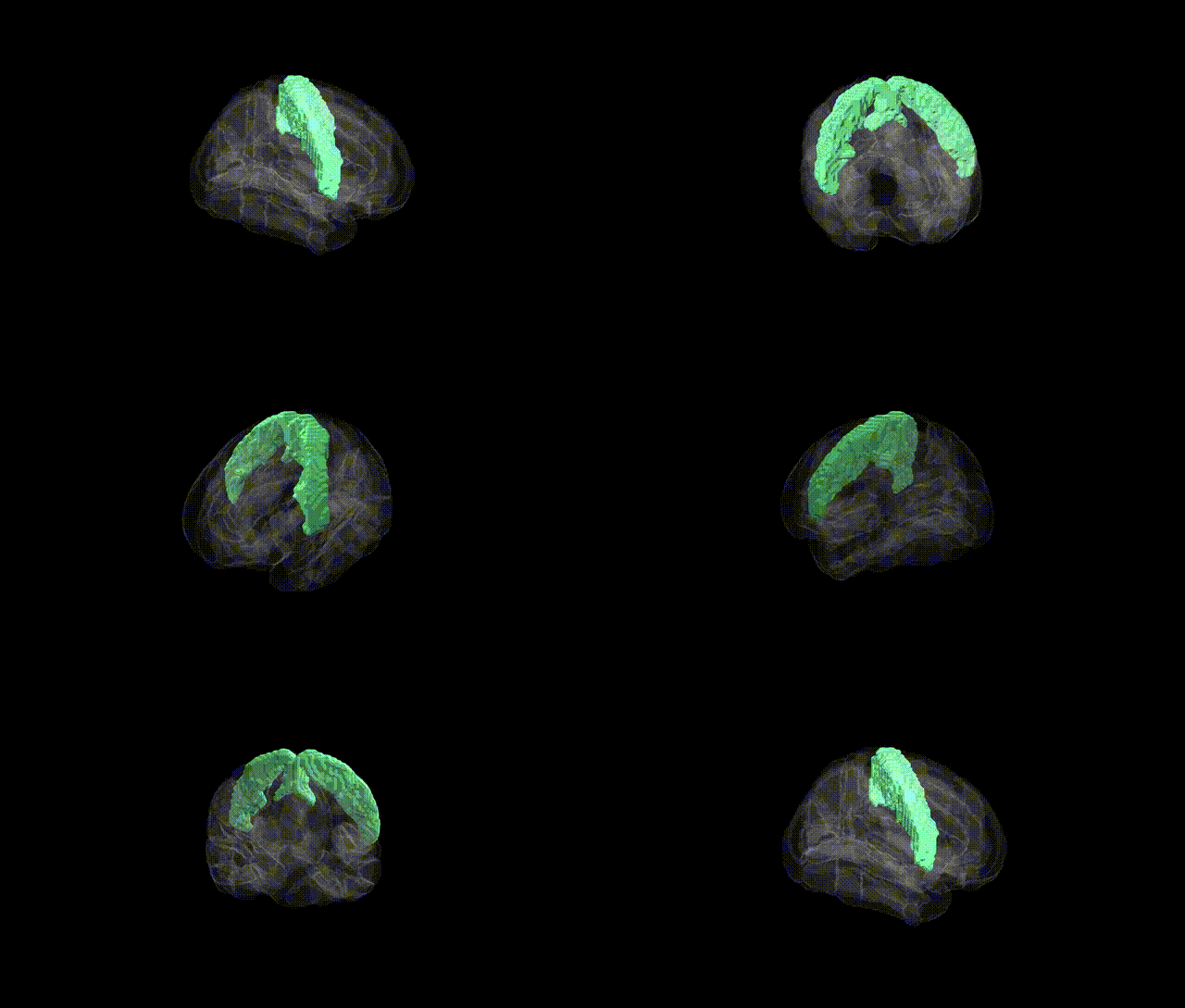
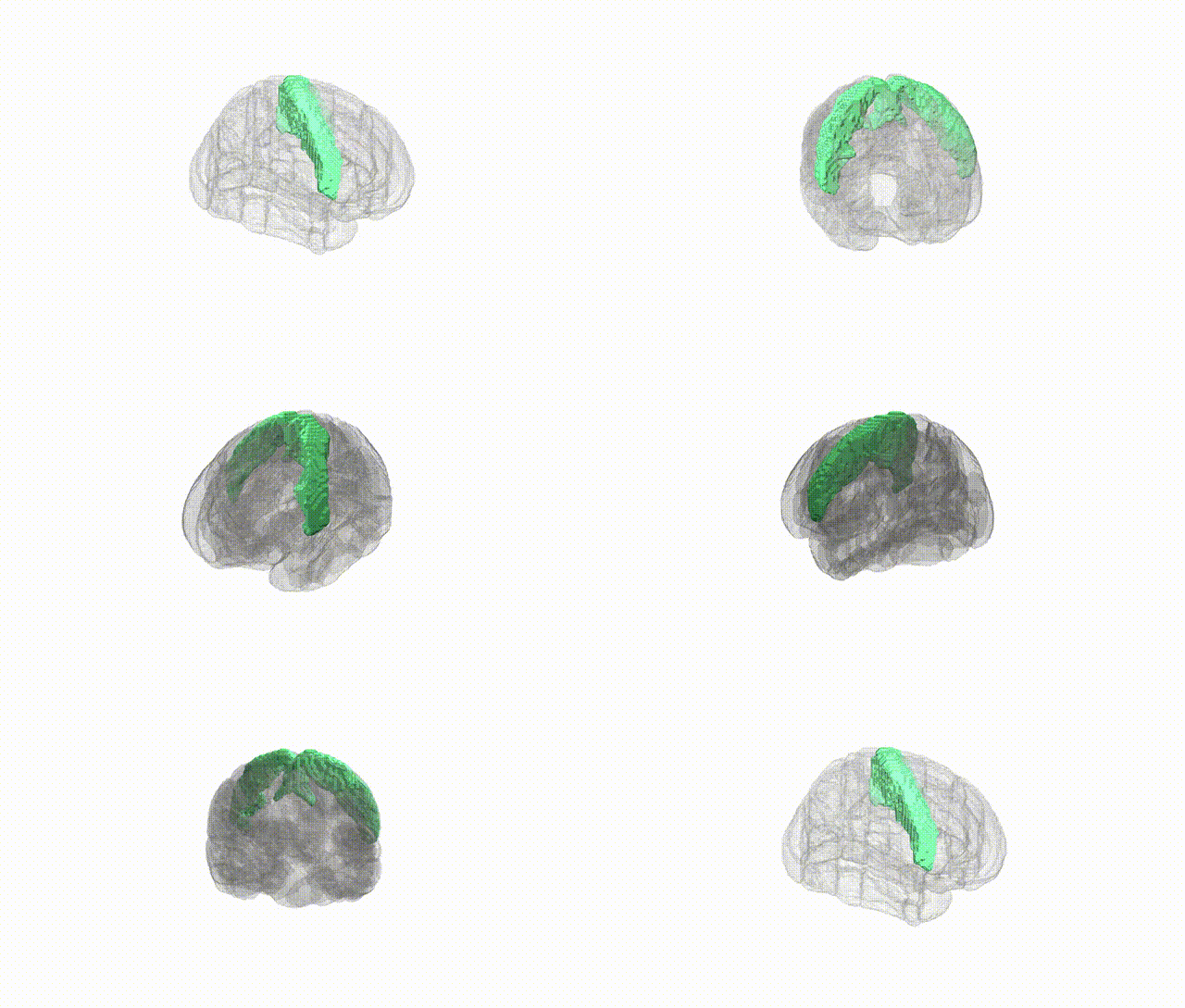
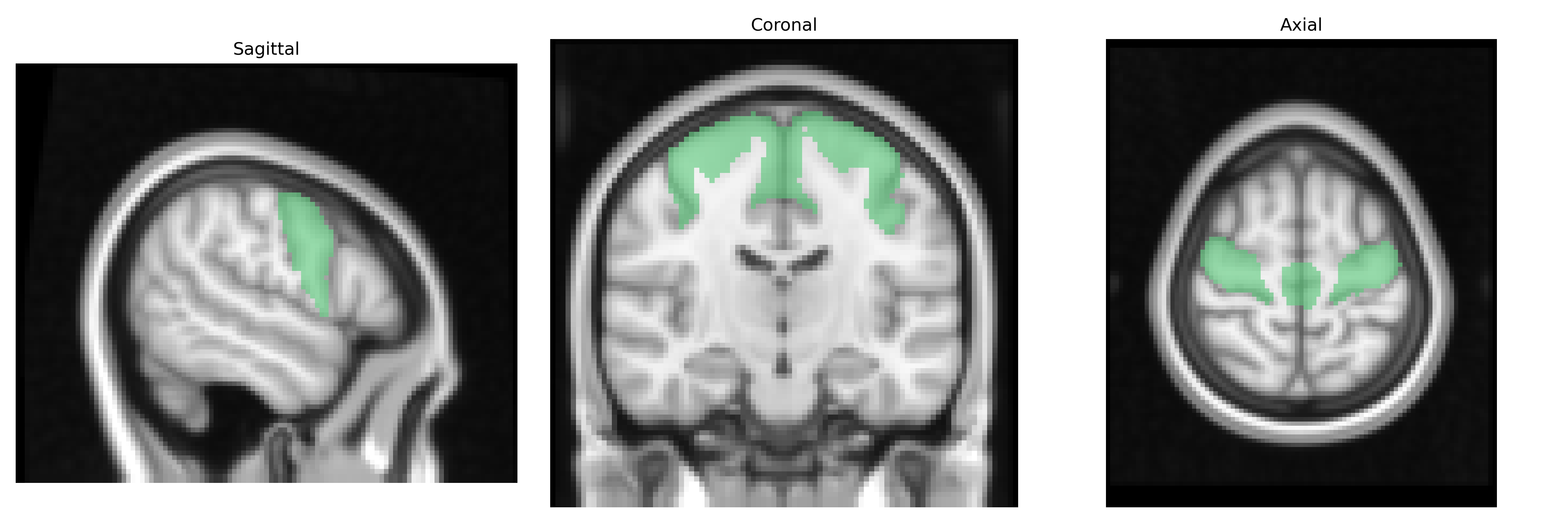
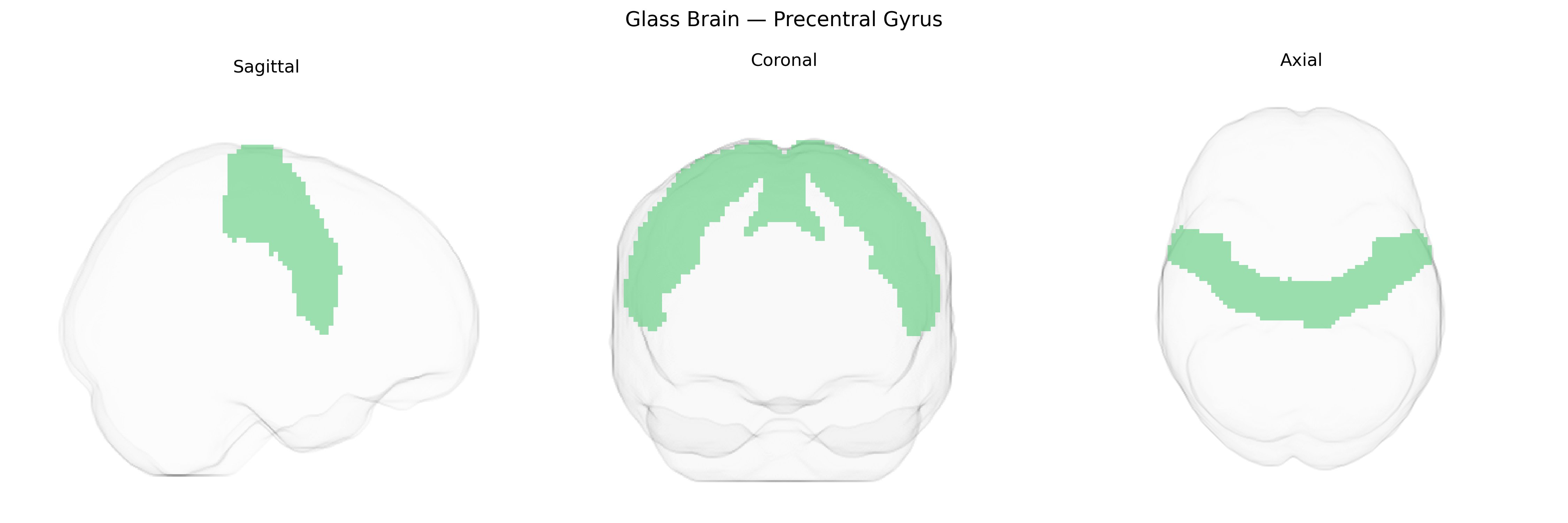
The bilateral precentral gyrus is a cortical region of the frontal lobe corresponding largely to the primary motor cortex (M1), located anterior to the central sulcus and extending along the lateral aspect of the hemisphere. It contains a somatotopic representation of the body, with neurons organized into functional columns that control voluntary movement via projections to the corticospinal and corticobulbar tracts. The precentral gyrus integrates inputs from premotor and supplementary motor areas, as well as sensory cortices, to plan and execute fine, goal-directed movements, particularly of the contralateral limbs and face. Lesions in this region commonly produce contralateral motor deficits, including weakness or paralysis and impaired motor coordination. There is no direct Wikipedia article for the “precentral gyrus” as a standalone entry; a closely related and encompassing structure is the Primary motor cortex.
The bilateral precentral gyrus, corresponding largely to primary motor cortex in the HarvardOxford cort maxprob thr25 2 mm atlas, has been implicated in multiple genetic and GWAS findings, particularly through studies of motor function, neurodevelopmental and neuropsychiatric disorders, and brain imaging genetics. Variants in genes affecting corticospinal tract and motor system development (e.g., CNTNAP2, FOXP2, DCC, ROBO family genes, and glutamatergic and GABAergic signaling genes) have been associated with structural and functional variation in precentral gyrus, including cortical thickness and activation during motor tasks. Imaging-genetic GWAS (such as UK Biobank-based studies) have linked common variants in neurodevelopmental and synaptic genes to precentral gyrus morphometry and functional connectivity, and alterations in this region have been genetically associated with disorders involving motor control or motor-cognitive integration, including ADHD, autism spectrum disorder, Tourette syndrome, dystonia, Parkinson’s disease, and schizophrenia. In ALS and other motor neuron diseases, risk variants and polygenic burden show convergent effects on motor cortex, with precentral gyrus atrophy and hyperexcitability partly mediating genetic risk. Large-scale GWAS of handedness and motor skill learning also implicate genetic variation influencing precentral gyrus lateralization and function. Overall, genetic studies support the precentral gyrus as a key locus where polygenic influences on motor control, neurodevelopment, and neuropsychiatric risk converge, although specific locus-to-region mappings remain probabilistic and are often mediated through broader motor and frontoparietal networks rather than region-exclusive effects.
Overview generated by GPT-4o (2026).
Region ID: 7
Hemisphere: bilateral
Atlas: HarvardOxford cort maxprob thr25 2mm
Full Quality Version: Download MP4
Full Quality Version: Download MP4
Wali Sidiqyar*, Gaurav Rudravaram*, Elyssa M. McMaster, Trent M. Schwartz, Adam M. Saunders, Kurt G. Schilling, Bennett A. Landman "Introducing SPINS: A Shared Public Visualization Library of Neuroanatomical Structures." Medical Imaging with Deep Learning- short paper
This resource is licensed under CC0 1.0 Universal (Public Domain).