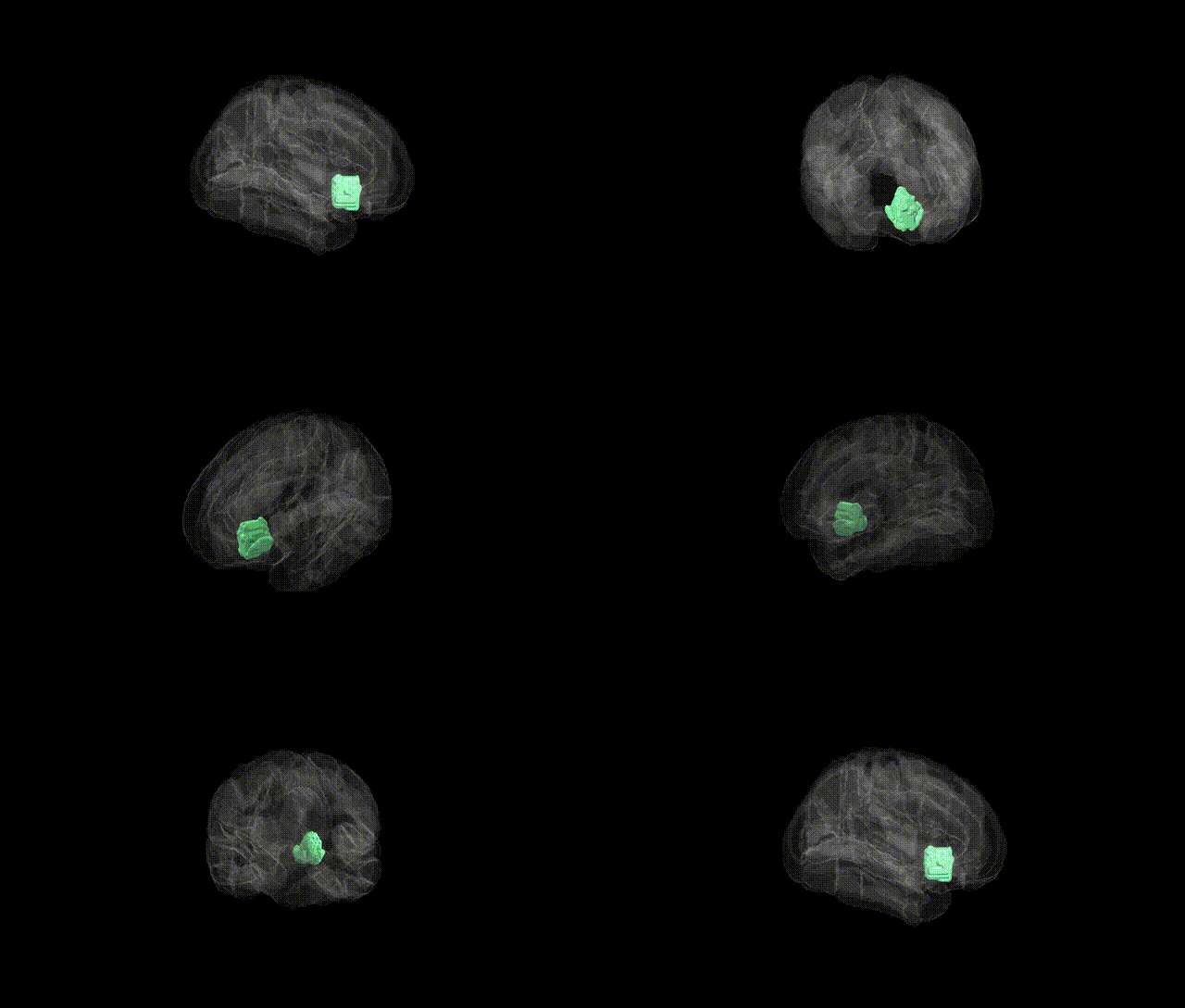
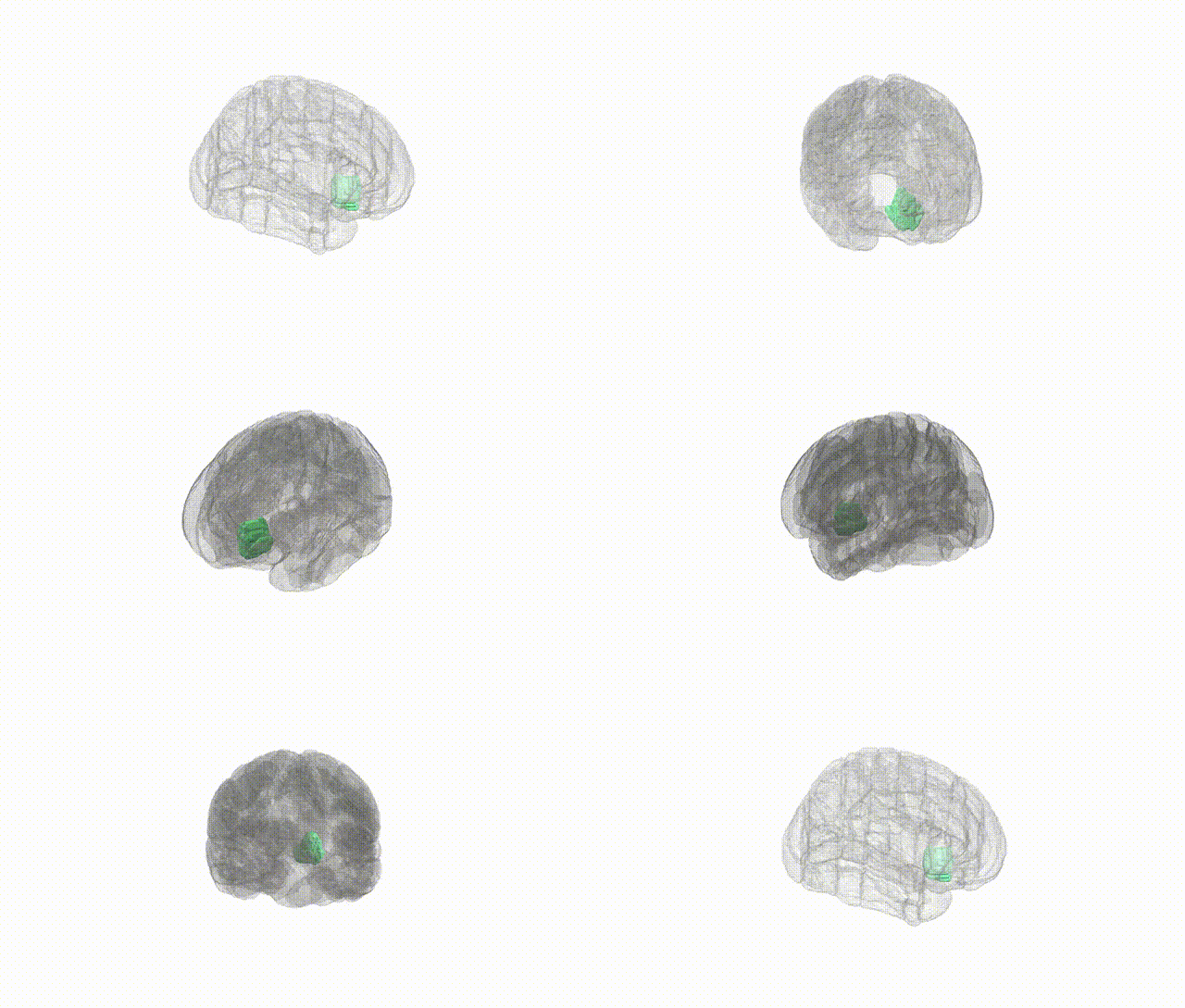
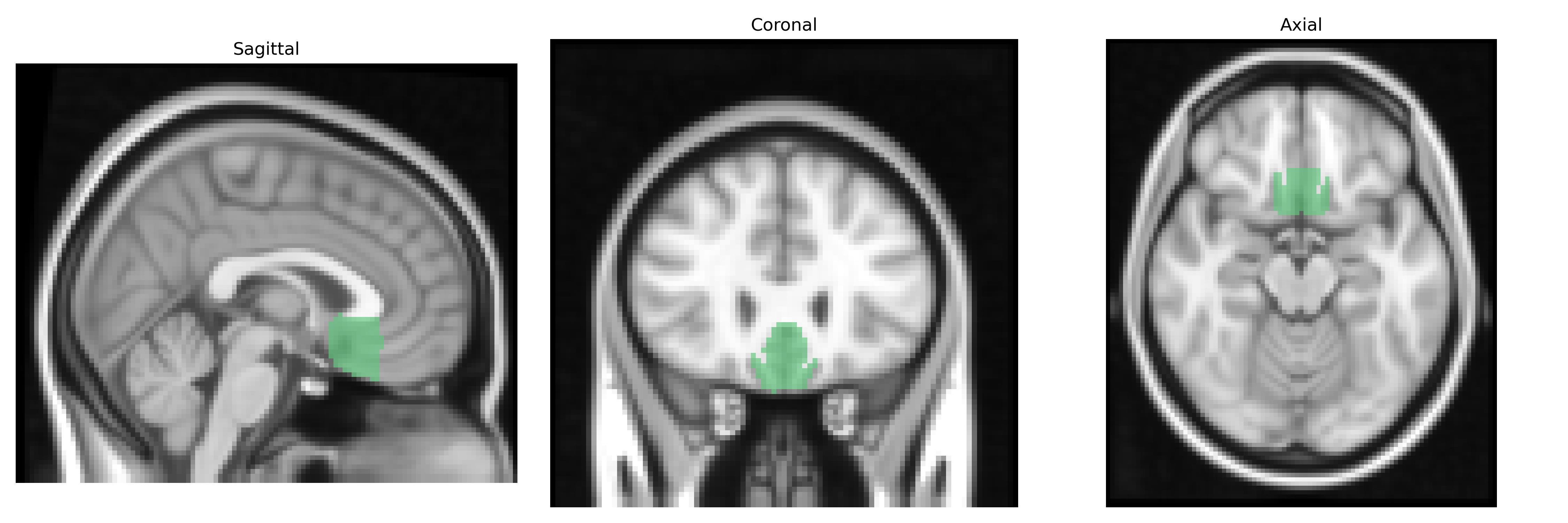
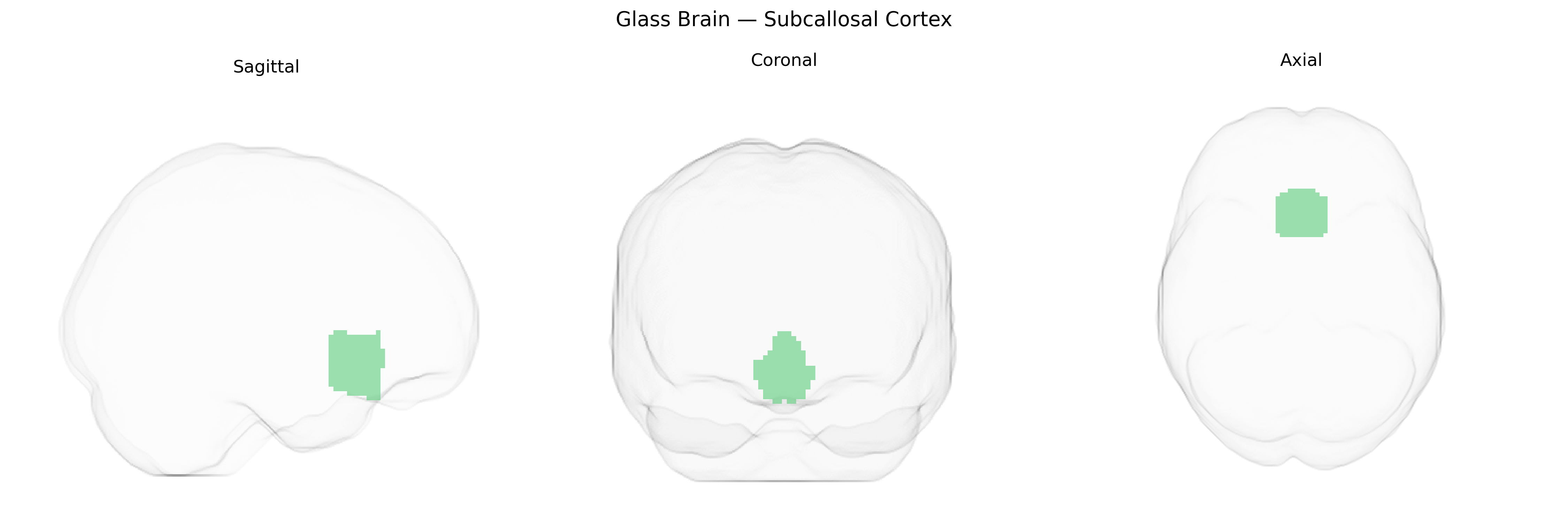
The bilateral subcallosal cortex, as defined in the Harvard–Oxford Cortical Structural Atlas, refers to gray matter regions located ventral to the corpus callosum in the medial frontal lobe, encompassing parts of the subgenual and adjacent cingulate areas. This region lies anterior to the hypothalamus and superior to the orbitofrontal cortex, and is closely associated with limbic circuitry involved in mood regulation, emotional processing, and autonomic control. Structurally, it includes portions of Brodmann area 25 (subgenual cingulate cortex) and nearby medial frontal cortex, and has been implicated in major depressive disorder and targeted in deep brain stimulation for treatment-resistant depression. There is no direct Wikipedia article for “Subcallosal Cortex”; a closely related and overlapping structure is the Subgenual cingulate cortex.
The bilateral Subcallosal Cortex, encompassing the subgenual anterior cingulate and adjacent ventromedial prefrontal regions in the Harvard-Oxford atlas, has been repeatedly implicated in genetic studies of mood and psychiatric disorders, often via imaging genetics and large-scale GWAS of depression and related traits. Variants in genes involved in synaptic function and stress response—such as SLC6A4 (serotonin transporter), BDNF (notably Val66Met), and FKBP5—have been associated with structural and functional differences in this region, as well as altered responsiveness to antidepressant treatment and deep brain stimulation for treatment-resistant depression. Large GWAS meta-analyses of major depressive disorder and negative affect-related traits (e.g., from the Psychiatric Genomics Consortium and UK Biobank) have linked polygenic risk scores for depression, neuroticism, and anxiety to altered subcallosal and subgenual cingulate volume and activity, supporting a genetically mediated vulnerability of this region in affective regulation. Additional work has connected genetic risk for bipolar disorder, suicidality, and stress-related disorders to altered connectivity and morphology in the subcallosal/subgenual cingulate area, suggesting that this region acts as a key cortical hub where common polygenic influences on mood, emotional processing, and treatment response converge.
Overview generated by GPT-4o (2026).
Region ID: 27
Hemisphere: bilateral
Atlas: HarvardOxford cort maxprob thr25 2mm
Full Quality Version: Download MP4
Full Quality Version: Download MP4
Wali Sidiqyar*, Gaurav Rudravaram*, Elyssa M. McMaster, Trent M. Schwartz, Adam M. Saunders, Kurt G. Schilling, Bennett A. Landman "Introducing SPINS: A Shared Public Visualization Library of Neuroanatomical Structures." Medical Imaging with Deep Learning- short paper
This resource is licensed under CC0 1.0 Universal (Public Domain).