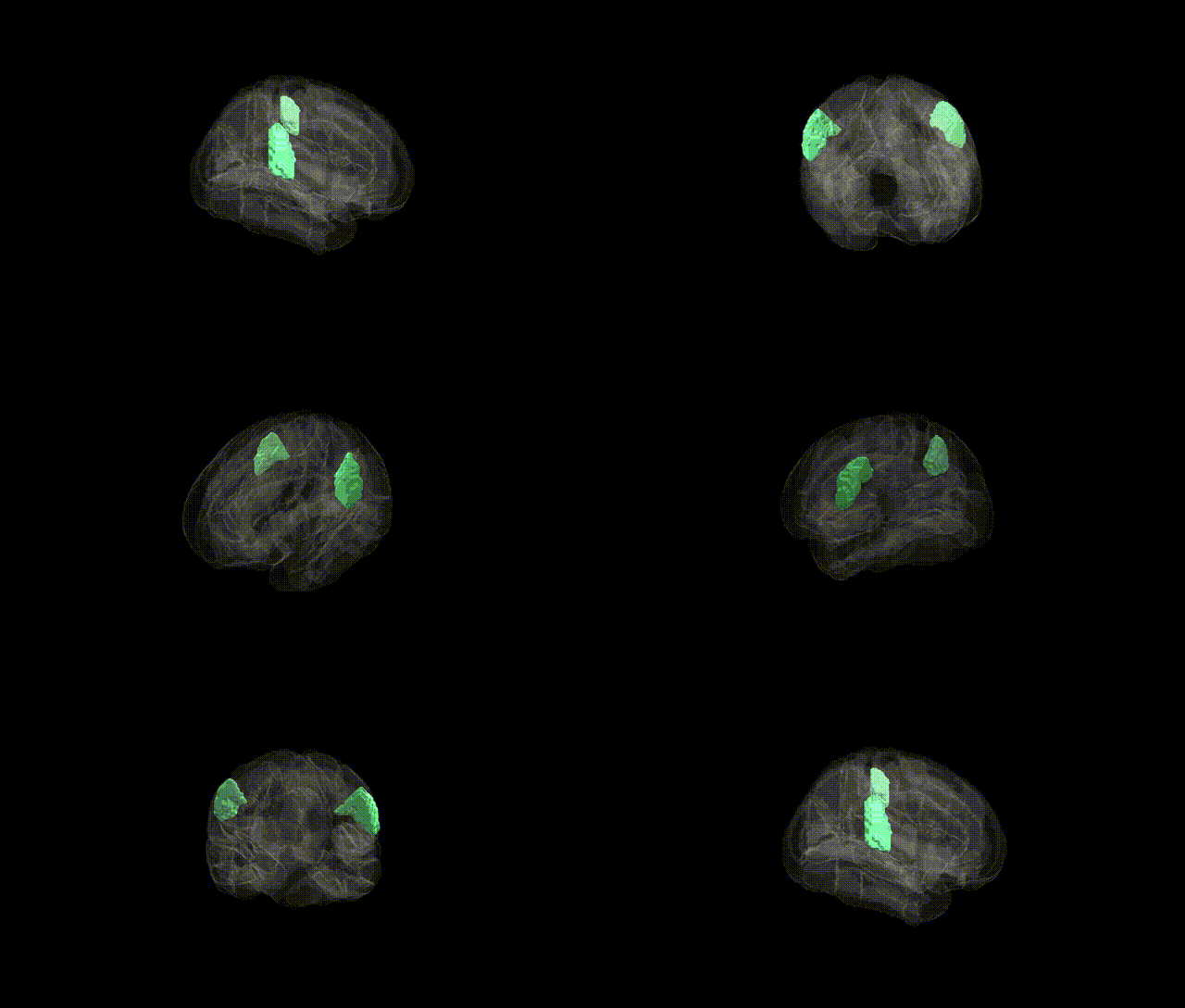
The bilateral Supramarginal Gyrus, anterior division, as defined in the Harvard-Oxford cortical atlas (maxprob thr25, 2 mm), corresponds to the rostral portion of the supramarginal gyrus, a curved cortical structure forming part of the inferior parietal lobule near the posterior end of the lateral (Sylvian) fissure. This anterior segment is involved in multimodal integration of somatosensory, auditory, and visual information, and plays key roles in phonological processing, language perception, and aspects of social cognition such as empathy and perspective-taking. It participates in dorsal language pathways and sensorimotor integration for speech, and is functionally connected with frontal and temporal language areas as well as attentional networks. There is no direct Wikipedia article for this specific atlas-defined subdivision; a closely related structure is the Supramarginal gyrus.
The bilateral supramarginal gyrus, anterior division, a key node in language, social cognition, and attention networks, shows convergent genetic associations from imaging-genetics and GWAS-based neuroimaging studies: common variants influencing cortical surface area and thickness in this region have been identified in large ENIGMA and UK Biobank analyses, implicating genes involved in neurodevelopment (e.g., variants near genes regulating axon guidance, synaptic plasticity, and neuronal proliferation) and overlapping with global cortical morphology loci. Polygenic architectures linked to general cognitive ability, educational attainment, reading and language skills, and working memory show enriched effects on supramarginal morphology and functional activation, consistent with the region’s role in phonological processing and verbal working memory. Genetic risk for neurodevelopmental and psychiatric disorders—including autism spectrum disorder, attention-deficit/hyperactivity disorder, schizophrenia, and major depressive disorder—has been associated with structural and functional alterations in the supramarginal gyrus, with some studies reporting that higher polygenic risk scores for these conditions correlate with reduced cortical thickness or altered functional connectivity in this area. Moreover, GWAS of resting-state networks and task-related activations highlight loci influencing frontoparietal and language networks that encompass the anterior supramarginal gyrus, suggesting shared genetic influences across distributed systems. Overall, current evidence indicates that variation in this region’s structure and function is partly heritable, reflects distributed polygenic effects related to cognition and psychiatric vulnerability, and is influenced by genetic pathways that broadly regulate cortical development and synaptic organization rather than being driven by a single region-specific locus.
Overview generated by GPT-4o (2026).
Region ID: 19
Hemisphere: bilateral
Atlas: HarvardOxford cort maxprob thr25 2mm
Full Quality Version: Download MP4
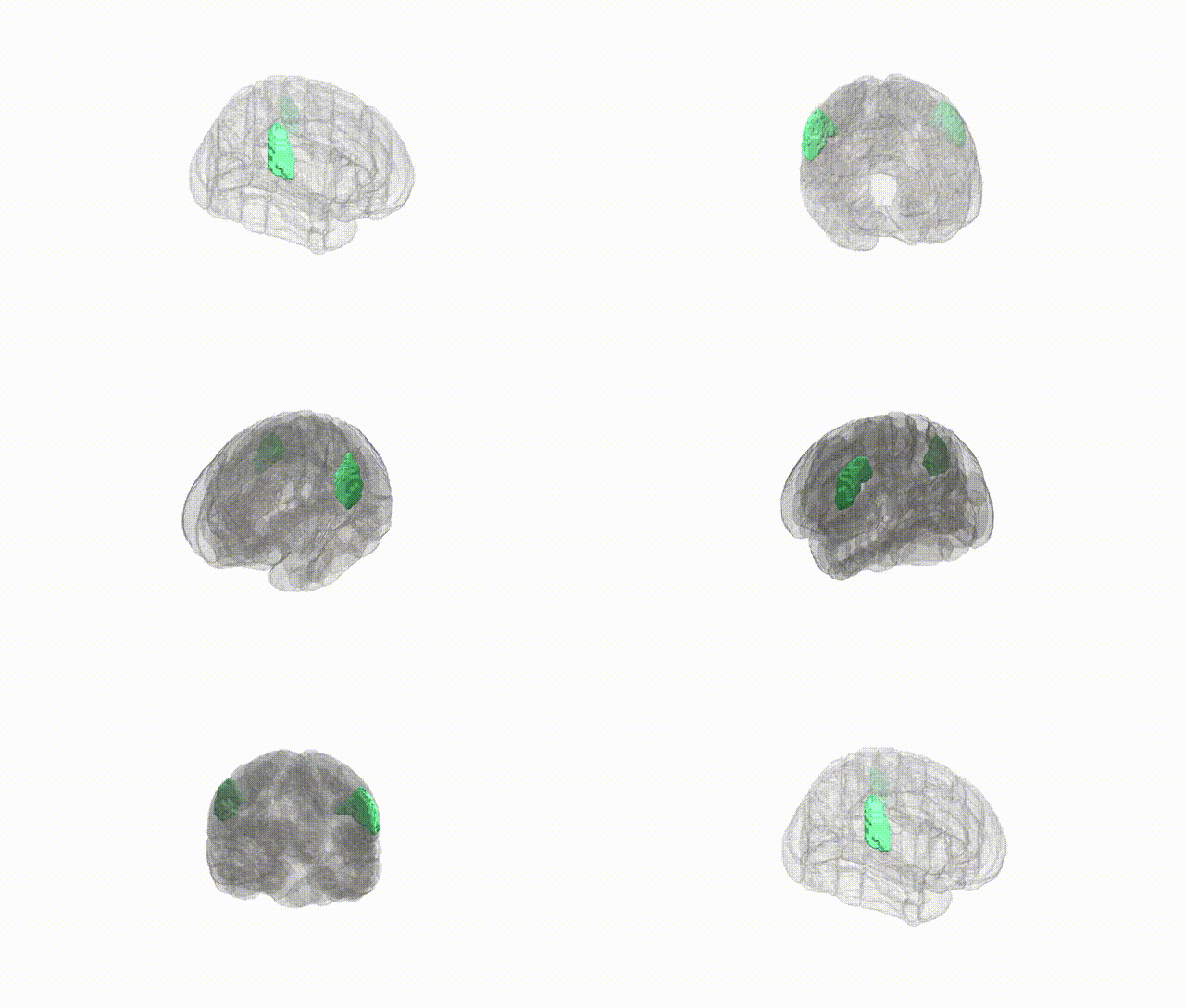
Full Quality Version: Download MP4
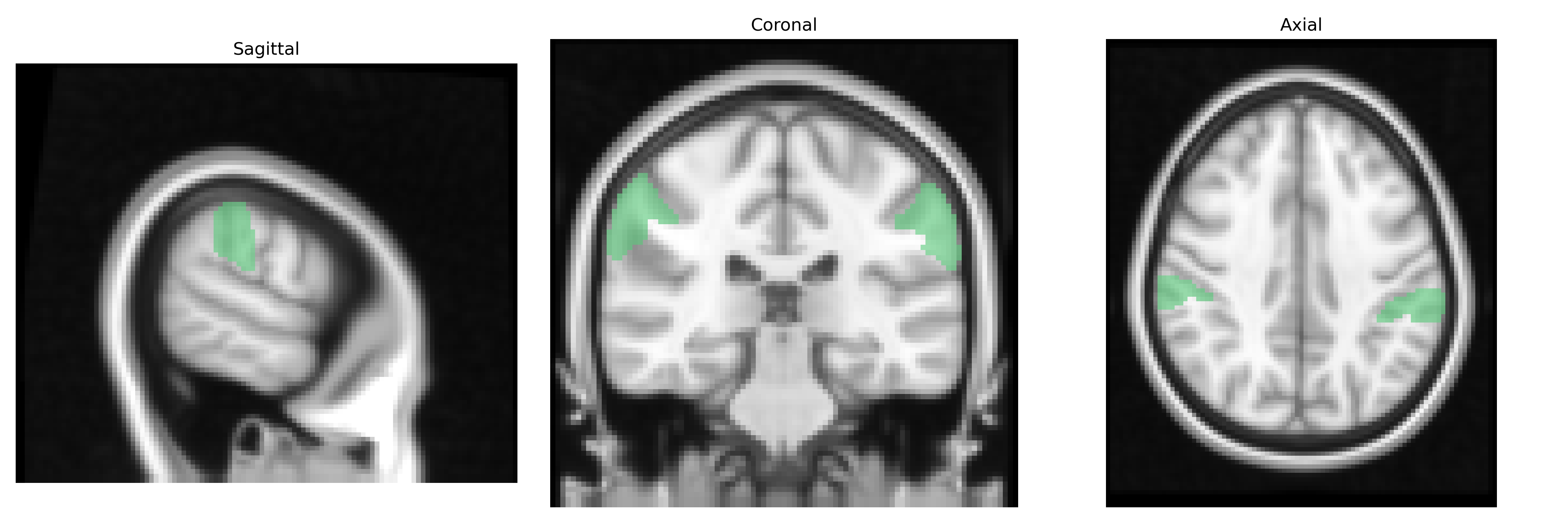
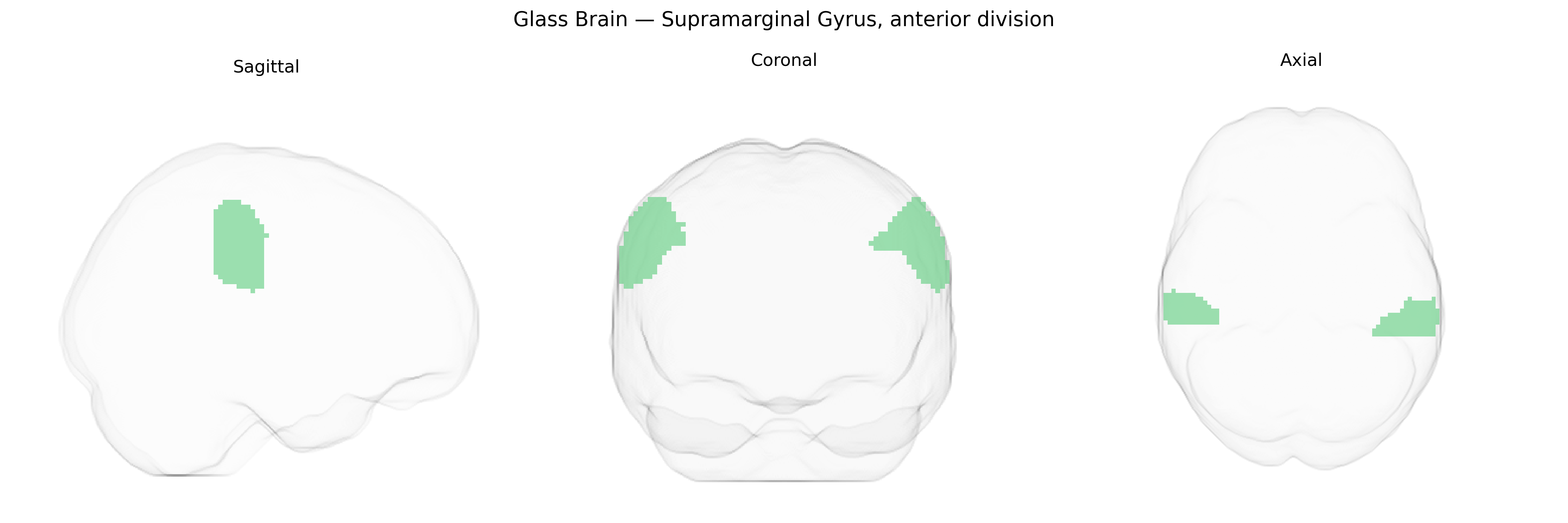
Wali Sidiqyar*, Gaurav Rudravaram*, Elyssa M. McMaster, Trent M. Schwartz, Adam M. Saunders, Kurt G. Schilling, Bennett A. Landman "Introducing SPINS: A Shared Public Visualization Library of Neuroanatomical Structures." Medical Imaging with Deep Learning- short paper
This resource is licensed under CC0 1.0 Universal (Public Domain).