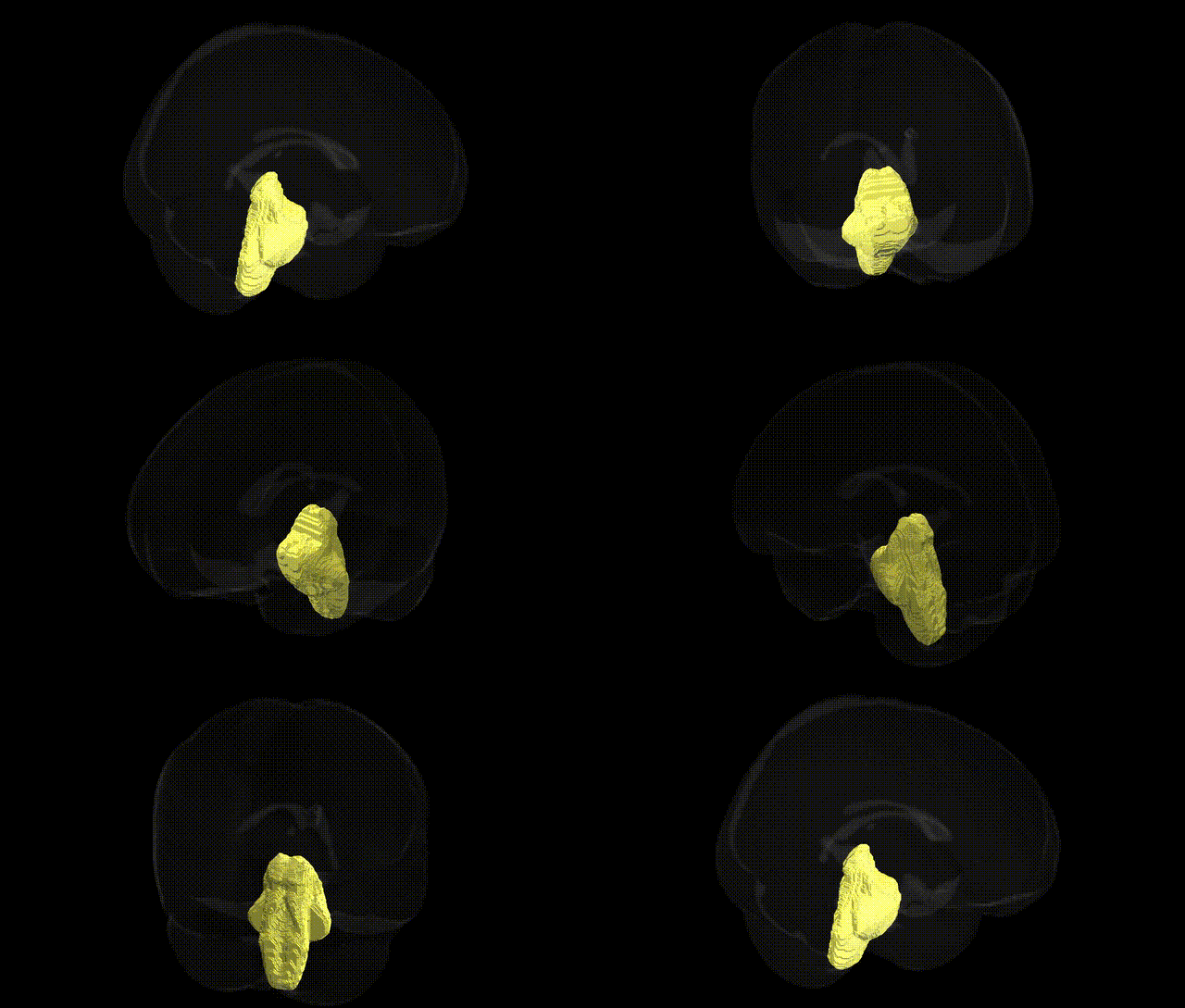
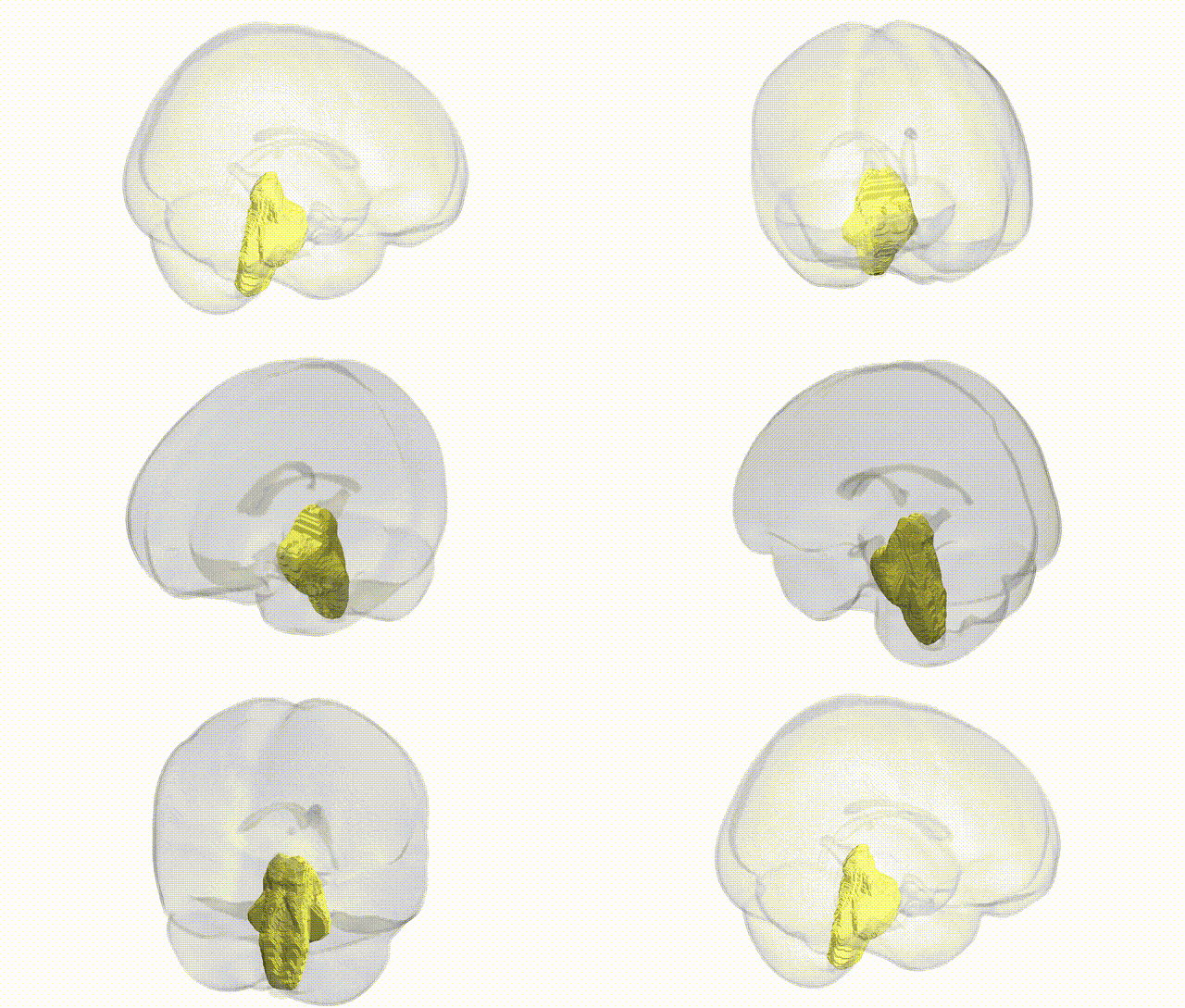
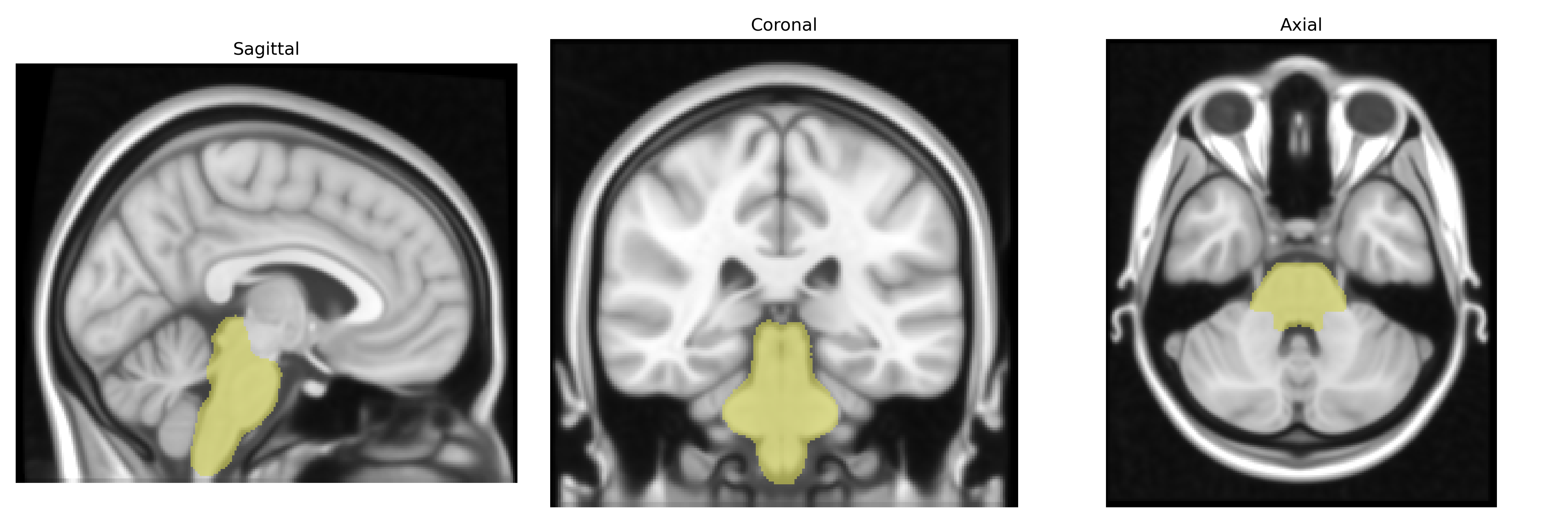
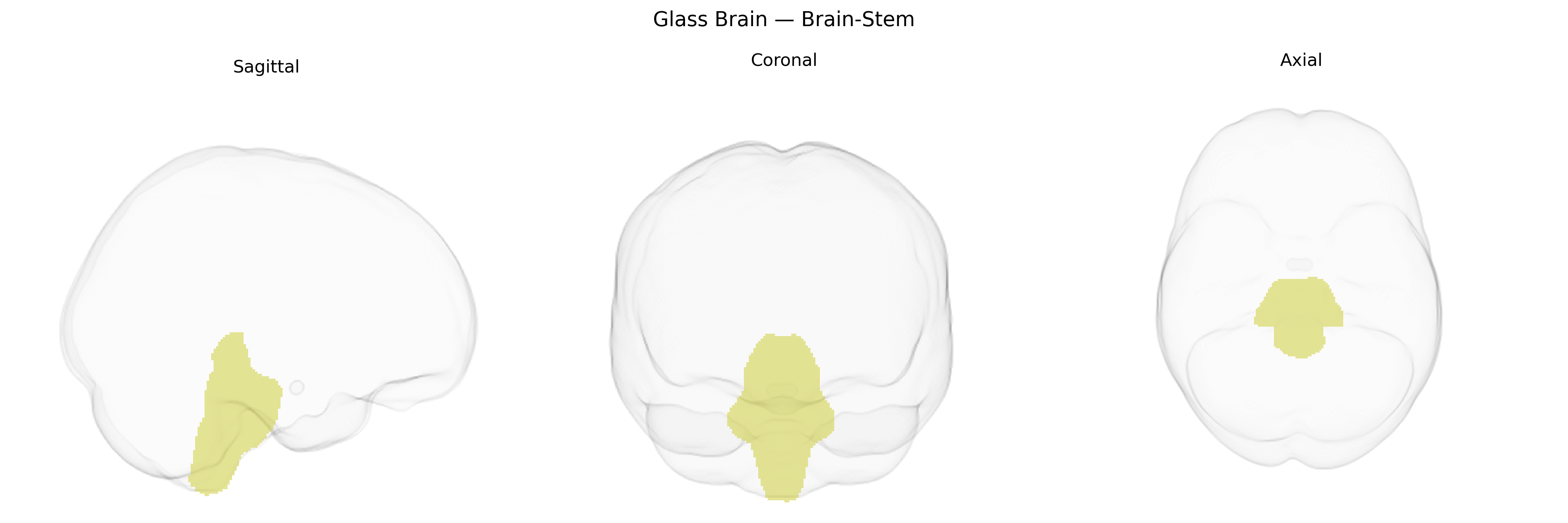
The bilateral brainstem, as defined in the Harvard-Oxford subcortical atlas, encompasses midline and paramedian structures extending from the midbrain through the pons to the medulla oblongata, serving as a major conduit between the cerebrum, cerebellum, and spinal cord. It contains ascending sensory and descending motor pathways, nuclei of most cranial nerves, and critical autonomic centers regulating cardiovascular, respiratory, and arousal functions. Functionally, the brainstem integrates somatic and visceral information, supports basic life-sustaining processes, and participates in sleep-wake regulation and motor control via reticular and monoaminergic systems. As an atlas region, the bilateral brainstem aggregates these closely apposed structures into a single functional group for neuroimaging analysis. There is no single dedicated page for “bilateral brainstem,” but it is part of the Brainstem.
The bilateral brainstem, encompassing midbrain, pons, and medulla regions captured in the Harvard-Oxford subcortical atlas, shows genetic associations largely through GWAS of traits reflecting autonomic regulation, sleep–wake control, and neurodegeneration rather than direct “brainstem volume” loci. Variants in genes affecting monoaminergic neurotransmission (e.g., SLC6A4, MAOA, DRD2 and other dopaminergic/serotonergic genes) have been linked to depression, anxiety, and suicidality, consistent with involvement of raphe and locus coeruleus nuclei; similarly, polygenic risk for major depressive disorder and schizophrenia shows imaging-genetic correlations with altered brainstem functional connectivity and signal properties. GWAS of neurodegenerative disorders with prominent brainstem pathology, including Parkinson’s disease (e.g., SNCA, LRRK2, GBA) and dementia with Lewy bodies, implicate loci influencing α‑synuclein biology and lysosomal function that correspond to early involvement of substantia nigra and other brainstem nuclei. Sleep-related traits, such as REM sleep behavior disorder and obstructive sleep apnea, show associations with genes related to synaptic function, neuroinflammation, and craniofacial/airway structure, aligning with brainstem control of sleep atonia and respiratory rhythm. Imaging-genetics studies have also reported heritable variation in brainstem volume and microstructure, with modest polygenic contributions overlapping with cardiovascular and blood pressure loci, reflecting the brainstem’s role in baroreflex and autonomic homeostasis.
Overview generated by GPT-4o (2026).
Region ID: 8
Hemisphere: bilateral
Atlas: HarvardOxford sub maxprob thr25 1mm
Full Quality Version: Download MP4
Full Quality Version: Download MP4
Wali Sidiqyar*, Gaurav Rudravaram*, Elyssa M. McMaster, Trent M. Schwartz, Adam M. Saunders, Kurt G. Schilling, Bennett A. Landman "Introducing SPINS: A Shared Public Visualization Library of Neuroanatomical Structures." Medical Imaging with Deep Learning- short paper
This resource is licensed under CC0 1.0 Universal (Public Domain).