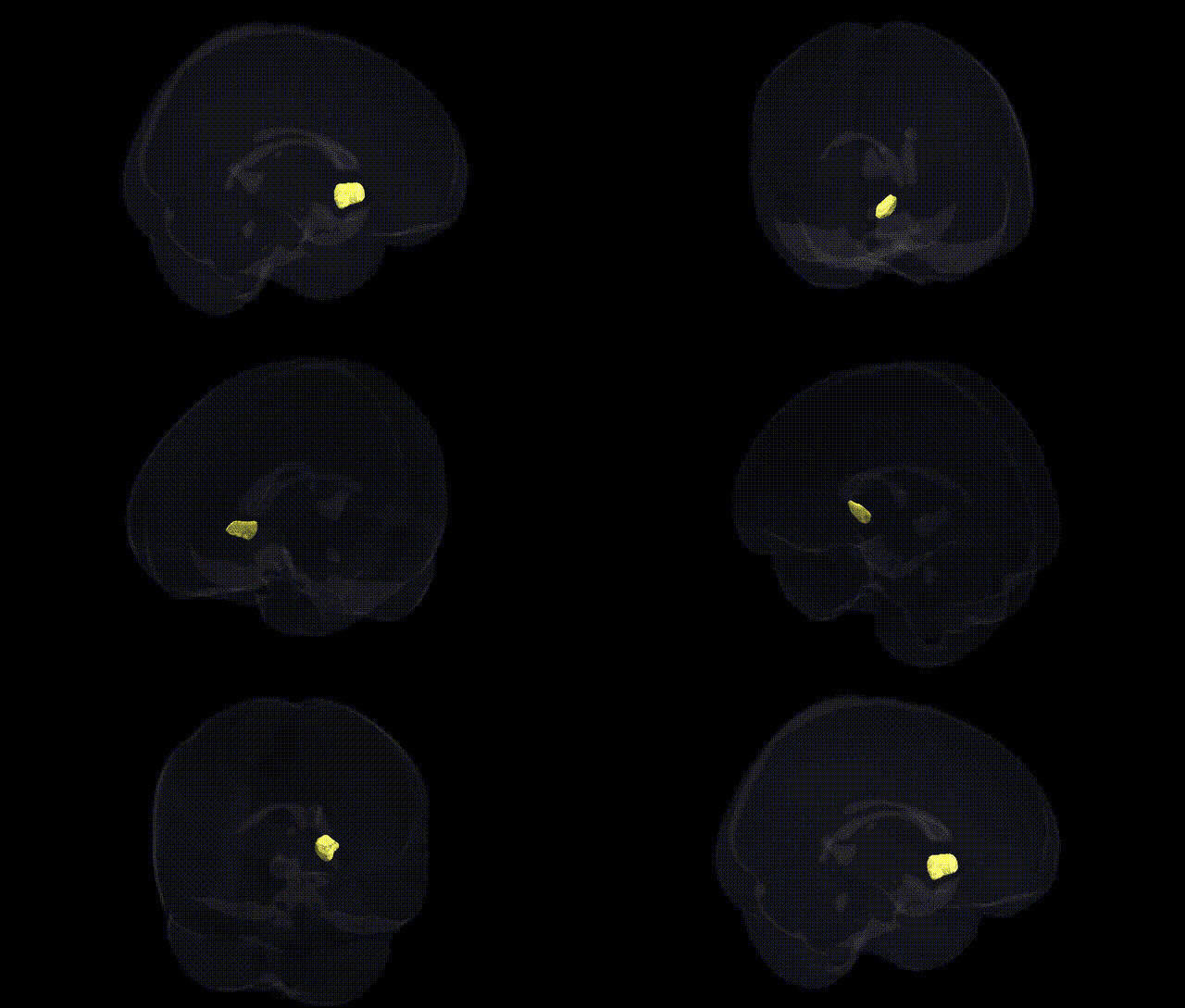
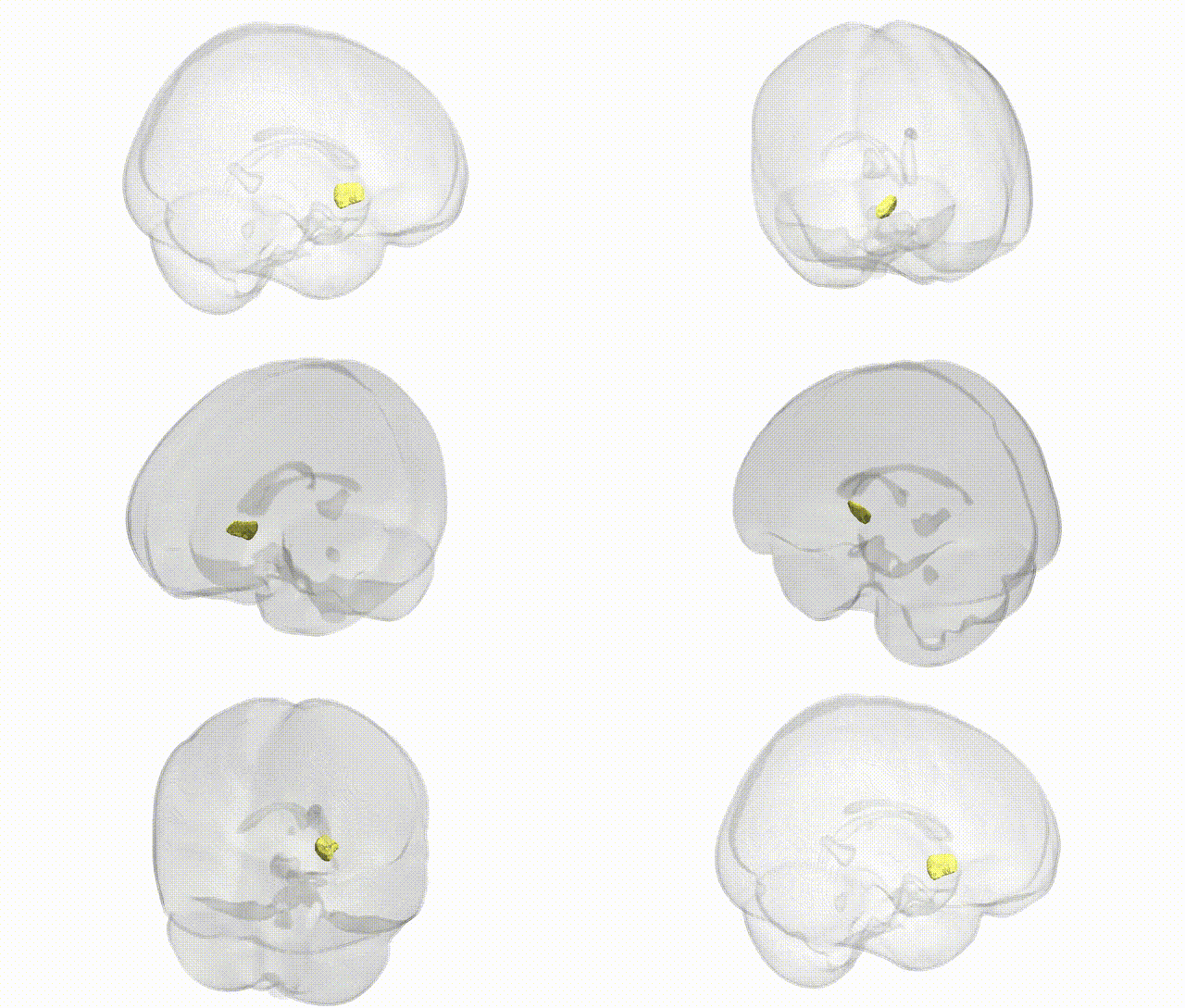
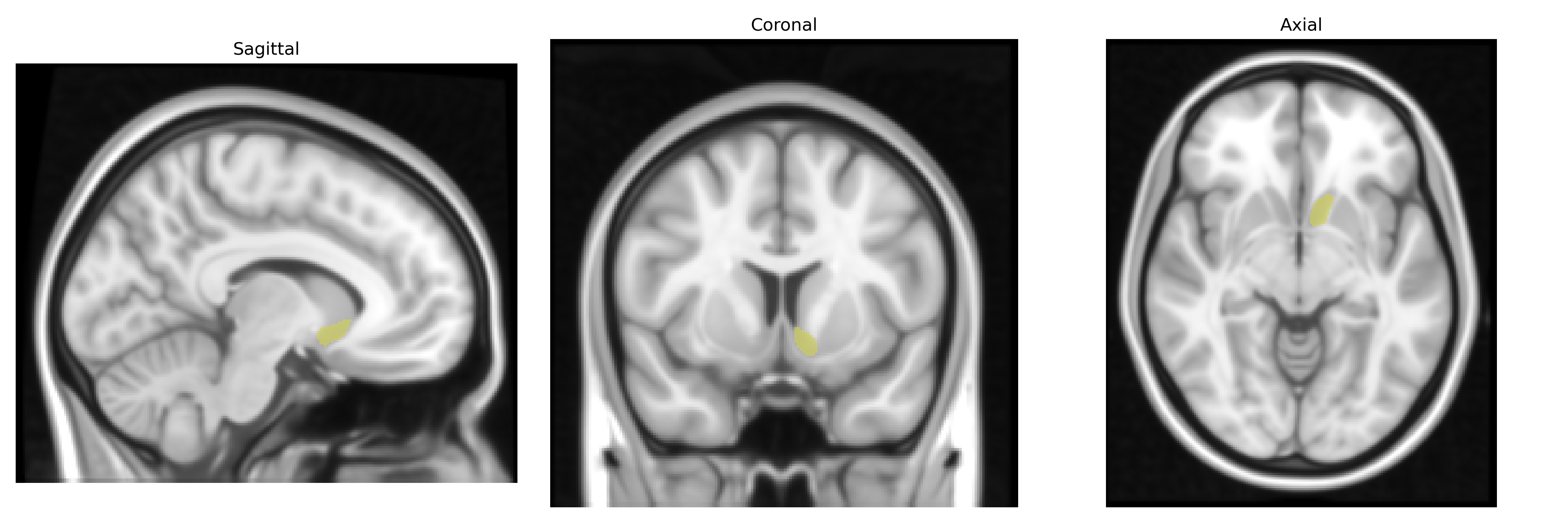
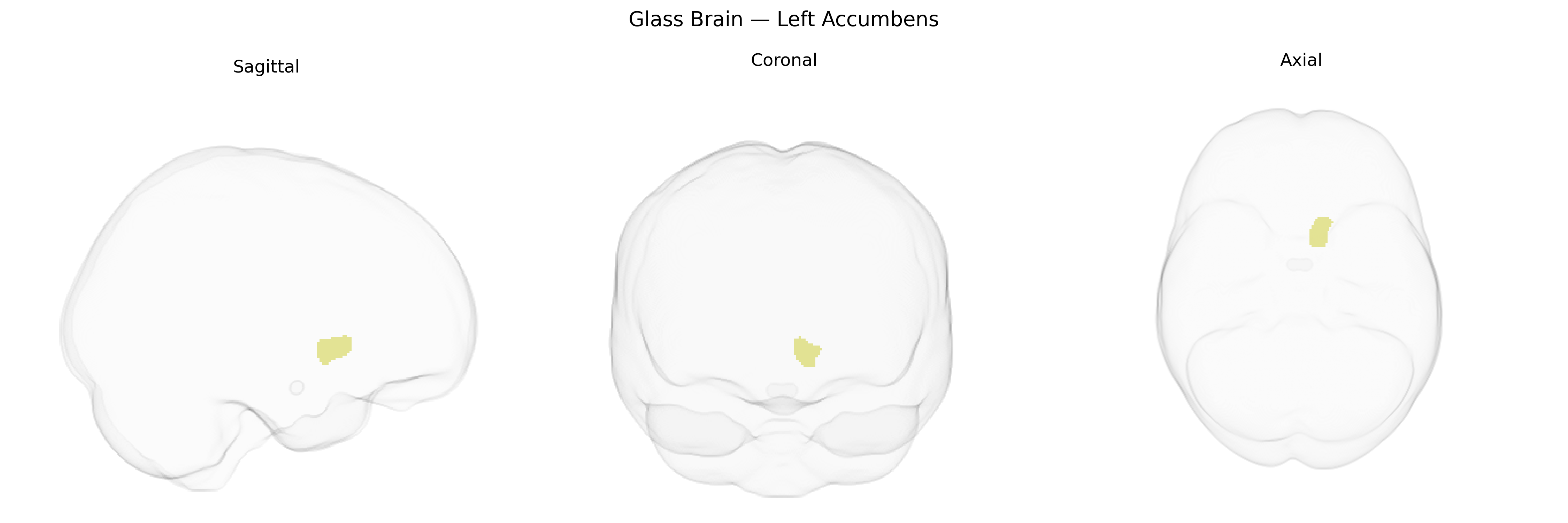
The bilateral Left Accumbens region in the Harvard-Oxford subcortical atlas corresponds to the nucleus accumbens, a key component of the ventral striatum located at the junction of the caudate and putamen near the anterior limb of the internal capsule. It is heavily innervated by dopaminergic projections from the ventral tegmental area and receives glutamatergic input from prefrontal cortex, amygdala, and hippocampus, integrating motivational, emotional, and contextual information. Functionally, the nucleus accumbens is central to reward processing, reinforcement learning, motivation, and the regulation of goal-directed behavior, and is critically implicated in addiction, mood disorders, and hedonic tone. As a bilateral structure, both left and right accumbens contribute to these processes, though subtle hemispheric differences in connectivity and functional specialization have been reported. Nucleus accumbens
The bilateral left accumbens (nucleus accumbens) in the HarvardOxford subcortical atlas is a key component of the ventral striatum and reward circuitry, and genetic studies consistently implicate it in addiction, mood, and cognitive traits. GWAS and imaging-genetics work have linked variation in accumbens volume and function to common polymorphisms in dopaminergic and glutamatergic genes, including DRD2/ANKK1, DRD3, SLC6A3 (DAT1), COMT, and GRIN2B, as well as to neurodevelopmental and synaptic genes such as BDNF, CACNA1C, and several loci near KIAA0319 and FOXP2 for cognitive and language-related traits. Large-scale ENIGMA and UK Biobank analyses show that accumbens volume is heritable and associated with multiple genome-wide significant loci, some overlapping with schizophrenia and bipolar disorder risk regions, and with polygenic risk scores for major depression and substance use disorders. Genetic variants influencing accumbens structure and activation have been repeatedly implicated in alcohol, nicotine, and other substance dependence, pathological gambling and risk-taking, obesity and binge eating, and reward-related personality traits such as impulsivity and extraversion. Additional GWAS signal in and around the accumbens has been observed for anhedonia, generalized reward sensitivity, and response to psychotropic medications, reinforcing its role as a convergent node through which diverse risk alleles modulate motivational and affective processes.
Overview generated by GPT-4o (2026).
Region ID: 11
Hemisphere: bilateral
Atlas: HarvardOxford sub maxprob thr25 1mm
Full Quality Version: Download MP4
Full Quality Version: Download MP4
Wali Sidiqyar*, Gaurav Rudravaram*, Elyssa M. McMaster, Trent M. Schwartz, Adam M. Saunders, Kurt G. Schilling, Bennett A. Landman "Introducing SPINS: A Shared Public Visualization Library of Neuroanatomical Structures." Medical Imaging with Deep Learning- short paper
This resource is licensed under CC0 1.0 Universal (Public Domain).