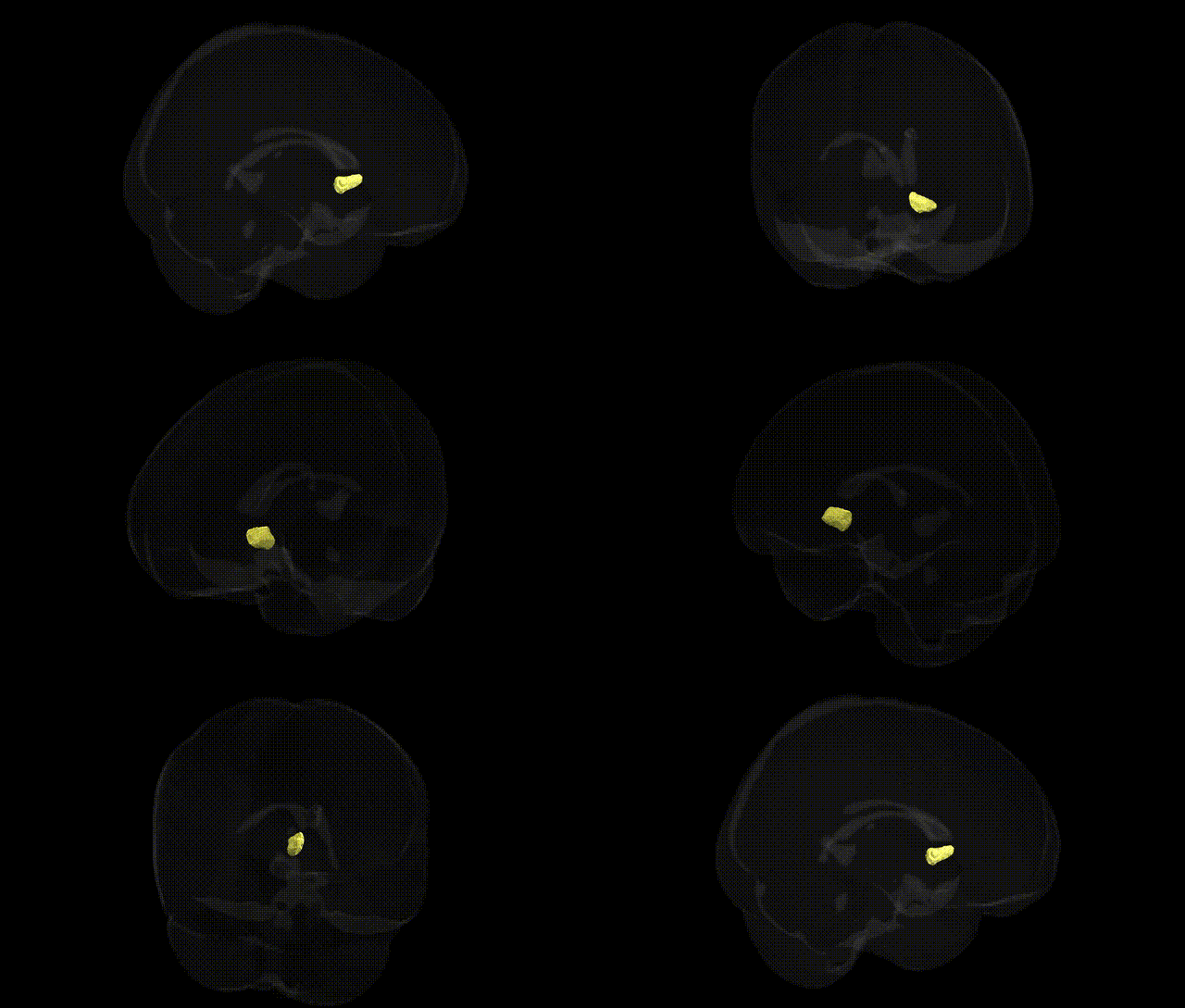
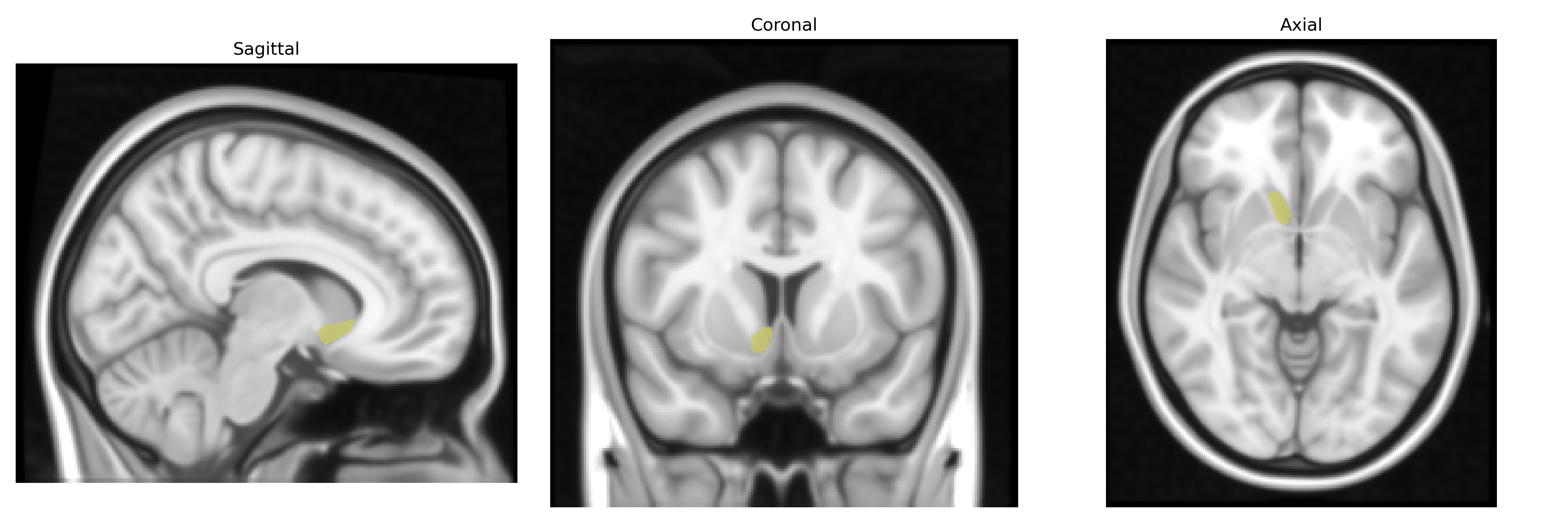
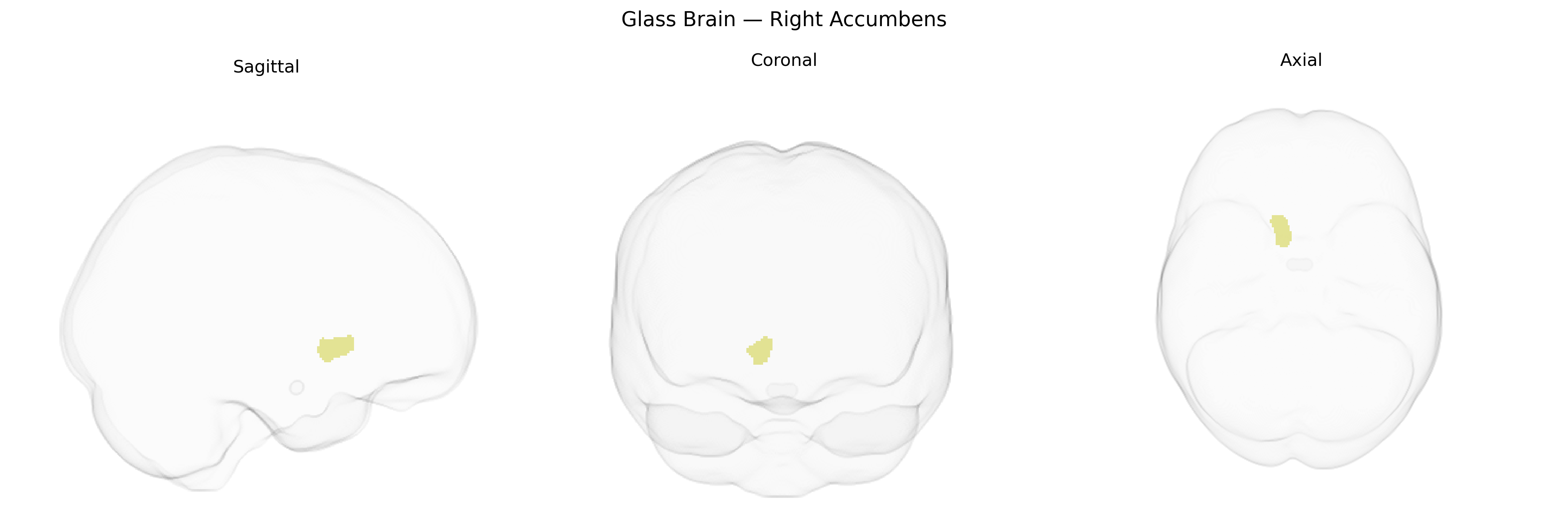
The bilateral Right Accumbens region in the Harvard-Oxford subcortical atlas corresponds to the right nucleus accumbens, a ventral striatal structure located at the junction of the caudate nucleus and putamen in the basal forebrain. It is a key component of the mesolimbic reward circuitry, receiving dense dopaminergic input from the ventral tegmental area and glutamatergic projections from prefrontal cortex, amygdala, and hippocampus, and projecting primarily to the ventral pallidum and hypothalamus. Functionally, the nucleus accumbens is crucial for reward processing, reinforcement learning, motivation, and the translation of limbic information into goal-directed behavior, and it plays a central role in addiction, affective regulation, and certain psychiatric disorders. There is no direct Wikipedia article specifically titled “Right Accumbens”; a closely related entry is Nucleus accumbens.
The bilateral right nucleus accumbens, a core component of the mesolimbic reward system as defined in the HarvardOxford subcortical atlas, has been repeatedly implicated in genetic studies of addiction, motivation, and mood-related traits. GWAS of brain structure have identified common variants influencing nucleus accumbens volume and morphology, including loci near genes involved in synaptic signaling and neurodevelopment (such as those in glutamatergic and dopaminergic pathways), though findings are typically shared across bilateral accumbens rather than strictly lateralized to the right side. Polygenic risk for substance use disorders (e.g., alcohol and nicotine dependence) and behavioral addictions has been associated with altered accumbens activation and volume, and variants in genes like DRD2, OPRM1, and others in dopamine and opioid systems show convergent evidence linking genetic risk to functional changes in accumbens-based reward processing. GWAS of depression, anhedonia, and related affective traits, as well as large-scale imaging genetics consortia (e.g., ENIGMA, UK Biobank), report that polygenic load for major depressive disorder, schizophrenia, and ADHD is associated with accumbens structural and functional differences, reflecting this region’s genetic sensitivity in mood and psychosis-spectrum disorders. Additionally, genetic studies of body mass index, obesity, and eating behavior highlight the accumbens as a key mediator of reward-related overeating, with risk alleles in genes such as FTO and MC4R indirectly linked to accumbens responsivity to food cues. Overall, imaging-genetic and GWAS findings converge on the nucleus accumbens—including the right accumbens—as a genetically modulated hub for reward, motivation, addiction vulnerability, and mood dysregulation, though most associations are region-level and bilateral rather than specific to the right hemisphere.
Overview generated by GPT-4o (2026).
Region ID: 21
Hemisphere: bilateral
Atlas: HarvardOxford sub maxprob thr25 1mm
Full Quality Version: Download MP4
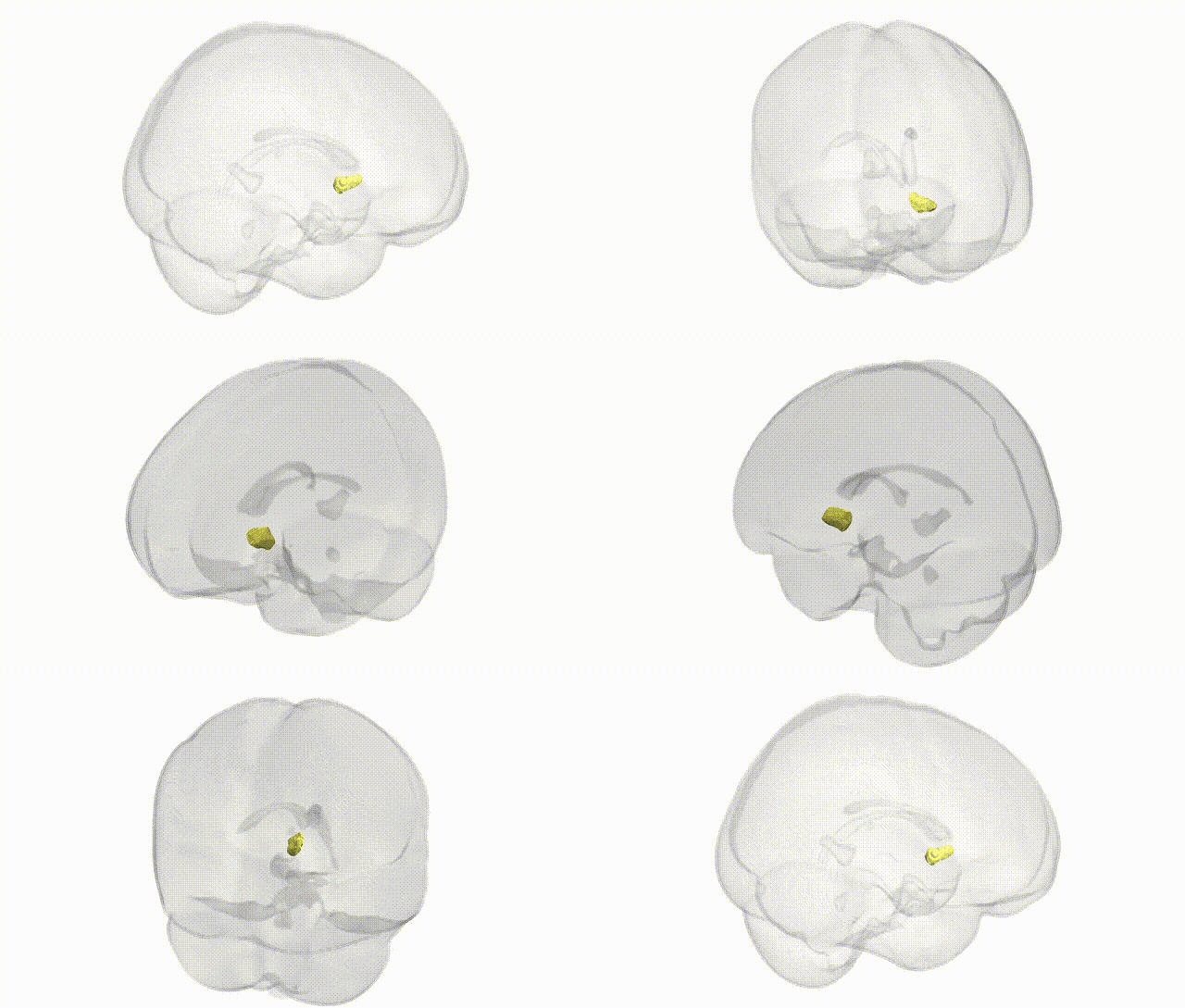
Full Quality Version: Download MP4
Wali Sidiqyar*, Gaurav Rudravaram*, Elyssa M. McMaster, Trent M. Schwartz, Adam M. Saunders, Kurt G. Schilling, Bennett A. Landman "Introducing SPINS: A Shared Public Visualization Library of Neuroanatomical Structures." Medical Imaging with Deep Learning- short paper
This resource is licensed under CC0 1.0 Universal (Public Domain).