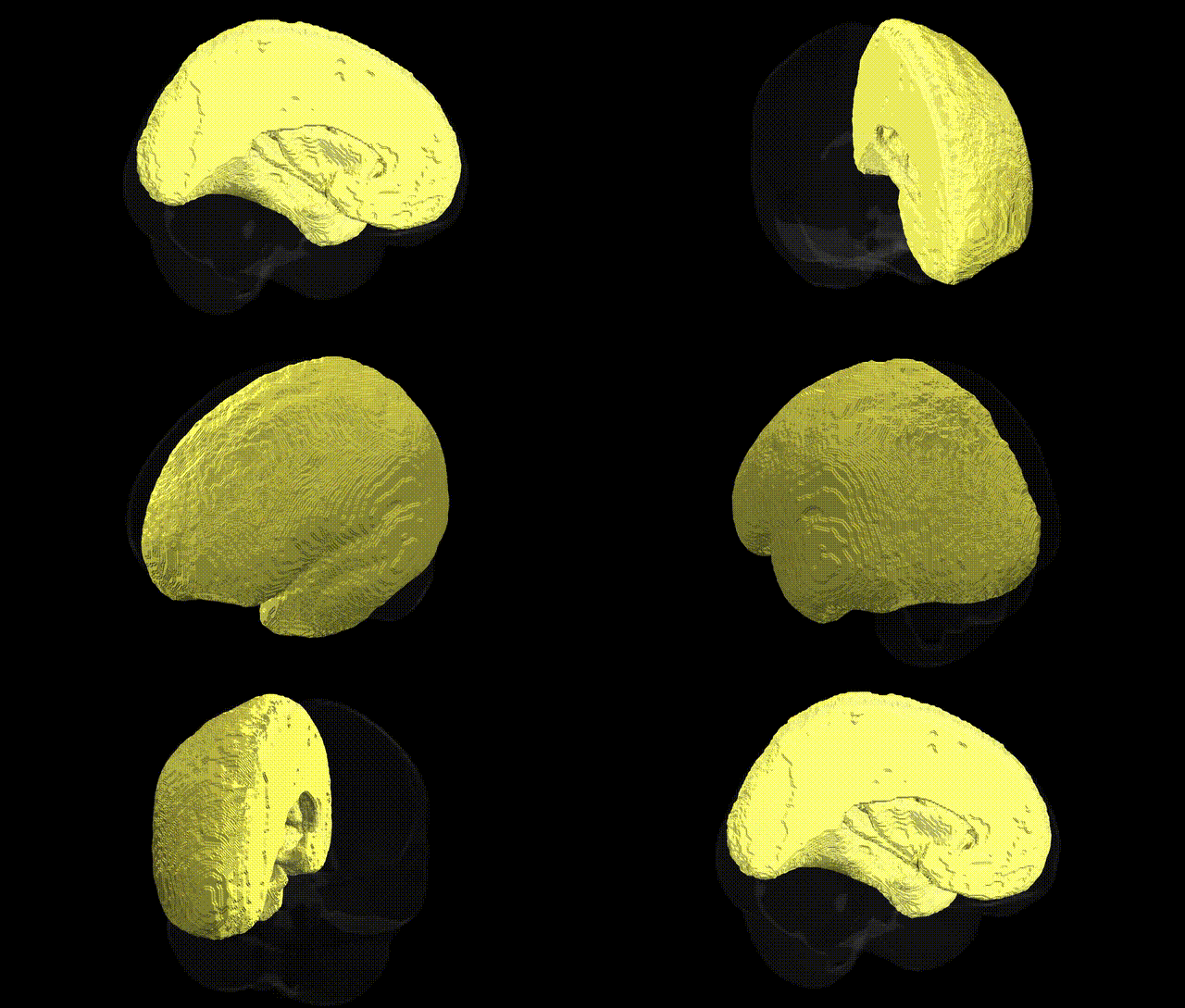
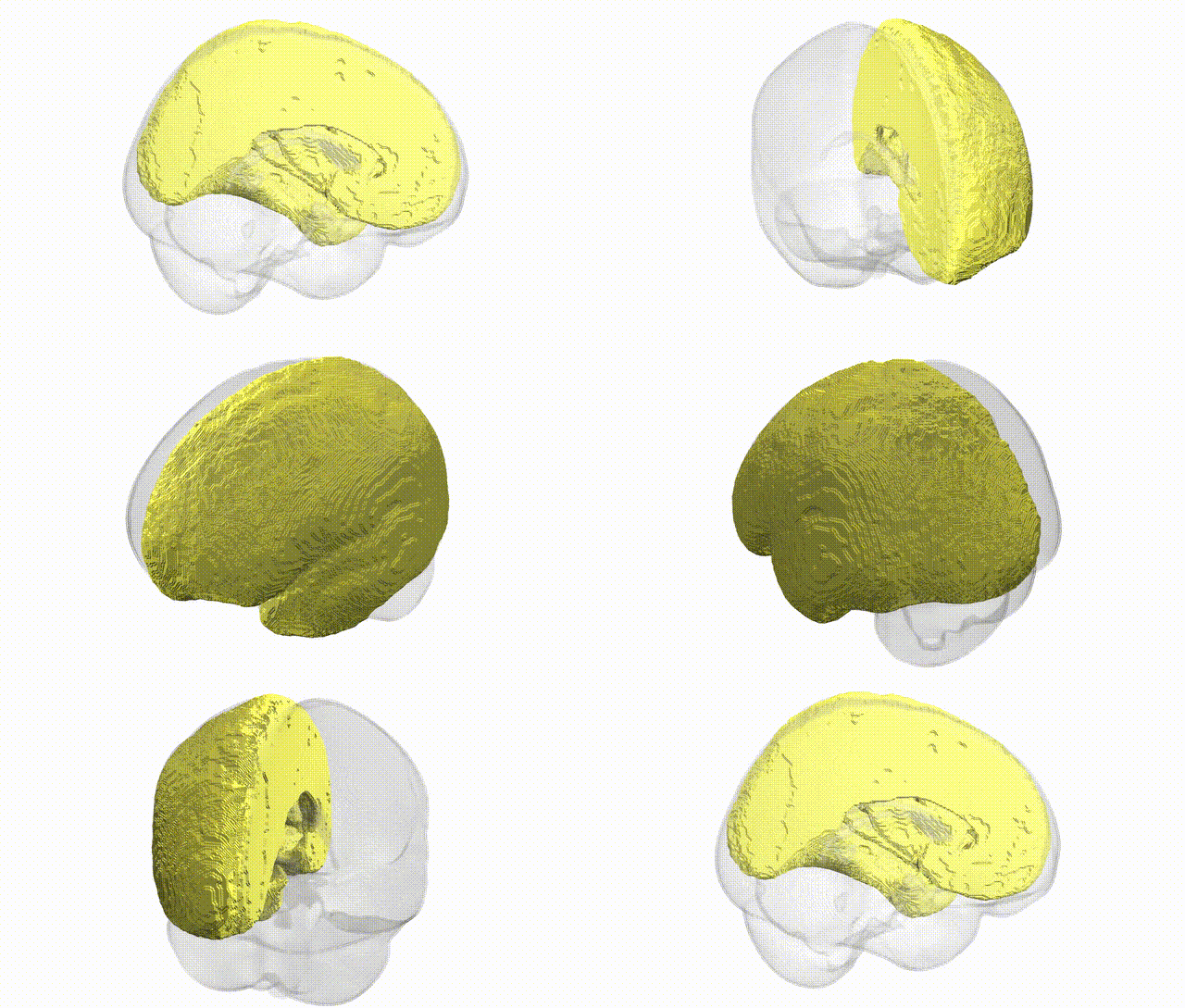
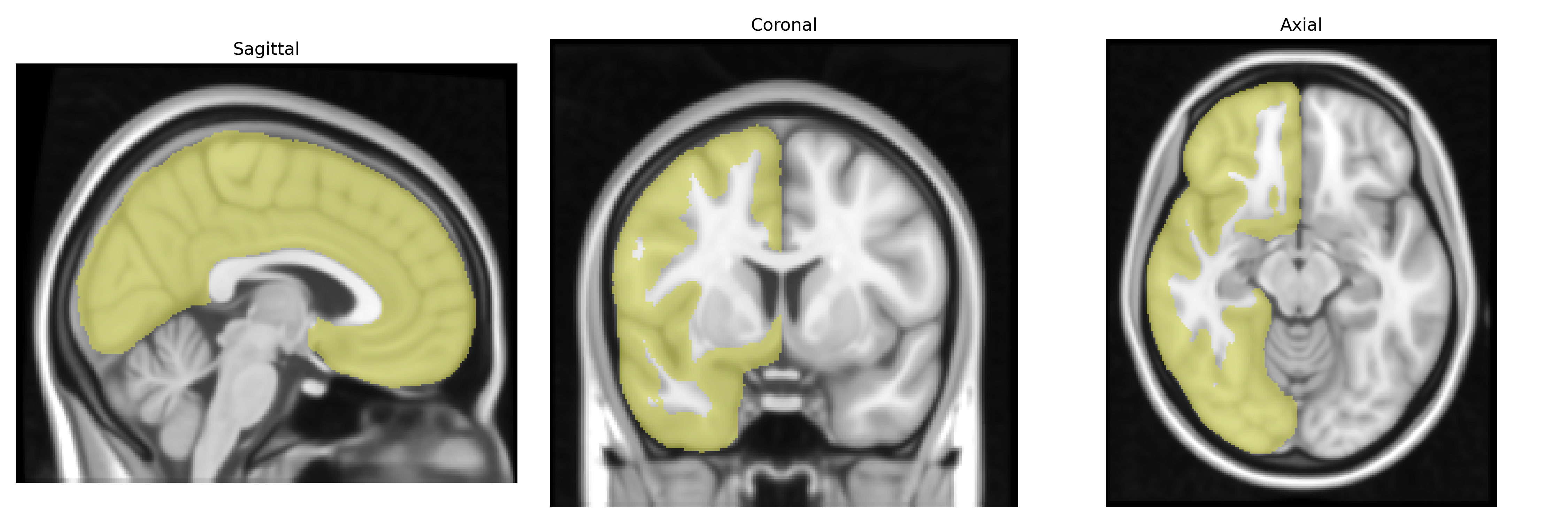
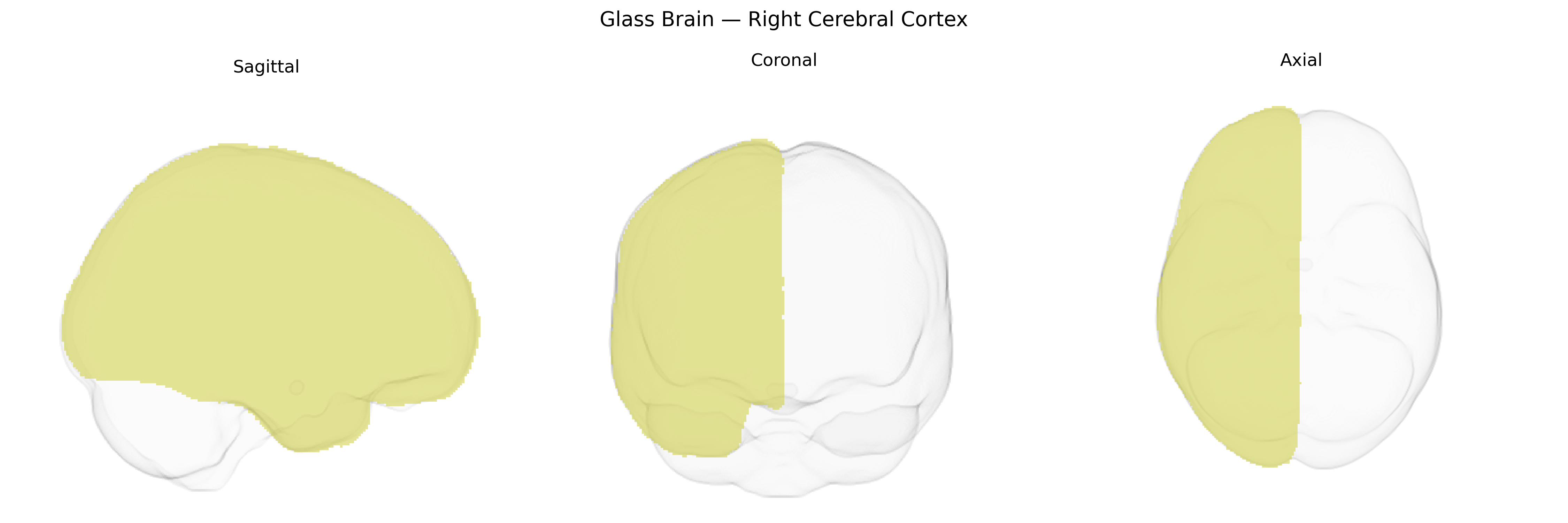
The bilateral right cerebral cortex, as defined in the Harvard–Oxford subcortical maximum probability (thr25, 1 mm) atlas, refers to the right-sided portion of the cerebral mantle encompassing the outer layer of neural tissue responsible for higher-order brain functions. This region integrates sensory input, motor planning, and complex cognitive processes including perception, language (particularly prosody and some aspects of pragmatics), attention, spatial orientation, and aspects of emotional and social cognition. Structurally, it consists of multiple interconnected cortical areas organized into lobes (frontal, parietal, temporal, and occipital) with distinct cytoarchitectonic and functional specializations, supported by underlying white matter tracts that facilitate intra- and interhemispheric communication. Functionally, the right cerebral cortex plays a critical role in visuospatial processing, facial recognition, holistic integration of information, and modulation of affective responses, contributing to coherent perception and behavior in concert with the left hemisphere. Cerebral cortex
The bilateral right cerebral cortex, as delineated in the Harvard-Oxford subcortical/maximal probability atlas, encompasses diverse neocortical regions whose genetic architecture has been characterized primarily through large-scale neuroimaging GWAS rather than atlas-specific studies. Common variants in genes such as HMGA2, IGF1, FOXO3, and multiple loci near MIRNA clusters and chromatin regulators have been associated with global cortical volume, thickness, and surface area, with many effects showing hemispheric asymmetries that include right-lateralized contributions to language, attention, and visuospatial networks. GWAS meta-analyses from consortia like ENIGMA and UK Biobank have identified hundreds of loci influencing regional cortical morphology (e.g., in genes related to synaptic function, neuronal migration, and neurodevelopmental pathways), and some of these loci show overlap with genetic risk for psychiatric disorders (schizophrenia, bipolar disorder, major depression), neurodevelopmental conditions (autism spectrum disorder, ADHD), and cognitive traits (general intelligence, educational attainment). In particular, polygenic risk scores for schizophrenia and depression have been repeatedly linked to reduced cortical thickness or altered surface area in right frontal and temporal regions, while loci associated with handedness and language lateralization (e.g., near PCSK6, LRRTM1 and several intergenic regions) show effects on structural and functional asymmetry between right and left cortex. Although the Harvard-Oxford atlas provides a standardized parcellation, most genetic findings map onto functionally or cytoarchitectonically defined subregions (right prefrontal, temporal, parietal, and occipital cortices), collectively indicating that common genetic variation influences the structure and connectivity of the right cerebral cortex in ways that contribute to vulnerability and resilience across a spectrum of cognitive and psychiatric phenotypes.
Overview generated by GPT-4o (2026).
Region ID: 13
Hemisphere: bilateral
Atlas: HarvardOxford sub maxprob thr25 1mm
Full Quality Version: Download MP4
Full Quality Version: Download MP4
Wali Sidiqyar*, Gaurav Rudravaram*, Elyssa M. McMaster, Trent M. Schwartz, Adam M. Saunders, Kurt G. Schilling, Bennett A. Landman "Introducing SPINS: A Shared Public Visualization Library of Neuroanatomical Structures." Medical Imaging with Deep Learning- short paper
This resource is licensed under CC0 1.0 Universal (Public Domain).