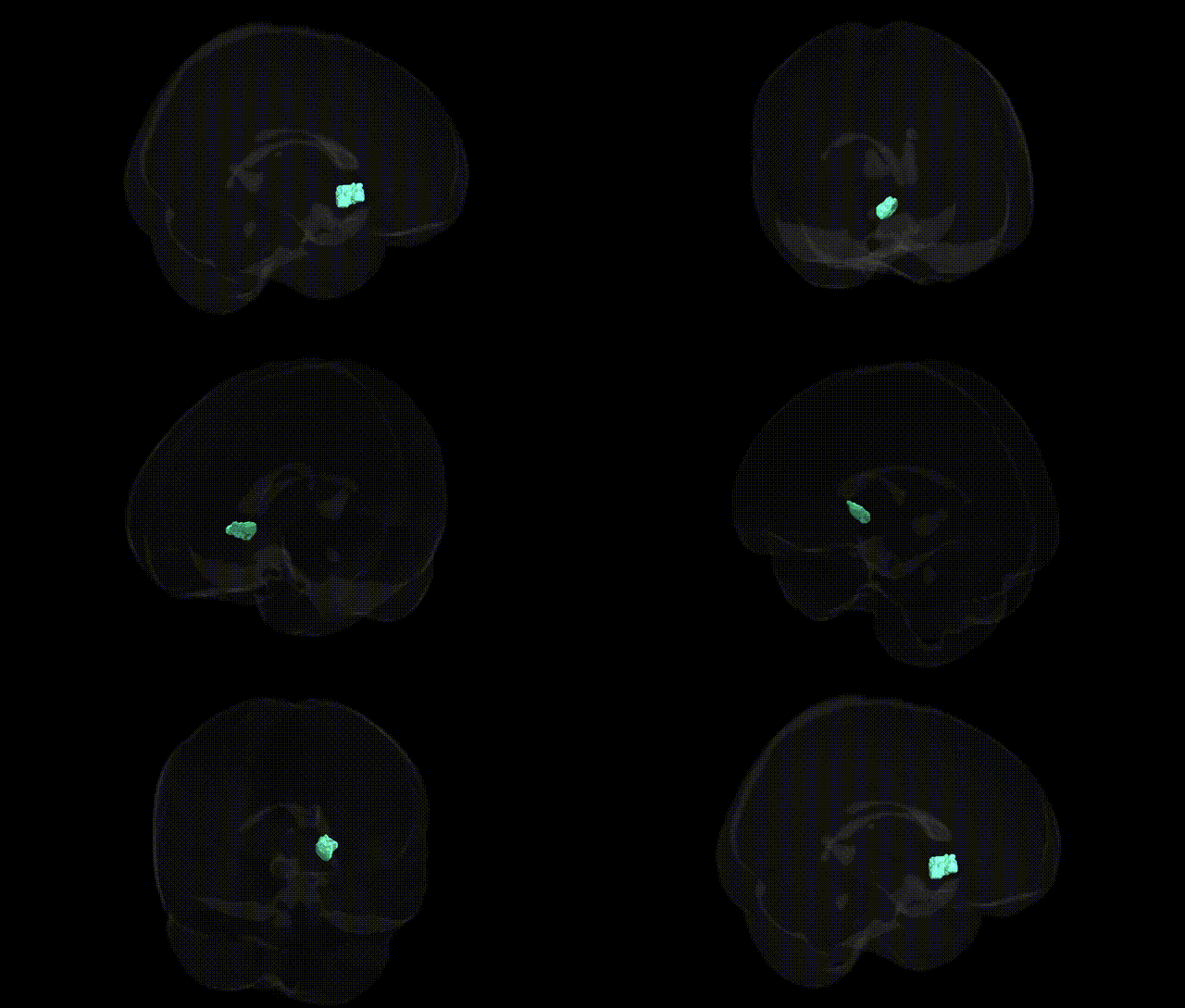
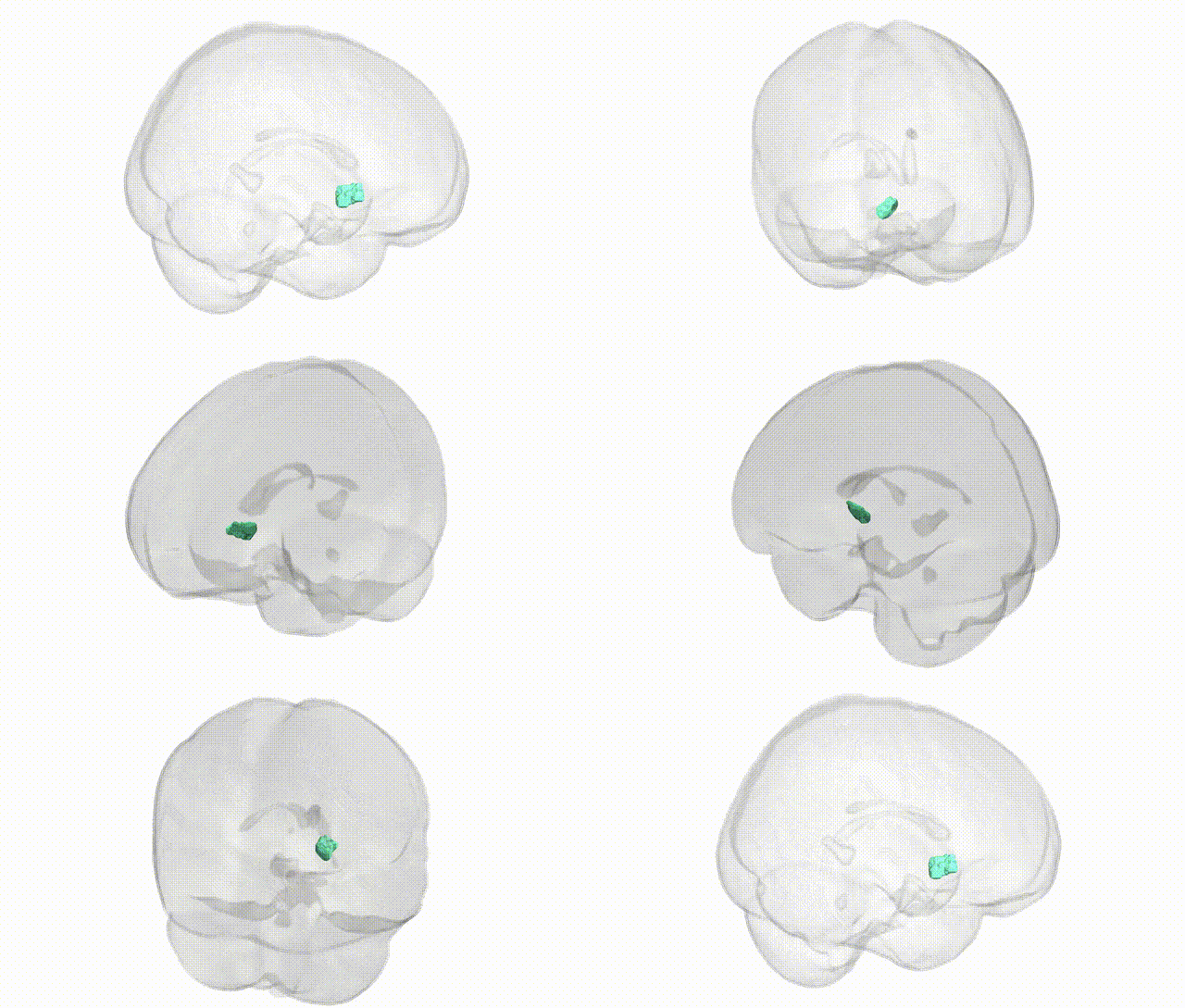
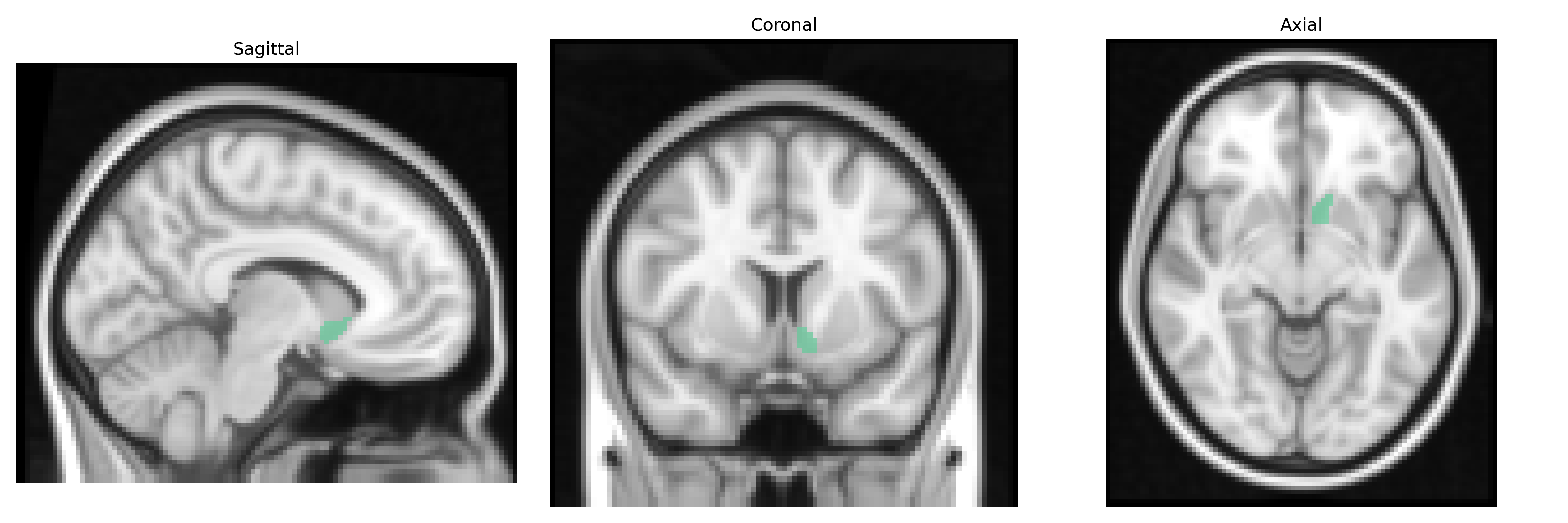
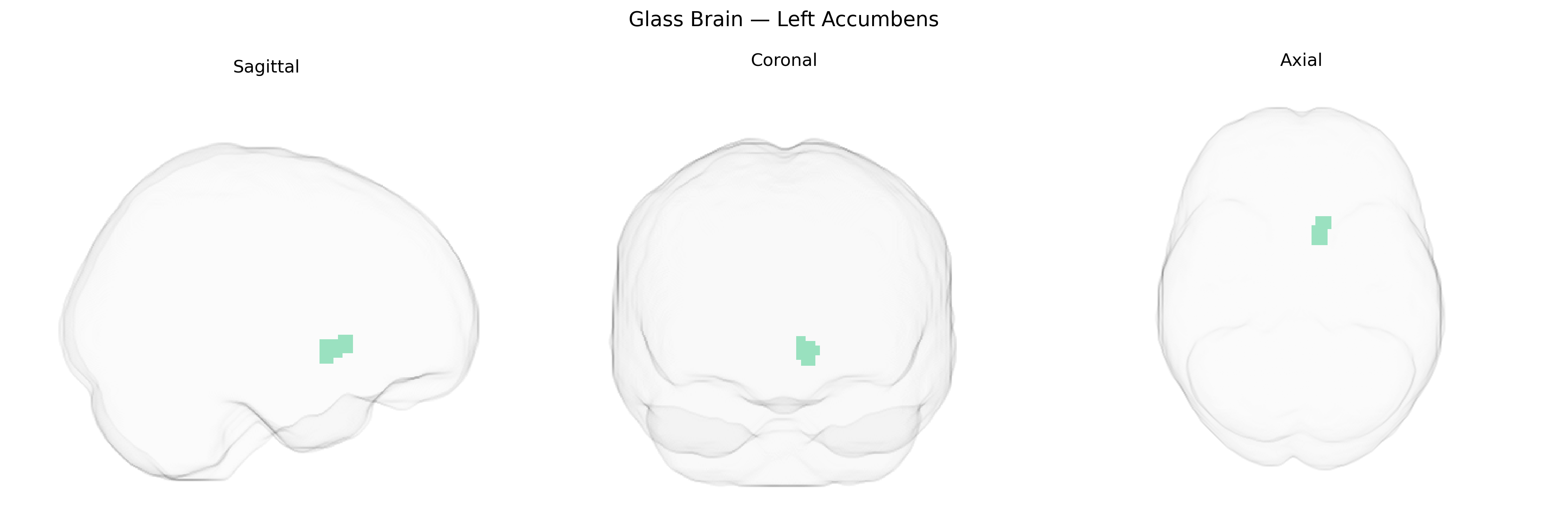
The bilateral left accumbens, corresponding to the left nucleus accumbens within the ventral striatum, is a key subcortical region implicated in reward processing, motivation, reinforcement learning, and addiction-related behaviors. Anatomically, it lies at the junction of the caudate nucleus and putamen, receiving dense dopaminergic input from the ventral tegmental area and integrating glutamatergic projections from limbic and prefrontal regions, including the amygdala, hippocampus, and medial/orbitofrontal cortex. Functionally, it contributes to the evaluation of rewarding and aversive stimuli, the shaping of goal-directed actions, and the modulation of affective and hedonic states, often showing activation in tasks involving anticipation of reward, decision-making under uncertainty, and drug-related cues. There is no direct Wikipedia article specific to “Left Accumbens”; a related and encompassing article is Nucleus accumbens.
The bilateral left nucleus accumbens (NAc) from the Harvard-Oxford subcortical atlas is a core node of the brain’s reward circuitry and has been repeatedly implicated in genetic studies of psychiatric and behavioral traits. GWAS and imaging-genetics work (including ENIGMA and large consortia) show that common variants in and near genes involved in dopamine and glutamate signaling, synaptic plasticity, and neurodevelopment (for example, DRD2, CACNA1C, GRIN2B, BDNF, and SLC6A3) are associated with individual differences in accumbens volume, functional activation, and connectivity. Polygenic risk scores and locus-specific associations for major depressive disorder, bipolar disorder, schizophrenia, substance use disorders (including alcohol, nicotine, and cocaine dependence), attention-deficit/hyperactivity disorder, and obesity-related traits frequently converge on striatal regions with prominent effects in the accumbens, linking risk variants to altered reward sensitivity, anhedonia, impulsivity, and cue-reactivity. Additional GWAS have associated NAc structure and function with personality traits (e.g., neuroticism, risk-taking), cognitive and motivational phenotypes, and chronic pain vulnerability, suggesting that genetically driven variation in accumbens circuitry contributes broadly to susceptibility for mood, psychotic, addictive, and metabolic disorders.
Overview generated by GPT-4o (2026).
Region ID: 11
Hemisphere: bilateral
Atlas: HarvardOxford sub maxprob thr25 2mm
Full Quality Version: Download MP4
Full Quality Version: Download MP4
Wali Sidiqyar*, Gaurav Rudravaram*, Elyssa M. McMaster, Trent M. Schwartz, Adam M. Saunders, Kurt G. Schilling, Bennett A. Landman "Introducing SPINS: A Shared Public Visualization Library of Neuroanatomical Structures." Medical Imaging with Deep Learning- short paper
This resource is licensed under CC0 1.0 Universal (Public Domain).