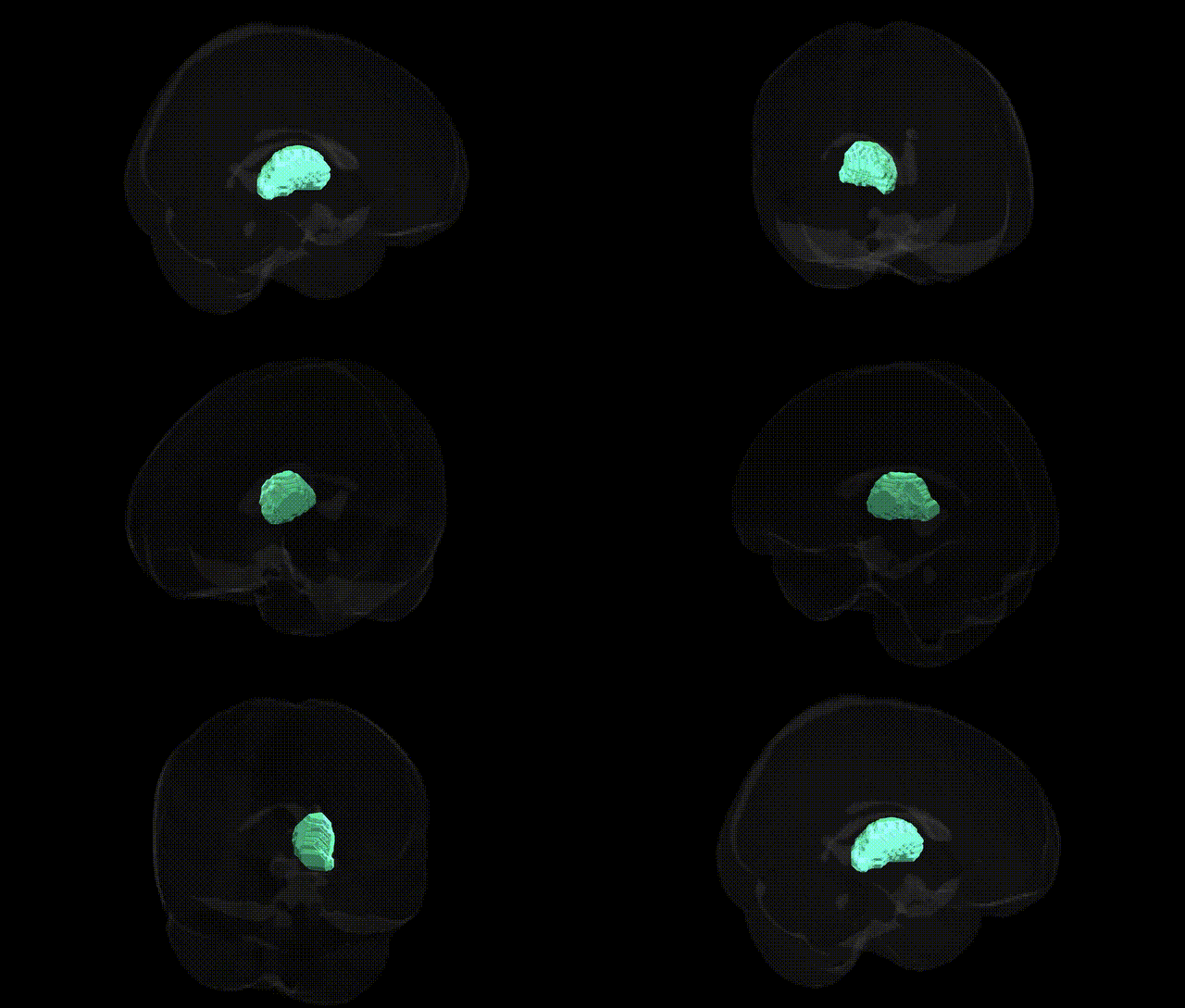
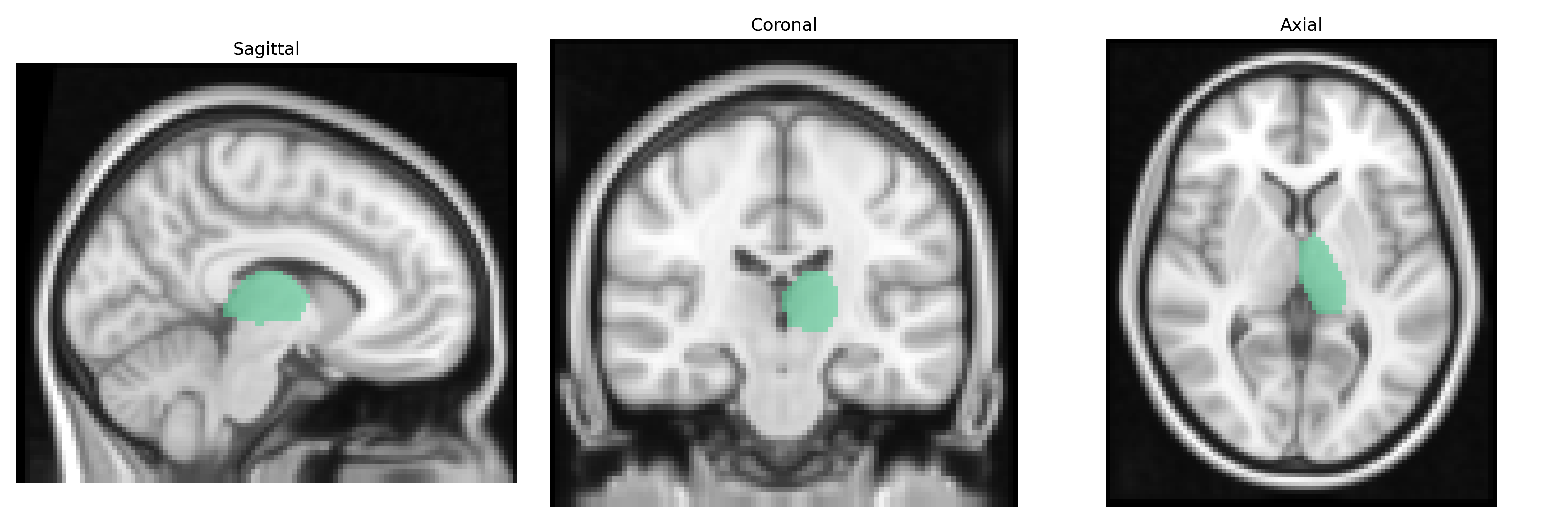
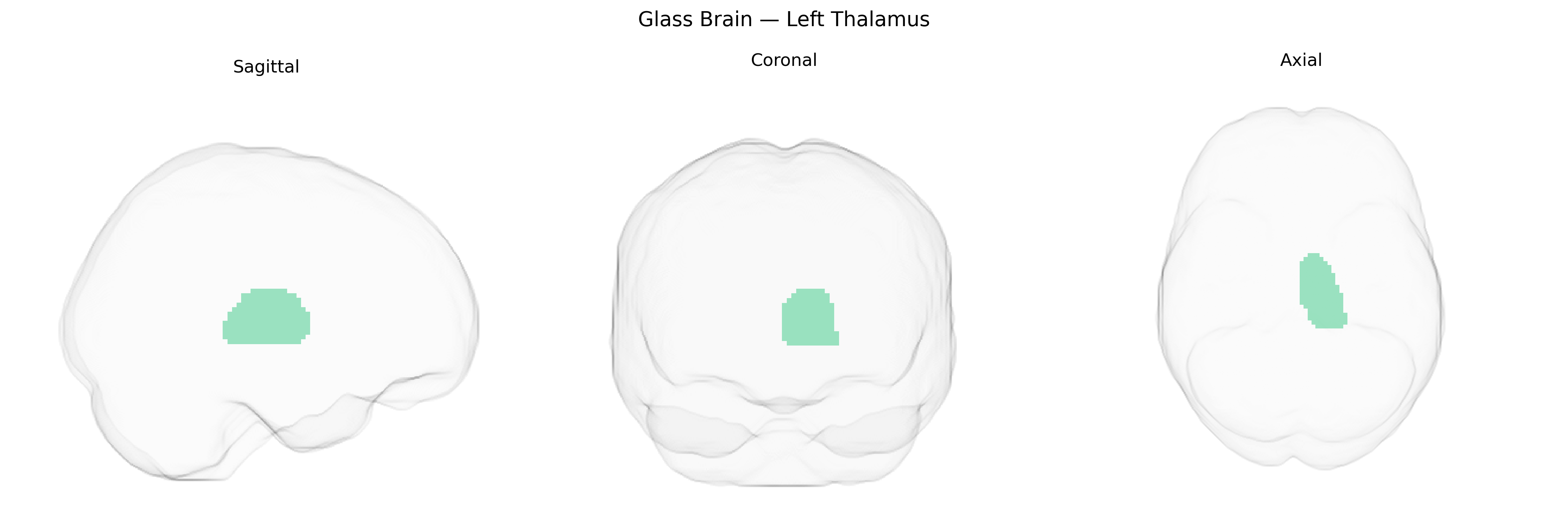
The bilateral Left Thalamus, as defined in the Harvard-Oxford subcortical maximum probability atlas (thr25, 2 mm), refers to the thalamic gray matter nuclei within the left hemisphere, forming a key relay and integrative hub for sensory, motor, and associative information. Structurally, the thalamus is composed of multiple nuclei (including anterior, medial, and lateral groups) that project topographically to cortical and subcortical targets, supporting functions such as somatosensory processing, motor coordination via connections with basal ganglia and cerebellum, regulation of arousal and sleep-wake cycles, and participation in higher-order cognitive and affective networks. In this atlas, the region is defined probabilistically based on population-based anatomical segmentation, and the “left” designation specifies localization relative to the midline, although many thalamic functions are bilaterally coordinated. There is no direct Wikipedia article specifically for the “Left Thalamus” as a distinct region; instead, the broader structure is described at Thalamus.
The bilateral left thalamus, as defined in the Harvard–Oxford subcortical atlas, has been implicated in multiple genetic and genome‑wide association studies linking variation in this region’s volume, microstructure, or functional connectivity to common polygenic influences on brain and behavior. Large MRI‑GWAS consortia (e.g., ENIGMA, UK Biobank–based studies) have identified SNPs in and near genes such as MAPT, PTK2B, GMNC, DRAM1, and SLC39A8, among others, that are associated with thalamic volume or morphology, often overlapping with loci influencing broader subcortical structures. Thalamic structure and function show substantial heritability and share genetic architecture with neuropsychiatric disorders including schizophrenia, bipolar disorder, major depressive disorder, and autism spectrum disorder, as well as with neurodegenerative diseases such as Parkinson’s and Alzheimer’s disease, in which risk loci (e.g., in HLA region, APOE‑related pathways, synaptic and immune genes) correlate with thalamic atrophy or connectivity changes. Polygenic risk scores for these disorders, along with those for cognitive ability and educational attainment, have been associated with differences in thalamic volume and thalamocortical network properties, indicating that the left thalamus participates in distributed genetic pathways affecting cognition, mood regulation, and vulnerability to psychiatric and neurological disease.
Overview generated by GPT-4o (2026).
Region ID: 4
Hemisphere: bilateral
Atlas: HarvardOxford sub maxprob thr25 2mm
Full Quality Version: Download MP4
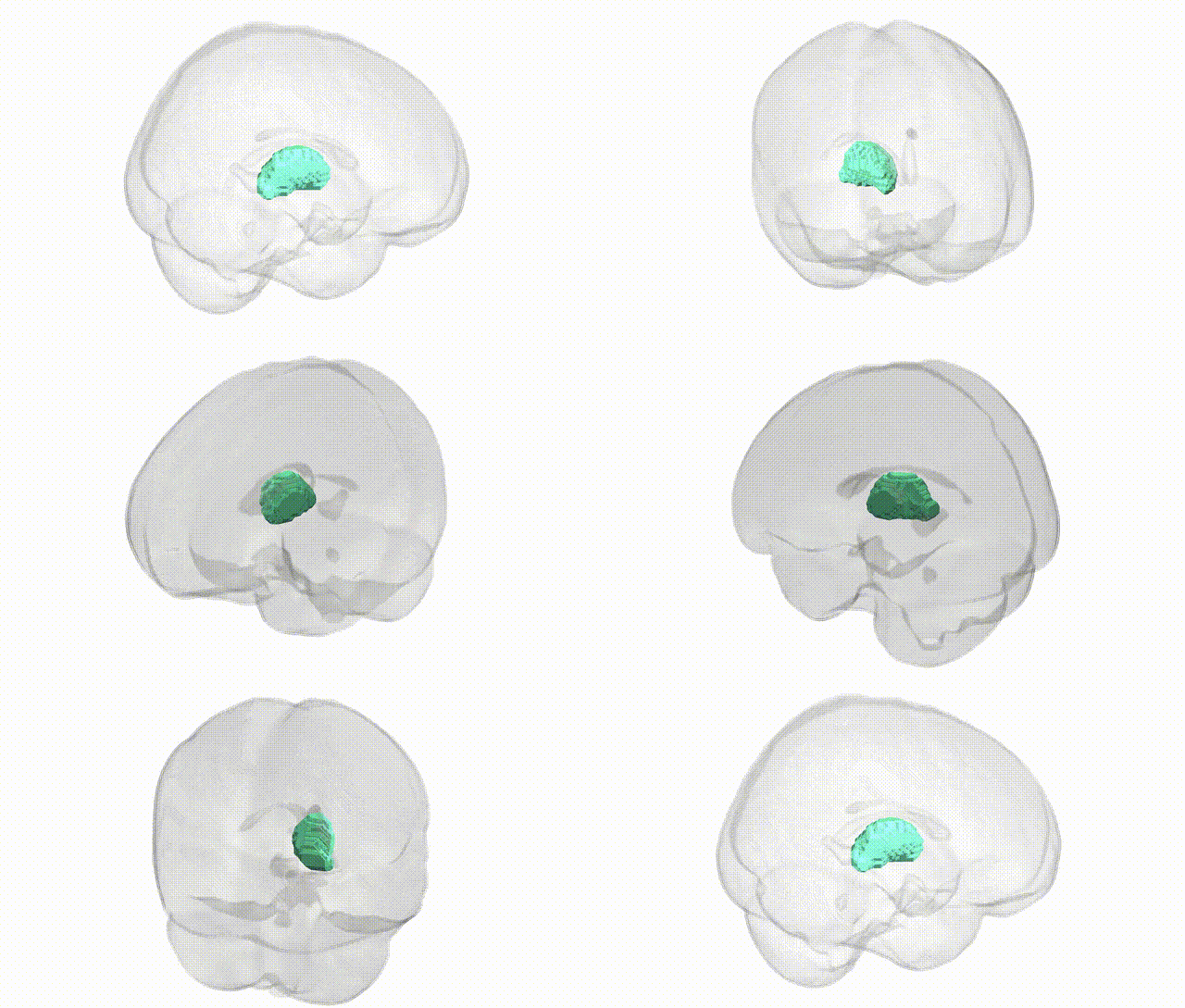
Full Quality Version: Download MP4
Wali Sidiqyar*, Gaurav Rudravaram*, Elyssa M. McMaster, Trent M. Schwartz, Adam M. Saunders, Kurt G. Schilling, Bennett A. Landman "Introducing SPINS: A Shared Public Visualization Library of Neuroanatomical Structures." Medical Imaging with Deep Learning- short paper
This resource is licensed under CC0 1.0 Universal (Public Domain).