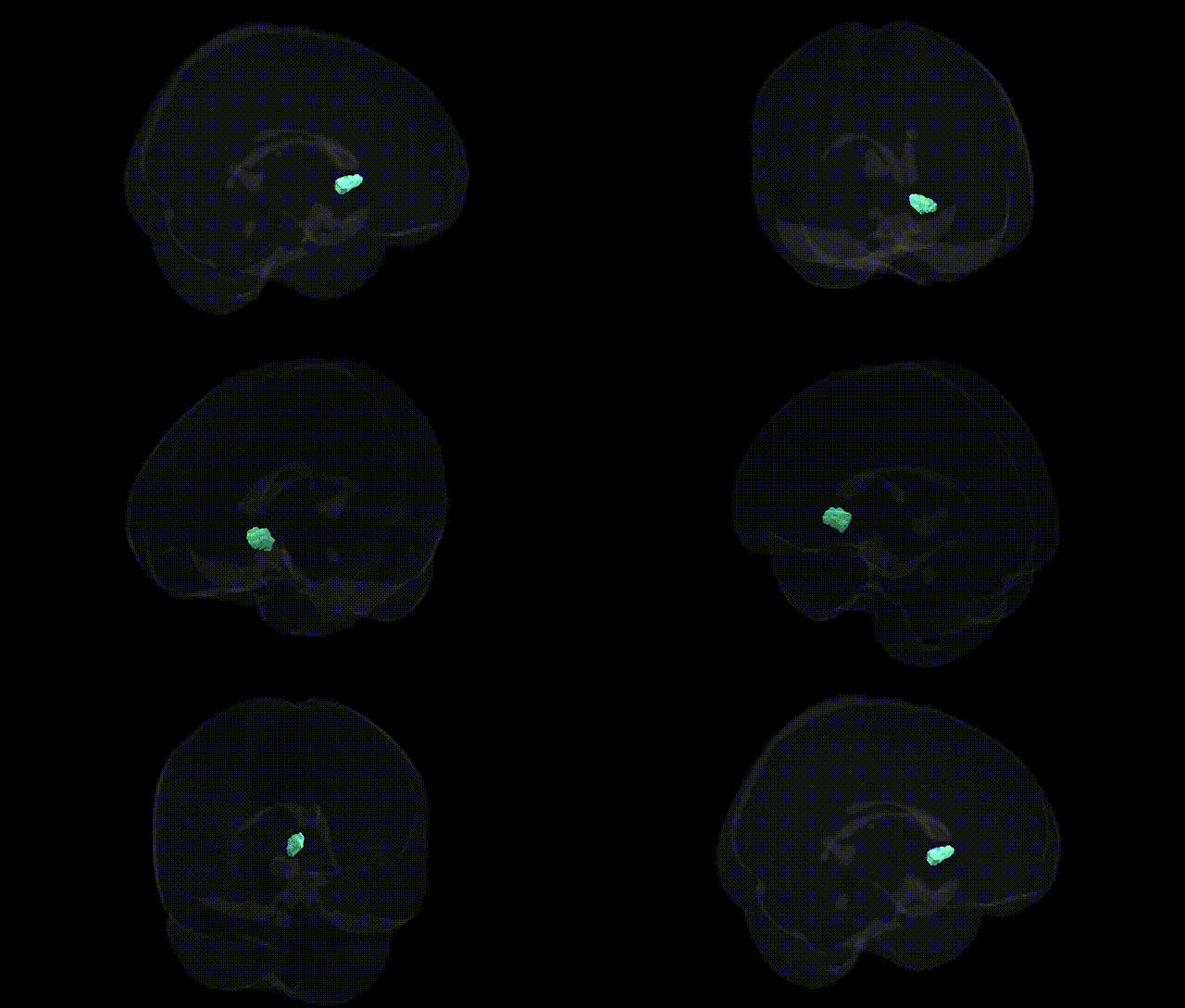
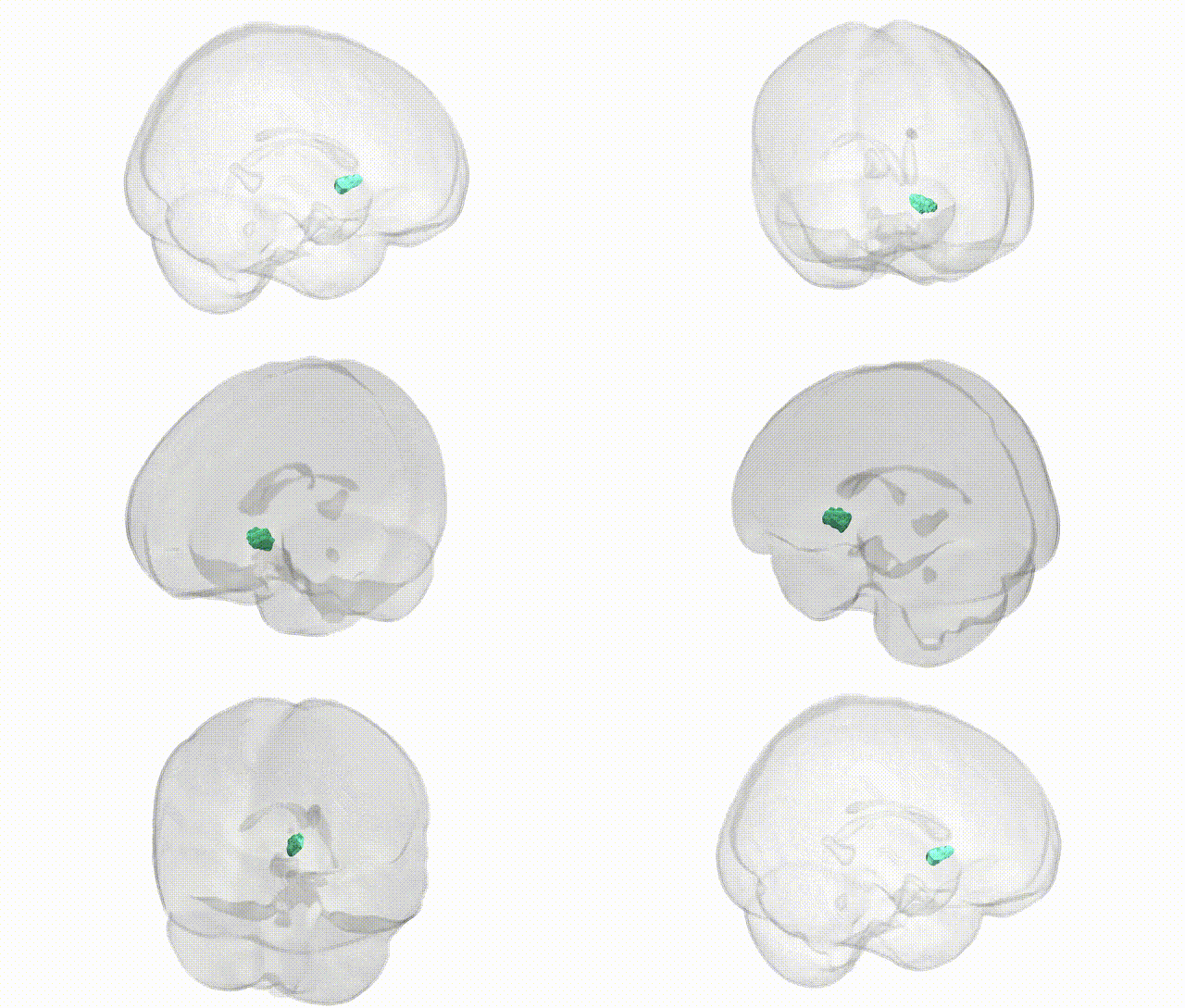
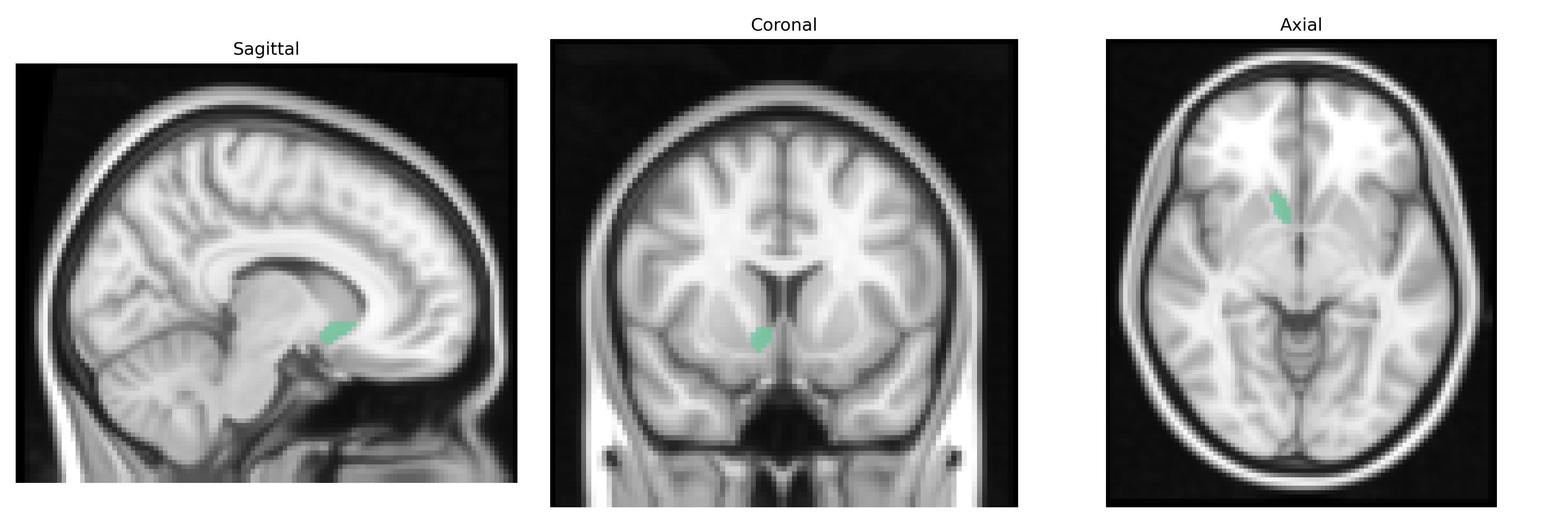
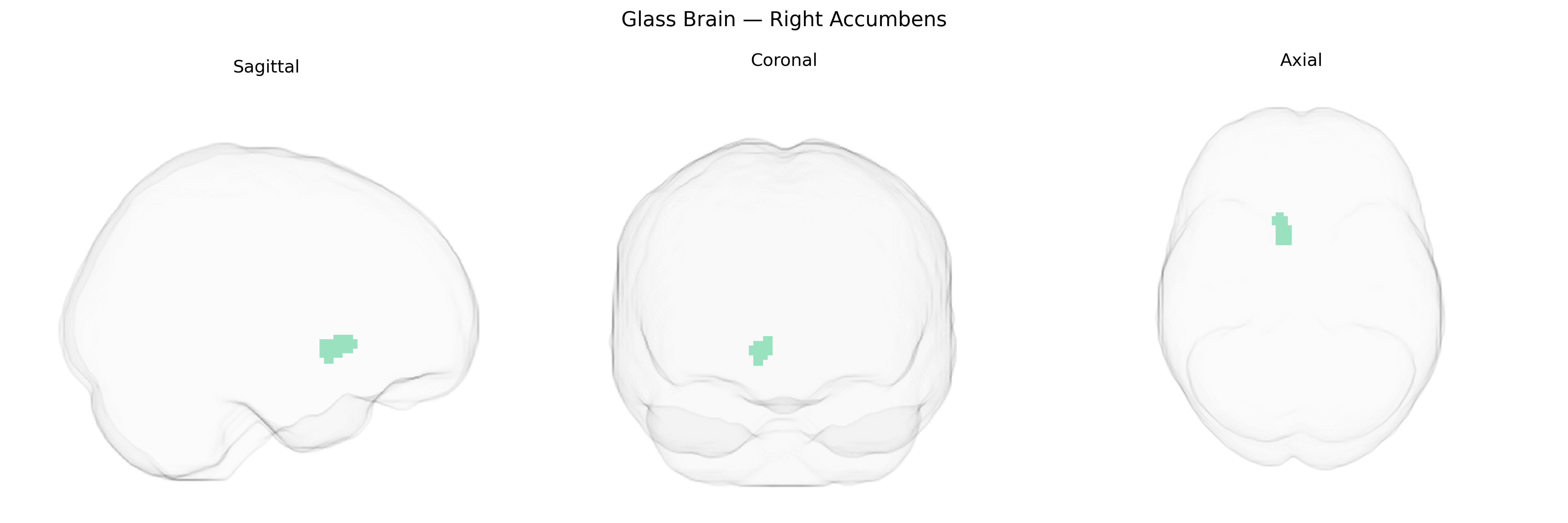
The bilateral right accumbens region, as defined in the Harvard-Oxford subcortical maxprob thr25 2mm atlas, corresponds to the right nucleus accumbens and its contralateral homologue, a ventral striatal structure located at the junction of the caudate nucleus and putamen in the basal forebrain. This nucleus is a key component of the mesolimbic and mesocortical dopamine pathways, receiving dense dopaminergic input from the ventral tegmental area as well as glutamatergic projections from prefrontal cortex, hippocampus, and amygdala. Functionally, it plays a central role in reward processing, motivation, reinforcement learning, and the encoding of salience and hedonic value, and is critically implicated in addiction, mood regulation, and decision making. Its subdivisions, often described as core and shell, differ in connectivity and function, supporting both goal-directed behavior and affective valuation. There is no dedicated Wikipedia article for the “right accumbens” specifically; a closely related and encompassing structure is the Nucleus accumbens.
The bilateral right nucleus accumbens, as defined in the Harvard-Oxford subcortical atlas, has been implicated in numerous genetic studies focusing on reward processing, addiction, and mood-related phenotypes. GWAS and imaging-genetics work have linked common variants in dopaminergic and glutamatergic pathways—such as DRD2, DRD3, DAT1 (SLC6A3), COMT, OPRM1, and genes in the glutamate system (e.g., GRIN2A)—to variability in accumbens volume, activation, or connectivity, particularly in response to reward or drug cues. Large-scale consortia (e.g., ENIGMA) have reported heritable components of accumbens volume and identified loci in and near genes involved in neurodevelopment, synaptic plasticity, and cell adhesion (such as DCC and NCAM family genes) that contribute to structural variation in this region. Accumbens structure and function have also been associated with polygenic risk scores for major depressive disorder, schizophrenia, bipolar disorder, and ADHD, consistent with its role in motivational and hedonic processes. Genetic variants influencing accumbens morphology or reactivity have further been tied to substance use traits (alcohol, nicotine, and other drugs), obesity and BMI, impulsivity, and anhedonia, supporting a broad genetic architecture linking this ventral striatal hub to psychiatric and behavioral risk.
Overview generated by GPT-4o (2026).
Region ID: 21
Hemisphere: bilateral
Atlas: HarvardOxford sub maxprob thr25 2mm
Full Quality Version: Download MP4
Full Quality Version: Download MP4
Wali Sidiqyar*, Gaurav Rudravaram*, Elyssa M. McMaster, Trent M. Schwartz, Adam M. Saunders, Kurt G. Schilling, Bennett A. Landman "Introducing SPINS: A Shared Public Visualization Library of Neuroanatomical Structures." Medical Imaging with Deep Learning- short paper
This resource is licensed under CC0 1.0 Universal (Public Domain).