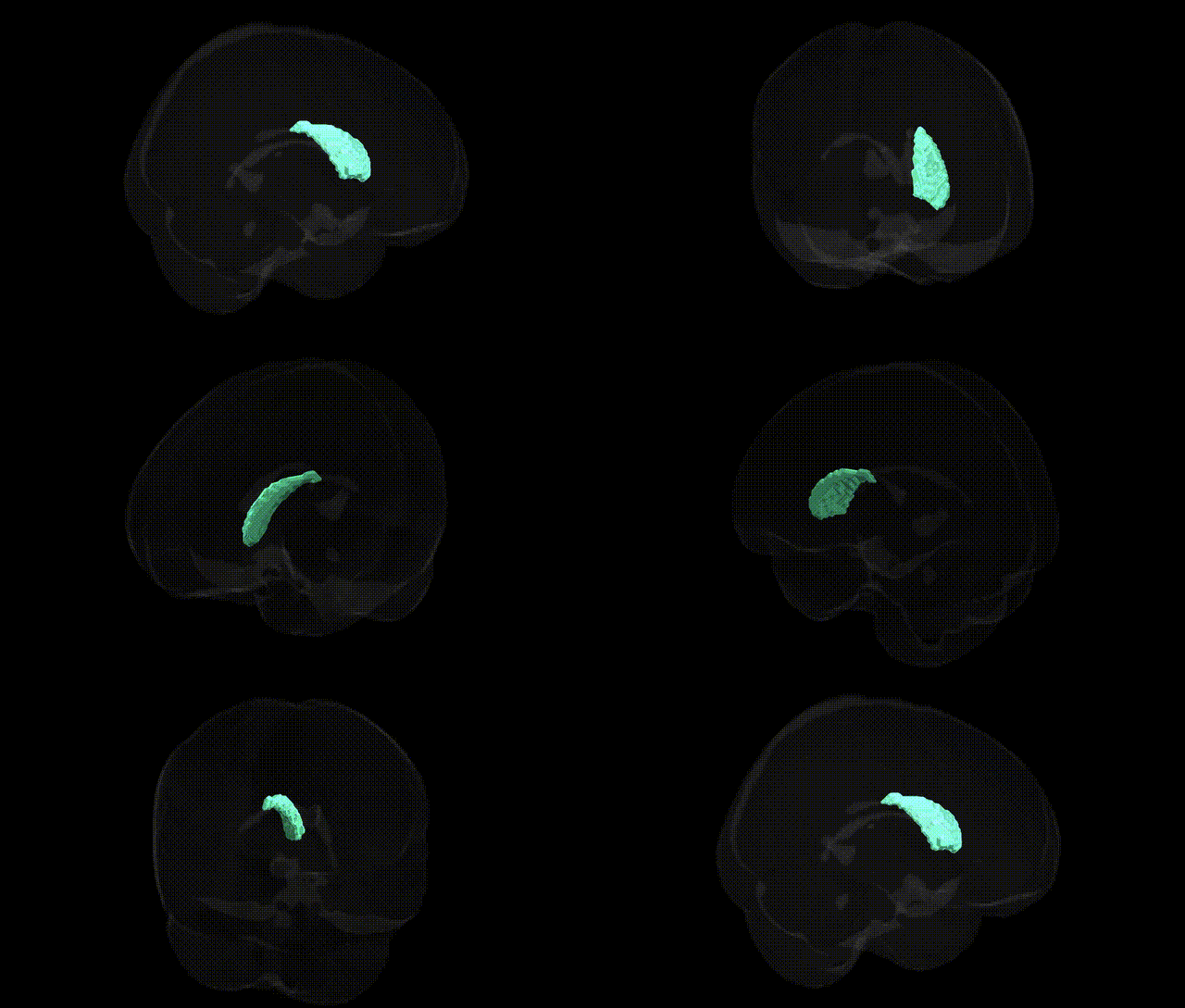
The bilateral right caudate, as defined in the Harvard-Oxford subcortical atlas, refers to the right-sided portion of the caudate nucleus, a C-shaped gray matter structure in the dorsal striatum of the basal ganglia. It is situated adjacent to the lateral ventricle and structurally continuous with the putamen via the striatal bridges, receiving dense glutamatergic inputs from frontal and parietal cortices and dopaminergic projections from the substantia nigra pars compacta. Functionally, the right caudate contributes to motor control, action selection, goal-directed behavior, cognitive flexibility, and aspects of learning and memory, particularly procedural and habit learning, while also playing a role in reward processing and executive functions through cortico-striato-thalamo-cortical loops. Pathophysiological changes in this region are implicated in movement disorders (such as Parkinson’s disease and Huntington’s disease), obsessive-compulsive disorder, attention-deficit/hyperactivity disorder, and other neuropsychiatric conditions. Caudate nucleus
The bilateral right caudate, as defined in the Harvard-Oxford subcortical atlas, has been implicated in multiple genetic and GWAS findings, particularly related to brain volume and neuropsychiatric phenotypes. Large-scale imaging genetics consortia such as ENIGMA and UK Biobank have identified common variants (notably near genes including HMGA2, IGF1, and others involved in neurodevelopment and synaptic function) associated with caudate volume, reflecting polygenic influences on striatal anatomy. Caudate structure and function show heritability and have been linked via GWAS and candidate-gene studies to disorders such as attention-deficit/hyperactivity disorder, obsessive-compulsive disorder, schizophrenia, and autism spectrum disorder, in which caudate alterations (often bilateral but sometimes right-lateralized) are reported. Dopaminergic and glutamatergic pathway genes (e.g., DRD2, DAT1/SLC6A3, COMT, and several glutamate receptor genes) have been associated with caudate-related reward, habit learning, and motor control, and indirectly with traits such as addiction, impulsivity, and compulsive behaviors. Additionally, polygenic scores for educational attainment, cognitive performance, and neuroticism show correlations with caudate volume or connectivity, supporting a genetically mediated link between this region and individual differences in cognition and affect, although most associations are modest, highly polygenic, and not specific to the right caudate alone.
Overview generated by GPT-4o (2026).
Region ID: 16
Hemisphere: bilateral
Atlas: HarvardOxford sub maxprob thr25 2mm
Full Quality Version: Download MP4
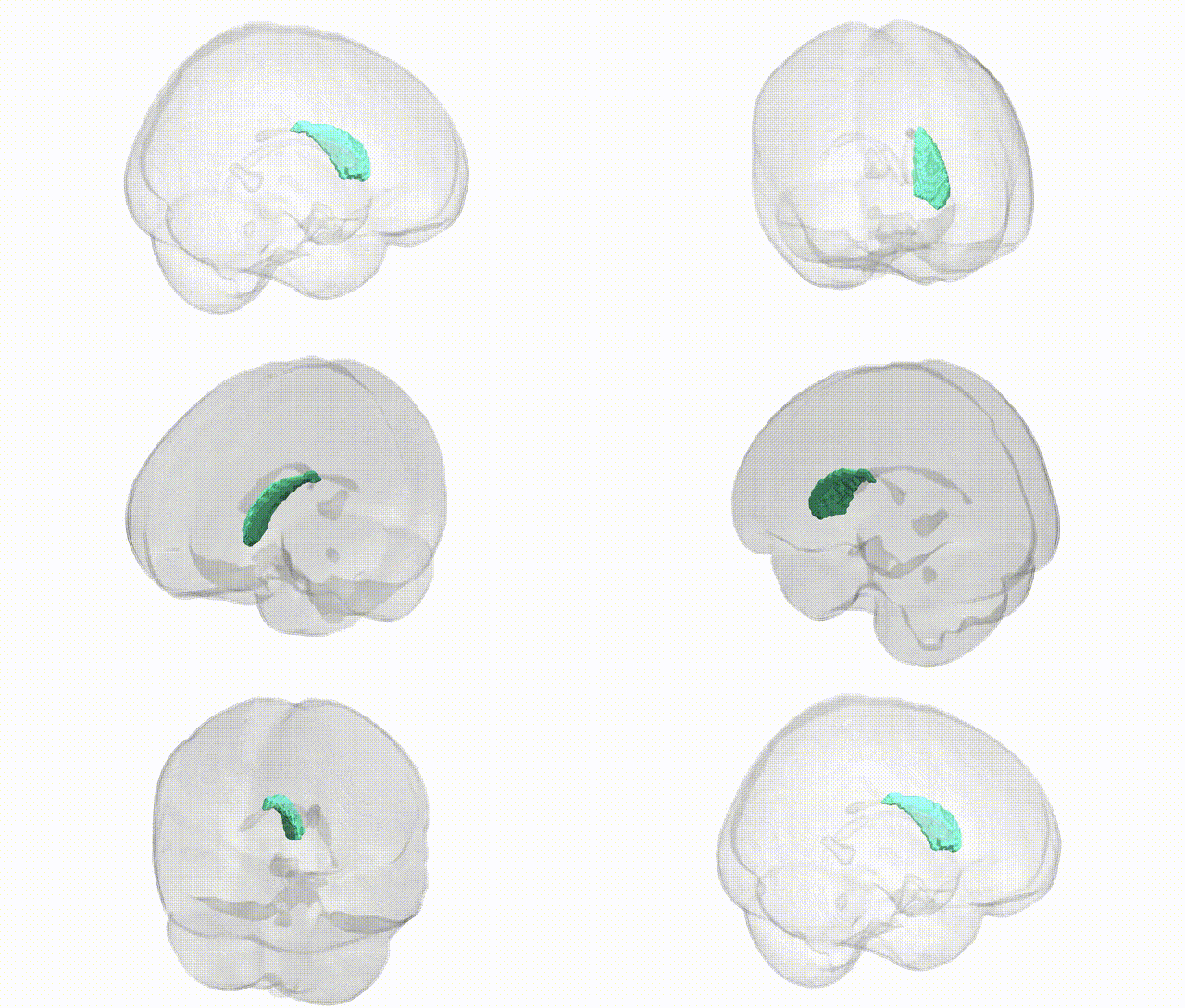
Full Quality Version: Download MP4
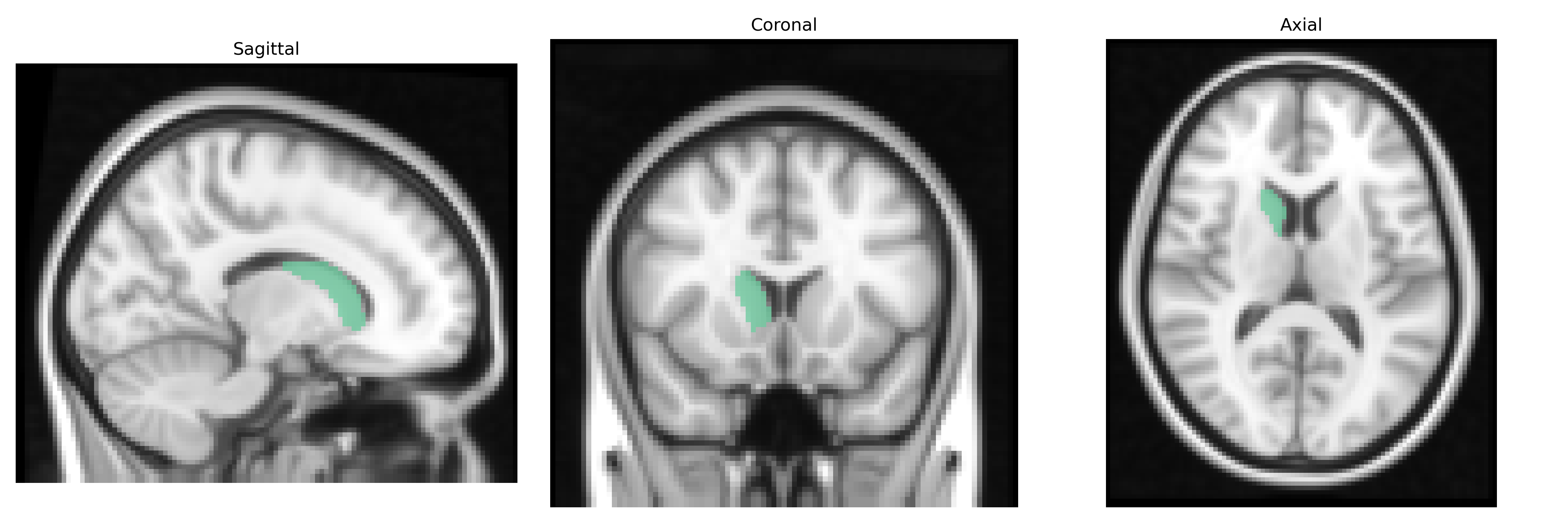
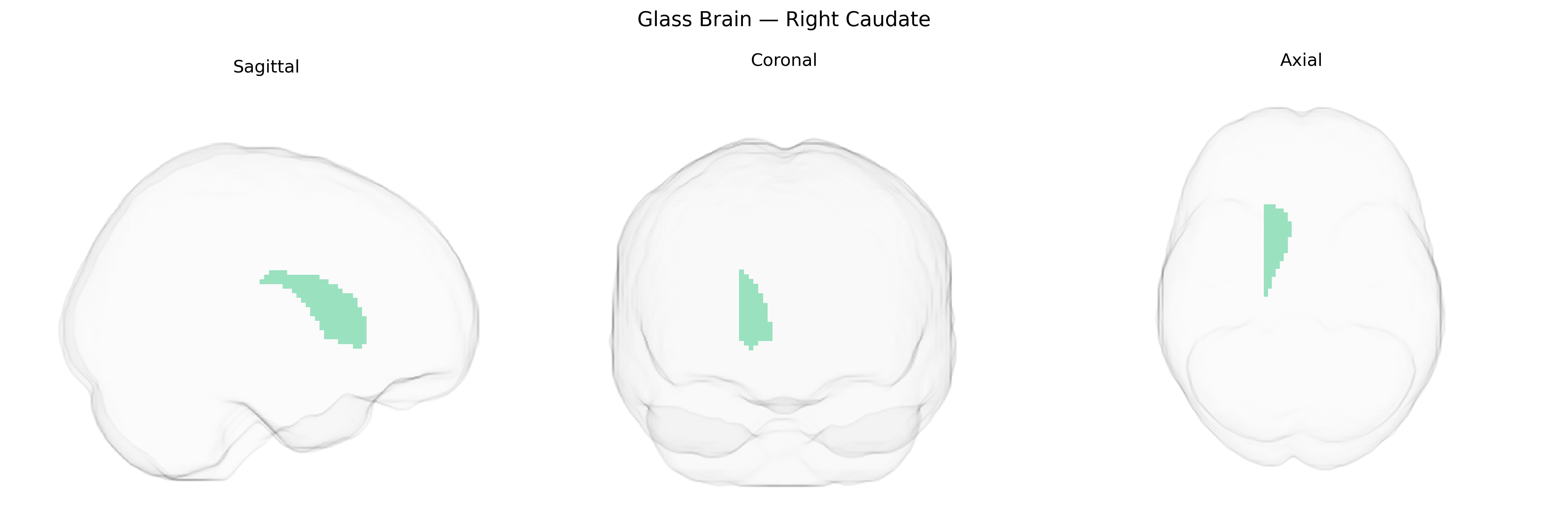
Wali Sidiqyar*, Gaurav Rudravaram*, Elyssa M. McMaster, Trent M. Schwartz, Adam M. Saunders, Kurt G. Schilling, Bennett A. Landman "Introducing SPINS: A Shared Public Visualization Library of Neuroanatomical Structures." Medical Imaging with Deep Learning- short paper
This resource is licensed under CC0 1.0 Universal (Public Domain).