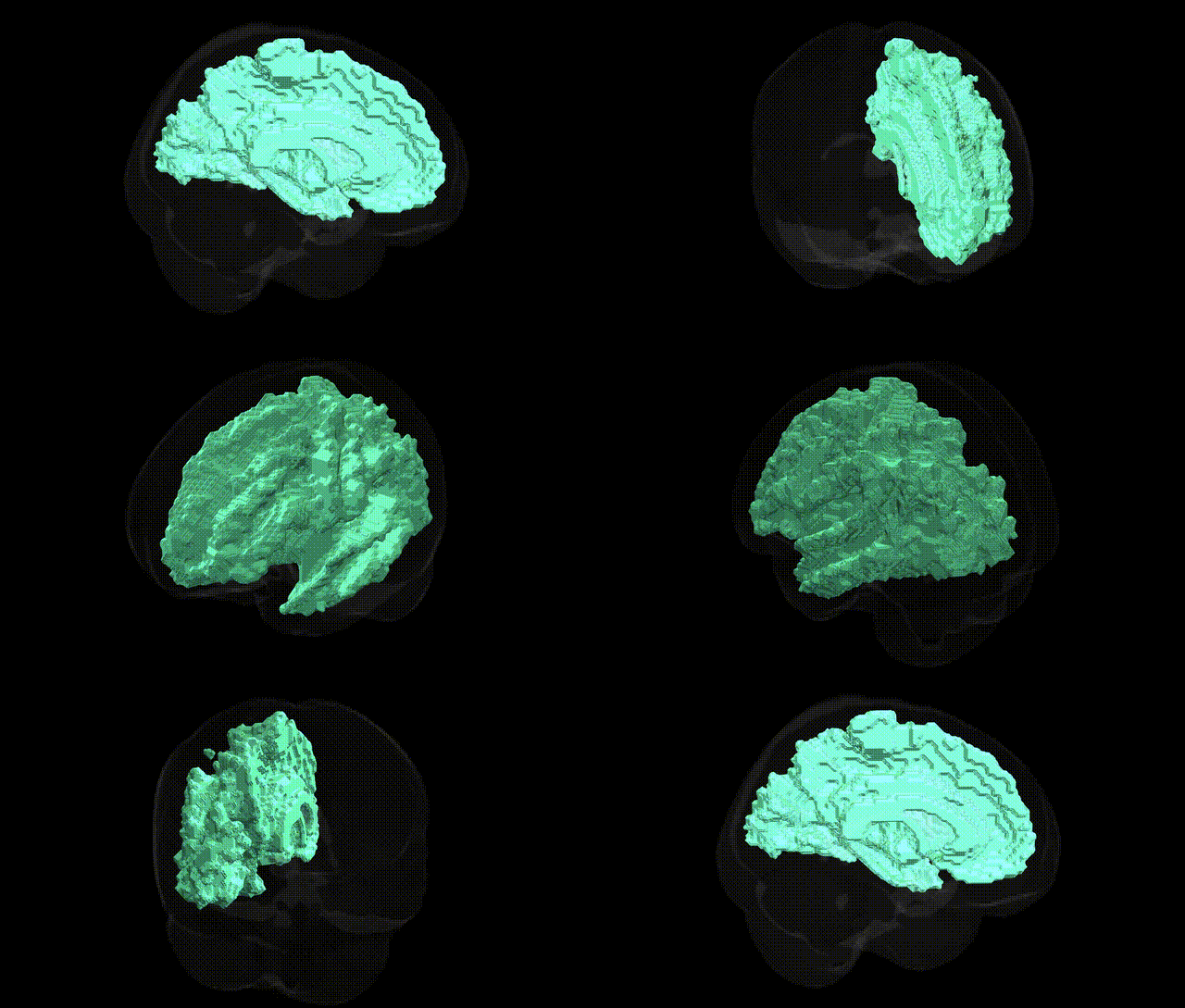
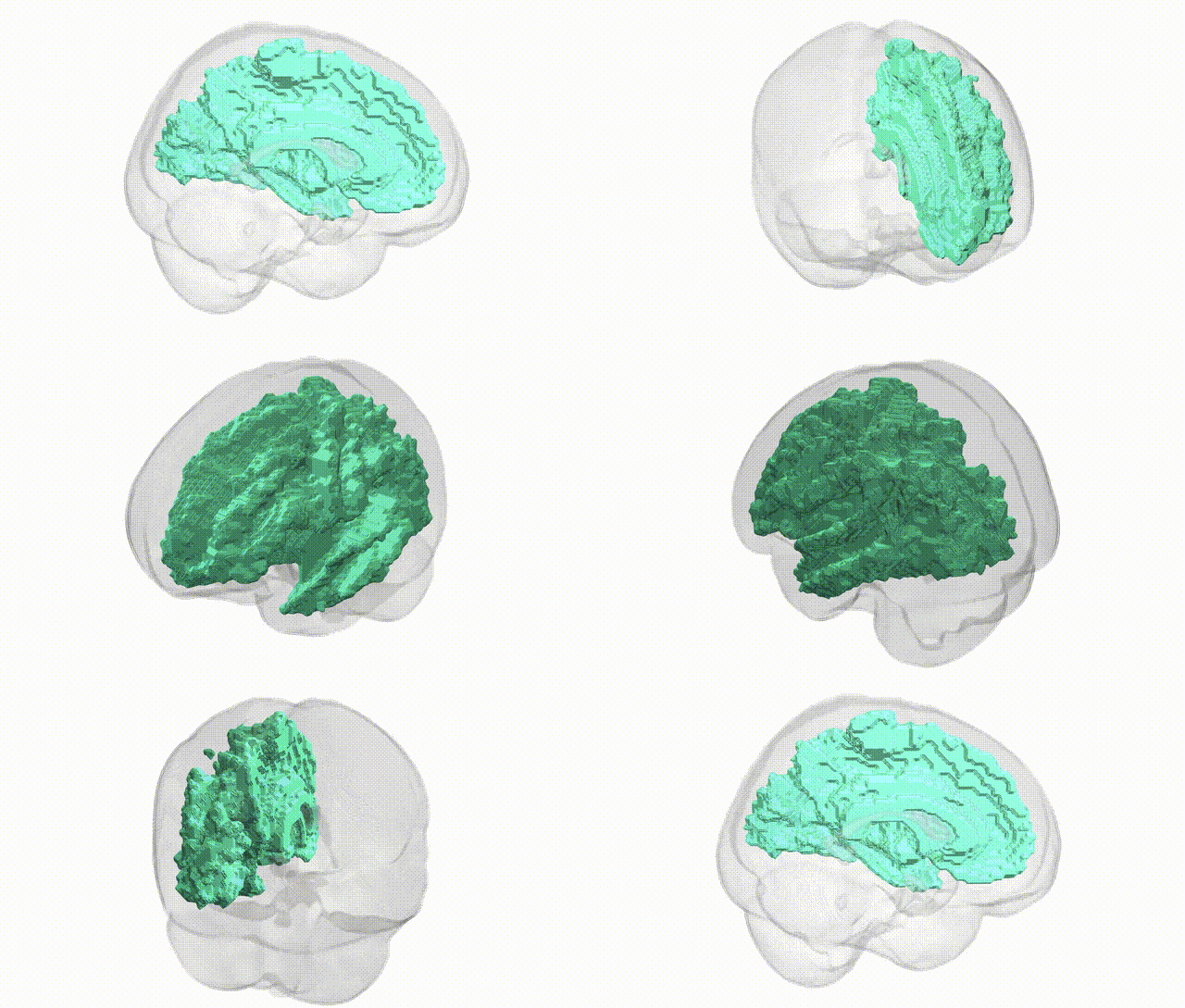
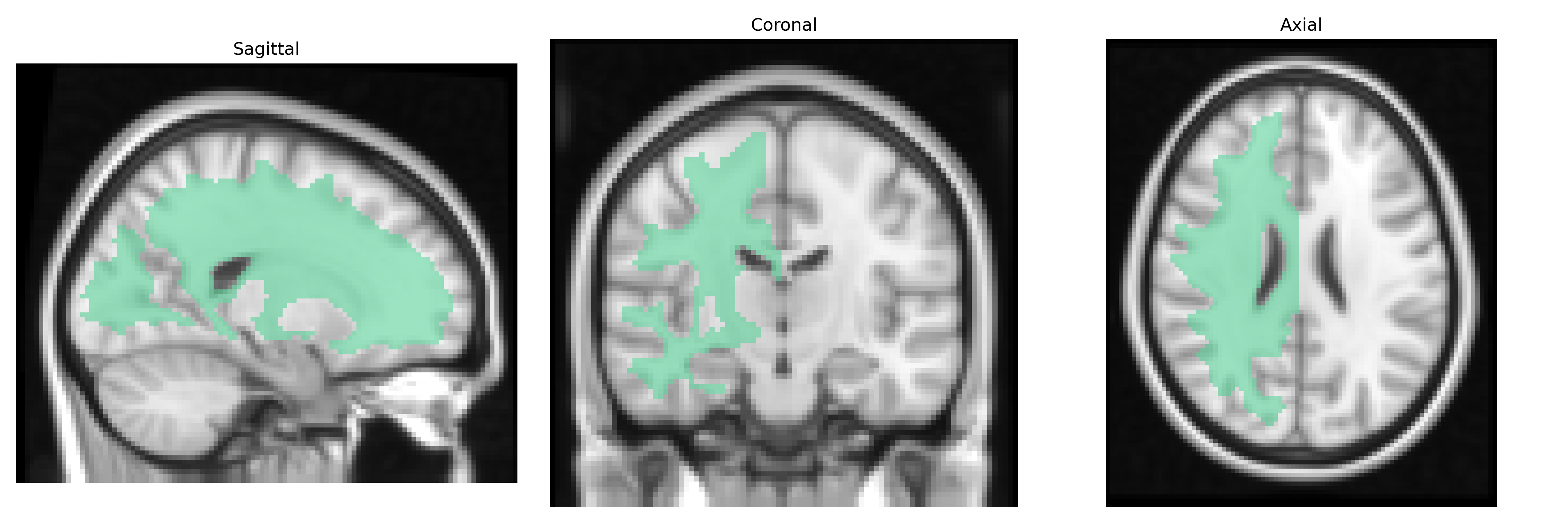
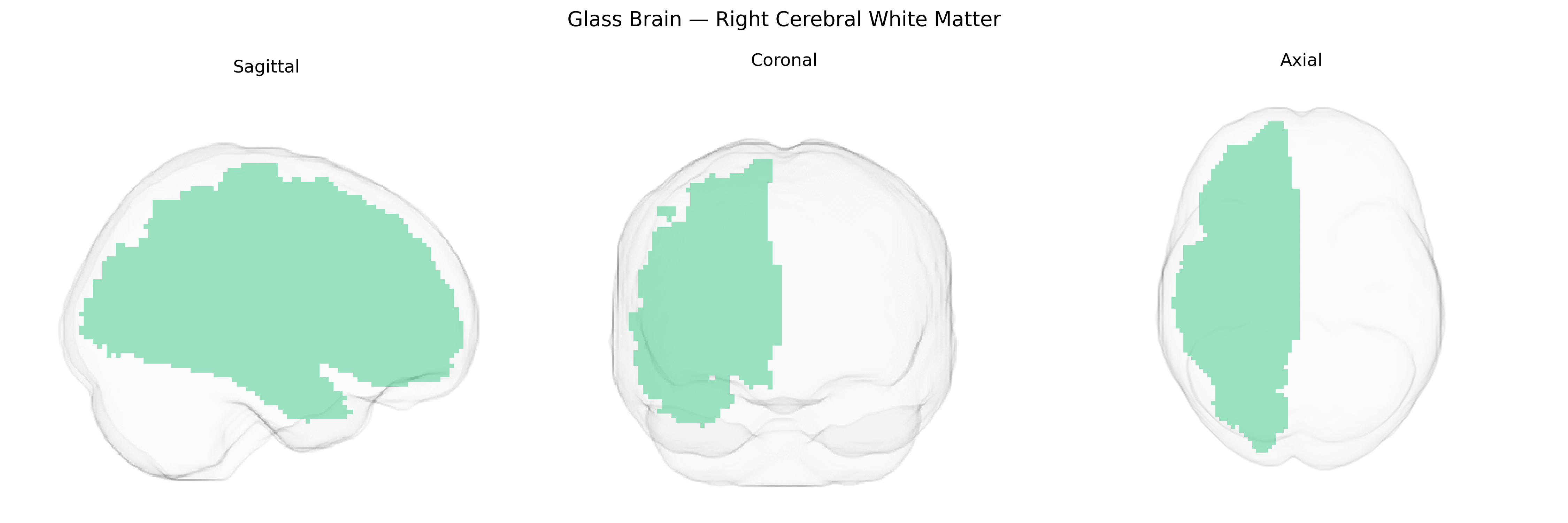
The bilateral Right Cerebral White Matter, as defined in the Harvard-Oxford subcortical atlas, comprises the myelinated fiber tracts underlying the cerebral cortex in the right hemisphere, including association, commissural, and projection pathways that connect cortical regions with each other and with subcortical nuclei. These fibers facilitate rapid and efficient transmission of neural signals, supporting integrative functions such as sensorimotor coordination, higher cognitive processing, and interhemispheric communication via structures like the corpus callosum. Although “Right Cerebral White Matter” does not have a dedicated article, it is part of the broader cerebral white matter system described under White matter.
Genetic associations involving bilateral right cerebral white matter, as delineated in the Harvard-Oxford atlas, are largely inferred from genome-wide association studies (GWAS) of global and regional white matter volume, microstructure (e.g., fractional anisotropy), and white matter hyperintensities rather than this atlas label specifically, with many effects spanning both hemispheres. Variants in genes related to neurodevelopment, myelination, and axonal integrity—such as those in or near genes like NTRK1/2, CNTN4, MAG, and multiple oligodendrocyte- and myelin-related loci—have been associated with white matter morphology and integrity measures that include right-hemispheric tracts. Large GWAS consortia (e.g., ENIGMA, UK Biobank analyses) have identified polygenic contributions from common variants to total and regional white matter volume, as well as diffusion metrics within major right-lateralized tracts (e.g., right superior longitudinal fasciculus, right inferior fronto-occipital fasciculus), with overlap between loci implicated in cognitive performance, educational attainment, and intracranial volume. Additionally, genetic risk factors for neuropsychiatric and neurodegenerative disorders—such as schizophrenia, bipolar disorder, major depression, and Alzheimer’s disease—often show mediated effects through altered white matter integrity, including in right frontal and temporal white matter, while polygenic scores for vascular risk and small vessel disease are linked to white matter hyperintensities and microstructural damage that encompass this region; however, no robust evidence indicates that this specific “Right Cerebral White Matter” atlas label has unique, region-exclusive genetic associations distinct from broader supratentorial white matter.
Overview generated by GPT-4o (2026).
Region ID: 12
Hemisphere: bilateral
Atlas: HarvardOxford sub maxprob thr25 2mm
Full Quality Version: Download MP4
Full Quality Version: Download MP4
Wali Sidiqyar*, Gaurav Rudravaram*, Elyssa M. McMaster, Trent M. Schwartz, Adam M. Saunders, Kurt G. Schilling, Bennett A. Landman "Introducing SPINS: A Shared Public Visualization Library of Neuroanatomical Structures." Medical Imaging with Deep Learning- short paper
This resource is licensed under CC0 1.0 Universal (Public Domain).