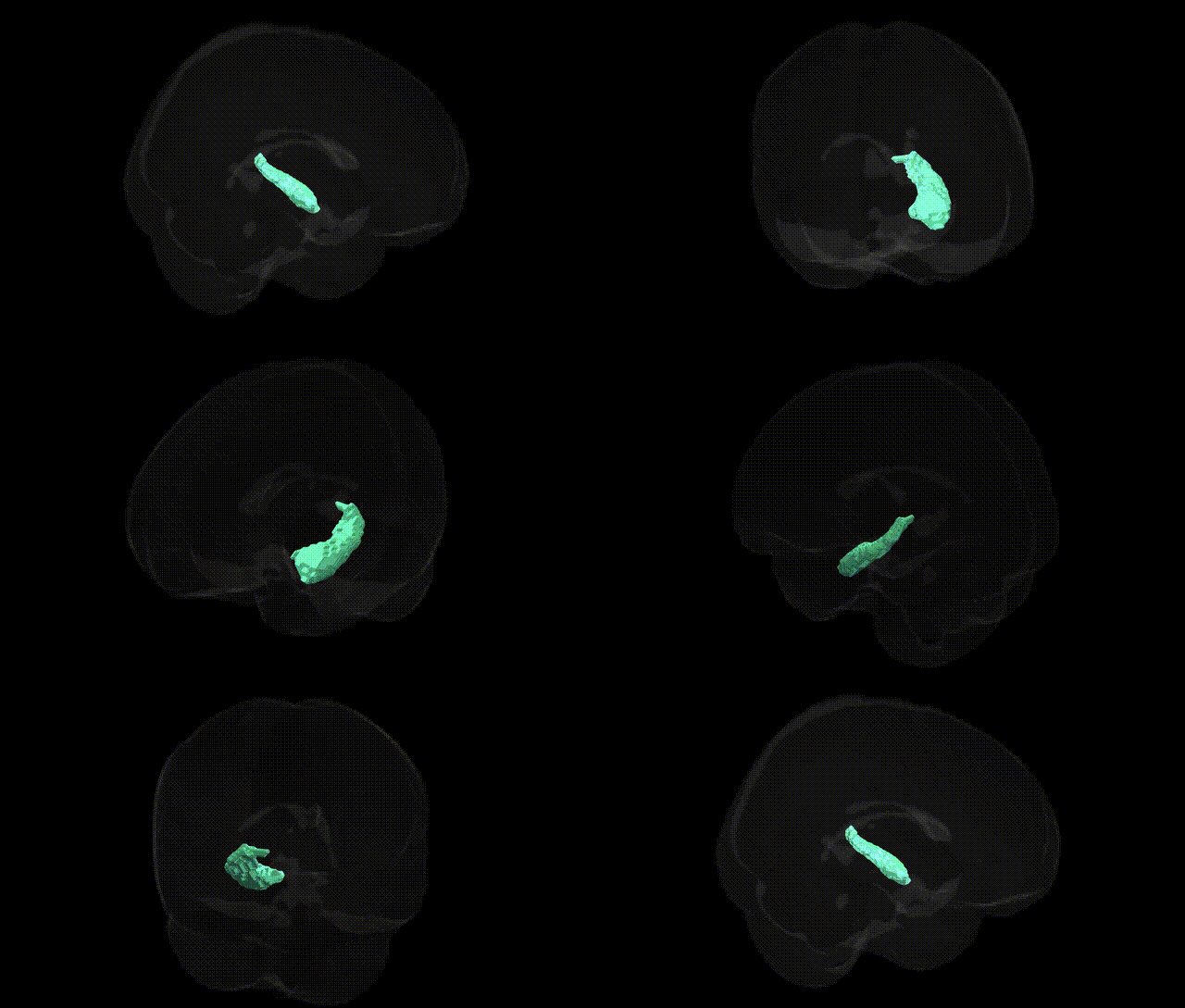
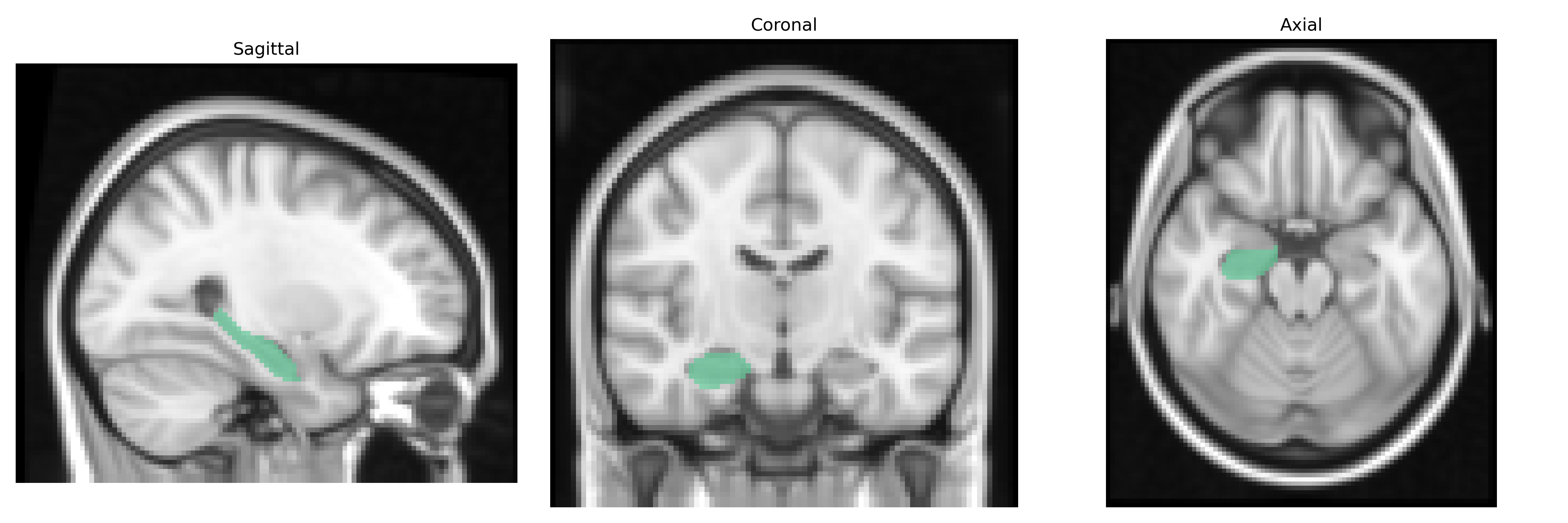
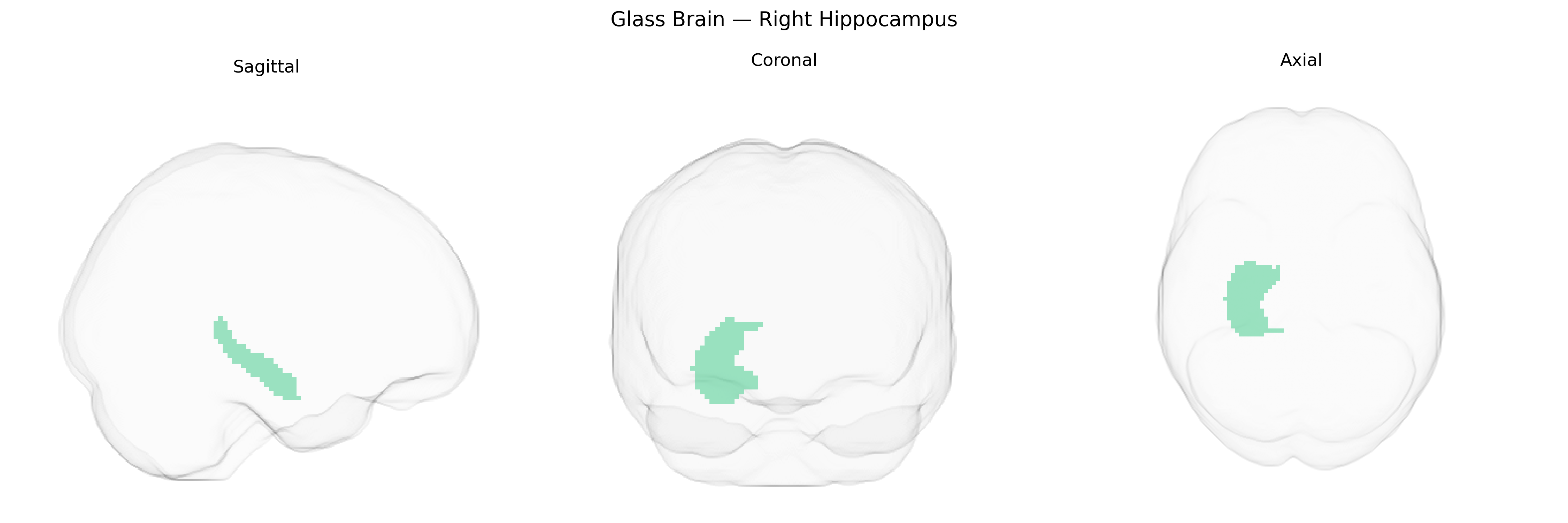
The bilateral Right Hippocampus, as defined in the Harvard–Oxford subcortical maximum probability (thr25, 2 mm) atlas, comprises the right-sided hippocampal formation located within the medial temporal lobe, extending from the amygdalar region posteriorly along the temporal horn of the lateral ventricle and curving superiorly toward the splenium of the corpus callosum. This structure includes key subfields such as cornu ammonis, dentate gyrus, and subiculum (though not individually resolved in this atlas), and is supplied primarily by branches of the posterior cerebral and anterior choroidal arteries. Functionally, the right hippocampus is critically involved in episodic and spatial memory, contextual learning, and aspects of emotional processing, with hemispheric specialization often emphasizing spatial and nonverbal memory functions on the right. It forms part of the limbic system, interacting extensively with the entorhinal cortex, parahippocampal gyrus, amygdala, and prefrontal regions via major white matter pathways such as the fornix, thereby integrating multimodal sensory input into long-term memory representations. Hippocampus
Genetic associations with the bilateral right hippocampus, as defined in the Harvard-Oxford subcortical atlas, implicate numerous loci involved in neurodevelopment, synaptic plasticity, stress response, and neurodegeneration. Large-scale neuroimaging GWAS (e.g., ENIGMA, UK Biobank) have identified variants in genes such as HMGA2, TESC, SREBF1, and DPP4 associated with total and regional hippocampal volume, alongside polygenic overlap with general cognitive ability and educational attainment. Hippocampal structure and function show strong genetic correlations with major depressive disorder, schizophrenia, bipolar disorder, post-traumatic stress disorder, and Alzheimer’s disease, with risk loci in genes like APOE, CLU, BIN1, and CR1 linked to hippocampal atrophy and episodic memory decline. Variants in BDNF (notably Val66Met) and genes regulating glutamatergic and GABAergic signaling have been tied to memory performance, stress sensitivity, and right-lateralized hippocampal activation patterns, while genome-wide polygenic scores for depression, anxiety, and neuroticism correlate with reduced hippocampal volume. Overall, the right hippocampus emerges as a heritable structure whose morphology and function reflect a complex interplay of common variants contributing to cognitive traits, mood and psychotic disorders, and neurodegenerative risk.
Overview generated by GPT-4o (2026).
Region ID: 19
Hemisphere: bilateral
Atlas: HarvardOxford sub maxprob thr25 2mm
Full Quality Version: Download MP4
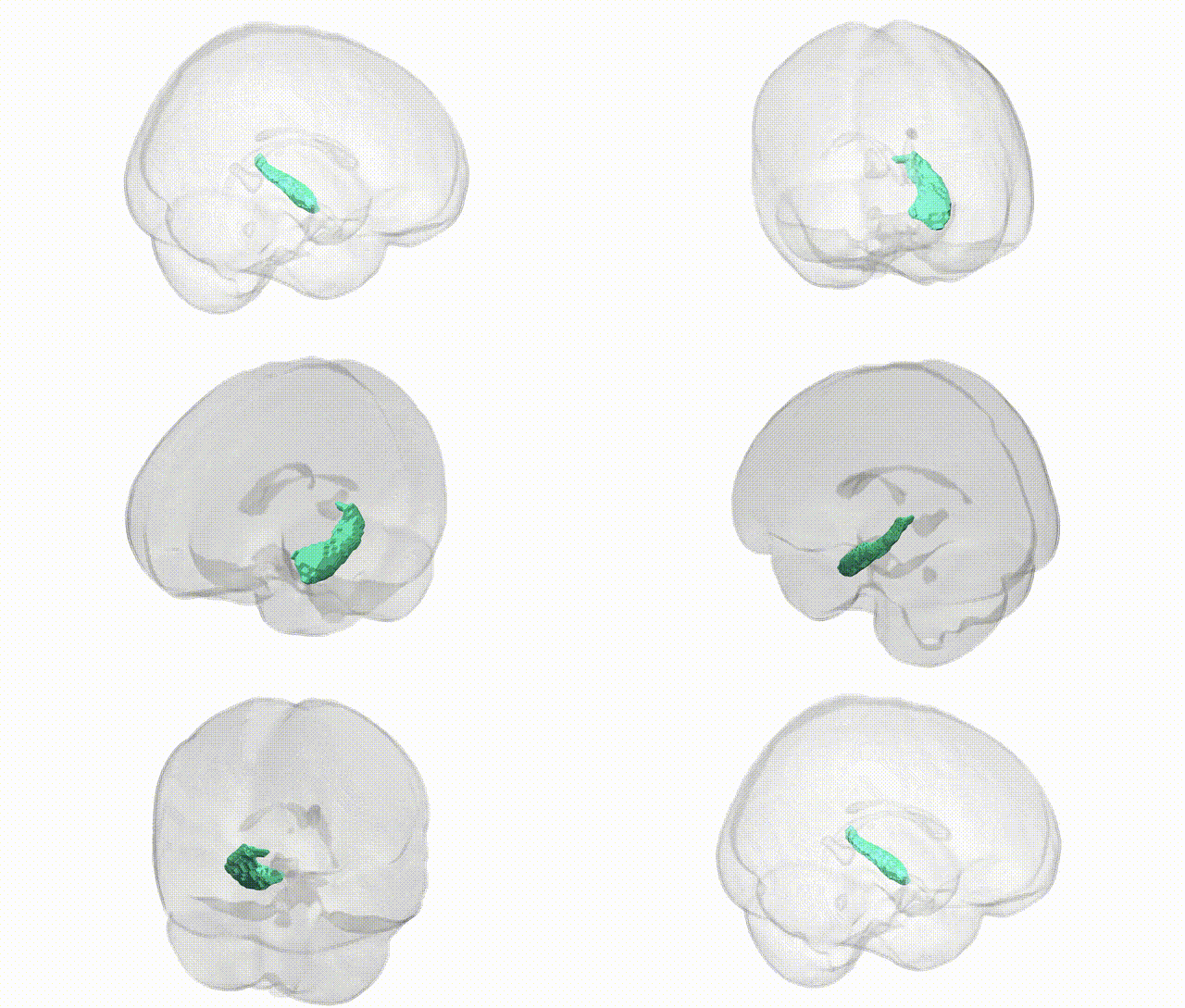
Full Quality Version: Download MP4
Wali Sidiqyar*, Gaurav Rudravaram*, Elyssa M. McMaster, Trent M. Schwartz, Adam M. Saunders, Kurt G. Schilling, Bennett A. Landman "Introducing SPINS: A Shared Public Visualization Library of Neuroanatomical Structures." Medical Imaging with Deep Learning- short paper
This resource is licensed under CC0 1.0 Universal (Public Domain).