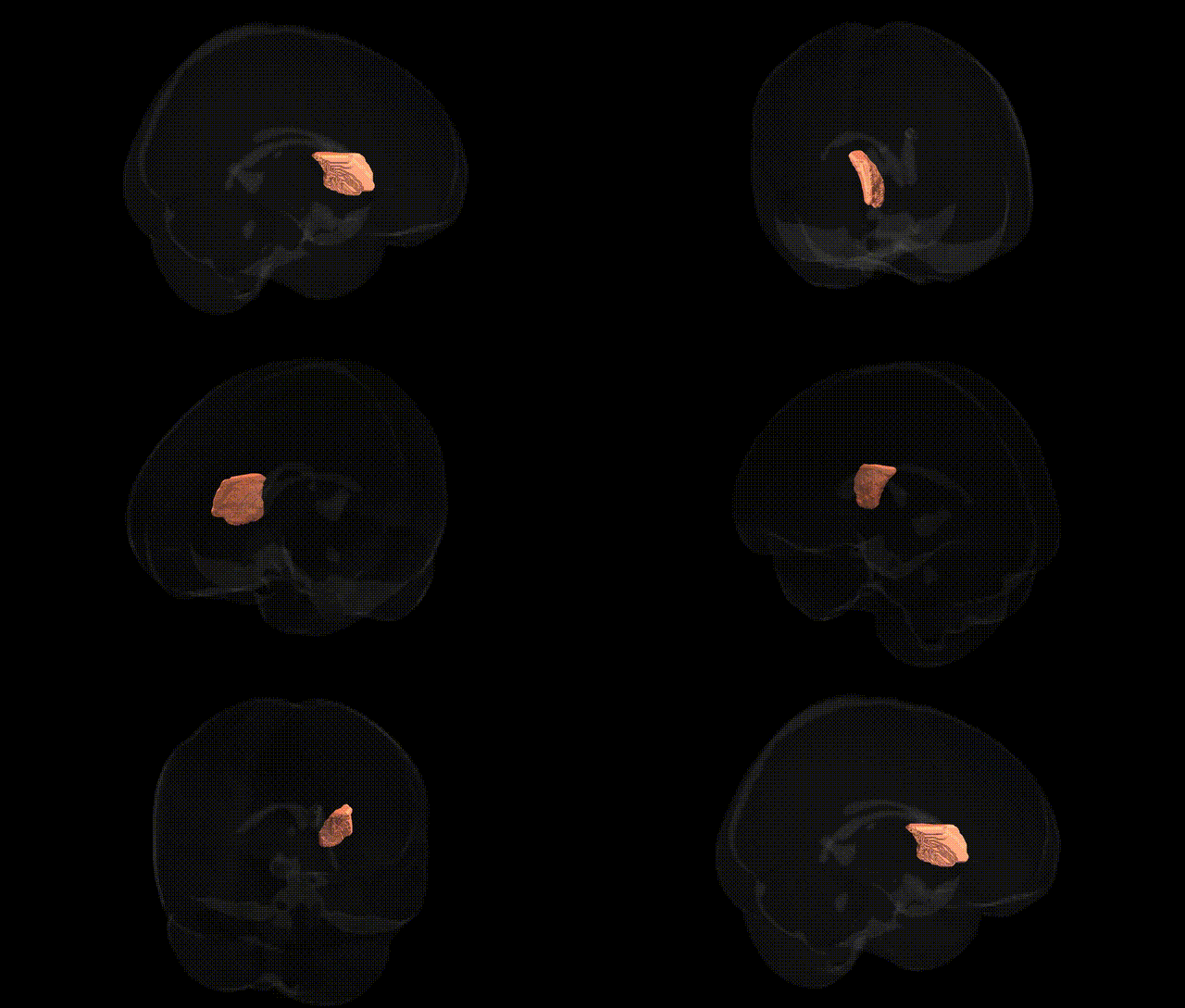
The bilateral anterior limb of the internal capsule (left) is a major white matter tract situated between the head of the caudate nucleus medially and the lentiform nucleus laterally, forming part of the internal capsule that conveys corticocortical and subcortical connections. It contains fronto-pontine fibers, thalamocortical projections (especially from the mediodorsal and anterior thalamic nuclei to prefrontal and cingulate cortices), and reciprocal fibers linking the prefrontal cortex with limbic and associative thalamic regions, thereby contributing to executive functions, working memory, emotional regulation, and aspects of motivation and behavior. This region is clinically significant in vascular lesions, demyelinating disease, and is a frequent target in neuromodulation procedures such as deep brain stimulation and capsulotomy for treatment-resistant psychiatric disorders, given its role in fronto-thalamic and limbic circuitry.
Internal capsule
The bilateral anterior limb of the internal capsule (ALIC), as defined in the JHU ICBM 1 mm atlas, has been implicated in genetic studies largely through its role in fronto-striatal and thalamo-cortical circuitry rather than via region-specific GWAS hits. Variants in genes influencing white matter microstructure and myelination, such as NTRK3, MAG, and others identified in large diffusion tensor imaging GWAS (e.g., ENIGMA and UK Biobank-based studies), have been associated with fractional anisotropy and mean diffusivity measures in internal capsule tracts, suggesting heritable control of ALIC integrity. Polygenic risk for schizophrenia, bipolar disorder, major depressive disorder, and obsessive–compulsive disorder has been linked to altered microstructure of fronto-striatal pathways that traverse the ALIC, with specific loci in genes related to synaptic function (e.g., CACNA1C, GRIN2A, and common dopaminergic and glutamatergic pathway genes) contributing to both disease risk and white matter differences. GWAS of cognitive traits (general intelligence, processing speed, executive function) have identified variants in axon guidance and neuronal development genes (e.g., ROBO1/2, CNTN4, and other cell-adhesion molecules) that show downstream associations with the integrity of anterior limb and related association fibers, reflecting a genetic influence on connectivity between prefrontal cortex and striatum/thalamus. Additionally, risk alleles for attention-deficit/hyperactivity disorder, Tourette syndrome, and substance use disorders have been associated in imaging–genetics studies with structural and microstructural changes in fronto-striatal tracts running through the ALIC, although these are typically reported at the level of broader internal capsule or fronto-striatal pathways rather than the ALIC label alone. Overall, the genetic architecture linked to the bilateral ALIC is characterized by common variants affecting neurodevelopment, myelination, synaptic signaling, and cortical–subcortical connectivity, manifesting as heritable differences in tract integrity that intersect with polygenic risk for major psychiatric and cognitive phenotypes.
Overview generated by GPT-4o (2026).
Region ID: 18
Hemisphere: bilateral
Atlas: JHU ICBM labels 1mm
Full Quality Version: Download MP4
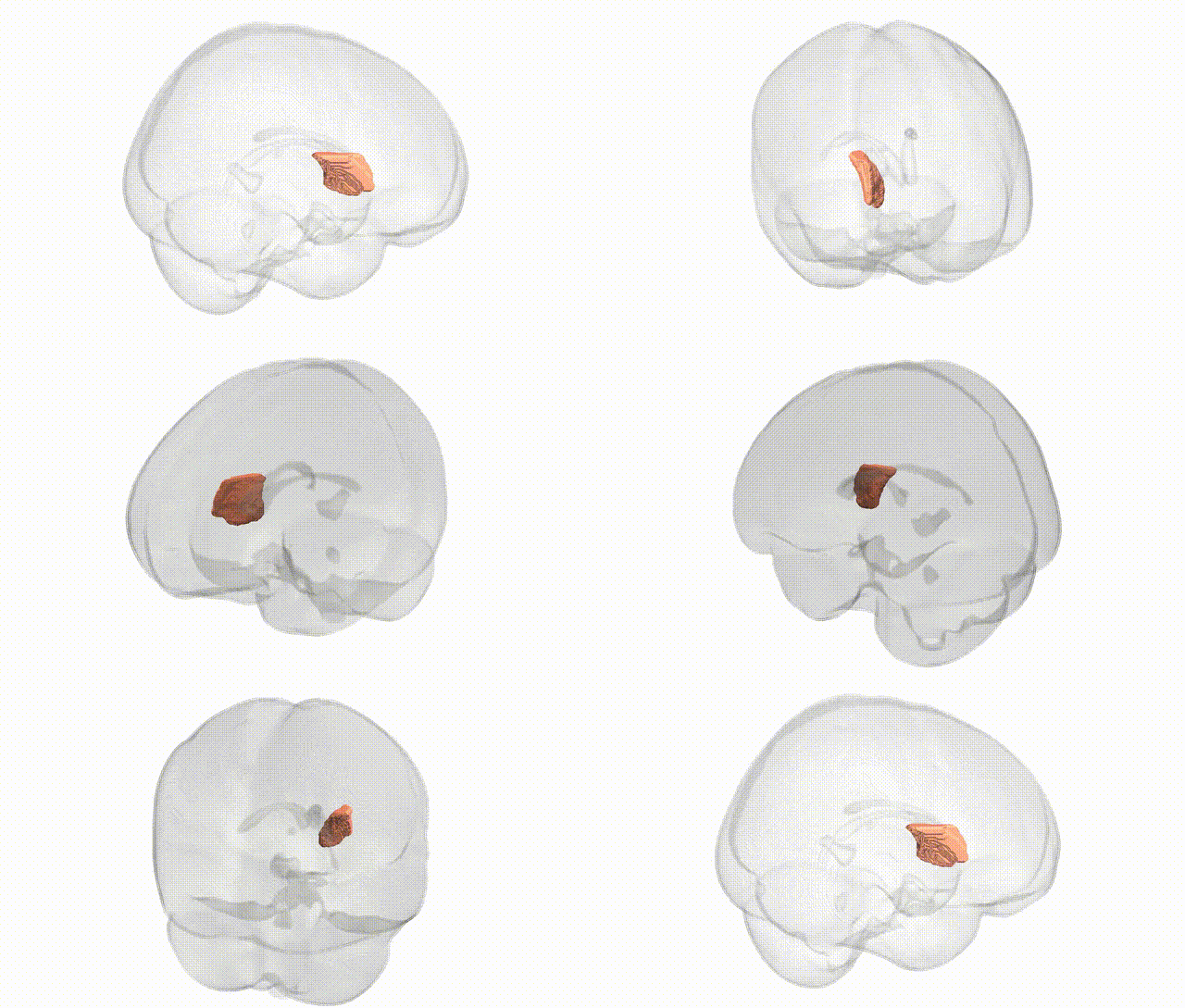
Full Quality Version: Download MP4
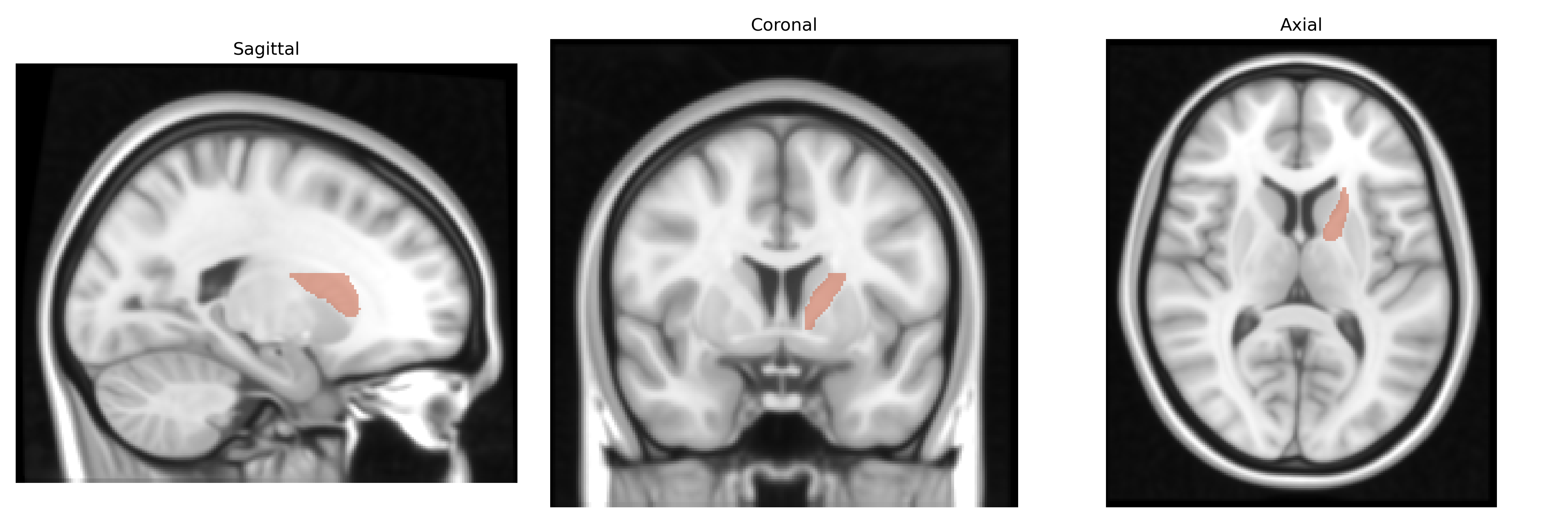
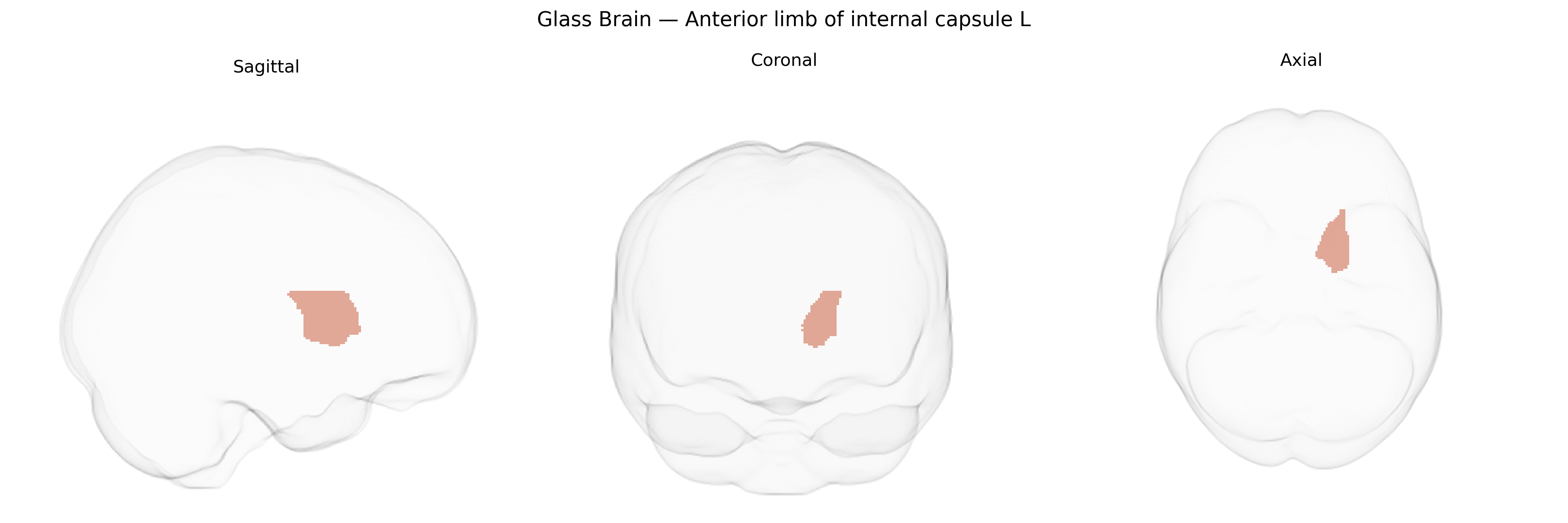
Wali Sidiqyar*, Gaurav Rudravaram*, Elyssa M. McMaster, Trent M. Schwartz, Adam M. Saunders, Kurt G. Schilling, Bennett A. Landman "Introducing SPINS: A Shared Public Visualization Library of Neuroanatomical Structures." Medical Imaging with Deep Learning- short paper
This resource is licensed under CC0 1.0 Universal (Public Domain).