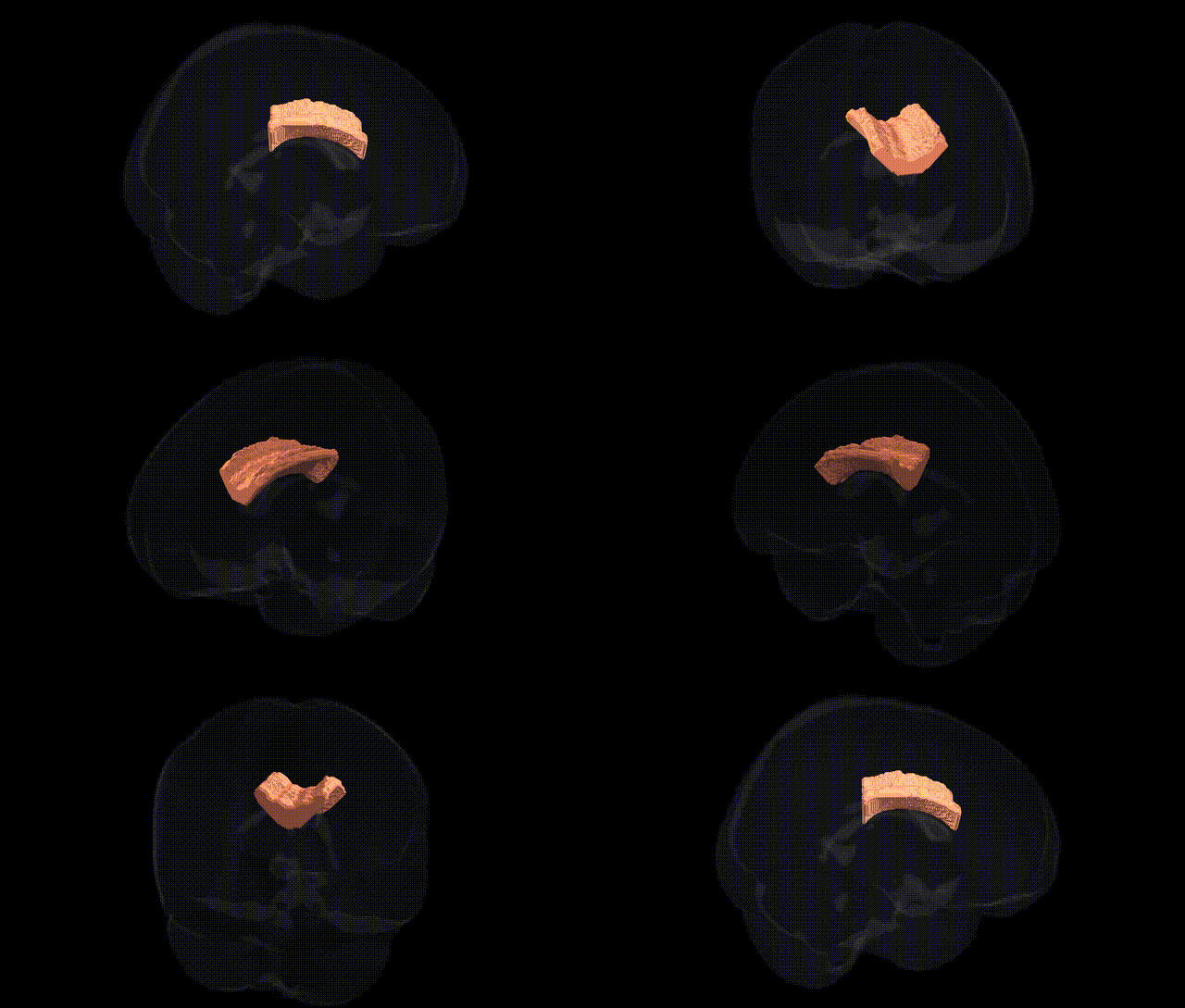
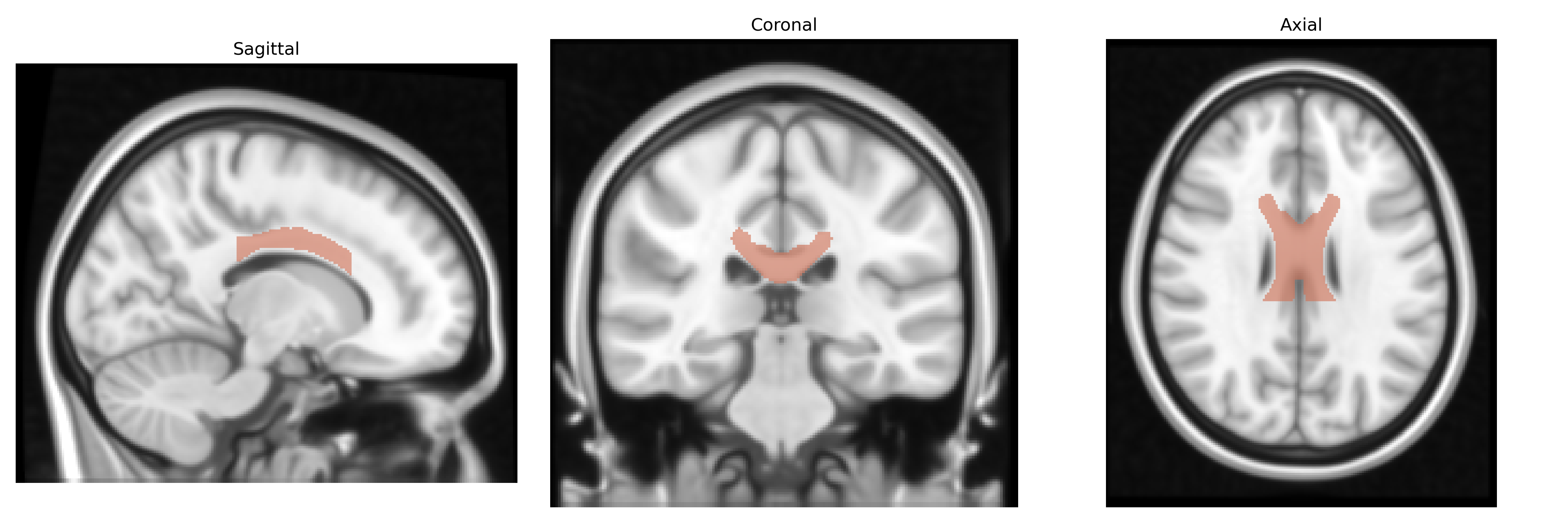
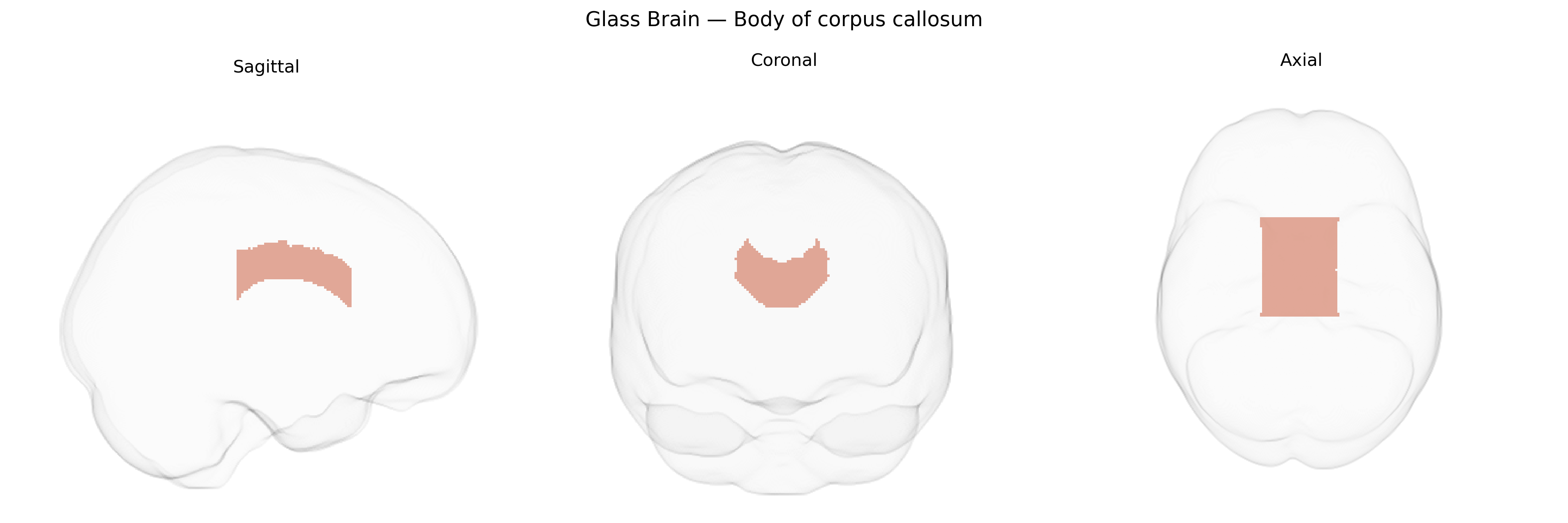
The bilateral Body of corpus callosum, as defined in the JHU ICBM labels 1mm atlas, represents the central segment of the corpus callosum, the major commissural fiber bundle connecting homologous cortical regions of the left and right cerebral hemispheres. Composed primarily of densely packed myelinated axons, the body lies superior to the lateral ventricles and interhemispheric fissure, providing interhemispheric communication for extensive portions of the frontal, parietal, and posterior cortical areas. Functionally, this region is critical for the integration of sensory, motor, and higher-order cognitive information across hemispheres, contributing to coordinated bilateral behavior, unified perception, and complex cognitive processes such as language and executive function. Developmentally, its integrity and microstructural organization are key for normal neurodevelopment, while disruptions in its structure or connectivity are implicated in a variety of neuropsychiatric and neurodevelopmental conditions. Corpus callosum
The bilateral body of the corpus callosum, as defined in the JHU ICBM labels 1 mm atlas, has been implicated in multiple genetic studies linking white matter microstructure (typically measured via diffusion tensor imaging) to common variants across the genome. GWAS of fractional anisotropy (FA) and other diffusion metrics in large cohorts (e.g., ENIGMA, UK Biobank) have repeatedly identified associations near genes involved in axon guidance, myelination, and neurodevelopment, including loci in or near CNTNAP2, NRG1, MAG, NCAM1, and several oligodendrocyte- and myelin-related genes, although specific signals for the corpus callosum body often overlap with broader callosal or global white matter measures. Genetic variants influencing callosal body integrity have been linked to neuropsychiatric and neurodevelopmental disorders such as schizophrenia, bipolar disorder, autism spectrum disorder, and attention-deficit/hyperactivity disorder, where risk alleles in pathways related to synaptic function and neurodevelopment (e.g., CACNA1C, DISC1, and polygenic risk scores for these disorders) correlate with reduced FA or altered callosal volume. In addition, GWAS of cognitive traits (general intelligence, processing speed, educational attainment) and motor function have identified polygenic architectures that partially overlap with those affecting corpus callosum microstructure, suggesting shared genetic influences on interhemispheric connectivity and higher-order cognition. Overall, genetic findings for the corpus callosum body point to a polygenic, pleiotropic architecture, with many common variants of small effect contributing to variability in white matter organization and to risk for complex brain disorders.
Overview generated by GPT-4o (2026).
Region ID: 4
Hemisphere: bilateral
Atlas: JHU ICBM labels 1mm
Full Quality Version: Download MP4
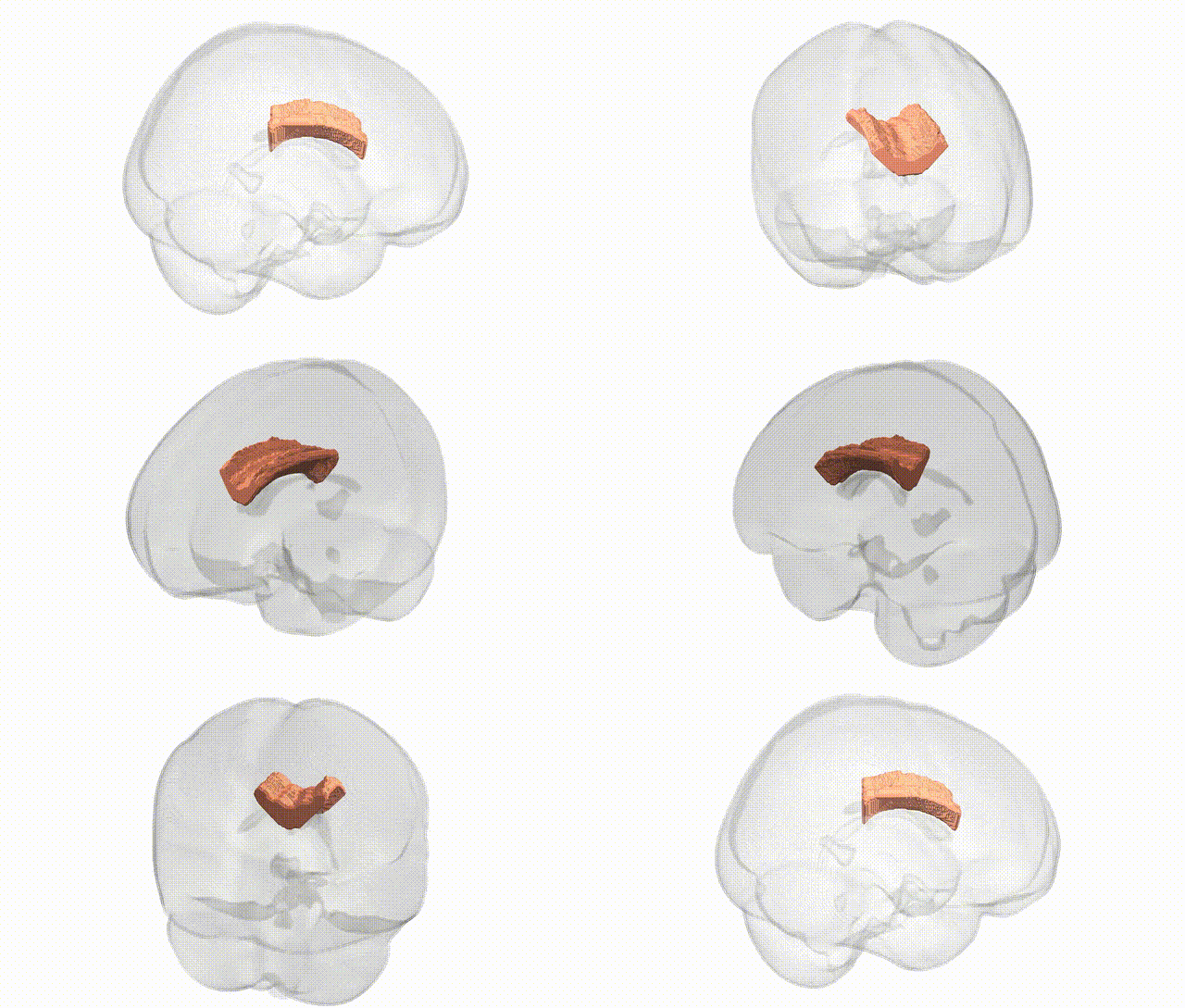
Full Quality Version: Download MP4
Wali Sidiqyar*, Gaurav Rudravaram*, Elyssa M. McMaster, Trent M. Schwartz, Adam M. Saunders, Kurt G. Schilling, Bennett A. Landman "Introducing SPINS: A Shared Public Visualization Library of Neuroanatomical Structures." Medical Imaging with Deep Learning- short paper
This resource is licensed under CC0 1.0 Universal (Public Domain).