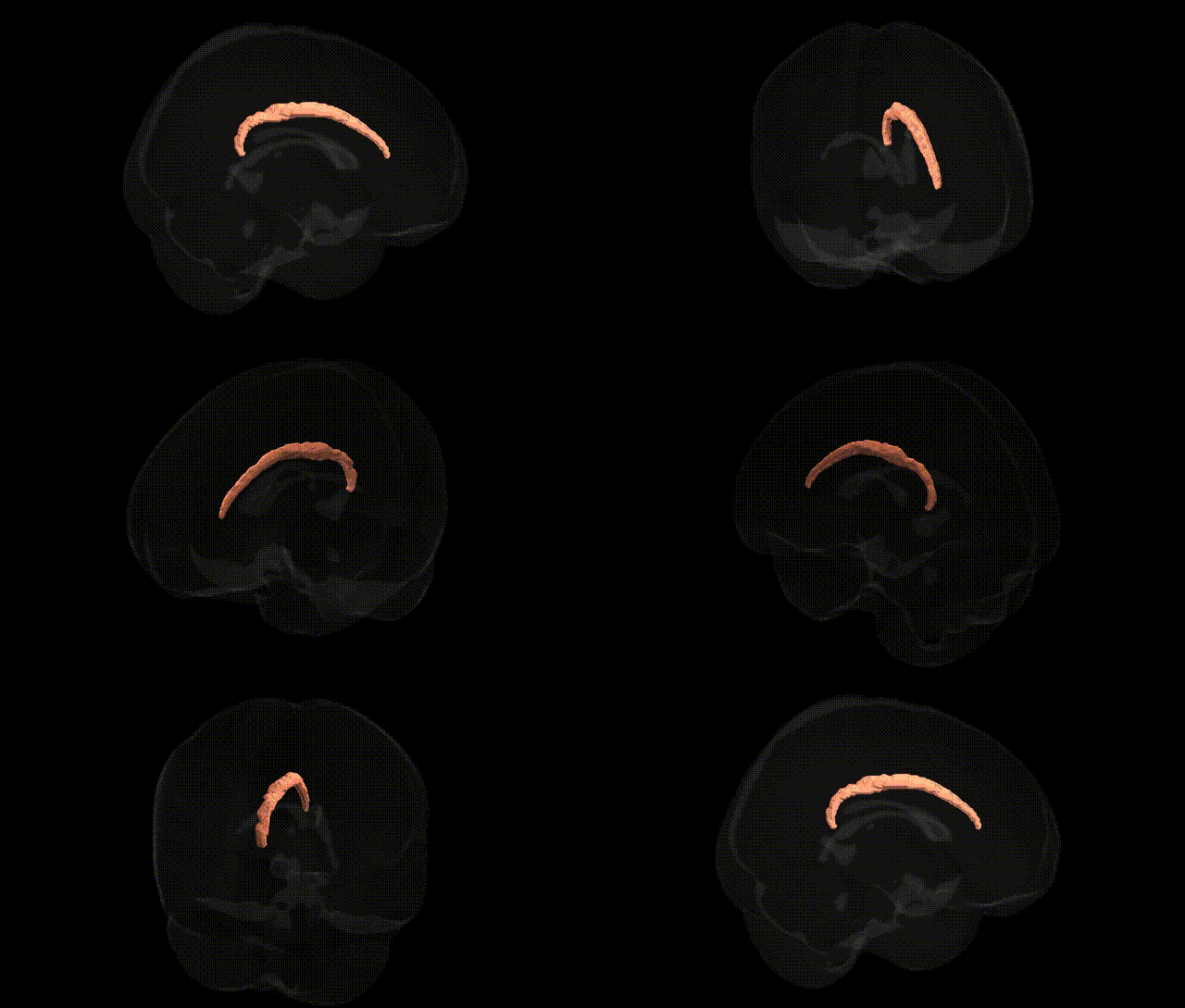
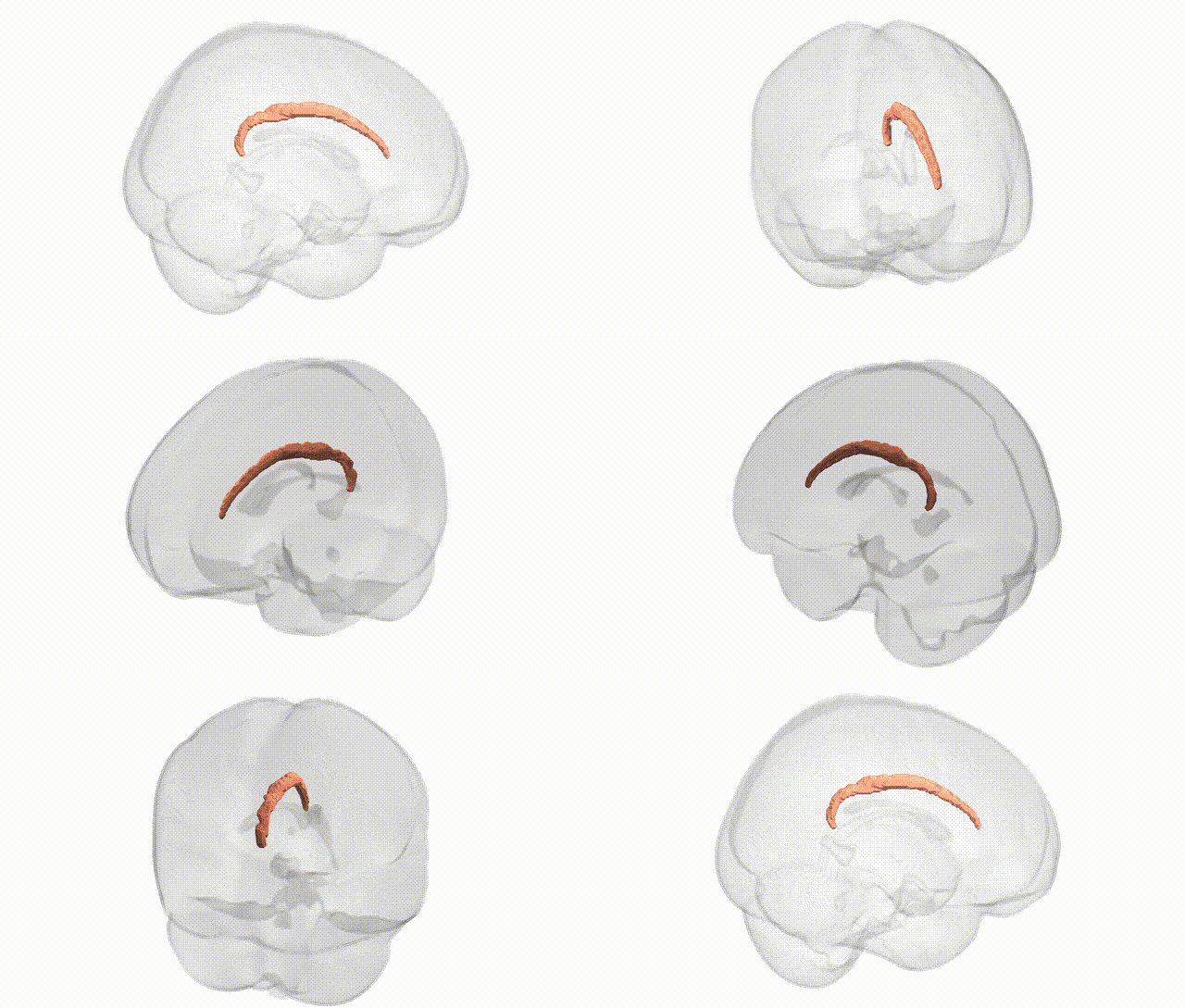
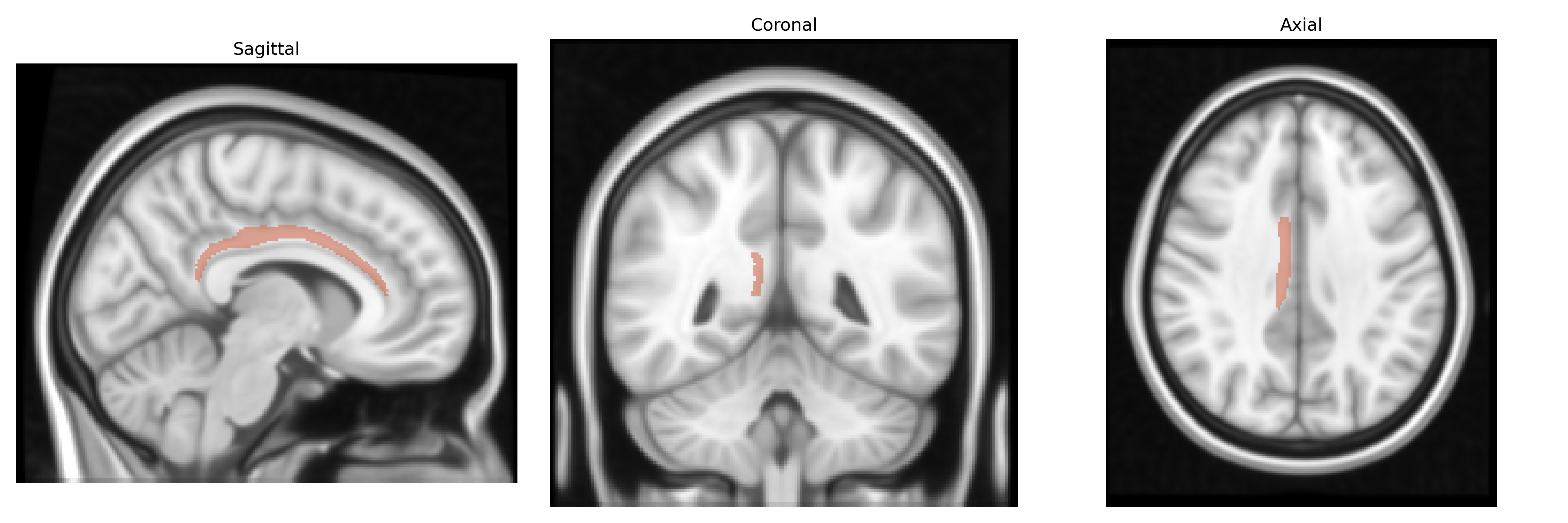
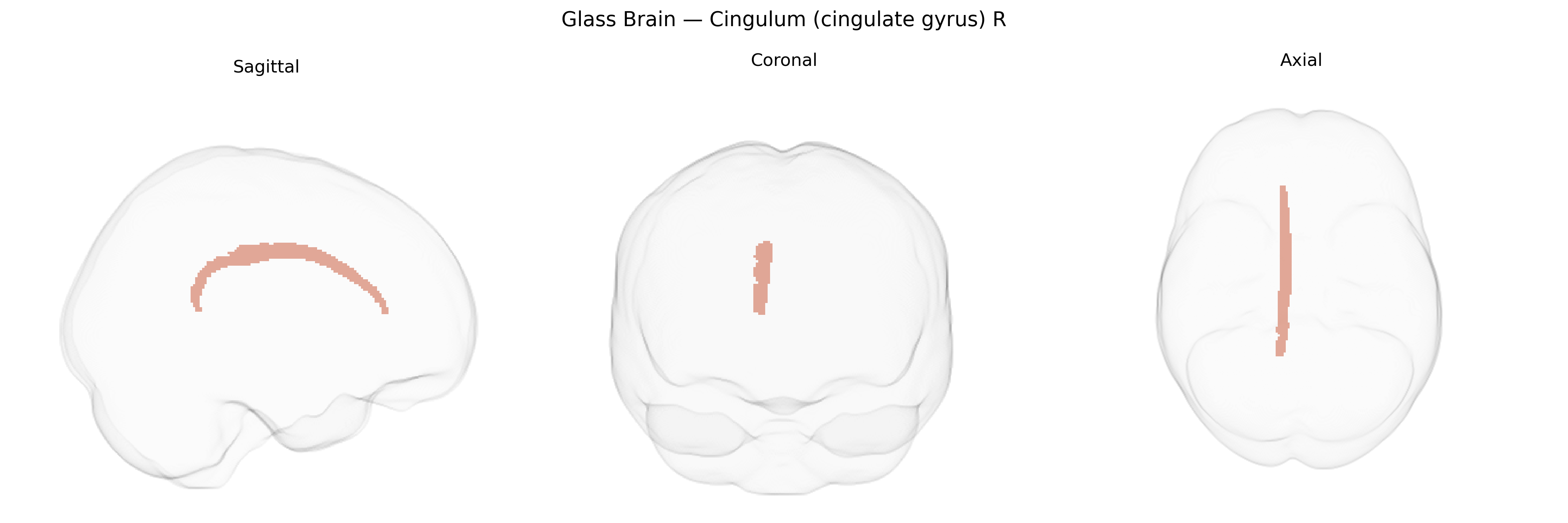
The bilateral cingulum (cingulate gyrus) R, as defined in the JHU ICBM labels 1 mm atlas, corresponds to a major associative white matter tract running within the cingulate gyrus along the medial aspect of the cerebral hemispheres, arching over the corpus callosum and extending from the frontal to parietal and temporal regions. It forms part of the limbic system and connects cingulate cortex with prefrontal, parietal, and medial temporal structures, including the hippocampal formation, thereby supporting integration of cognitive, emotional, and memory-related processes. Functionally, the cingulum is implicated in attention, executive control, pain and emotion processing, and the regulation of autonomic responses, and is frequently studied in the context of mood disorders, dementia, and disorders of connectivity. There is no direct Wikipedia article for this specific labeled tract; a closely related structure is the Cingulate gyrus.
The bilateral cingulum (cingulate gyrus) R tract in the JHU ICBM 1 mm atlas has been repeatedly implicated in imaging genetics and GWAS studies of brain structure and connectivity, with variants in genes involved in myelination, synaptic plasticity, and neurodevelopment (e.g., NTRK1/3, BDNF, CNTNAP2, MAG, and several oligodendrocyte-related loci) associated with cingulum fractional anisotropy (FA), mean diffusivity (MD), and tract volume. Large-scale GWAS of diffusion MRI metrics have identified common variants near genes such as DPYSL2, TENM4, and PLCG1 that influence microstructural properties of the cingulum as part of broader white-matter networks. These genetic influences on cingulum integrity have been linked to disorders including major depressive disorder, schizophrenia, bipolar disorder, autism spectrum disorder, and ADHD, where risk alleles in genes like CACNA1C, ZNF804A, DISC1, and GRM3 show associations with altered cingulum connectivity or cingulate-related functional networks. Imaging-genetic studies also connect cingulum variation to cognitive traits such as executive function, attention, memory, and general intelligence, as well as personality dimensions (e.g., neuroticism) and stress-related traits, suggesting that polygenic influences on this tract contribute to individual differences in emotion regulation and cognitive control.
Overview generated by GPT-4o (2026).
Region ID: 35
Hemisphere: bilateral
Atlas: JHU ICBM labels 1mm
Full Quality Version: Download MP4
Full Quality Version: Download MP4
Wali Sidiqyar*, Gaurav Rudravaram*, Elyssa M. McMaster, Trent M. Schwartz, Adam M. Saunders, Kurt G. Schilling, Bennett A. Landman "Introducing SPINS: A Shared Public Visualization Library of Neuroanatomical Structures." Medical Imaging with Deep Learning- short paper
This resource is licensed under CC0 1.0 Universal (Public Domain).