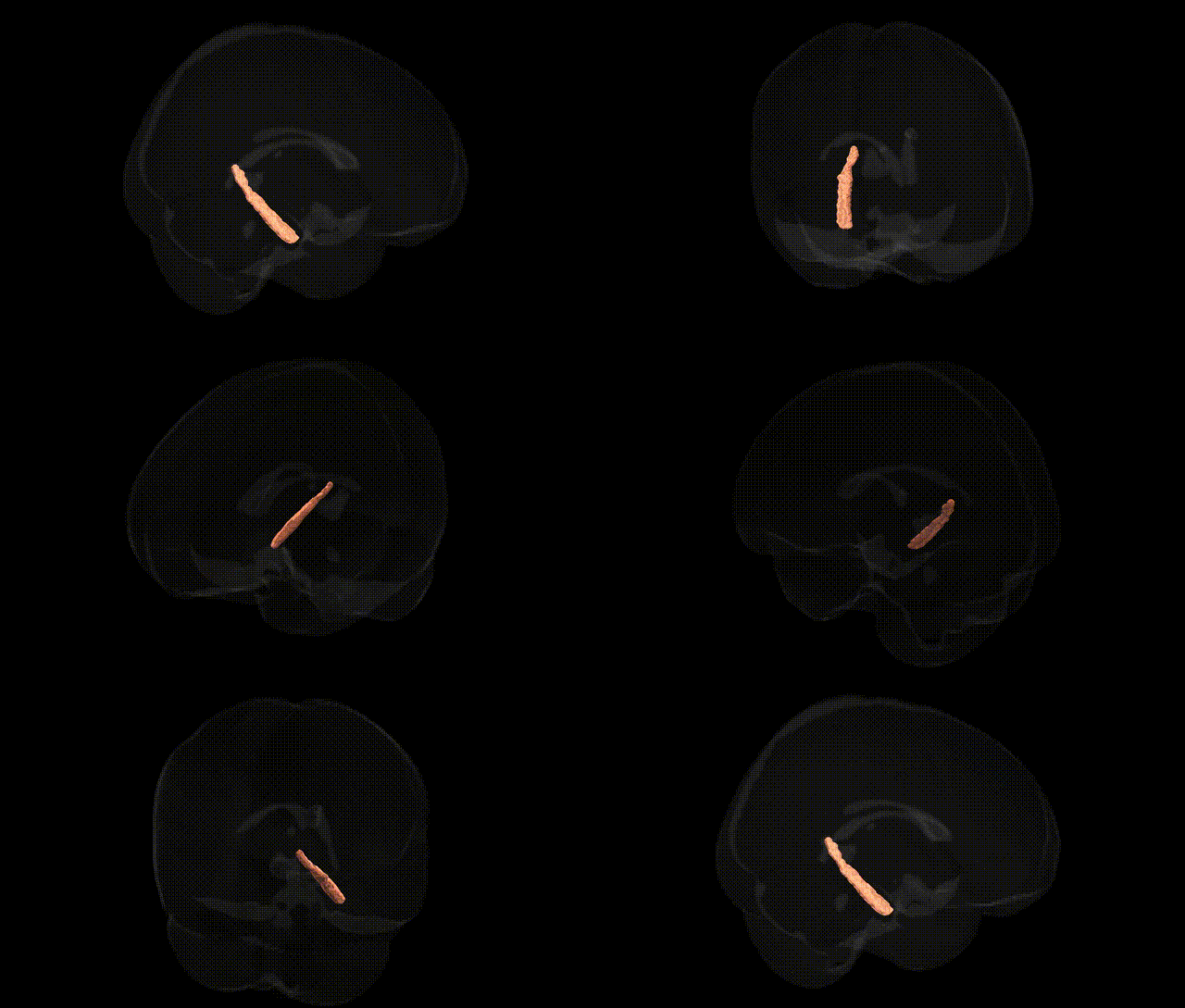
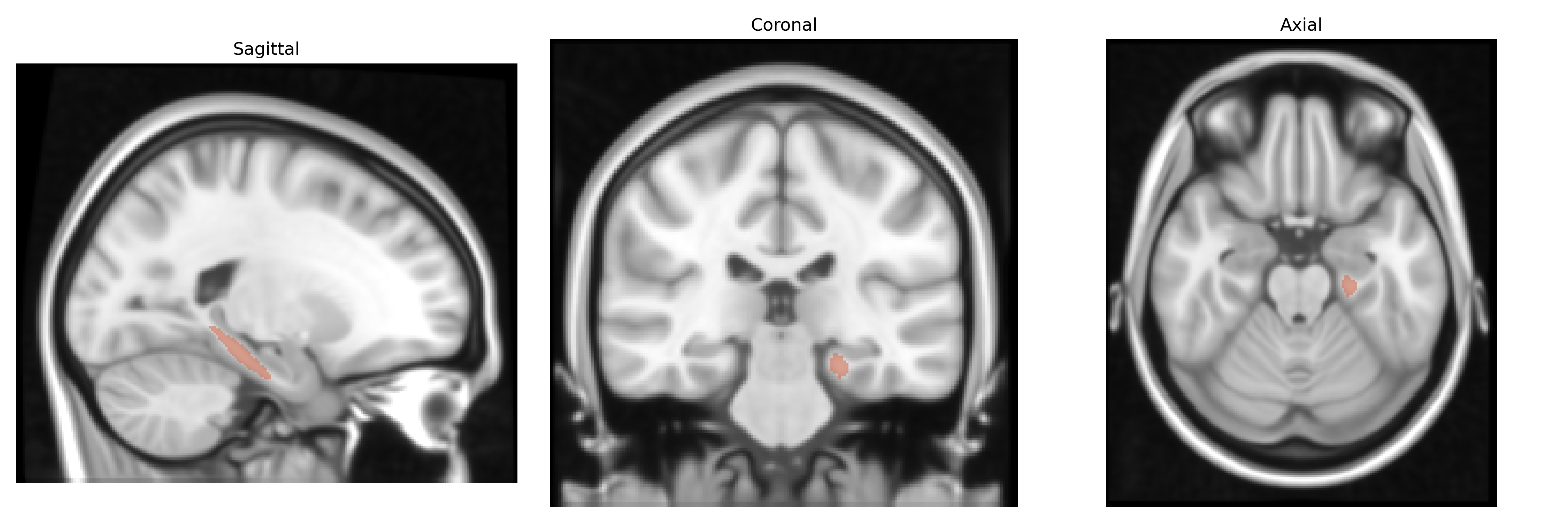
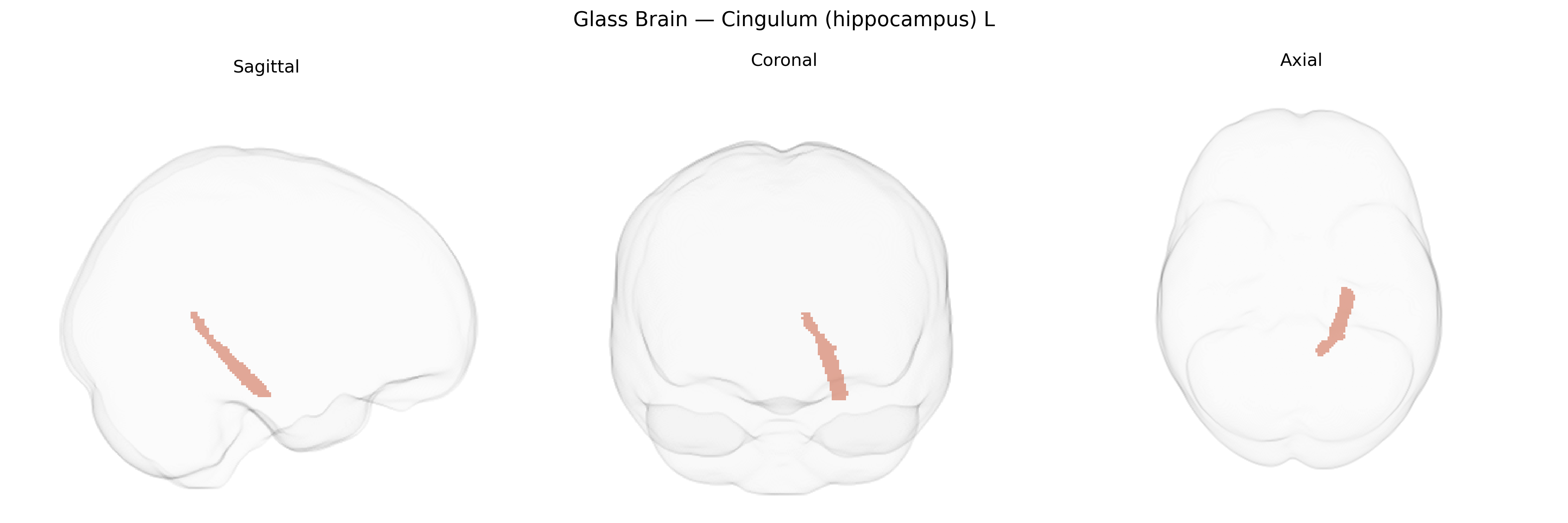
The bilateral Cingulum (hippocampus) L, as defined in the JHU ICBM DTI-81 1 mm atlas, refers to the left-sided portion of the cingulum bundle that courses within the parahippocampal and hippocampal regions of the medial temporal lobe. This white matter tract forms a key component of the limbic system’s connectivity, linking the cingulate gyrus, parahippocampal gyrus, and hippocampal formation with other cortical and subcortical structures involved in memory, emotion, and spatial navigation. Its fibers run longitudinally along the medial temporal lobe, integrating information between posterior and anterior limbic circuits, and are commonly investigated in diffusion MRI studies of neurodegenerative disease, psychiatric disorders, and normal aging. There is no direct Wikipedia article for “Cingulum (hippocampus)” as labeled in this atlas; a closely related structure is the Cingulum bundle.
The bilateral cingulum (hippocampus) tract, as defined in the JHU ICBM 1 mm atlas, has been repeatedly implicated in imaging genetics studies, particularly GWAS of diffusion MRI measures such as fractional anisotropy and mean diffusivity. Variants in genes involved in myelination, axonal guidance, and synaptic function—including loci near NTRK1, CNTN4, DPYSL2, and several oligodendrocyte-related genes—have shown associations with microstructural properties of the cingulum or closely related limbic white matter tracts, although individual effects are generally small and polygenic. This tract’s central role in memory and emotion circuitry has led to genetic links with neuropsychiatric disorders: risk alleles for schizophrenia, major depressive disorder, bipolar disorder, and post-traumatic stress disorder have been associated with altered cingulum integrity, with polygenic risk scores for these conditions explaining modest variance in diffusion metrics. APOE ε4 and other Alzheimer’s disease–related variants have been tied to reduced cingulum (hippocampus) integrity and accelerated age-related decline, paralleling findings in hippocampal gray matter. In addition, GWAS of cognitive traits, such as general cognitive ability and memory performance, have identified polygenic influences on limbic white matter, including the cingulum, suggesting that genetic architecture underlying cognition partly acts through structural variation in this tract. Overall, current evidence indicates that the bilateral cingulum (hippocampus) is a polygenically influenced white matter pathway whose microstructure reflects the cumulative impact of common variants associated with neurodevelopment, neurodegeneration, and psychiatric vulnerability, rather than strong effects from single loci.
Overview generated by GPT-4o (2026).
Region ID: 38
Hemisphere: bilateral
Atlas: JHU ICBM labels 1mm
Full Quality Version: Download MP4
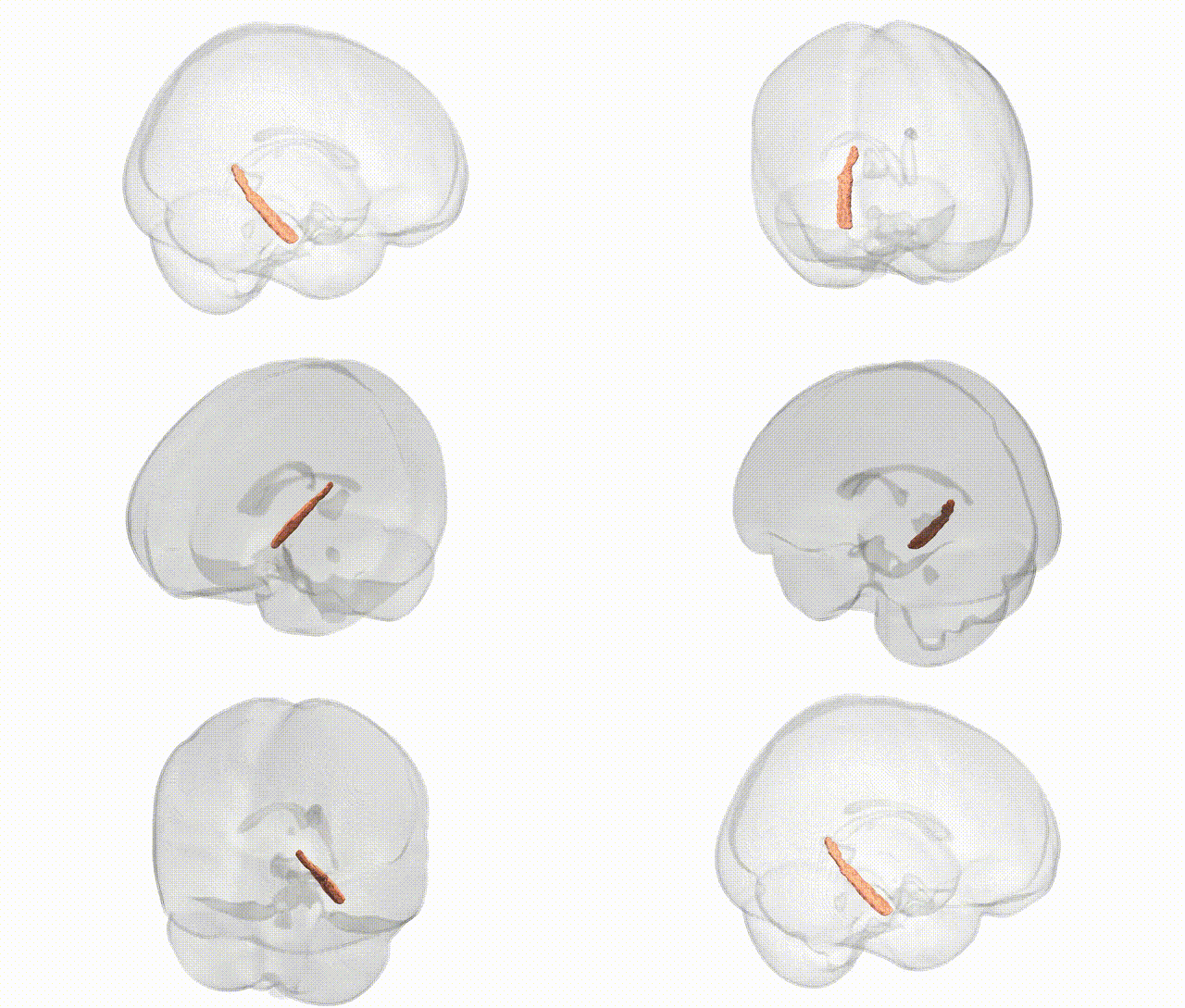
Full Quality Version: Download MP4
Wali Sidiqyar*, Gaurav Rudravaram*, Elyssa M. McMaster, Trent M. Schwartz, Adam M. Saunders, Kurt G. Schilling, Bennett A. Landman "Introducing SPINS: A Shared Public Visualization Library of Neuroanatomical Structures." Medical Imaging with Deep Learning- short paper
This resource is licensed under CC0 1.0 Universal (Public Domain).