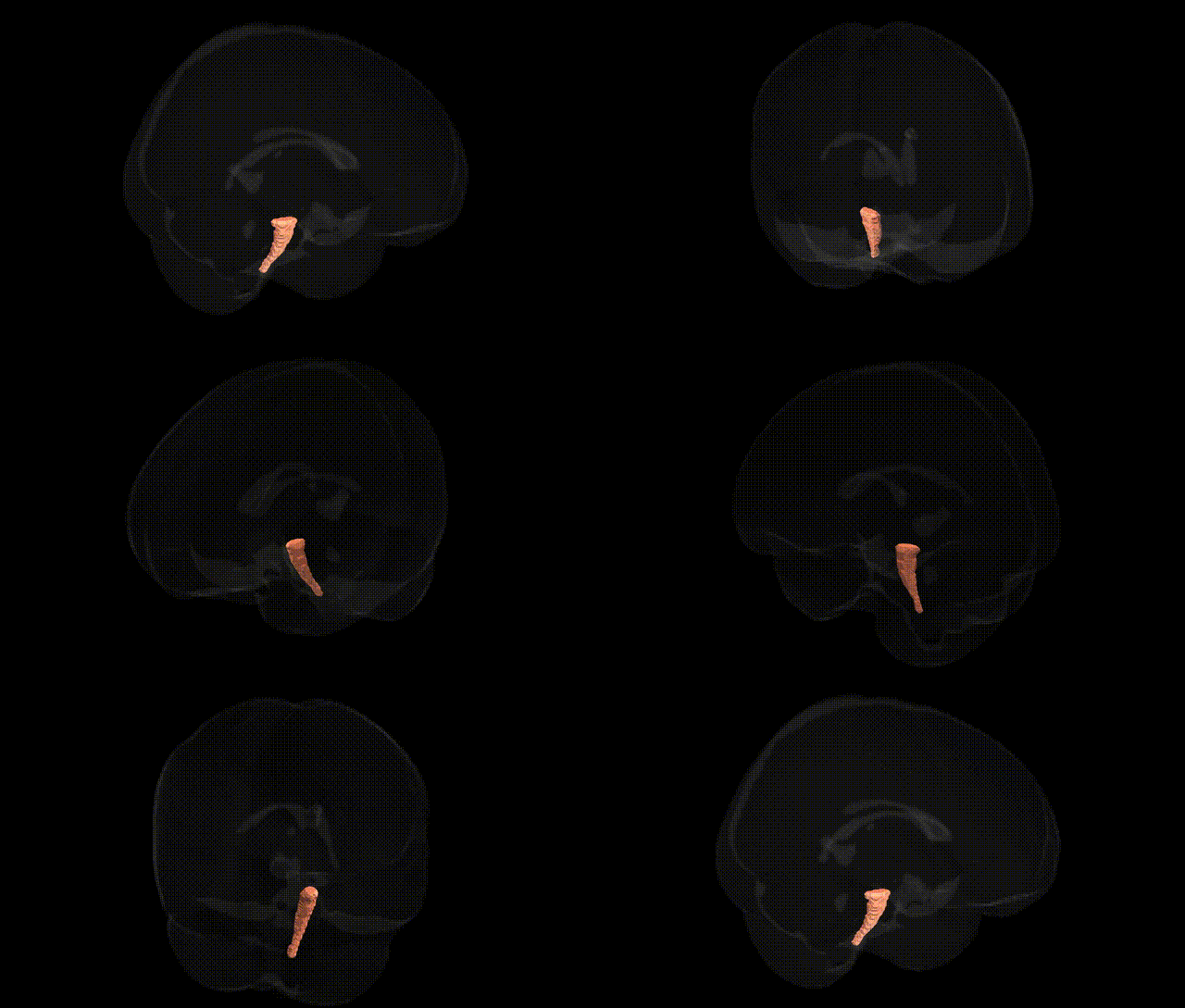
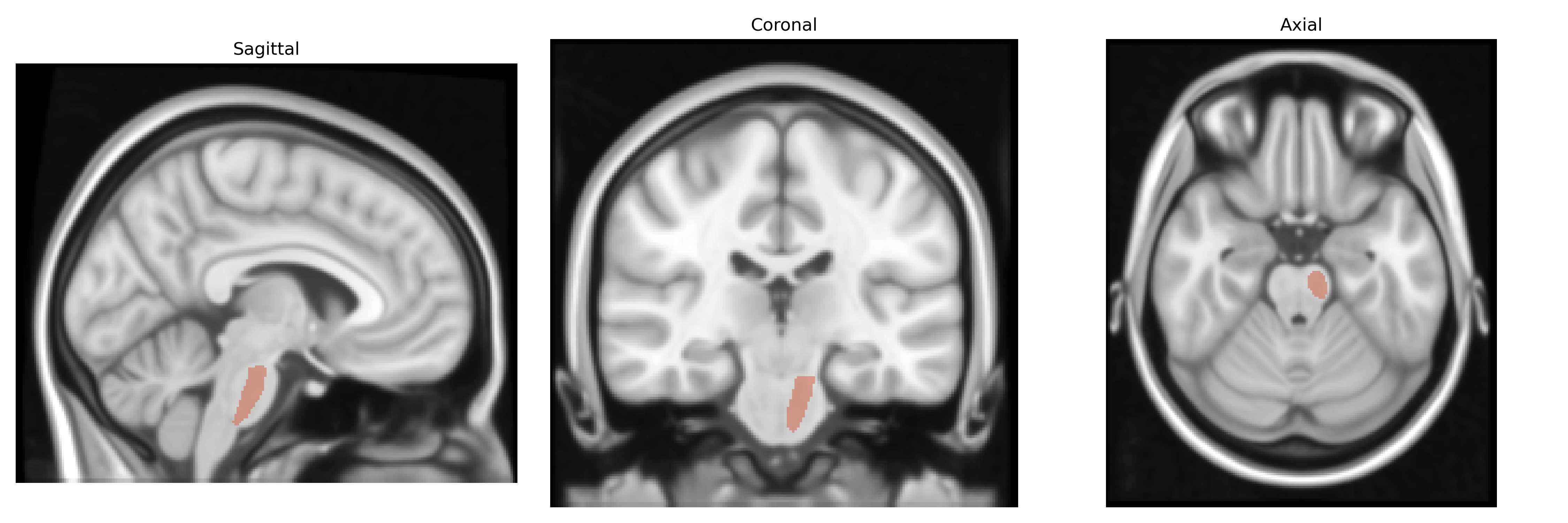
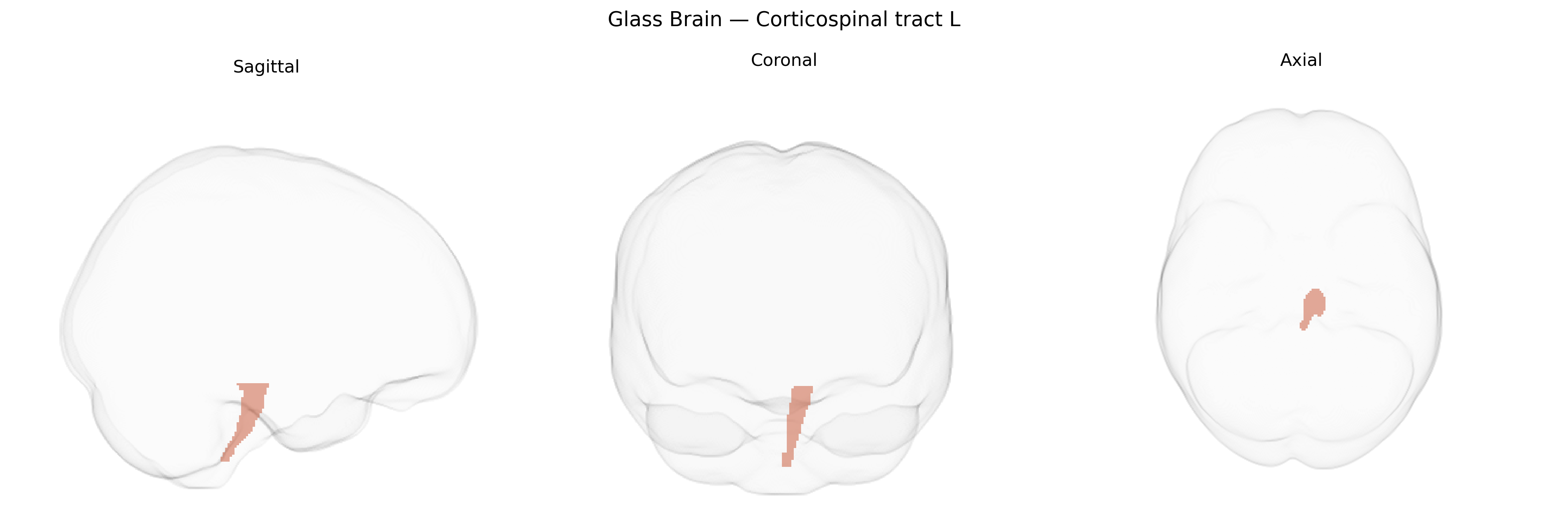
The bilateral corticospinal tract (L) in the JHU ICBM 1 mm atlas represents the left-sided portion of the major descending motor pathway that conveys signals from the cerebral cortex to the spinal cord. Originating primarily from the primary motor cortex, premotor areas, and somatosensory cortex, corticospinal fibers descend through the corona radiata, internal capsule, cerebral peduncles, and brainstem before reaching the spinal cord, where they modulate alpha motor neuron activity to control voluntary, fine, and fractionated movements of the limbs and trunk. The tract’s integrity is crucial for motor function, and damage can produce weakness or paralysis, spasticity, and impaired motor control. Although there is no dedicated Wikipedia page specifically for the “corticospinal tract (L),” the relevant structure is the corticospinal tract as a whole: Corticospinal tract.
The bilateral corticospinal tract in the JHU ICBM 1 mm atlas, including the left (L) segment, has been implicated in genetic studies primarily through diffusion MRI GWAS that examine white matter microstructure. Large-scale consortia such as ENIGMA and UK Biobank have identified multiple common variants associated with fractional anisotropy and mean diffusivity in corticospinal tract regions, with notable signals involving genes related to axonal development, myelination, and cytoskeletal organization (e.g., variants near CNTN4, NRG1, and genes in the cell-adhesion and neurodevelopmental pathways), though individual tract-specific associations for the left corticospinal label are often reported as part of global or bilateral measures rather than isolated findings. Genetic influences on corticospinal tract integrity have been linked to motor function, reaction time, and general cognitive performance, and are also observed in polygenic risk for neurodevelopmental and neurodegenerative conditions—including schizophrenia, autism spectrum disorder, and amyotrophic lateral sclerosis—where case-control and imaging-genetics studies frequently show microstructural abnormalities in corticospinal pathways. In ALS, variants in genes such as C9orf72, SOD1, TARDBP, and FUS are associated with degeneration of motor tracts, including the corticospinal tract, although atlas-based labels like the JHU ICBM 1 mm region are used more as imaging endpoints than as direct targets of single-locus GWAS. Overall, genetic findings support a polygenic architecture underlying the structure and integrity of the corticospinal tract, with shared variants influencing both its anatomical properties and susceptibility to motor and neuropsychiatric disorders.
Overview generated by GPT-4o (2026).
Region ID: 8
Hemisphere: bilateral
Atlas: JHU ICBM labels 1mm
Full Quality Version: Download MP4
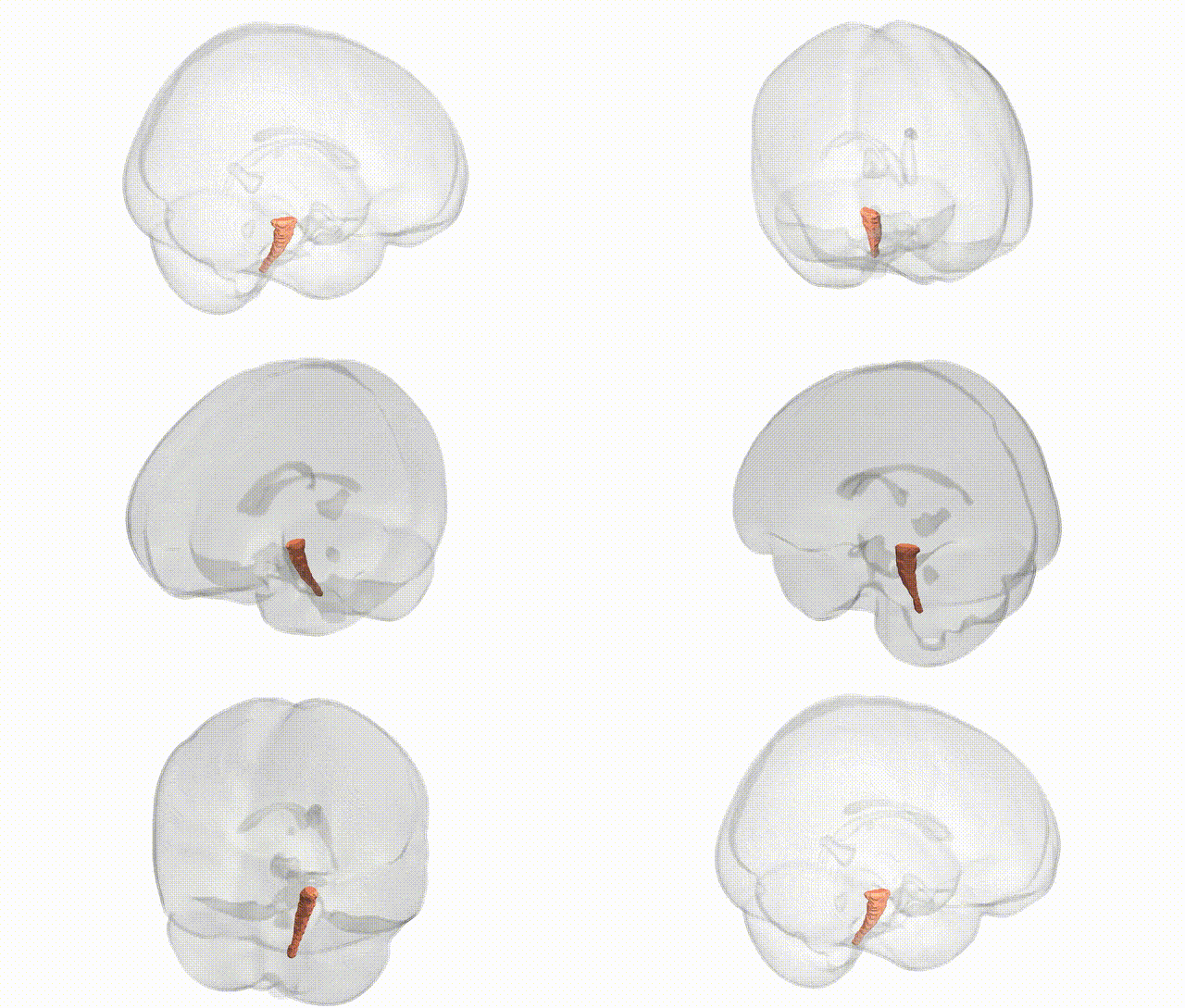
Full Quality Version: Download MP4
Wali Sidiqyar*, Gaurav Rudravaram*, Elyssa M. McMaster, Trent M. Schwartz, Adam M. Saunders, Kurt G. Schilling, Bennett A. Landman "Introducing SPINS: A Shared Public Visualization Library of Neuroanatomical Structures." Medical Imaging with Deep Learning- short paper
This resource is licensed under CC0 1.0 Universal (Public Domain).