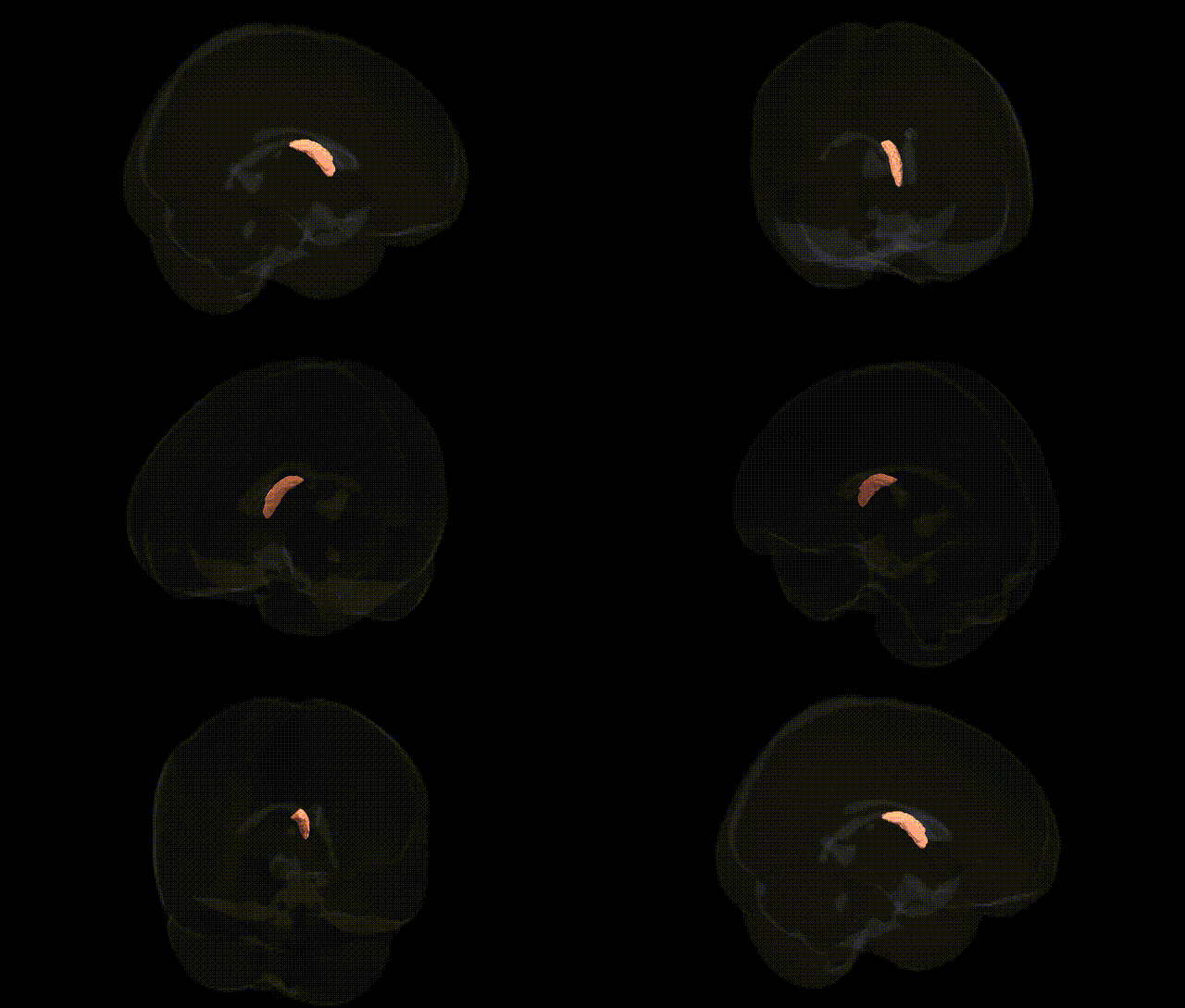
The bilateral fornix (column and body of fornix) is a major white matter tract of the limbic system that emerges from the hippocampal formation and arches anteriorly and superiorly toward the diencephalon and basal forebrain. Structurally, it is divided into the crura, body, and columns, with the body comprising the central portion beneath the corpus callosum and the columns descending toward targets such as the mammillary bodies and septal nuclei. Functionally, the fornix is a principal efferent pathway of the hippocampus, critical for episodic memory and spatial navigation, relaying information within the Papez circuit and other mnemonic networks. Damage to this tract is associated with memory impairments, particularly anterograde amnesia. Fornix (brain)
The bilateral fornix (column and body) in the JHU ICBM 1mm atlas represents a core white-matter tract of the limbic system, and genetic studies of diffusion MRI and structural connectivity consistently implicate it in heritable variation of memory and emotion-related circuitry rather than single, tract-specific loci. Twin and family studies show substantial heritability of fornix microstructure (e.g., fractional anisotropy and mean diffusivity), and GWAS of global or tract-based white-matter integrity have identified associations with genes involved in axonal growth, myelination, and neurodevelopment (such as variants near CNTNAP2, NRG1, and CADM2), which in turn affect fornix and other limbic tracts. Large imaging-genetics consortia (e.g., ENIGMA, UK Biobank) report polygenic influences on hippocampal–fornix connectivity, linking common variants implicated in schizophrenia, major depressive disorder, bipolar disorder, and Alzheimer’s disease to altered limbic white-matter, with the fornix repeatedly highlighted as a pathway mediating genetic risk for episodic memory dysfunction and psychosis-related cognitive impairment. GWAS of Alzheimer’s-related endophenotypes and APOE genotype also show convergent effects on fornix integrity, consistent with its vulnerability in early neurodegeneration. Although no major study has identified variants uniquely specific to the fornix label used in the JHU atlas, converging imaging-genetic evidence indicates that common polygenic architectures for neuropsychiatric and neurodegenerative disorders, memory performance, and general cognitive ability exert measurable effects on the structure and microstructure of the bilateral fornix.
Overview generated by GPT-4o (2026).
Region ID: 6
Hemisphere: bilateral
Atlas: JHU ICBM labels 1mm
Full Quality Version: Download MP4
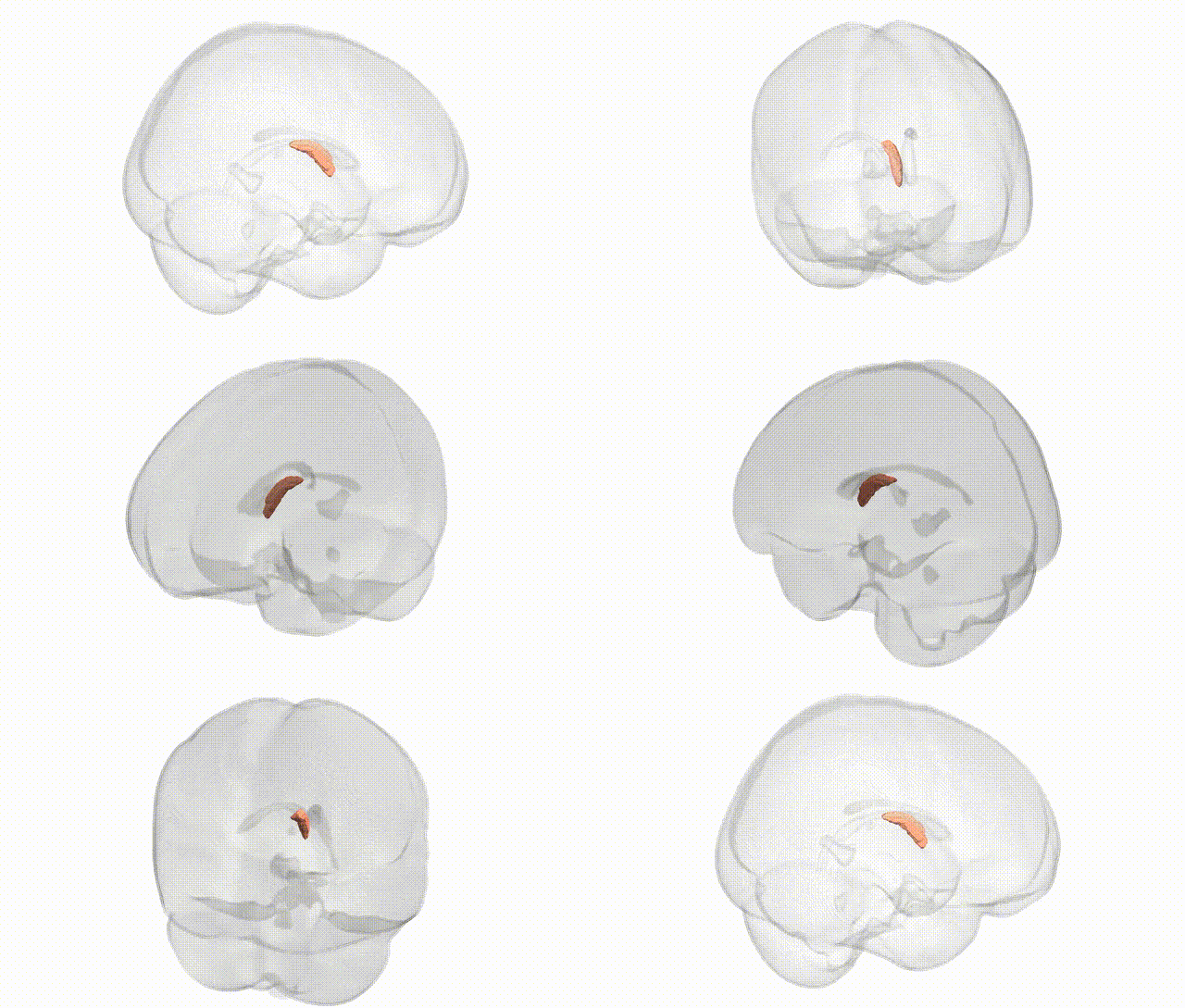
Full Quality Version: Download MP4
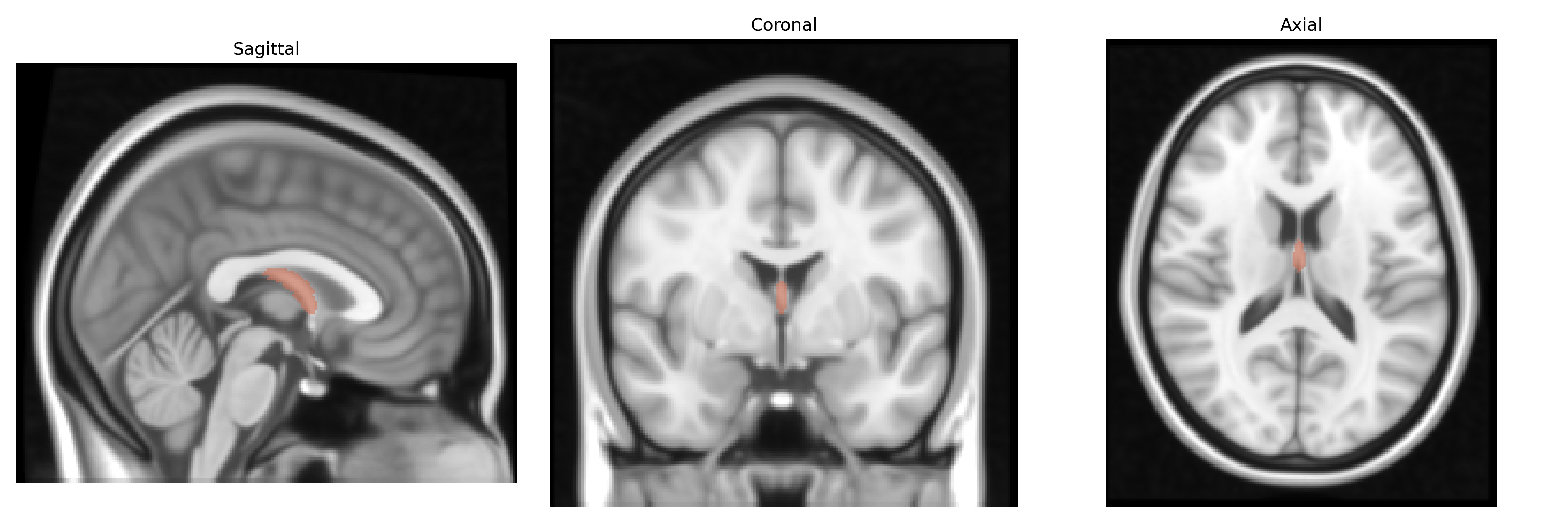
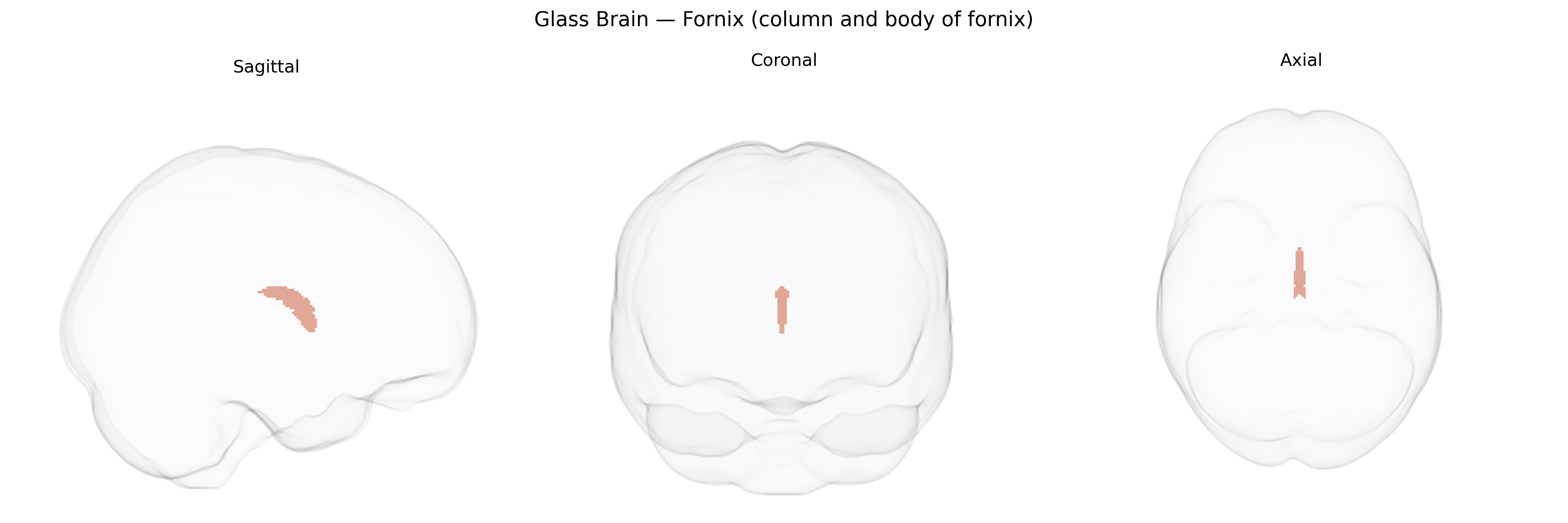
Wali Sidiqyar*, Gaurav Rudravaram*, Elyssa M. McMaster, Trent M. Schwartz, Adam M. Saunders, Kurt G. Schilling, Bennett A. Landman "Introducing SPINS: A Shared Public Visualization Library of Neuroanatomical Structures." Medical Imaging with Deep Learning- short paper
This resource is licensed under CC0 1.0 Universal (Public Domain).