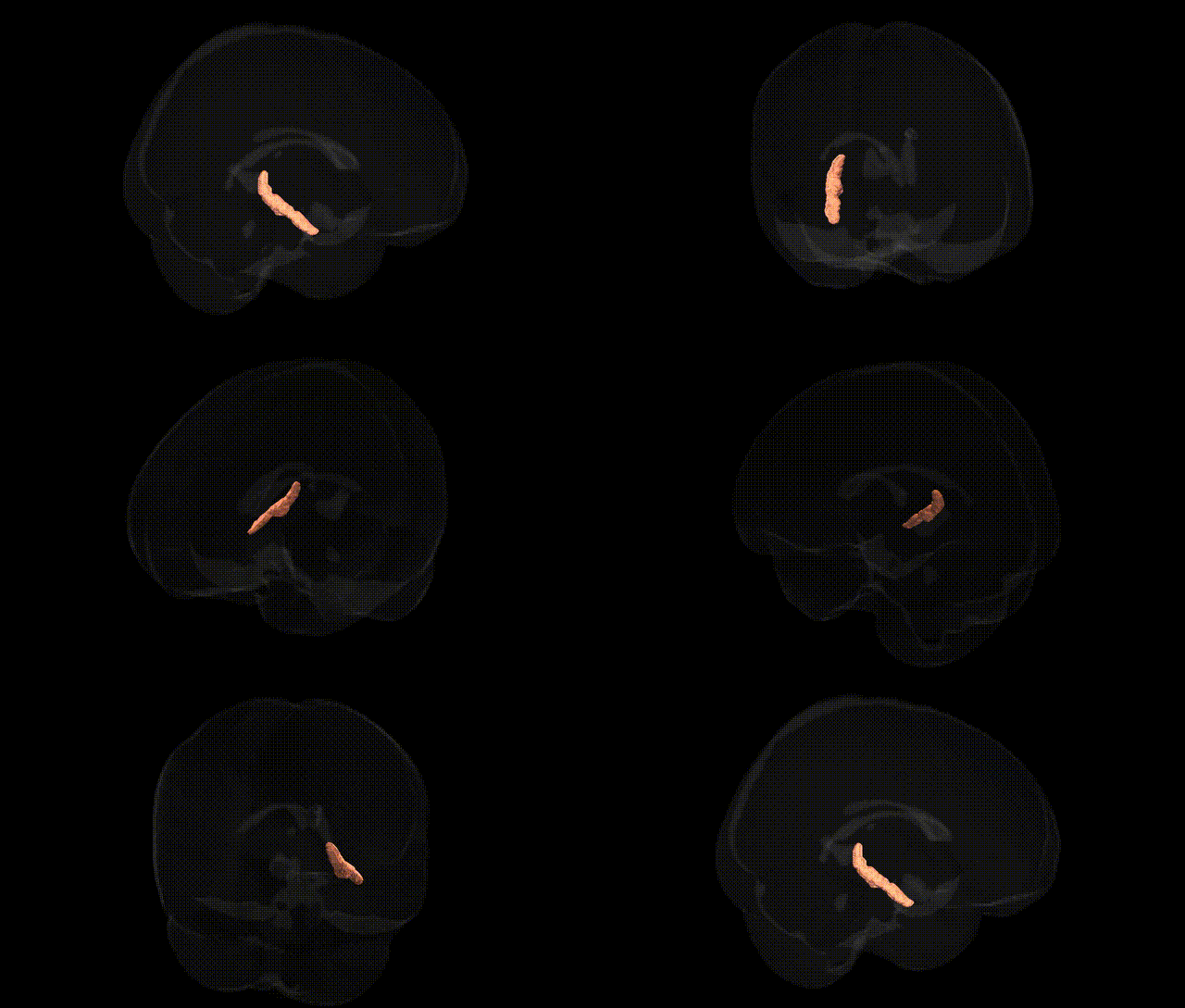
The bilateral fornix (cres)/stria terminalis is a paired white matter pathway complex in the limbic system that connects hippocampal and amygdalar regions with diencephalic and basal forebrain structures, playing key roles in memory, emotional processing, and autonomic regulation. The fornix is the major efferent tract of the hippocampal formation, arching beneath the corpus callosum and projecting primarily to the mammillary bodies and septal nuclei, while the stria terminalis courses along the medial border of the caudate nucleus, conveying outputs from the amygdala to the hypothalamus and related limbic targets. In diffusion-based atlases such as the JHU ICBM labels, the close anatomical proximity and limited resolution lead to the fornix (cres) and stria terminalis being grouped as a single label, reflecting a functionally integrated limbic fiber system rather than a single discrete structure. (No direct Wikipedia article; related structure: Fornix (neuroanatomy))
The bilateral fornix and stria terminalis are core components of limbic circuitry, and while very few GWAS have used the specific JHU ICBM “Fornix (cres)/Stria terminalis” label, multiple large neuroimaging-genetics studies have implicated genetic influences on white matter integrity, volume, and microstructure in this tract system. Variants in genes related to myelination and axonal guidance (e.g., NRG1, CNTNAP2, and genes within the MAG, LINGO1, and MBP pathways) have been associated with global and regional white matter measures that often include the fornix and adjacent limbic fibers, and polygenic scores for schizophrenia, bipolar disorder, and major depressive disorder show associations with reduced fractional anisotropy or altered diffusivity in fornix-stria terminalis pathways. Imaging GWAS of hippocampal connectivity and limbic white matter have also linked common variants in genes such as BDNF, APOE, and several schizophrenia risk loci (including CACNA1C and ZNF804A) to structural and functional changes in these circuits, which encompass the fornix and stria terminalis. In addition, studies of Alzheimer’s disease risk alleles (particularly APOE ε4) have reported microstructural abnormalities in the fornix, highlighting a genetic contribution to neurodegenerative vulnerability in this region, while autism spectrum disorder and anxiety-related trait GWAS have implicated overlapping limbic connectivity networks that include the stria terminalis. Overall, genetic associations tend to converge on neurodevelopmental, synaptic plasticity, and myelination pathways influencing limbic white matter integrity, with the fornix-stria terminalis complex frequently implicated as part of broader limbic and hippocampal connectivity phenotypes rather than as an isolated atlas-defined structure.
Overview generated by GPT-4o (2026).
Region ID: 40
Hemisphere: bilateral
Atlas: JHU ICBM labels 1mm
Full Quality Version: Download MP4
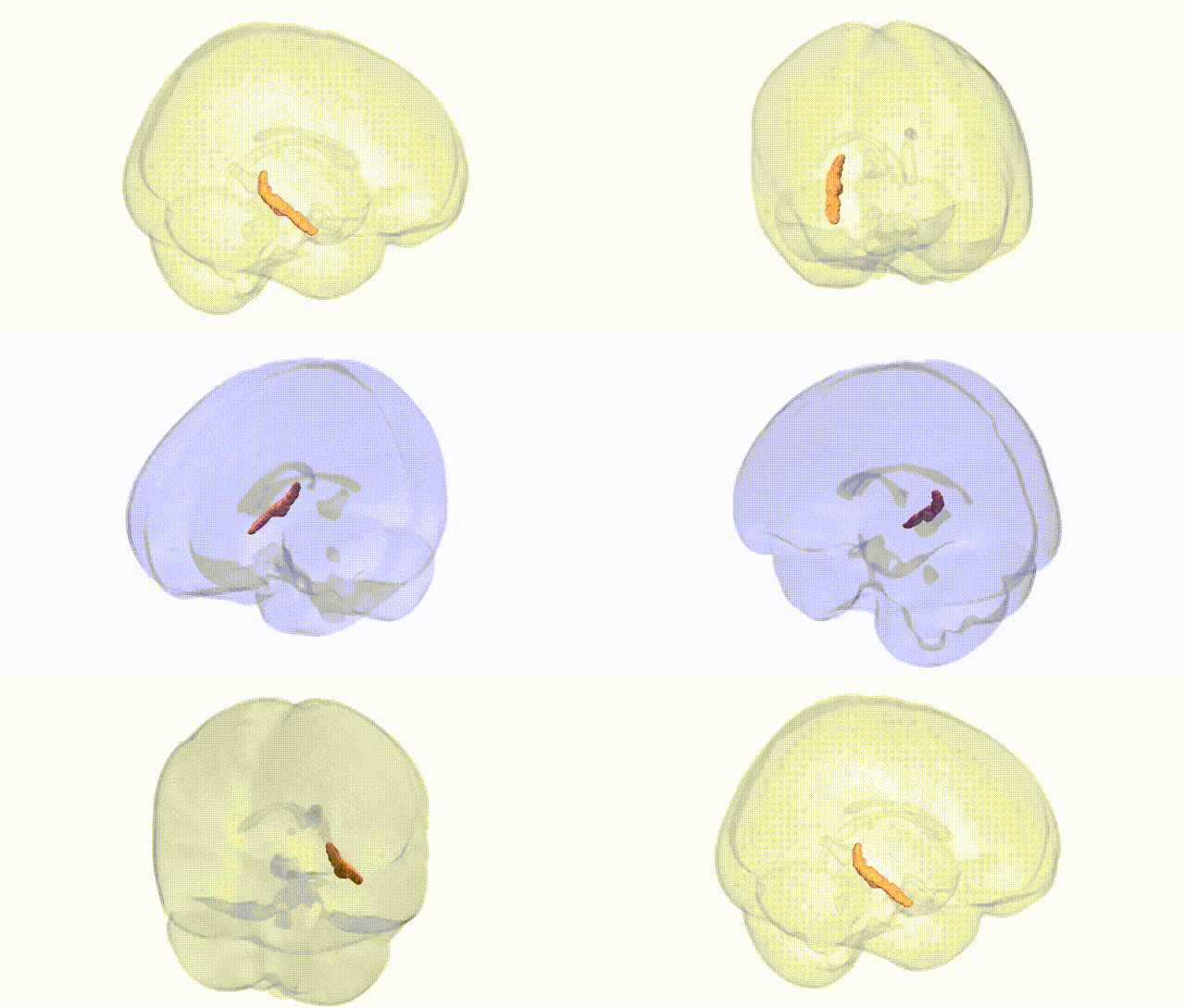
Full Quality Version: Download MP4
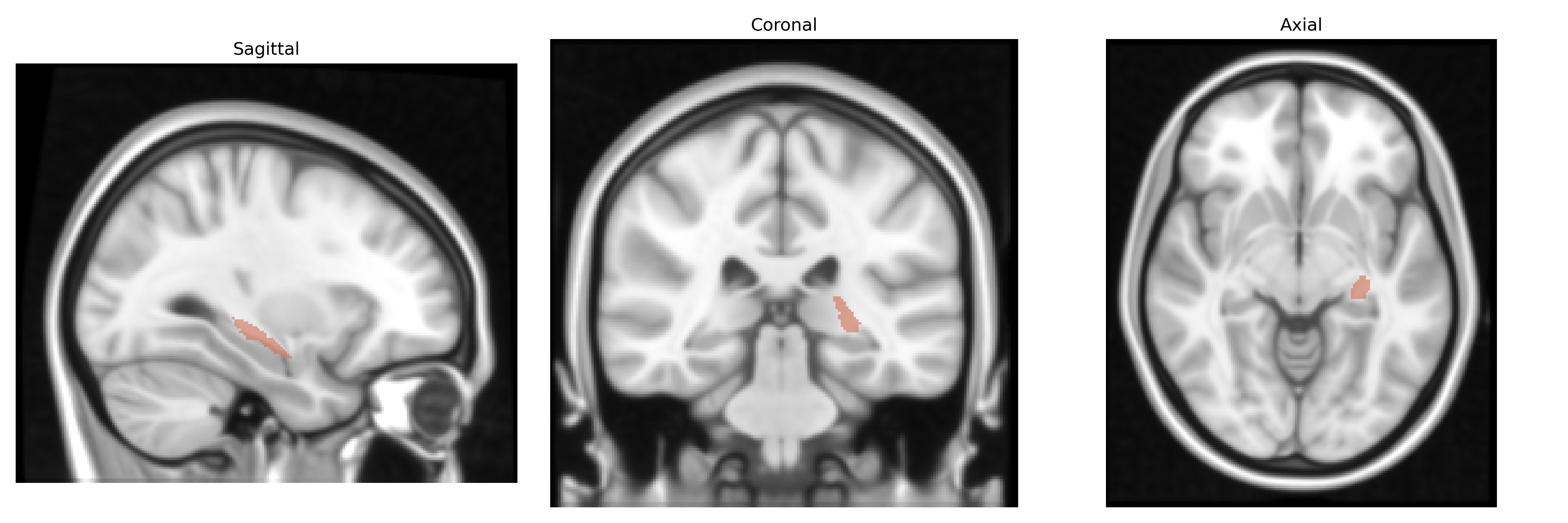
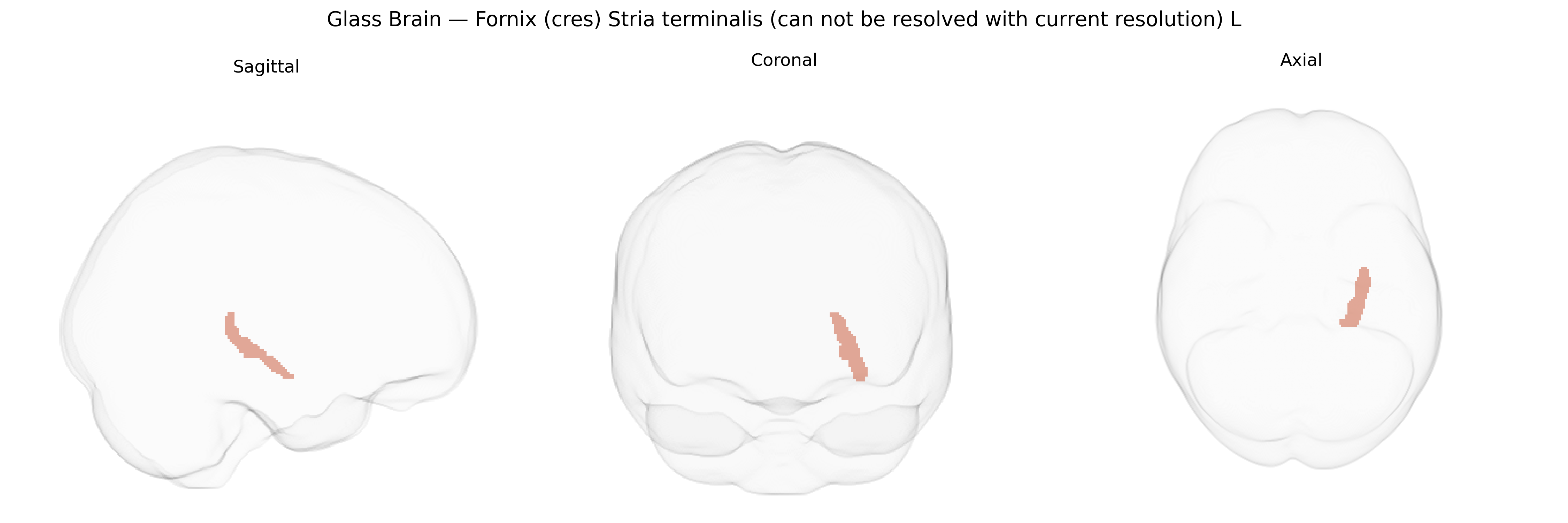
Wali Sidiqyar*, Gaurav Rudravaram*, Elyssa M. McMaster, Trent M. Schwartz, Adam M. Saunders, Kurt G. Schilling, Bennett A. Landman "Introducing SPINS: A Shared Public Visualization Library of Neuroanatomical Structures." Medical Imaging with Deep Learning- short paper
This resource is licensed under CC0 1.0 Universal (Public Domain).