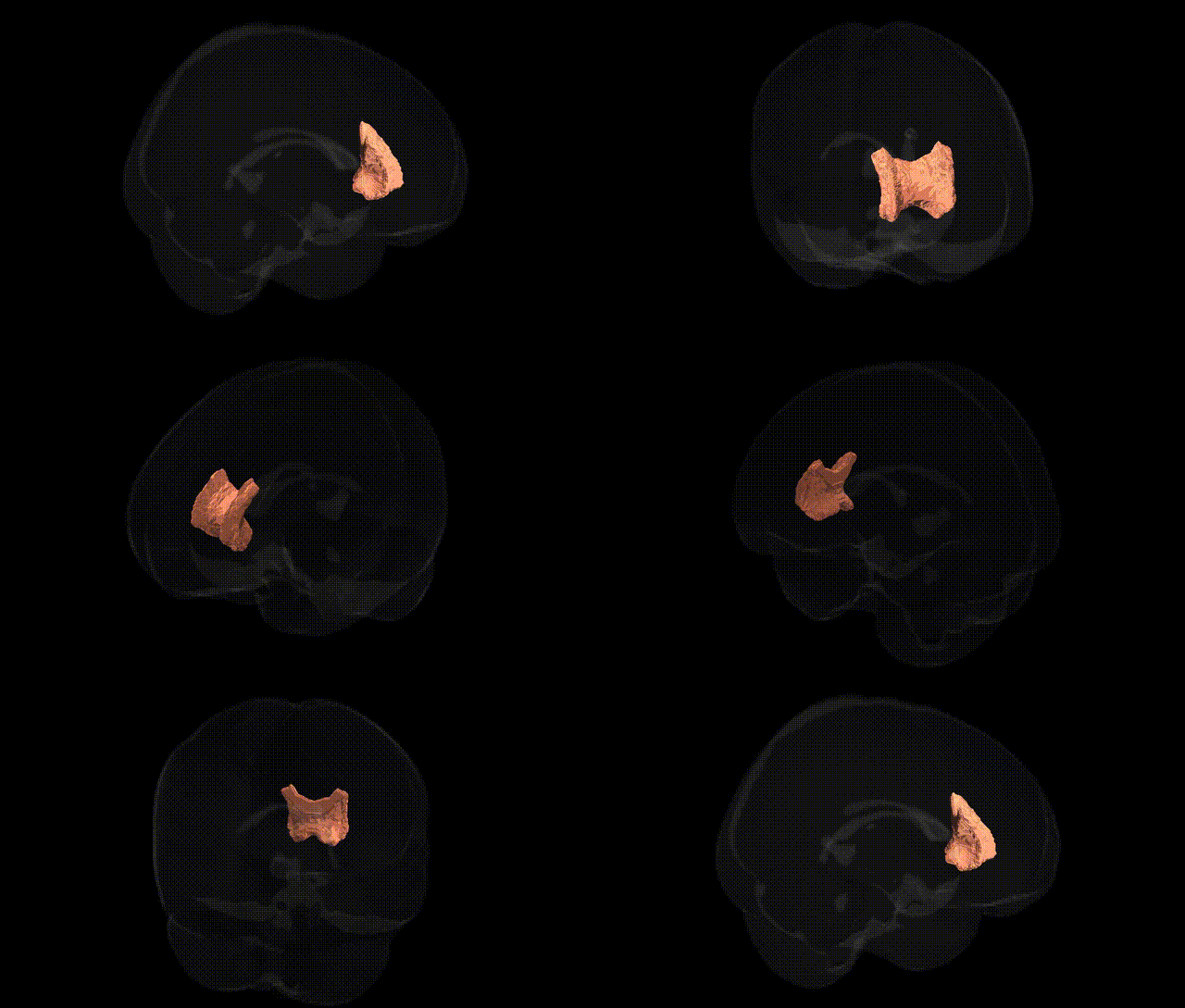
The bilateral genu of the corpus callosum is the most anterior portion of the corpus callosum, consisting of densely packed commissural white matter fibers that interconnect homologous regions of the frontal lobes across the midline. Structurally, it forms a curved, anteriorly projecting segment that arches forward from the rostral body of the corpus callosum, contributing to global interhemispheric integration of frontal cortical functions, including aspects of executive control, higher-order cognition, emotional regulation, and complex behavioral planning. In diffusion-based atlases such as the JHU ICBM labels, the genu is delineated as a distinct tract segment based on its characteristic orientation and connectivity profile, serving as a key landmark for studying frontal lobe interhemispheric communication and microstructural integrity in health and disease. There is no direct Wikipedia article specifically for the “genu of corpus callosum”; a related structure is the Corpus callosum.
The bilateral genu of the corpus callosum, as defined in the JHU ICBM labels 1 mm atlas, has been repeatedly implicated in imaging genetics studies that link common variants to white matter microstructure, particularly fractional anisotropy (FA) and mean diffusivity (MD) measured by diffusion tensor imaging. Genome-wide association studies have identified significant associations between genu callosal integrity and variants near or within genes involved in myelination, axon guidance, and neurodevelopment, including loci in or near CADM1, CNTNAP2, NTRK1/3, and genes regulating oligodendrocyte function, although specific signals vary across cohorts and analytic methods. Polygenic risk scores for schizophrenia, bipolar disorder, major depressive disorder, and autism spectrum disorder have been associated with altered genu FA, supporting a genetically mediated vulnerability of this region in psychiatric illness. In addition, variants in APOE and other lipid-related genes have been linked to genu callosal changes in aging, Alzheimer’s disease, and vascular cognitive impairment, while common and rare variants associated with neurodevelopmental disorders (e.g., callosal dysgenesis, intellectual disability) often show structural abnormalities of the genu. GWAS of cognitive traits and educational attainment have reported overlap between genetic factors influencing callosal microstructure and those influencing processing speed, executive function, and general intelligence, suggesting that the genu’s genetic architecture contributes to interhemispheric prefrontal connectivity underlying higher-order cognition.
Overview generated by GPT-4o (2026).
Region ID: 3
Hemisphere: bilateral
Atlas: JHU ICBM labels 1mm
Full Quality Version: Download MP4
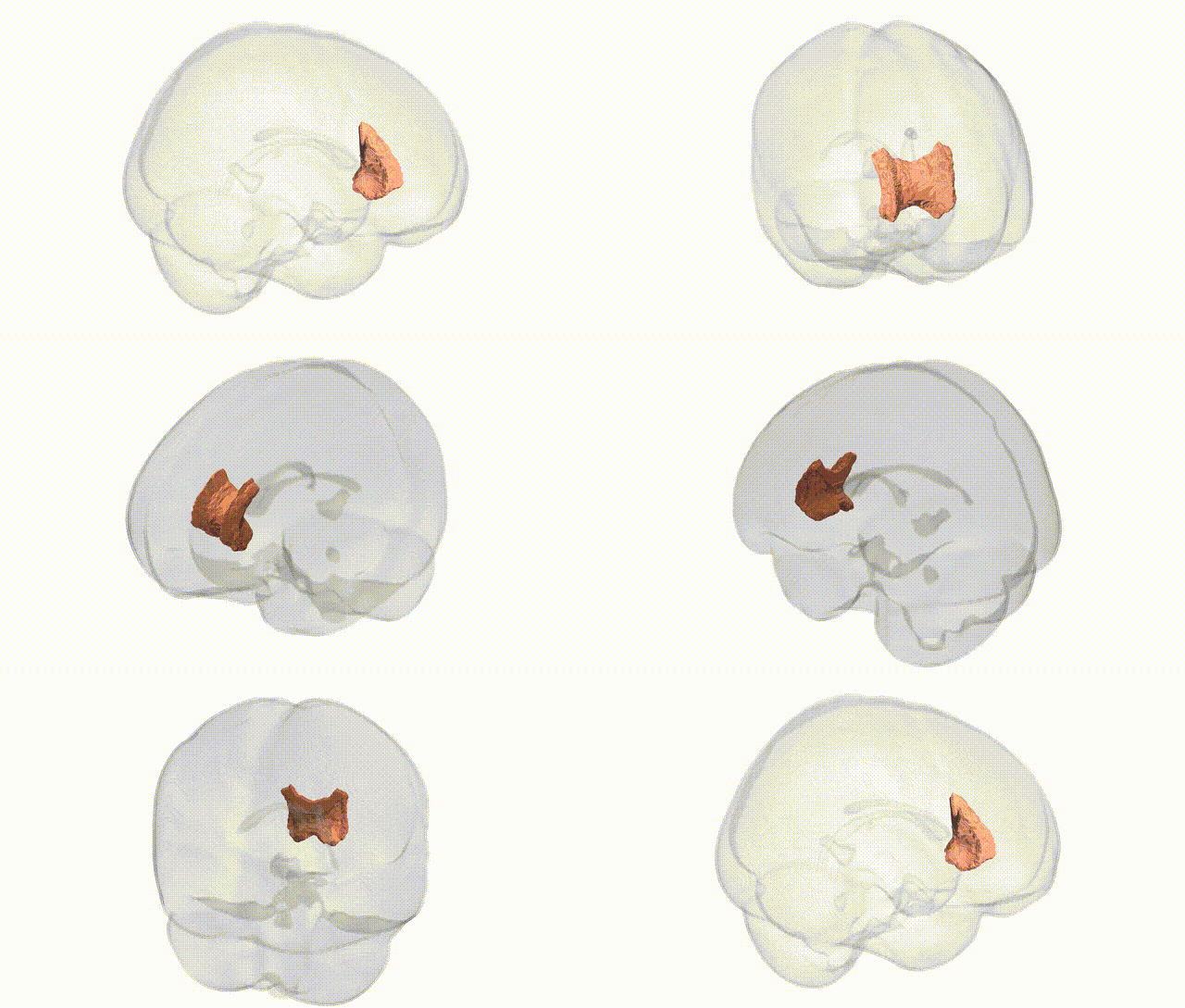
Full Quality Version: Download MP4
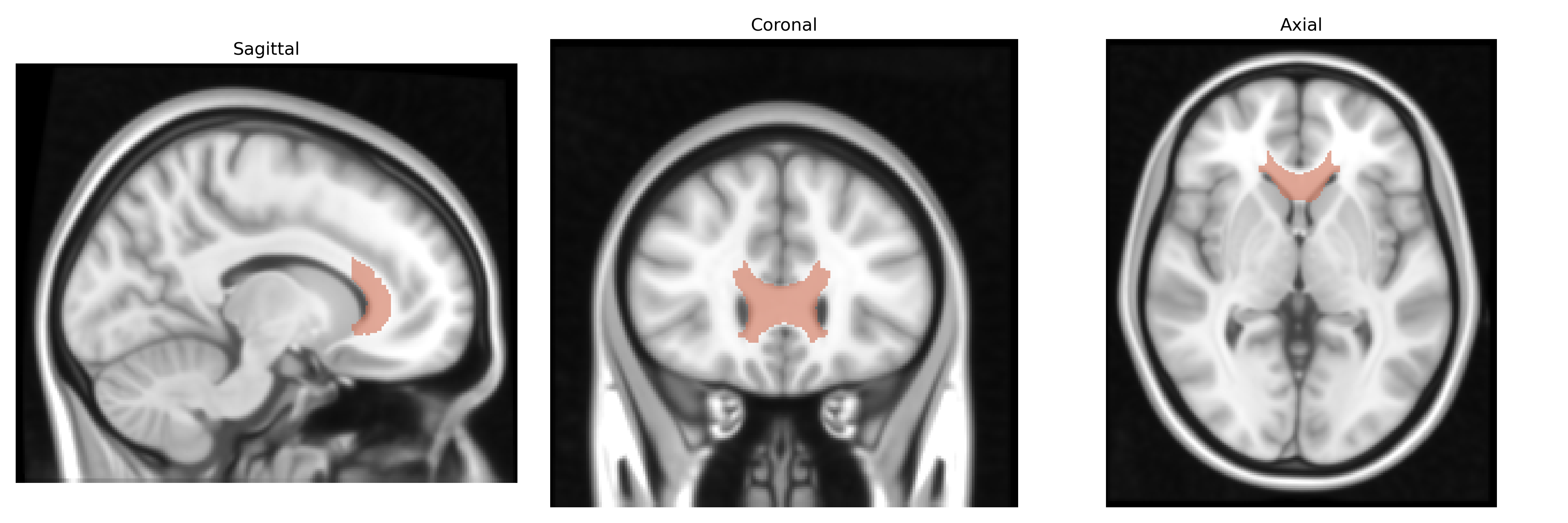
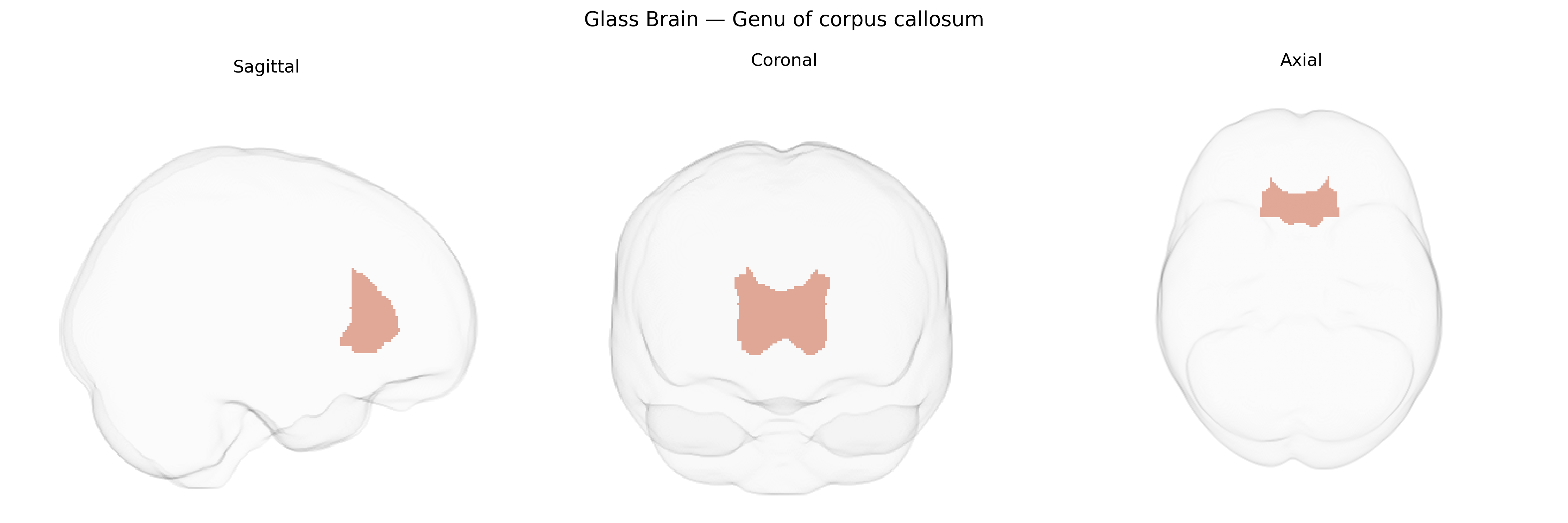
Wali Sidiqyar*, Gaurav Rudravaram*, Elyssa M. McMaster, Trent M. Schwartz, Adam M. Saunders, Kurt G. Schilling, Bennett A. Landman "Introducing SPINS: A Shared Public Visualization Library of Neuroanatomical Structures." Medical Imaging with Deep Learning- short paper
This resource is licensed under CC0 1.0 Universal (Public Domain).