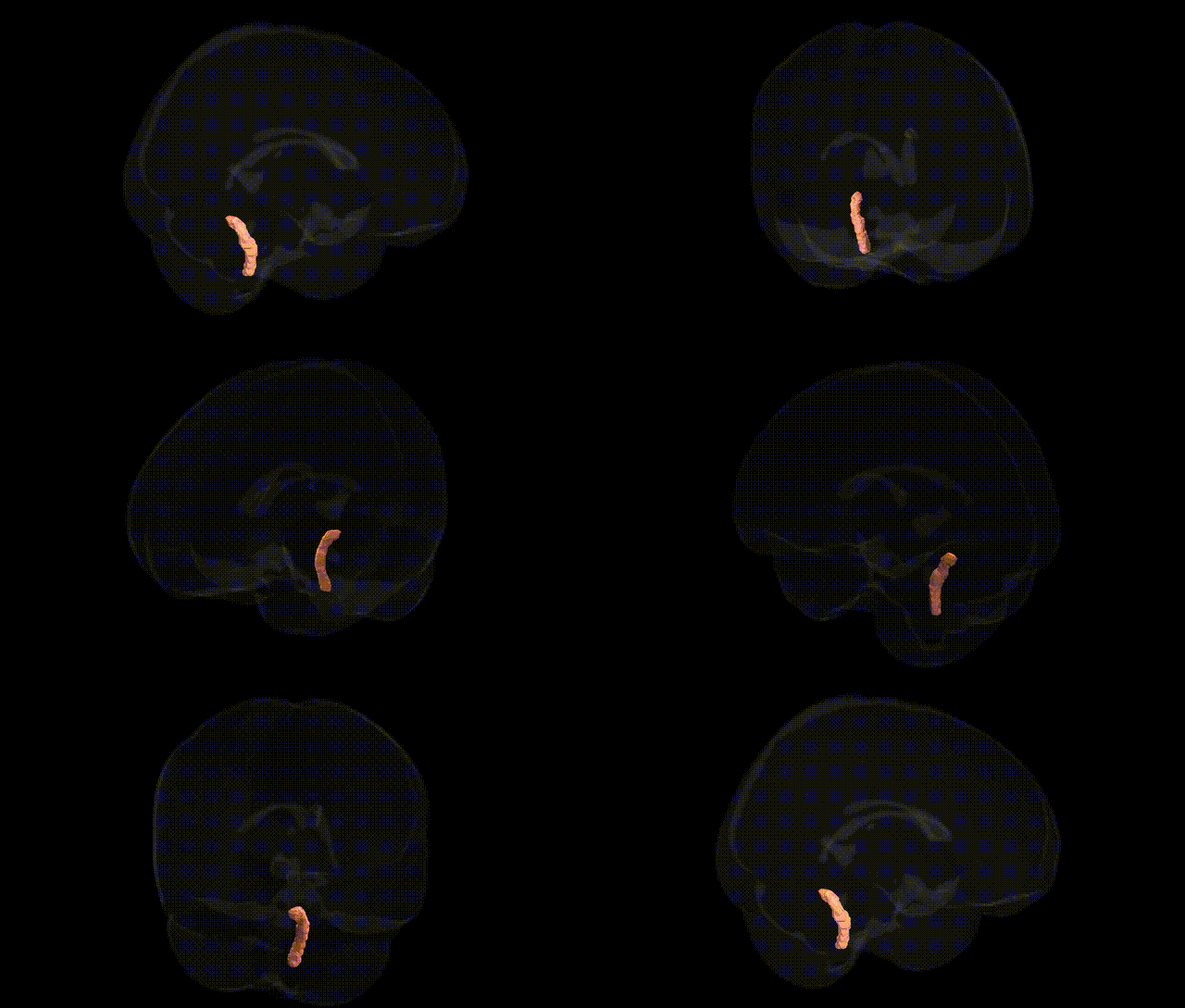
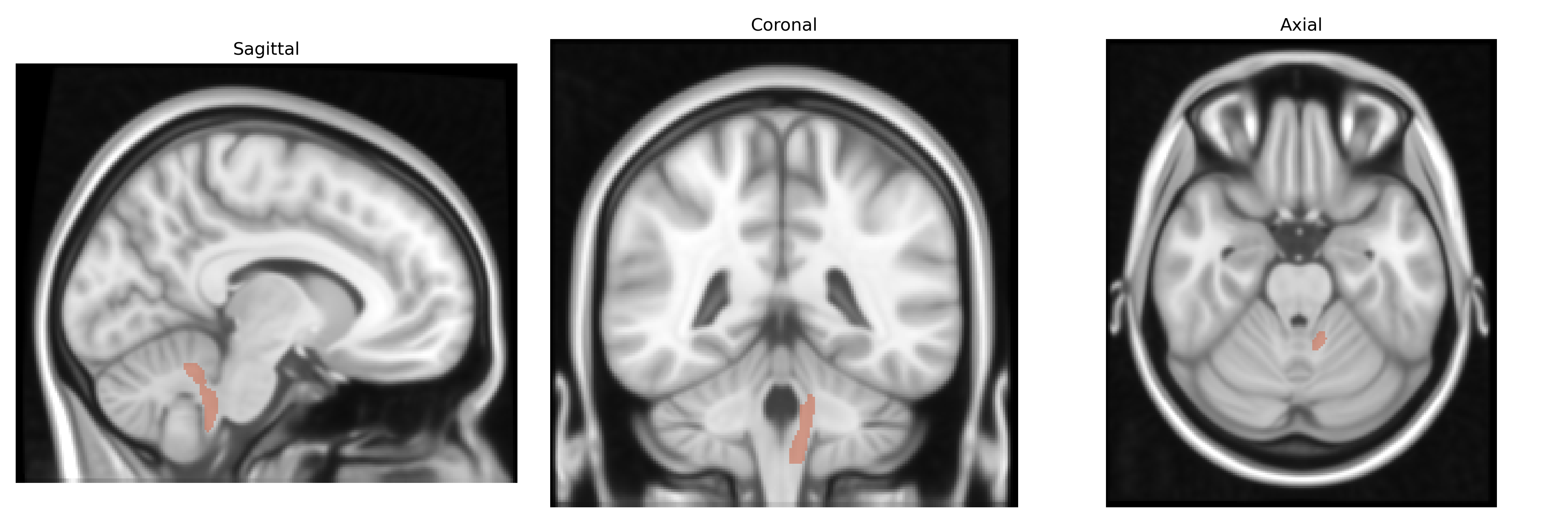
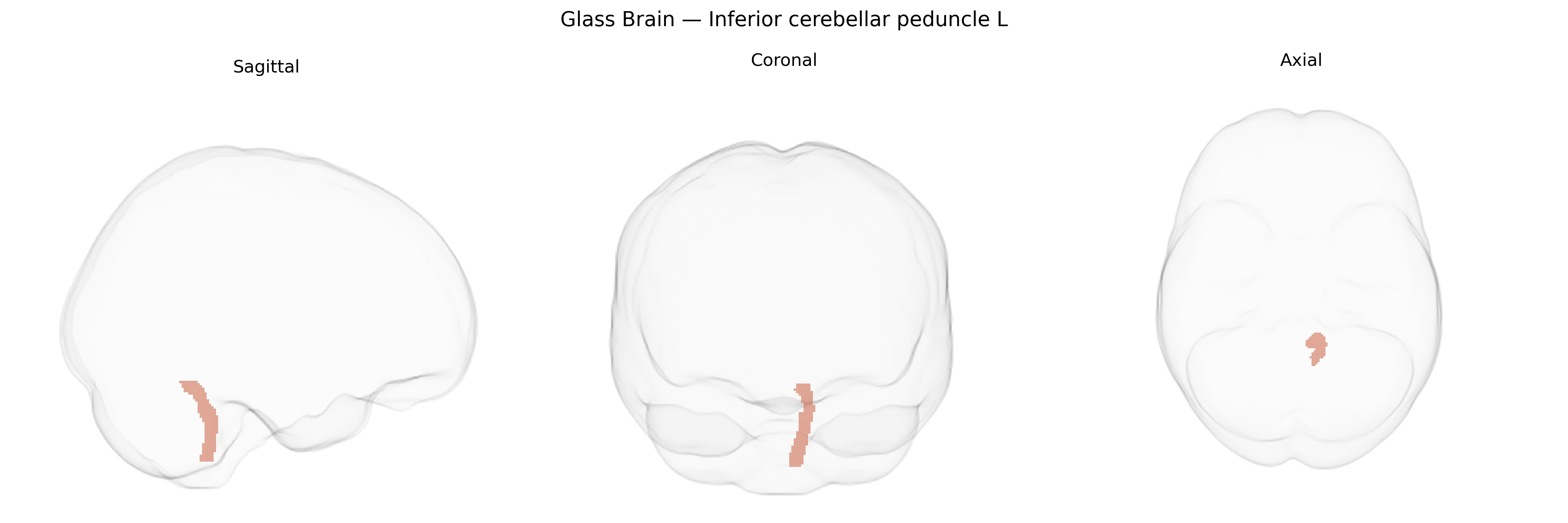
The bilateral Inferior cerebellar peduncle L, as defined in the JHU ICBM labels 1 mm atlas, corresponds to the left-sided white matter tract of the inferior cerebellar peduncle, a major afferent pathway connecting the medulla oblongata to the cerebellum. It conveys primarily proprioceptive and vestibular information via fibers such as the dorsal spinocerebellar tract and olivocerebellar fibers, contributing to the coordination of posture, balance, and fine motor control. Anatomically, it courses between the dorsolateral medulla and the inferolateral cerebellum, entering the cerebellar hemisphere and vermis, and integrates sensory input necessary for error correction and timing in motor execution. There is no direct Wikipedia article for this specific labeled region; a closely related structure is the Inferior cerebellar peduncle.
The bilateral inferior cerebellar peduncle (ICP) as defined in the JHU ICBM 1 mm atlas has limited region-specific genetic association data, but several neuroimaging GWAS and large-scale brain-structure genetics studies implicate variants influencing white-matter microstructure, particularly in tracts including or adjacent to the ICP. Polygenic influences on cerebellar and brainstem white matter—often involving genes related to axonal guidance, myelination, and synaptic function (for example, variants near or within NCAN, MAG, and other myelin/adhesion genes)—have been associated with diffusion metrics in infratentorial pathways that encompass or border the ICP. Broader GWAS of cerebellar volume and brainstem-cerebellar connectivity have implicated loci related to neurodevelopmental and psychiatric disorders, including schizophrenia, bipolar disorder, and major depression, consistent with cerebellar contributions to cognitive and affective circuits, although these analyses usually treat cerebellar peduncles as part of aggregated infratentorial or cerebellar white-matter regions rather than isolating the ICP. In rare monogenic or oligogenic conditions, mutations affecting cerebellar development or axonal projection systems (such as in some congenital ataxias, Joubert spectrum disorders, or leukodystrophies) can produce structural and microstructural abnormalities of the ICP, but these tend to be described at the syndrome or whole-cerebellum level rather than as ICP-specific genetic associations. Overall, current evidence suggests that genetic influences on the ICP largely reflect shared polygenic determinants of cerebellar and brainstem white matter rather than unique ICP-specific loci, and direct GWAS isolating the bilateral inferior cerebellar peduncle in the JHU ICBM framework remain sparse.
Overview generated by GPT-4o (2026).
Region ID: 12
Hemisphere: bilateral
Atlas: JHU ICBM labels 1mm
Full Quality Version: Download MP4
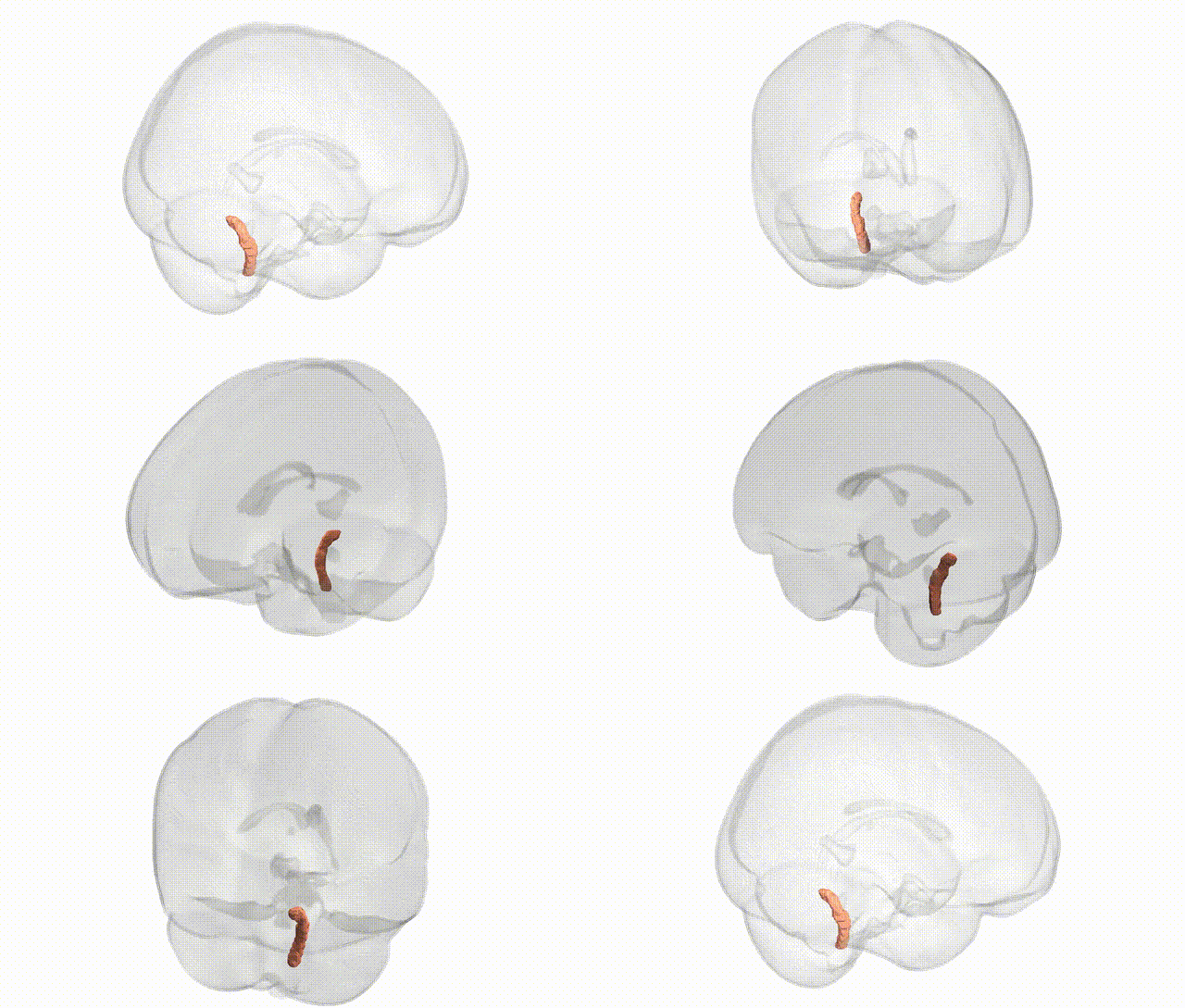
Full Quality Version: Download MP4
Wali Sidiqyar*, Gaurav Rudravaram*, Elyssa M. McMaster, Trent M. Schwartz, Adam M. Saunders, Kurt G. Schilling, Bennett A. Landman "Introducing SPINS: A Shared Public Visualization Library of Neuroanatomical Structures." Medical Imaging with Deep Learning- short paper
This resource is licensed under CC0 1.0 Universal (Public Domain).