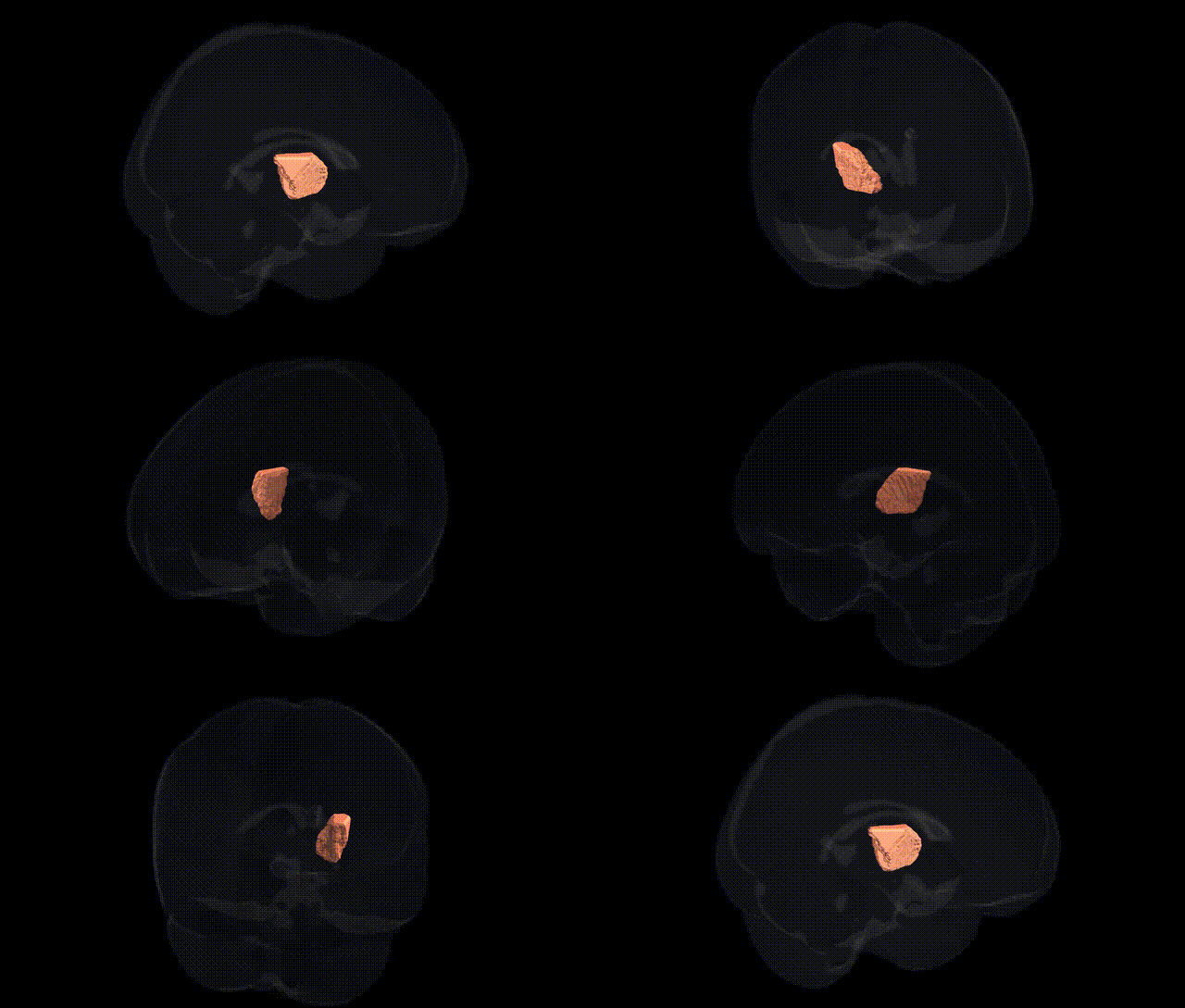
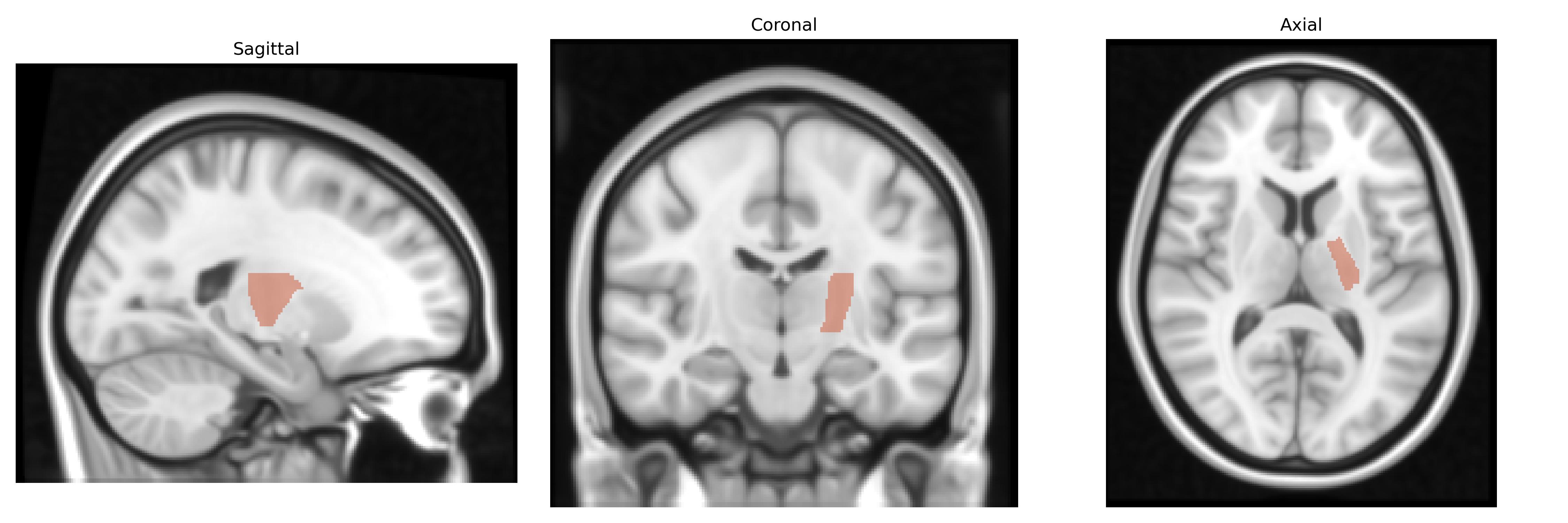
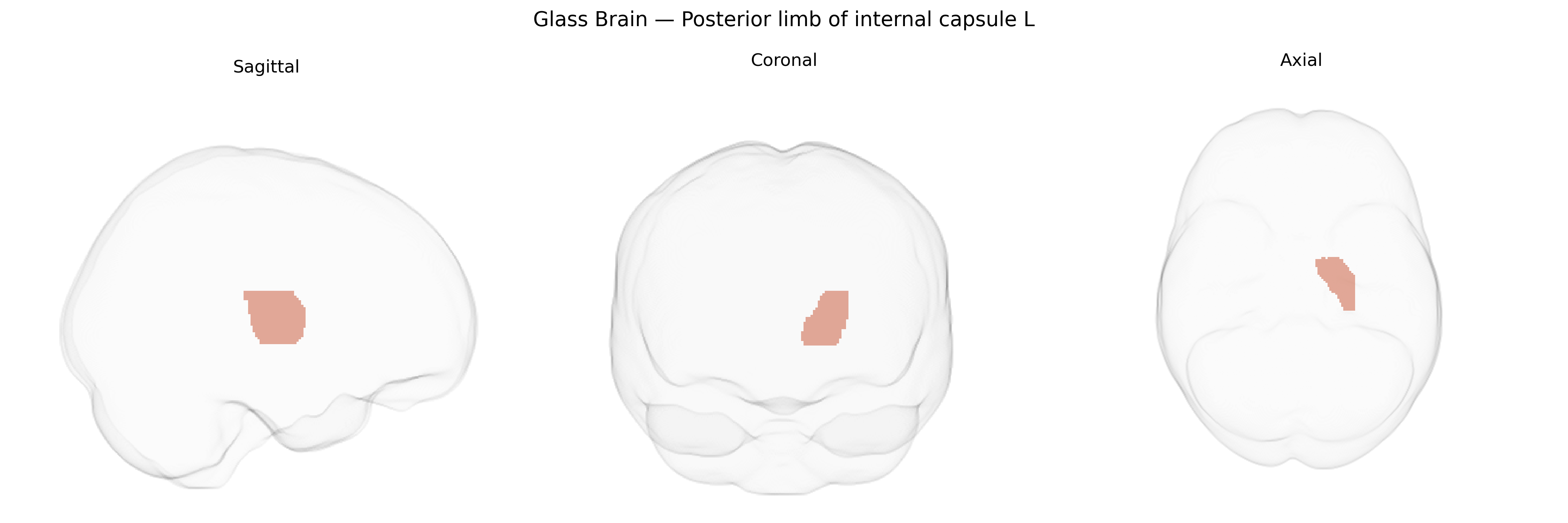
The bilateral posterior limb of the internal capsule (left) is a major white matter tract that carries ascending somatosensory fibers from the thalamus to the primary somatosensory cortex and descending corticospinal and corticobulbar fibers from the motor cortex to the brainstem and spinal cord. Anatomically, it lies between the thalamus medially and the lentiform nucleus laterally, forming part of the internal capsule’s central segment. This region is critical for voluntary motor control, fine motor coordination, and the transmission of tactile, proprioceptive, and nociceptive information. Lesions in the posterior limb often produce characteristic contralateral motor and sensory deficits, including hemiparesis and hemisensory loss, due to the high density and functional importance of its projection fibers. There is no direct Wikipedia article specifically for the “Posterior limb of internal capsule (L)” label from the JHU ICBM atlas; however, it is part of the internal capsule: Internal capsule.
The bilateral posterior limb of the internal capsule (PLIC), as defined in the JHU ICBM 1 mm atlas, has been implicated in multiple genetic and GWAS-based associations primarily through studies of white matter microstructure using diffusion MRI. Variants in genes involved in myelination and axonal integrity (such as CNTNAP2, NTRK3, and MAG) and common neurodevelopmental genes (including DISC1 and NRG1) have been associated with fractional anisotropy and other diffusion metrics in the PLIC, reflecting genetically influenced differences in motor and sensory projection pathways. Large-scale GWAS of brain imaging phenotypes, including UK Biobank and ENIGMA consortium studies, have identified polygenic influences on internal capsule white matter integrity, linking SNPs in loci such as 3p21, 17q21, and 6p22 to diffusion measures that encompass the PLIC and adjacent tracts, although these associations are typically reported at the level of broader internal capsule or projection pathways rather than the left PLIC alone. Genetic risk for complex disorders such as schizophrenia, bipolar disorder, major depression, and autism spectrum disorder has been related to altered internal capsule microstructure in imaging–genetics analyses, with polygenic risk scores for these conditions predicting reduced integrity or atypical development in the PLIC, suggesting that part of the genetic liability for these disorders manifests through disrupted cortico-subcortical connectivity. Additionally, variants associated with motor traits and neurodegenerative conditions (including stroke, cerebral small vessel disease, and Parkinson’s disease) have been linked to structural or lesion burden in internal capsule regions, consistent with the PLIC’s role in corticospinal and thalamocortical pathways, although specific GWAS hits are generally mapped to global measures of white matter damage or lesion volume rather than isolated PLIC anatomy.
Overview generated by GPT-4o (2026).
Region ID: 20
Hemisphere: bilateral
Atlas: JHU ICBM labels 1mm
Full Quality Version: Download MP4
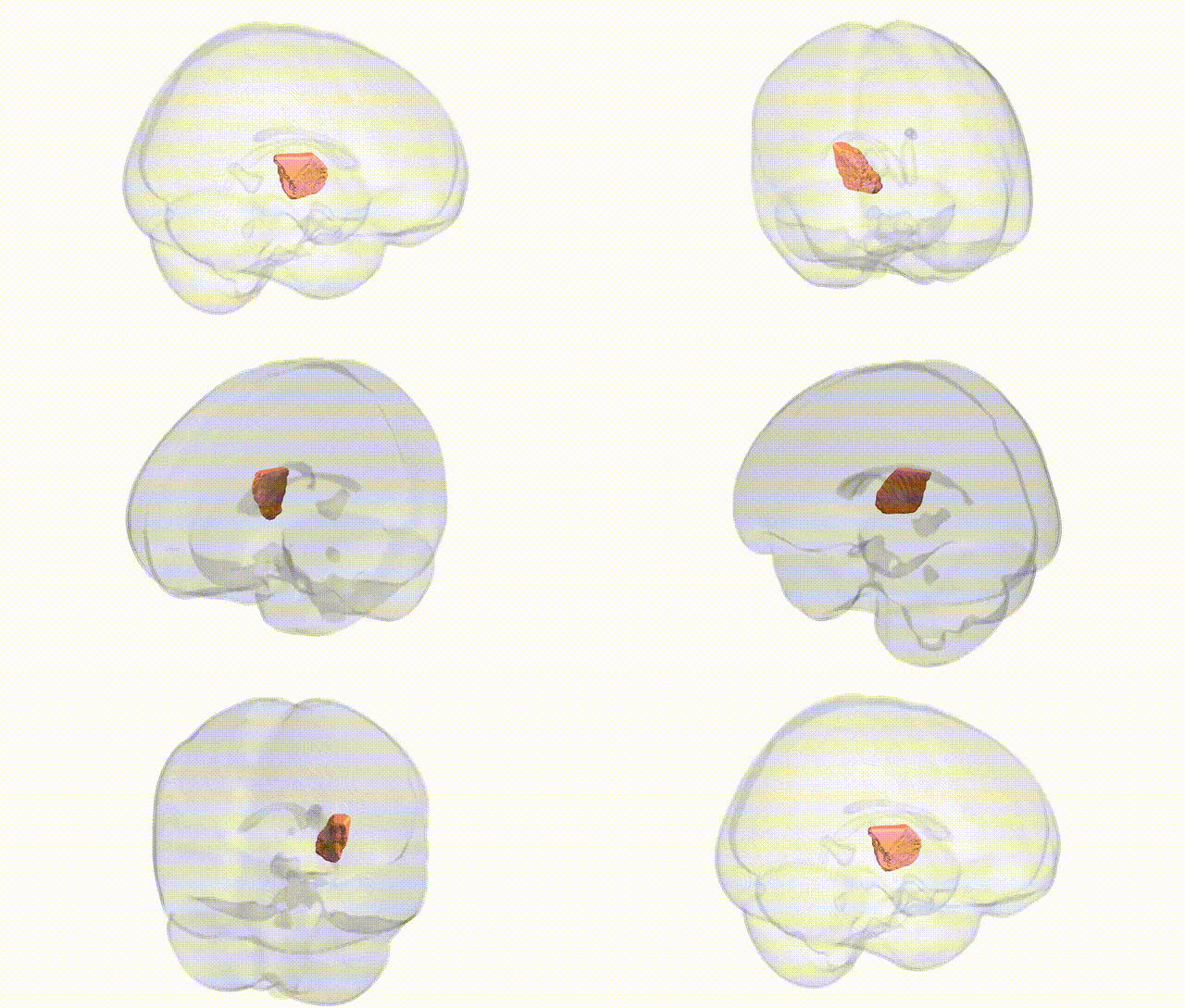
Full Quality Version: Download MP4
Wali Sidiqyar*, Gaurav Rudravaram*, Elyssa M. McMaster, Trent M. Schwartz, Adam M. Saunders, Kurt G. Schilling, Bennett A. Landman "Introducing SPINS: A Shared Public Visualization Library of Neuroanatomical Structures." Medical Imaging with Deep Learning- short paper
This resource is licensed under CC0 1.0 Universal (Public Domain).