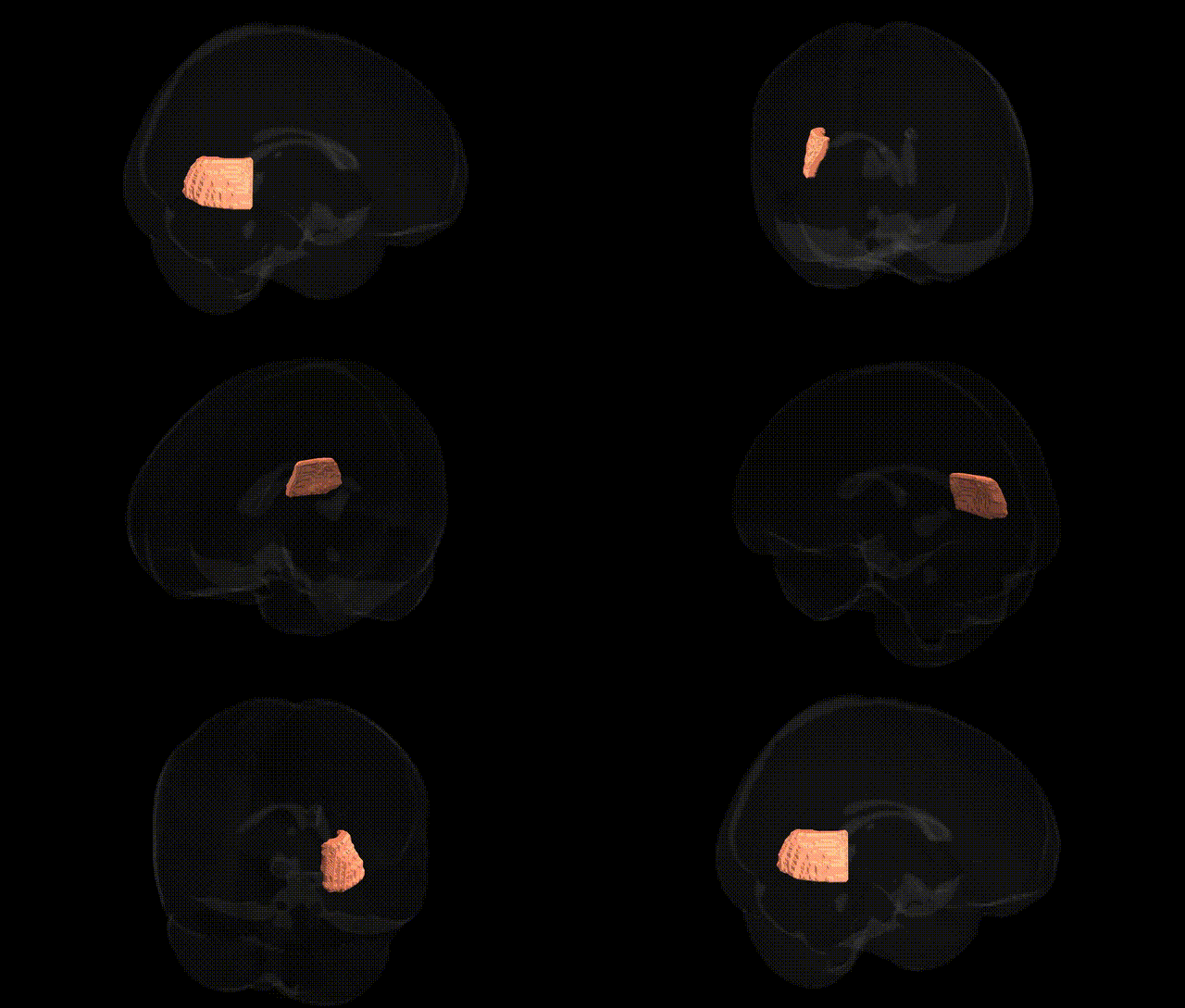
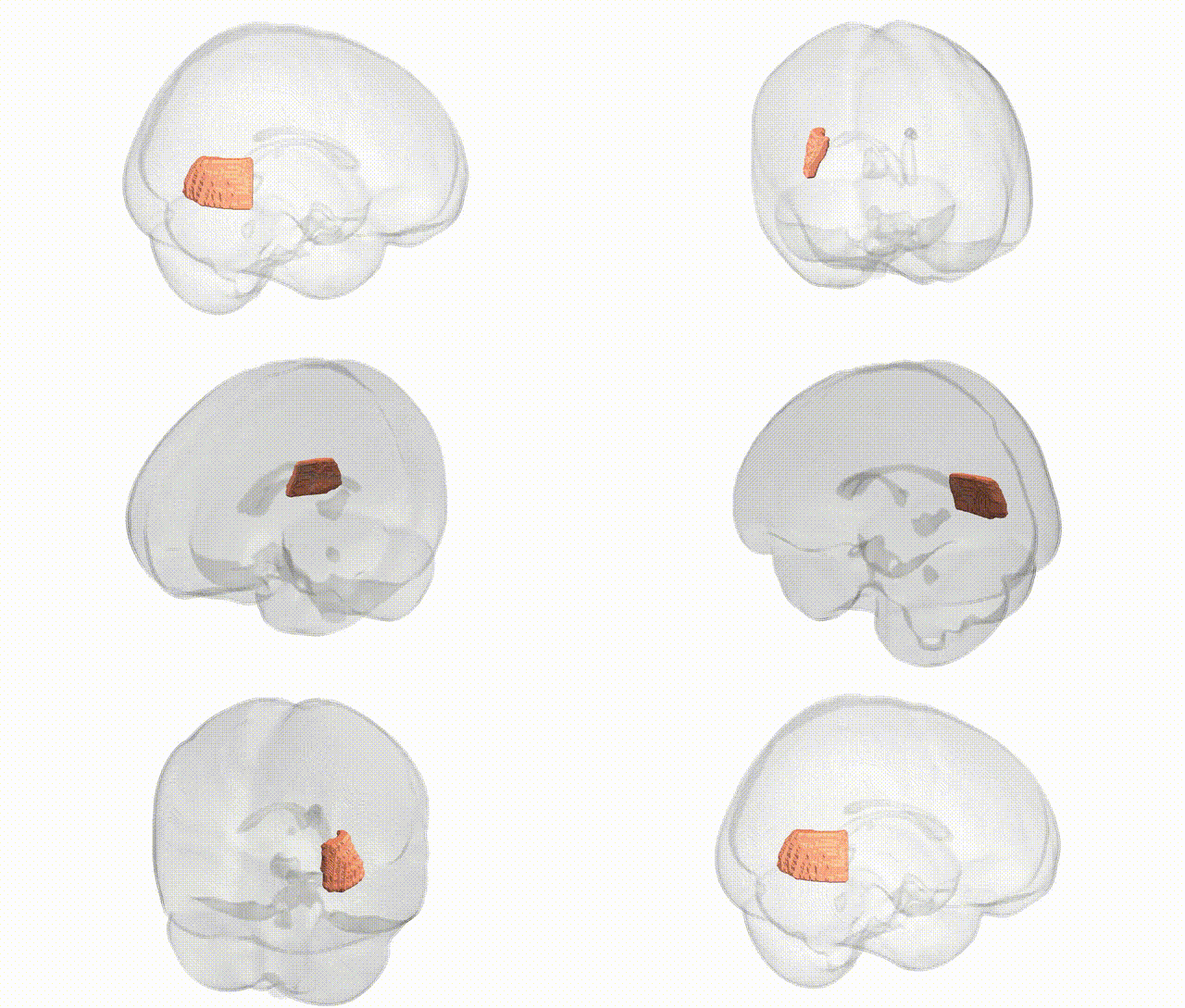
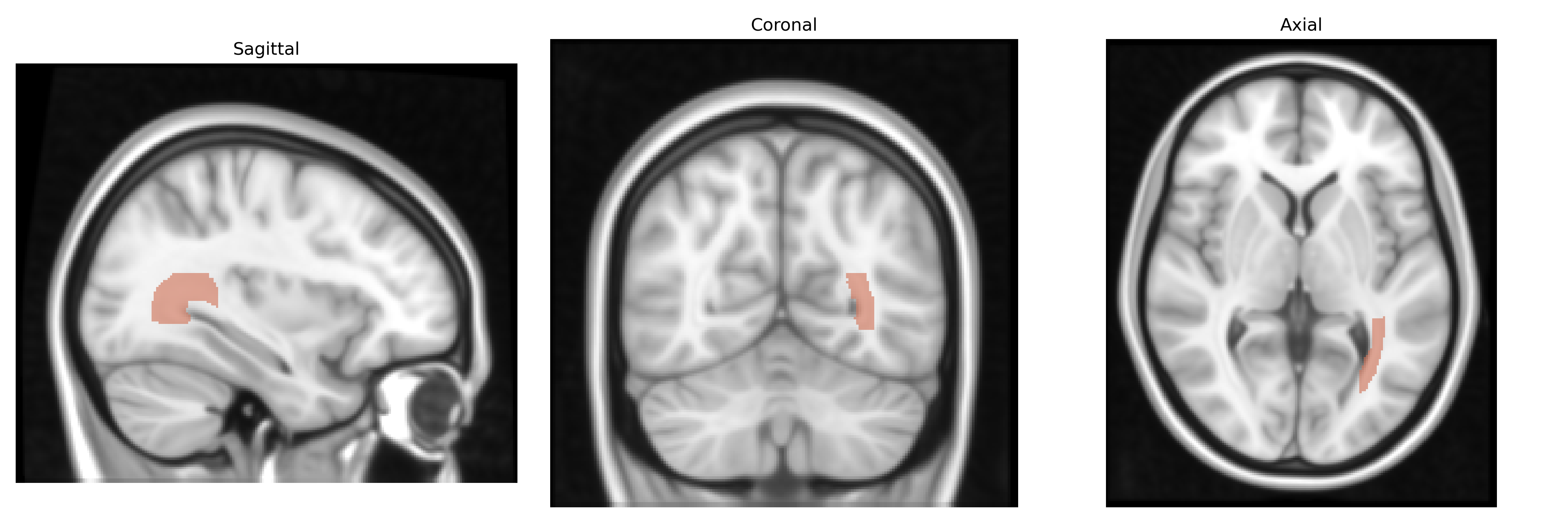
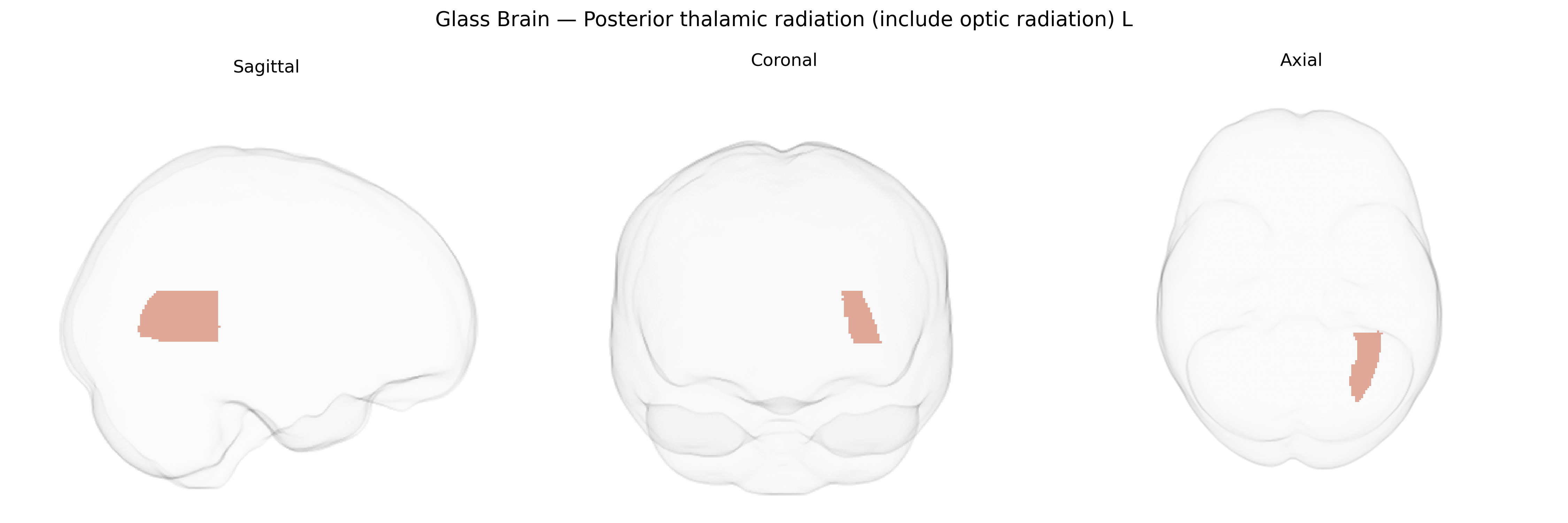
The bilateral Posterior thalamic radiation (include optic radiation) L, as defined in the JHU ICBM labels 1mm Atlas, comprises a major bundle of white matter fibers connecting the posterior thalamic nuclei to occipital and posterior parietal cortical regions, with a large portion corresponding to the optic radiation. Functionally, this tract is critical for the transmission of visual information from the lateral geniculate nucleus to the primary visual cortex (V1) and adjacent visual association areas, supporting conscious visual perception, visuospatial processing, and integration of visual input with higher-order sensory and cognitive functions. The pathway includes fibers coursing through the temporal and parietal lobes (including Meyer’s loop in the temporal lobe) and is highly relevant clinically, as lesions can produce characteristic visual field deficits such as quadrantanopias or hemianopias. There is no direct Wikipedia article for the “Posterior thalamic radiation”; a closely related structure is the Optic radiation.
The bilateral posterior thalamic radiation (including the optic radiation) as defined in the JHU ICBM 1 mm atlas has been implicated in several genetic and GWAS findings, largely via voxel-based morphometry, diffusion tensor imaging, and imaging-genetics consortia studies rather than locus-specific work on this tract alone. Variants in genes affecting myelination, axonal guidance, and neurodevelopment—such as those in BDNF, NTRK2, MAG, and NRXN1—have been associated with microstructural differences (e.g., fractional anisotropy and mean diffusivity) in posterior thalamic and optic radiations, often in the context of neurodevelopmental and psychiatric disorders. Large-scale GWAS of white matter microstructure (e.g., from ENIGMA and UK Biobank) have identified polygenic influences on diffusion metrics in posterior thalamic/optic radiations, with enrichment for pathways involved in axon guidance, oligodendrocyte function, and synaptic organization, and overlap with risk loci for schizophrenia, major depressive disorder, and autism spectrum disorder. In visual system–focused studies, genetic variants influencing visual pathway integrity, including optic radiation structure, have been related to disorders such as multiple sclerosis and glaucoma through demyelination or neurodegeneration, though these typically implicate broader white matter and immune-related loci (e.g., HLA region) rather than this tract in isolation. Overall, current evidence supports a polygenic architecture in which common and rare variants impacting white matter development, myelin biology, and synaptic connectivity contribute to interindividual differences in posterior thalamic/optic radiation anatomy and to risk for neuropsychiatric and demyelinating disorders that involve this pathway.
Overview generated by GPT-4o (2026).
Region ID: 30
Hemisphere: bilateral
Atlas: JHU ICBM labels 1mm
Full Quality Version: Download MP4
Full Quality Version: Download MP4
Wali Sidiqyar*, Gaurav Rudravaram*, Elyssa M. McMaster, Trent M. Schwartz, Adam M. Saunders, Kurt G. Schilling, Bennett A. Landman "Introducing SPINS: A Shared Public Visualization Library of Neuroanatomical Structures." Medical Imaging with Deep Learning- short paper
This resource is licensed under CC0 1.0 Universal (Public Domain).