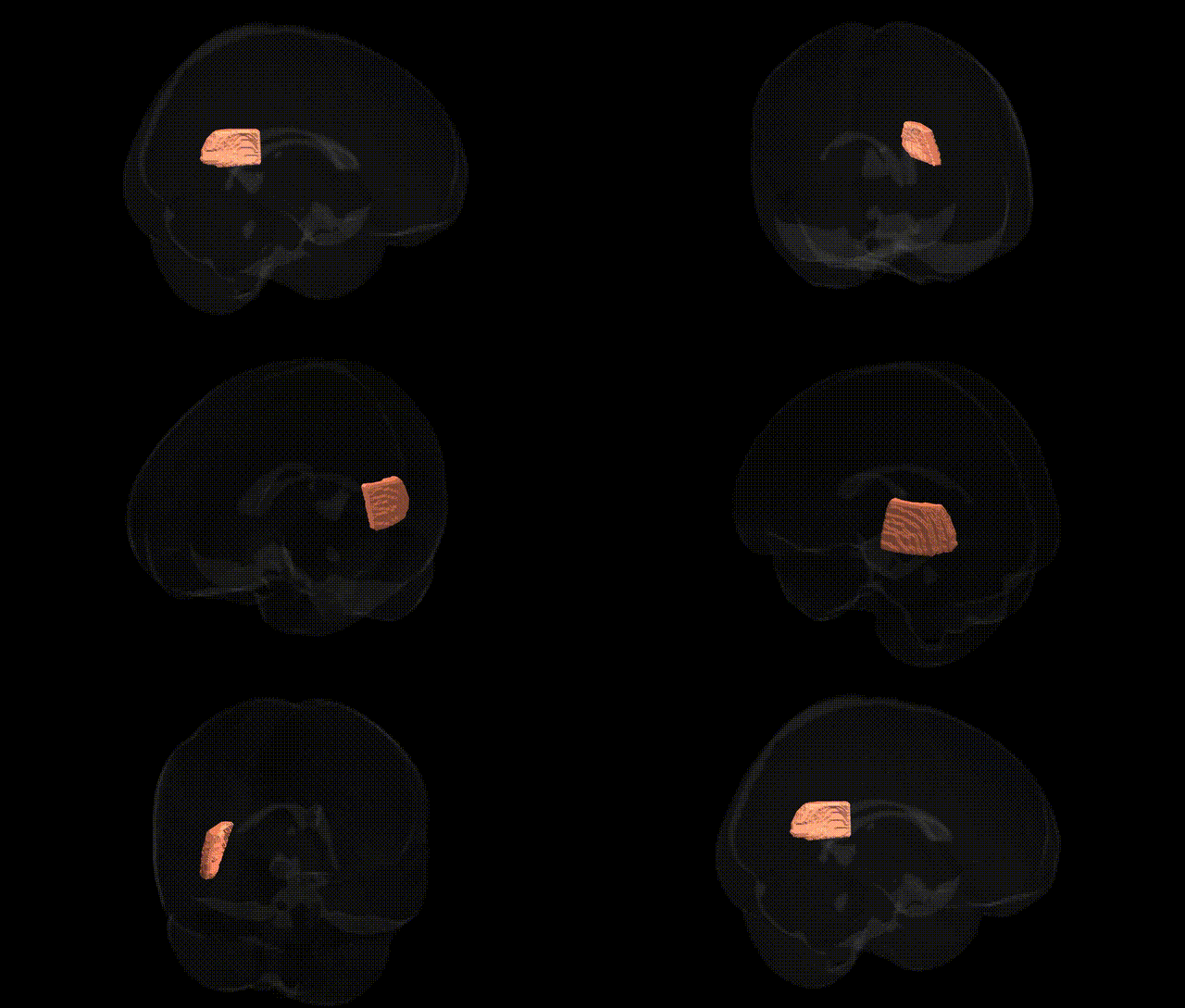
The bilateral Posterior thalamic radiation (including optic radiation), right, as defined in the JHU ICBM labels 1 mm atlas, is a major white matter projection system connecting the posterior and lateral nuclei of the thalamus with cortical regions in the occipital and posterior parietal lobes, with a prominent component being the optic radiation that carries visual information from the lateral geniculate nucleus to the primary visual cortex (V1) in the calcarine sulcus. This complex tract system includes fibers involved in visual processing, visuospatial integration, and multimodal sensory association, and traverses the deep white matter of the temporal and parietal lobes (including Meyer’s loop in its anterior segment) before terminating in occipital cortex. Functionally, the posterior thalamic radiation supports conscious visual perception, aspects of visual attention, and integration of thalamic sensory signals with cortical processing, and lesions in this region can result in visual field defects (such as homonymous hemianopia), visual neglect, or broader disturbances in visuospatial cognition depending on the precise subcomponents affected. No direct Wikipedia article exists for this specific atlas-defined tract; a closely related entry is Optic radiation.
The bilateral posterior thalamic radiation, including the optic radiation as defined in the JHU ICBM 1 mm atlas, has been implicated in several genetic and imaging-genetic studies, particularly through diffusion MRI measures such as fractional anisotropy and mean diffusivity. GWAS of white matter microstructure (e.g., UK Biobank and ENIGMA-based studies) have identified multiple loci influencing integrity of thalamic radiations and optic radiations, notably in genes related to axon guidance, myelination, and neurodevelopment (such as variants near or within CNTN4, NTRK1/2, MAG, and other cell-adhesion and myelin-associated genes), although specific associations to the right posterior thalamic radiation are usually reported in bilateral or tract-averaged analyses rather than hemisphere-specific results. Genetically influenced alterations in this region’s connectivity and microstructure have been linked to neuropsychiatric and neurodevelopmental conditions, including schizophrenia, bipolar disorder, major depression, and autism spectrum disorder, where polygenic risk scores and disorder-associated variants correlate with reduced integrity or atypical development of thalamic radiations. The optic radiation component has also been implicated in Mendelian and complex ocular and neuro-ophthalmologic conditions (e.g., Leber hereditary optic neuropathy, mitochondrial and myelin disorders), in which disease-causing variants or risk genes affect the broader visual pathway including white matter tracts from the lateral geniculate nucleus to visual cortex. In cognitive GWAS, polygenic influences on intelligence, processing speed, and educational attainment show downstream associations with microstructural variation in thalamic and optic radiations, suggesting that genetic factors that shape general brain development and synaptic/myelin biology contribute to individual differences in this tract’s structure and related visual and cognitive functions.
Overview generated by GPT-4o (2026).
Region ID: 29
Hemisphere: bilateral
Atlas: JHU ICBM labels 1mm
Full Quality Version: Download MP4
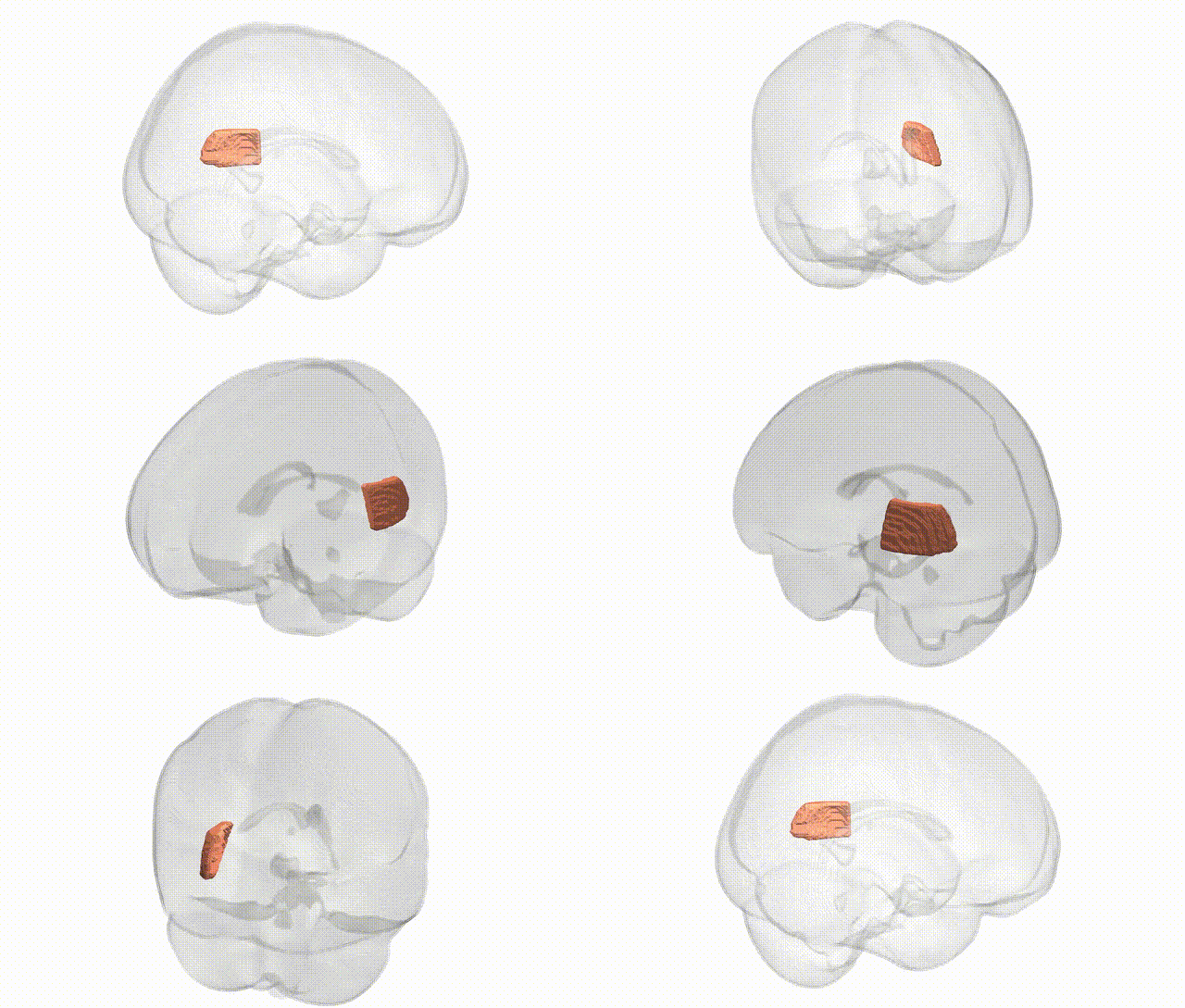
Full Quality Version: Download MP4
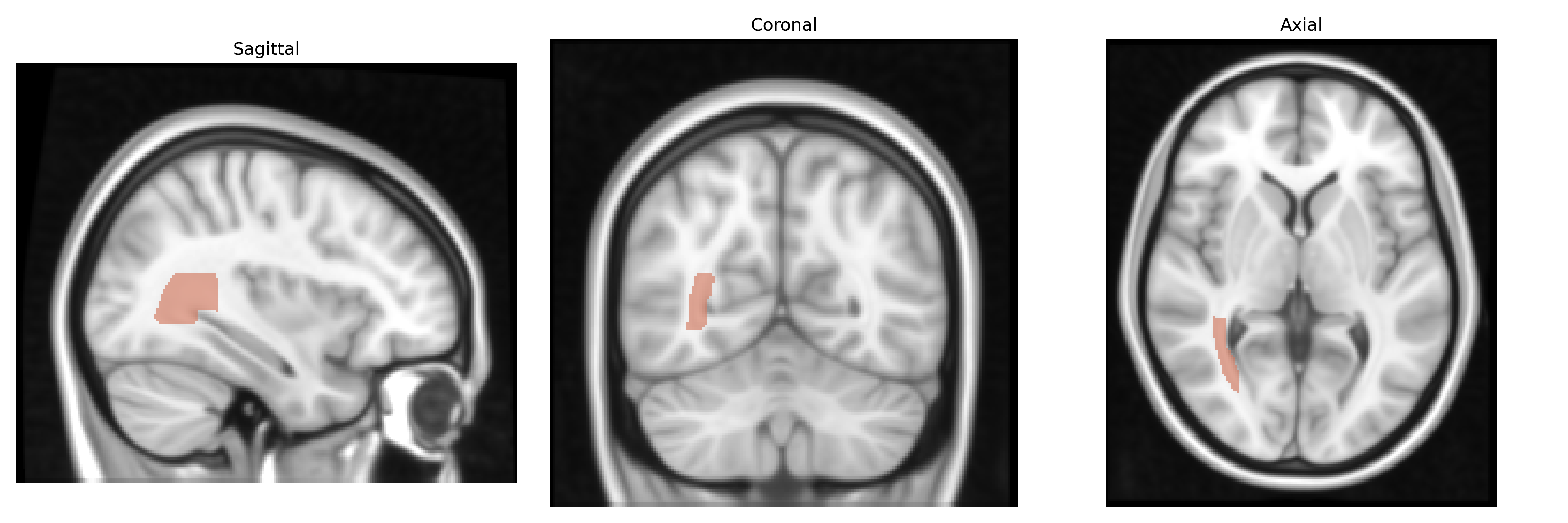
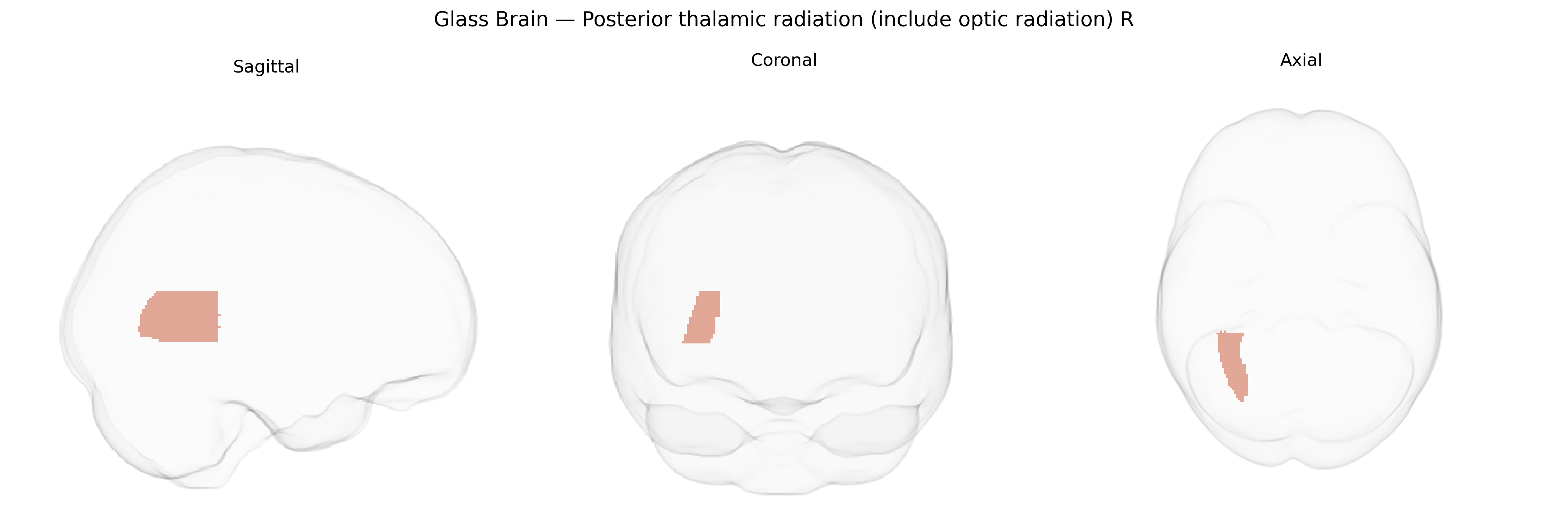
Wali Sidiqyar*, Gaurav Rudravaram*, Elyssa M. McMaster, Trent M. Schwartz, Adam M. Saunders, Kurt G. Schilling, Bennett A. Landman "Introducing SPINS: A Shared Public Visualization Library of Neuroanatomical Structures." Medical Imaging with Deep Learning- short paper
This resource is licensed under CC0 1.0 Universal (Public Domain).