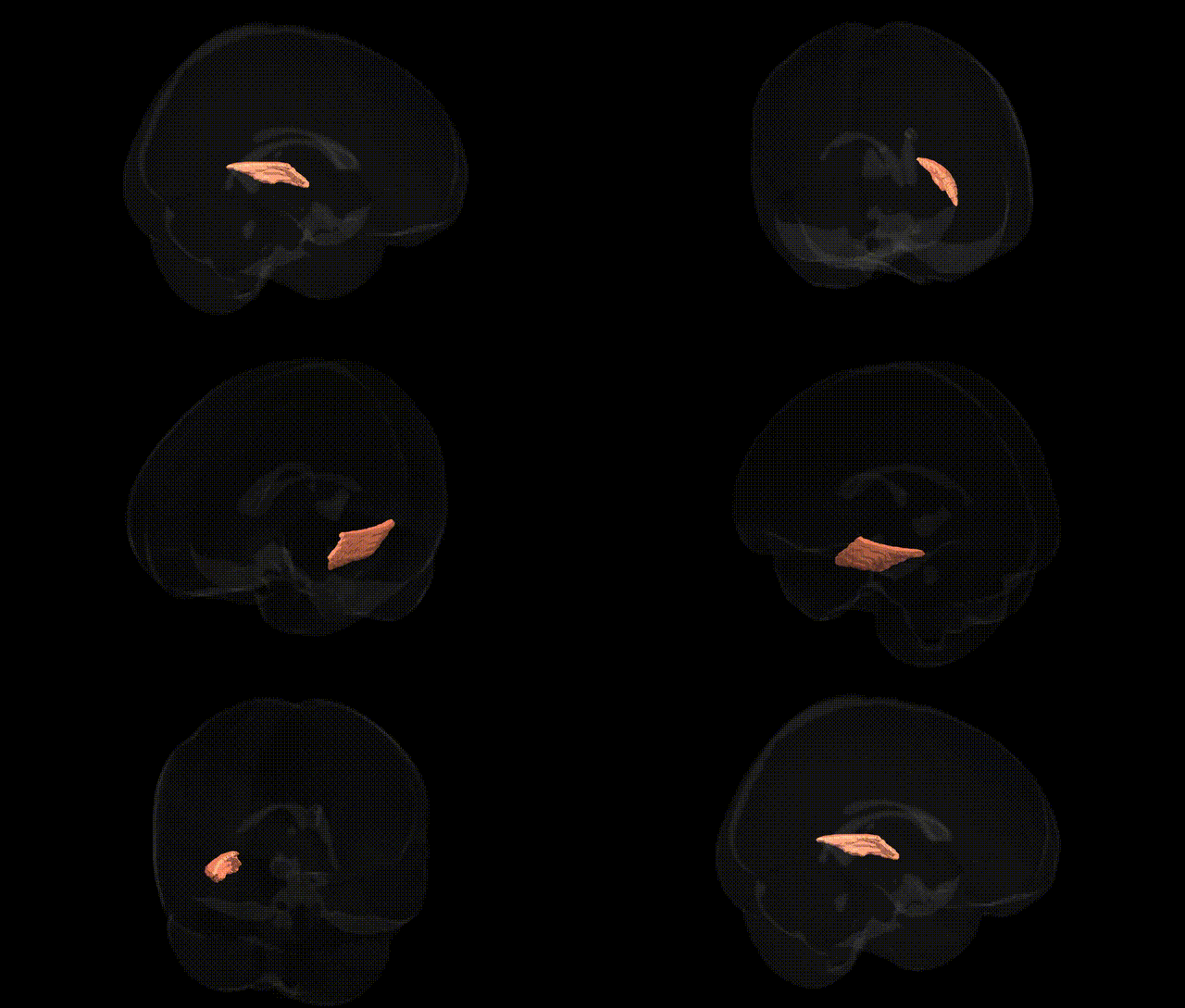
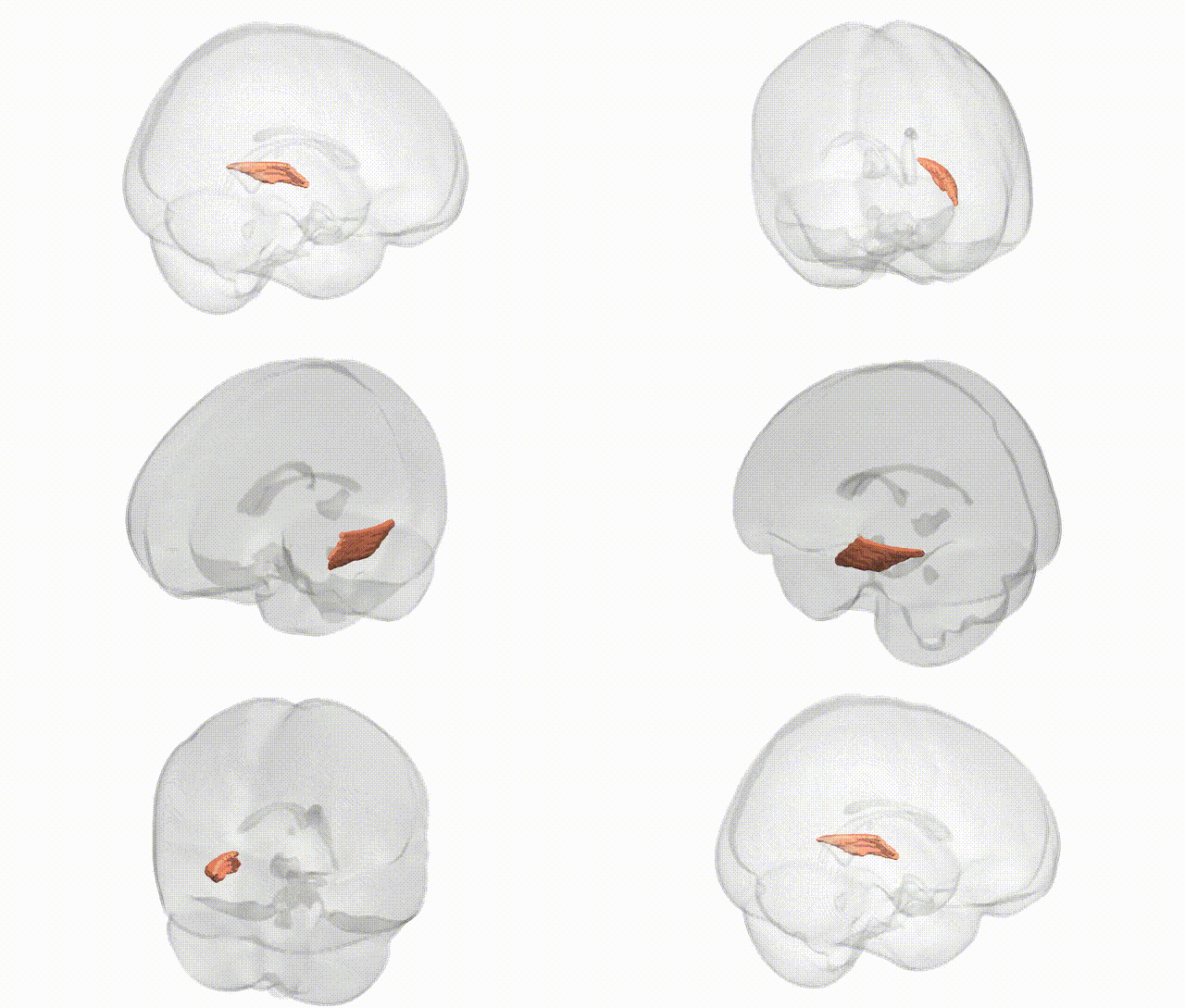
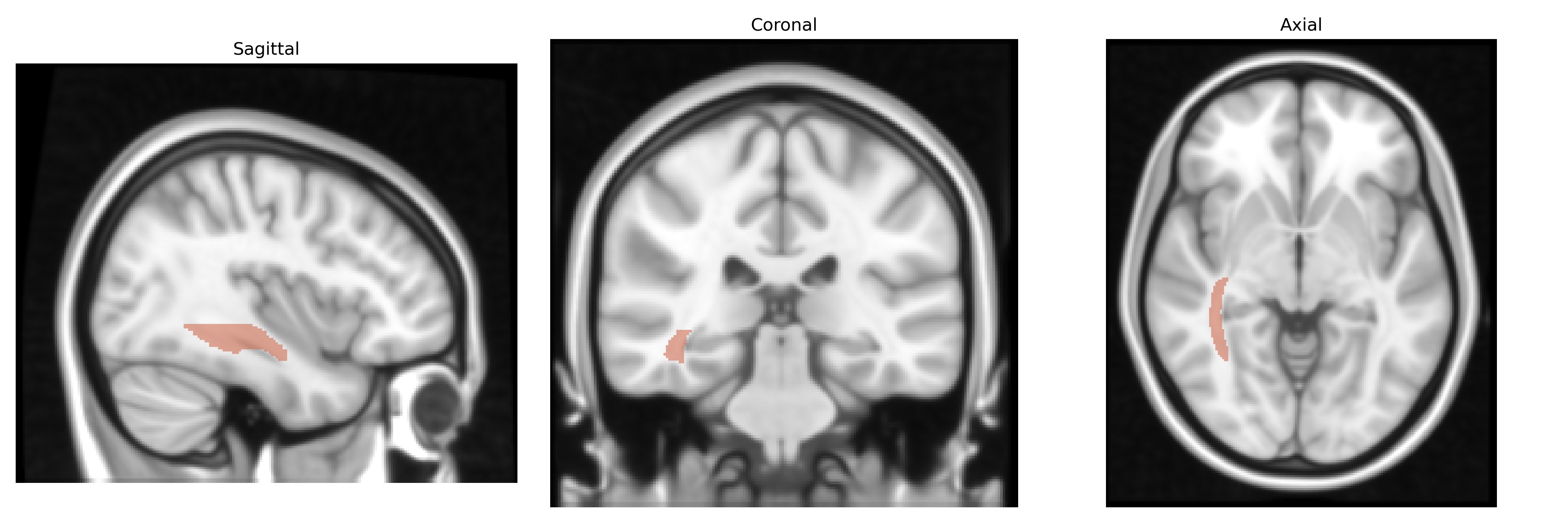
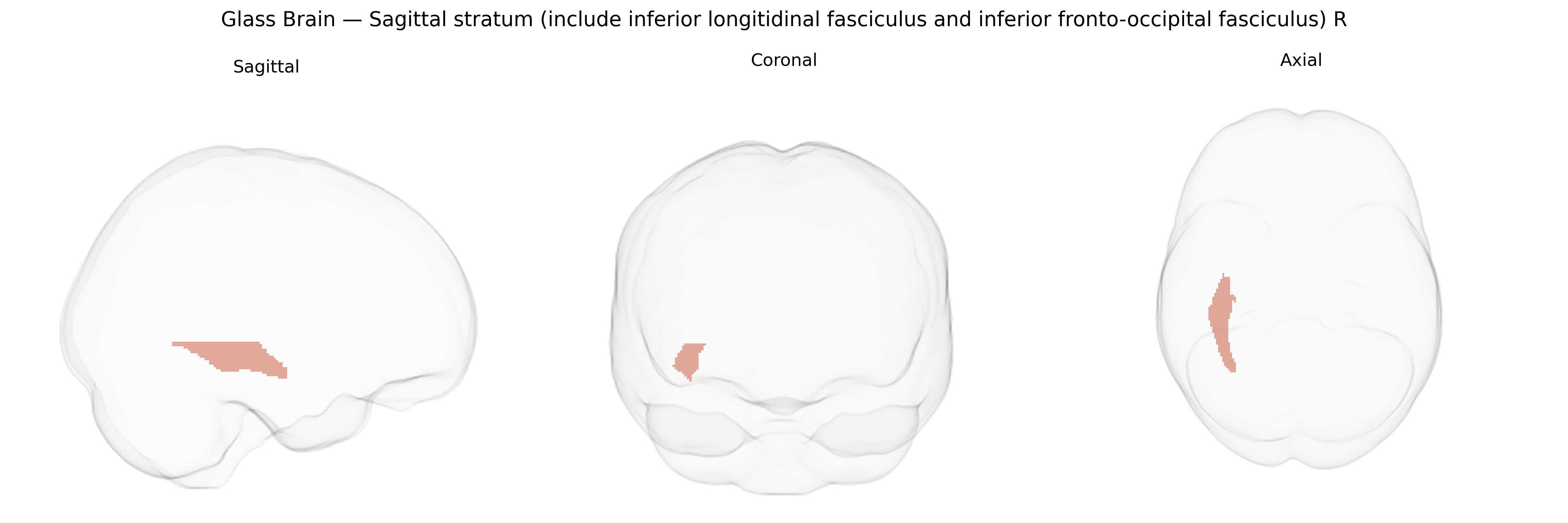
The bilateral sagittal stratum (including the inferior longitudinal fasciculus and inferior fronto-occipital fasciculus) is a major composite white matter pathway located in the deep posterior temporal and occipital lobes, forming part of the ventral visual and semantic processing streams. It consists of longitudinal fiber bundles that interconnect occipital, temporal, and frontal cortices, supporting visual object recognition, reading, and the integration of visual information with higher-order cognitive and language functions. The inferior longitudinal fasciculus primarily links occipital and anterior temporal regions, while the inferior fronto-occipital fasciculus connects occipital and posterior temporal areas with the frontal lobe, contributing to visuospatial processing, attention, and executive control over visual inputs. There is no single direct Wikipedia article for the sagittal stratum in this composite sense; relevant related structures include the Inferior longitudinal fasciculus and the Inferior fronto-occipital fasciculus.
The bilateral sagittal stratum, encompassing fibers of the inferior longitudinal fasciculus (ILF) and inferior fronto-occipital fasciculus (IFOF) as defined in the JHU ICBM 1 mm atlas, has been repeatedly implicated in imaging genetics studies linking white matter microstructure to common genetic variation and neuropsychiatric phenotypes. GWAS of diffusion MRI metrics (e.g., ENIGMA and UK Biobank cohorts) have identified associations between fractional anisotropy and single-nucleotide polymorphisms in genes related to axon guidance, myelination, and neurodevelopment, including loci near CNTNAP2, NRG1, MAG, and various cell-adhesion and cytoskeletal genes, although most findings do not target the sagittal stratum in isolation but rather ILF/IFOF or global association fiber measures. Alterations in ILF/IFOF integrity in this region have been genetically linked, via polygenic risk score and candidate gene approaches, to disorders such as schizophrenia, bipolar disorder, major depressive disorder, autism spectrum disorder, and dyslexia, with converging evidence that risk alleles influencing glutamatergic signaling, synaptic plasticity (e.g., GRM, CACNA family genes), and oligodendrocyte function contribute to reduced anisotropy or increased diffusivity. GWAS of cognitive traits and educational attainment have also reported that alleles associated with higher cognitive performance correspond to more robust microstructural integrity in long-range occipito-temporal and fronto-occipital tracts, including the ILF/IFOF within the sagittal stratum, suggesting that polygenic influences on intelligence and language partly act through development and maintenance of these associative white matter pathways.
Overview generated by GPT-4o (2026).
Region ID: 31
Hemisphere: bilateral
Atlas: JHU ICBM labels 1mm
Full Quality Version: Download MP4
Full Quality Version: Download MP4
Wali Sidiqyar*, Gaurav Rudravaram*, Elyssa M. McMaster, Trent M. Schwartz, Adam M. Saunders, Kurt G. Schilling, Bennett A. Landman "Introducing SPINS: A Shared Public Visualization Library of Neuroanatomical Structures." Medical Imaging with Deep Learning- short paper
This resource is licensed under CC0 1.0 Universal (Public Domain).