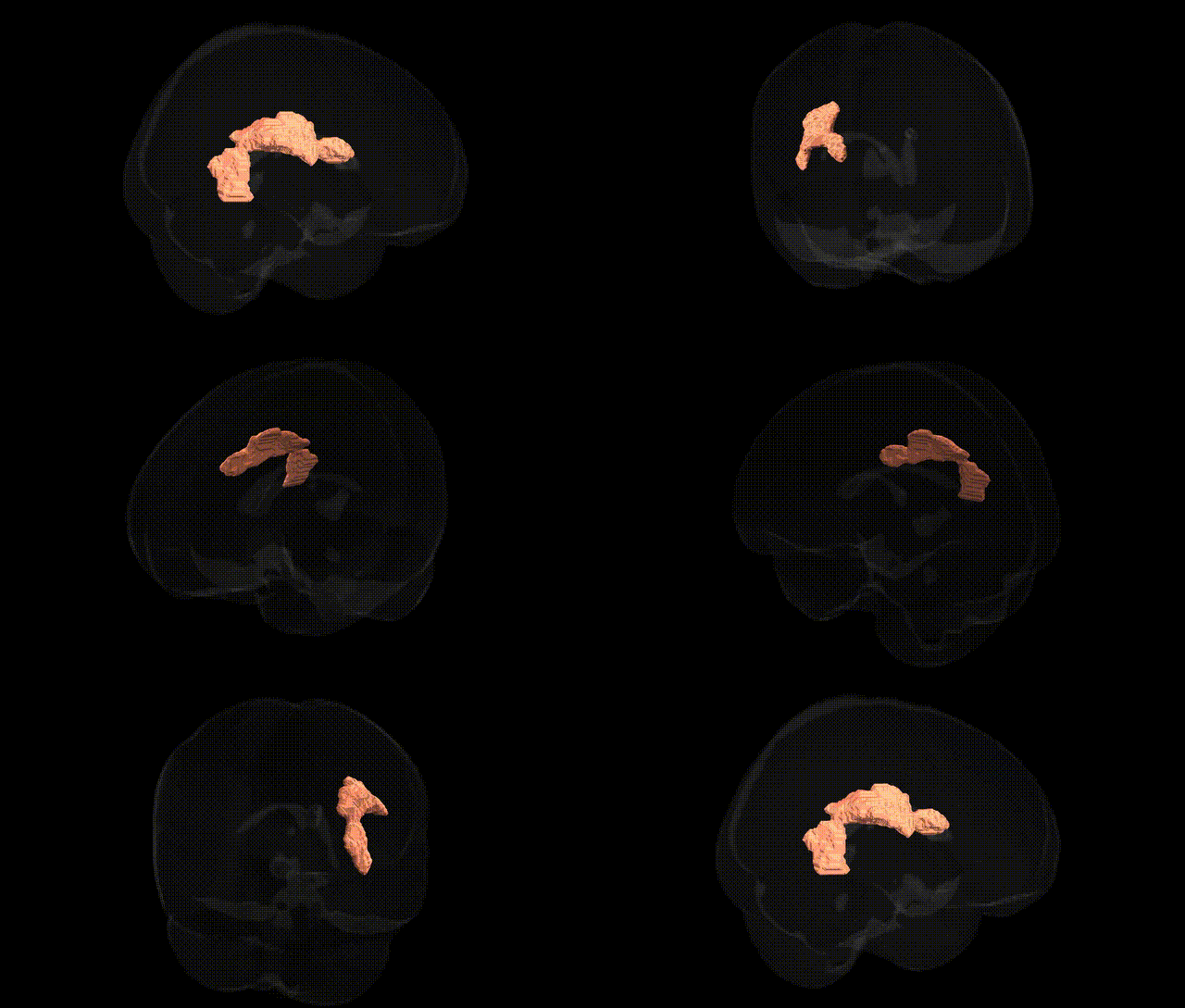
The bilateral Superior longitudinal fasciculus L, as defined in the JHU ICBM labels 1mm Atlas, is a major associative white matter tract running within each cerebral hemisphere, connecting frontal cortical regions with parietal, occipital, and portions of temporal cortex. It consists of longitudinally oriented myelinated fibers arching above the insula and lateral ventricles, forming a key pathway for integrating multimodal sensory information with higher-order motor planning, spatial attention, language, and executive functions. Structurally, the superior longitudinal fasciculus is divided into subcomponents (often including the arcuate fasciculus), with variations in tract morphology and lateralization that support hemisphere-specific specializations, such as left-dominant involvement in language processing. In diffusion MRI-based atlases like the JHU ICBM, this tract is delineated probabilistically, enabling standardized analysis of its microstructural properties (e.g., fractional anisotropy) in health and disease. Superior longitudinal fasciculus
The bilateral superior longitudinal fasciculus (SLF-L) as defined in the JHU ICBM 1 mm atlas has been implicated in multiple imaging-genetics and GWAS studies, largely through diffusion MRI measures such as fractional anisotropy (FA), mean diffusivity, and tract volume. Common variants in genes involved in myelination, axon guidance, and neurodevelopment (e.g., CNTNAP2, NTRK1/2, ROBO/SLIT pathway genes, and oligodendrocyte-related loci) have been associated with microstructural properties of SLF segments, although findings are generally polygenic and dispersed rather than concentrated in single “SLF genes.” Large-scale ENIGMA and UK Biobank imaging GWAS have reported significant heritability for SLF diffusion metrics and have linked SLF integrity to cognitive traits including processing speed, working memory, language abilities, and general intelligence, as well as to risk for neuropsychiatric disorders such as schizophrenia, major depressive disorder, ADHD, and autism spectrum disorder, often via shared polygenic architectures rather than region-specific variants. SLF abnormalities associated with risk alleles in these disorders typically manifest as reduced FA or altered tract organization, supporting a genetically influenced vulnerability of fronto-parietal and temporo-parietal connectivity systems, but current evidence indicates that genetic effects on this tract are highly distributed, modest in size, and embedded within broader brain-wide connectivity and neurodevelopmental networks rather than uniquely specific to the SLF-L label in the JHU atlas.
Overview generated by GPT-4o (2026).
Region ID: 42
Hemisphere: bilateral
Atlas: JHU ICBM labels 1mm
Full Quality Version: Download MP4
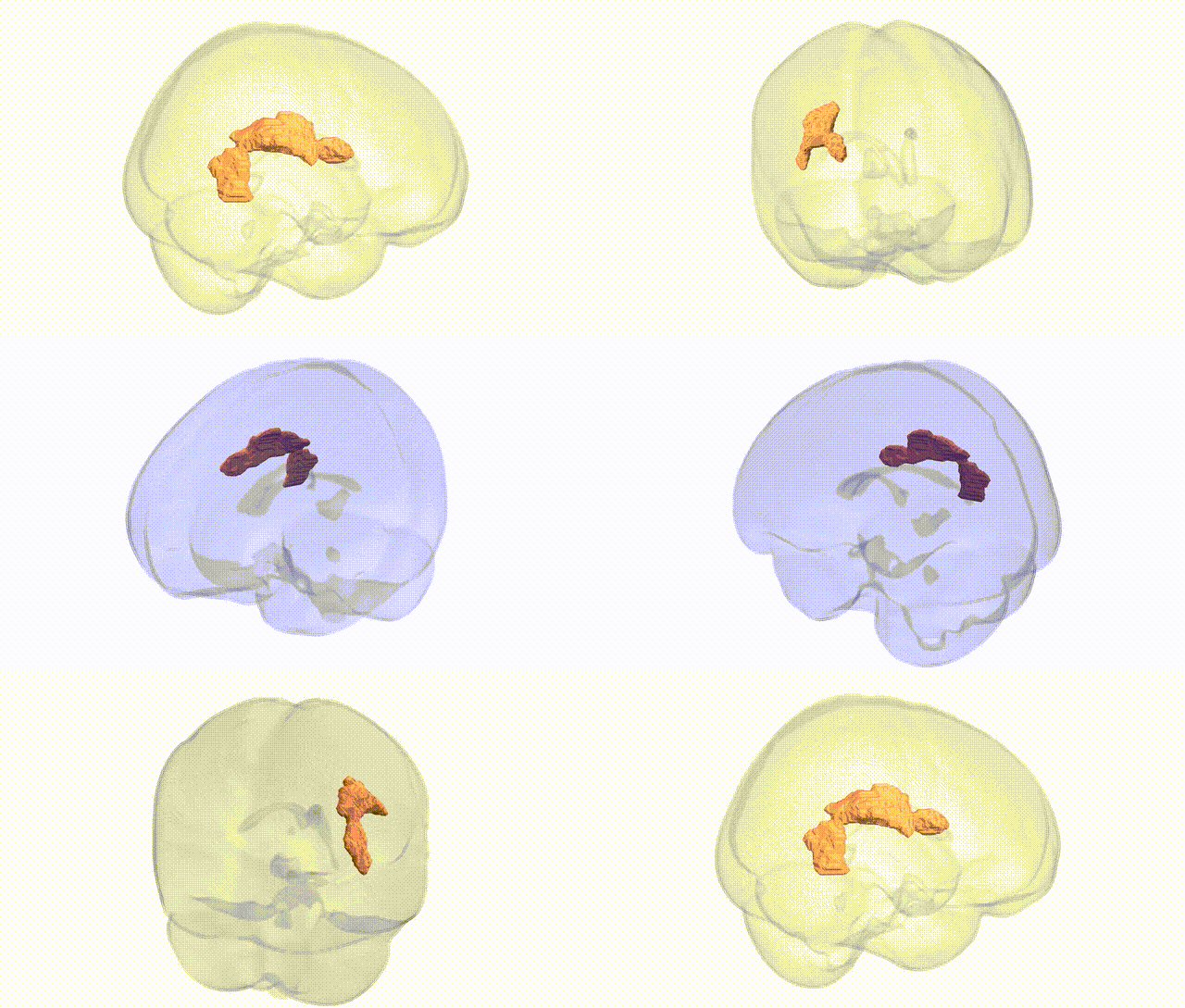
Full Quality Version: Download MP4
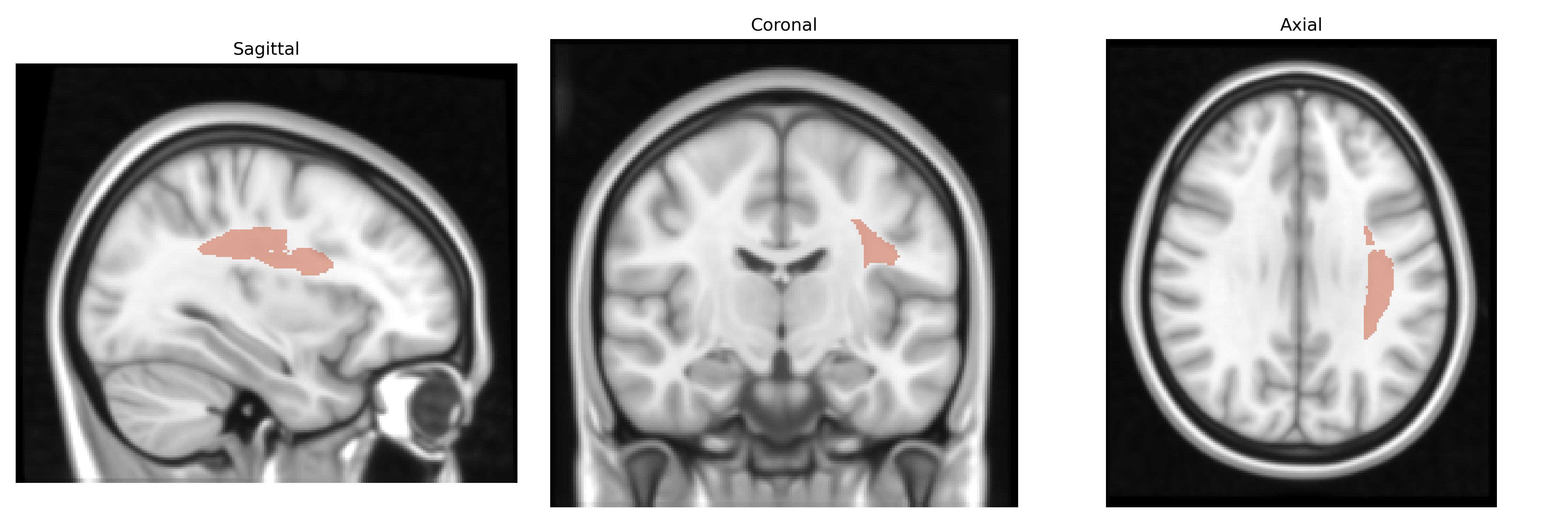
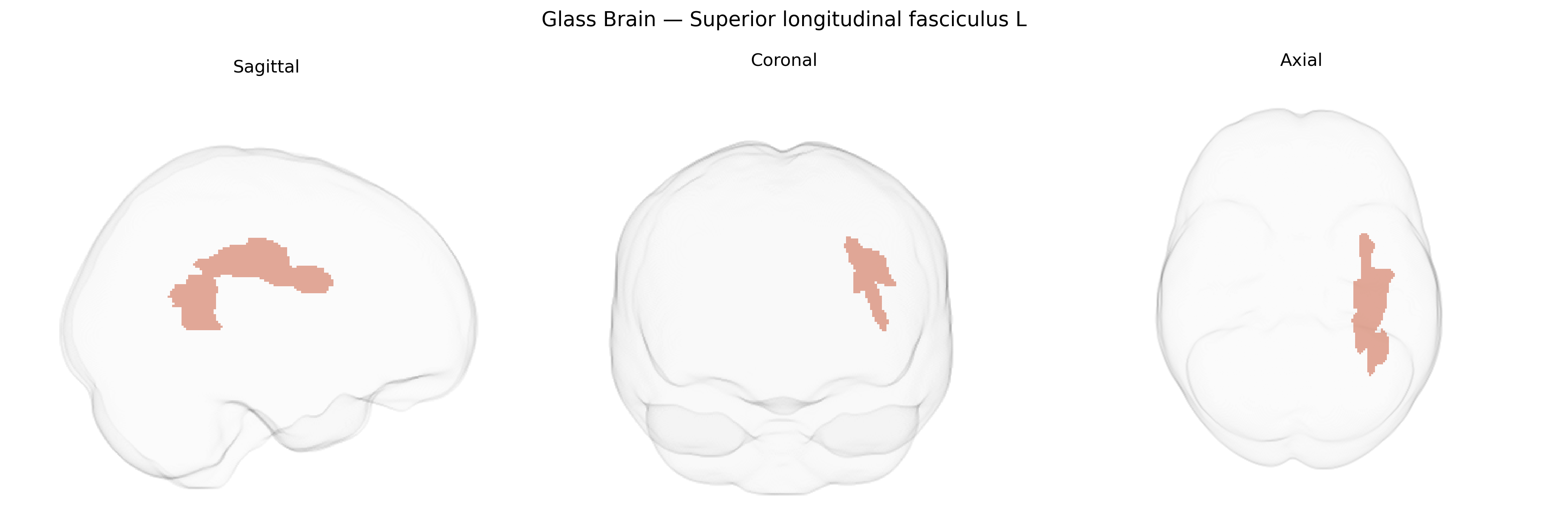
Wali Sidiqyar*, Gaurav Rudravaram*, Elyssa M. McMaster, Trent M. Schwartz, Adam M. Saunders, Kurt G. Schilling, Bennett A. Landman "Introducing SPINS: A Shared Public Visualization Library of Neuroanatomical Structures." Medical Imaging with Deep Learning- short paper
This resource is licensed under CC0 1.0 Universal (Public Domain).