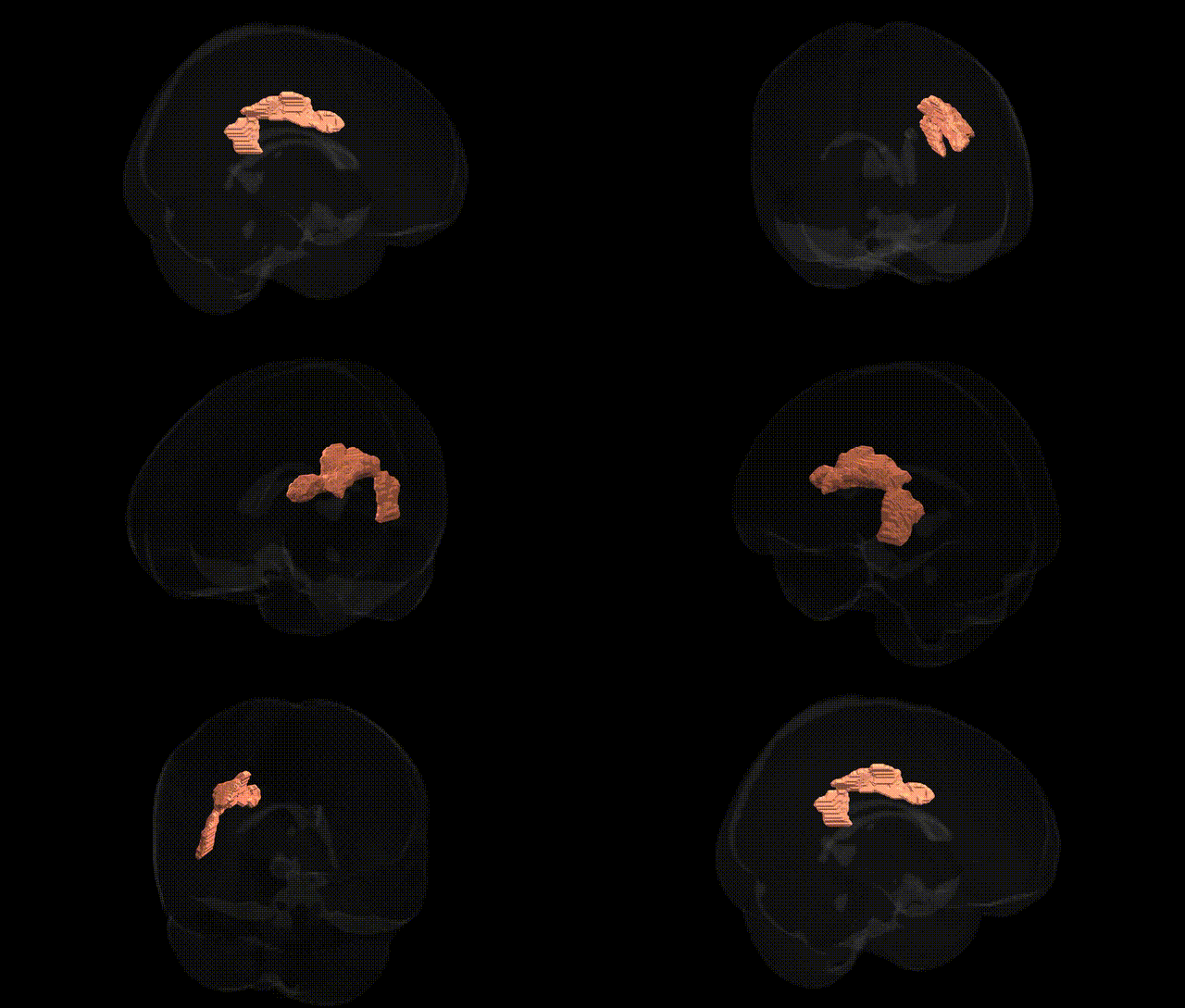
The bilateral Superior longitudinal fasciculus R, as defined in the JHU ICBM labels 1 mm Atlas, refers to the right superior longitudinal fasciculus (SLF), a major association fiber bundle that connects frontal, parietal, occipital, and temporal cortices within the same hemisphere. This long-range white matter tract runs dorsally, arching above the insula and lateral ventricle, and is subdivided into multiple components (often including dorsal and ventral branches) that link regions involved in language, attention, spatial processing, and sensorimotor integration. Functionally, the right SLF plays a key role in visuospatial attention, spatial awareness, and aspects of nonverbal cognition, and its integrity is critical for coordinated communication between frontal executive areas and posterior parietal and temporal association cortices. There is no direct link for “Superior longitudinal fasciculus R”; a related structure is the Superior longitudinal fasciculus.
Genetic associations involving the bilateral Superior longitudinal fasciculus (SLF), as defined in the JHU ICBM labels 1mm atlas, primarily emerge from imaging genetics and connectome-wide GWAS rather than gene–region–specific studies. The SLF, a major fronto-parietal association pathway implicated in language, attention, and working memory, has been linked through GWAS of diffusion MRI metrics (e.g., fractional anisotropy, mean diffusivity) to common variants in genes related to axon guidance, myelination, and synaptic plasticity, including loci near or within genes such as MAG, CNTNAP2, and NTRK1 in some cohorts, although findings are often sample- and metric-specific. Large-scale studies like UK Biobank–based GWAS have identified polygenic influences on white matter integrity in SLF-related tracts, with overlap in genetic architecture for psychiatric and cognitive traits, including schizophrenia, bipolar disorder, major depression, ADHD, and general cognitive ability, suggesting that variants conferring risk for these disorders also modulate SLF microstructure. Additionally, SLF diffusivity and volume have shown heritability in twin studies and have been associated with risk alleles for language-related and neurodevelopmental conditions (e.g., dyslexia and autism spectrum disorder), though many results remain correlational and do not isolate the SLF’s right-hemisphere subdivision as uniquely implicated. Overall, current evidence supports a polygenic, pleiotropic pattern in which common variants influencing neural development, myelin, and synaptic function contribute to individual differences in SLF structure and connectivity, thereby intersecting genetically with a range of cognitive and psychiatric phenotypes.
Overview generated by GPT-4o (2026).
Region ID: 41
Hemisphere: bilateral
Atlas: JHU ICBM labels 1mm
Full Quality Version: Download MP4
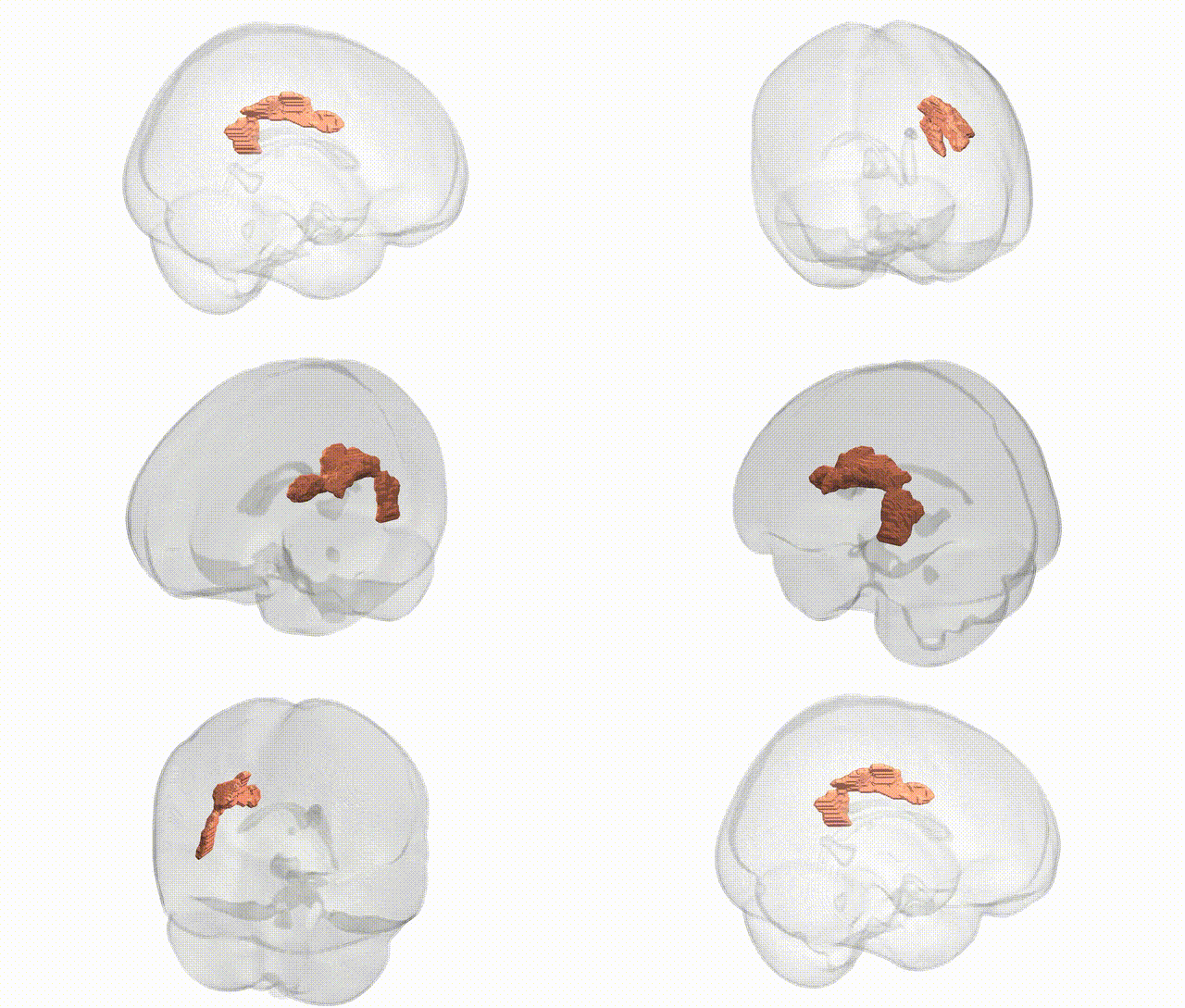
Full Quality Version: Download MP4
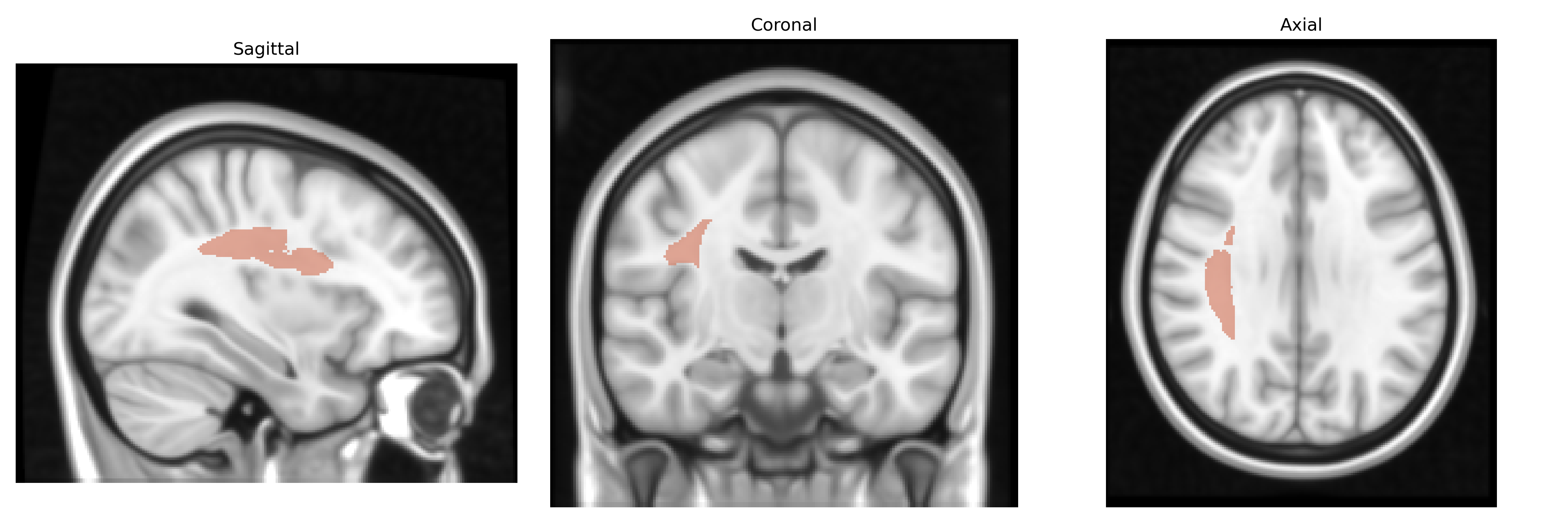
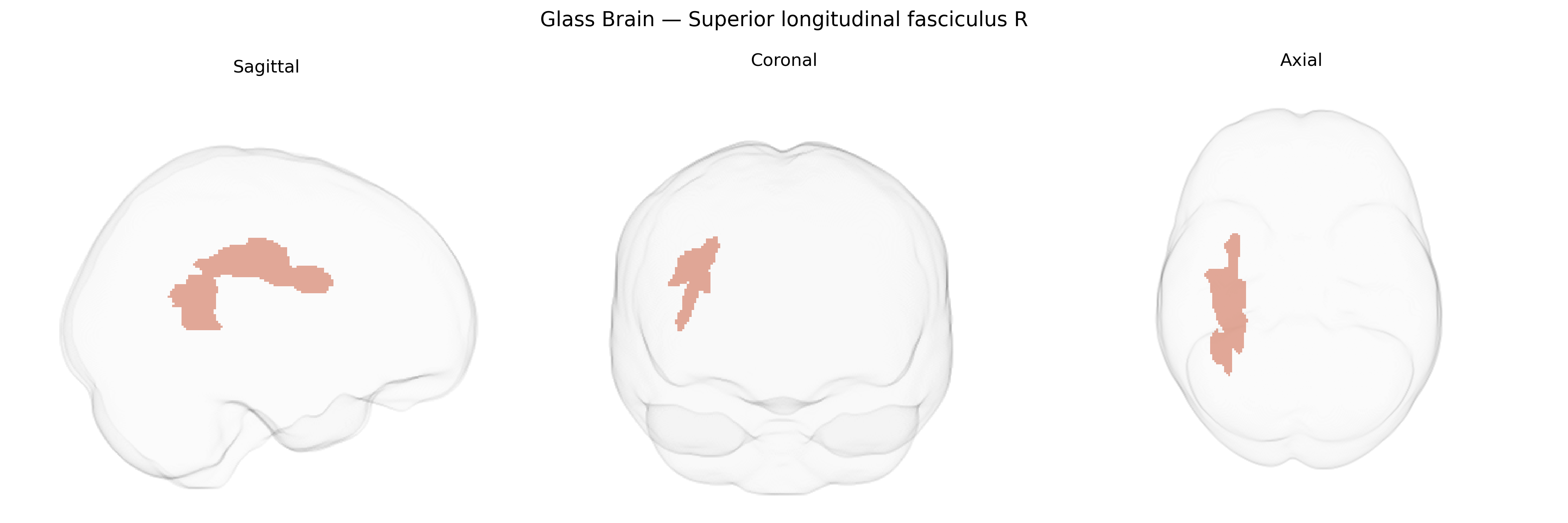
Wali Sidiqyar*, Gaurav Rudravaram*, Elyssa M. McMaster, Trent M. Schwartz, Adam M. Saunders, Kurt G. Schilling, Bennett A. Landman "Introducing SPINS: A Shared Public Visualization Library of Neuroanatomical Structures." Medical Imaging with Deep Learning- short paper
This resource is licensed under CC0 1.0 Universal (Public Domain).