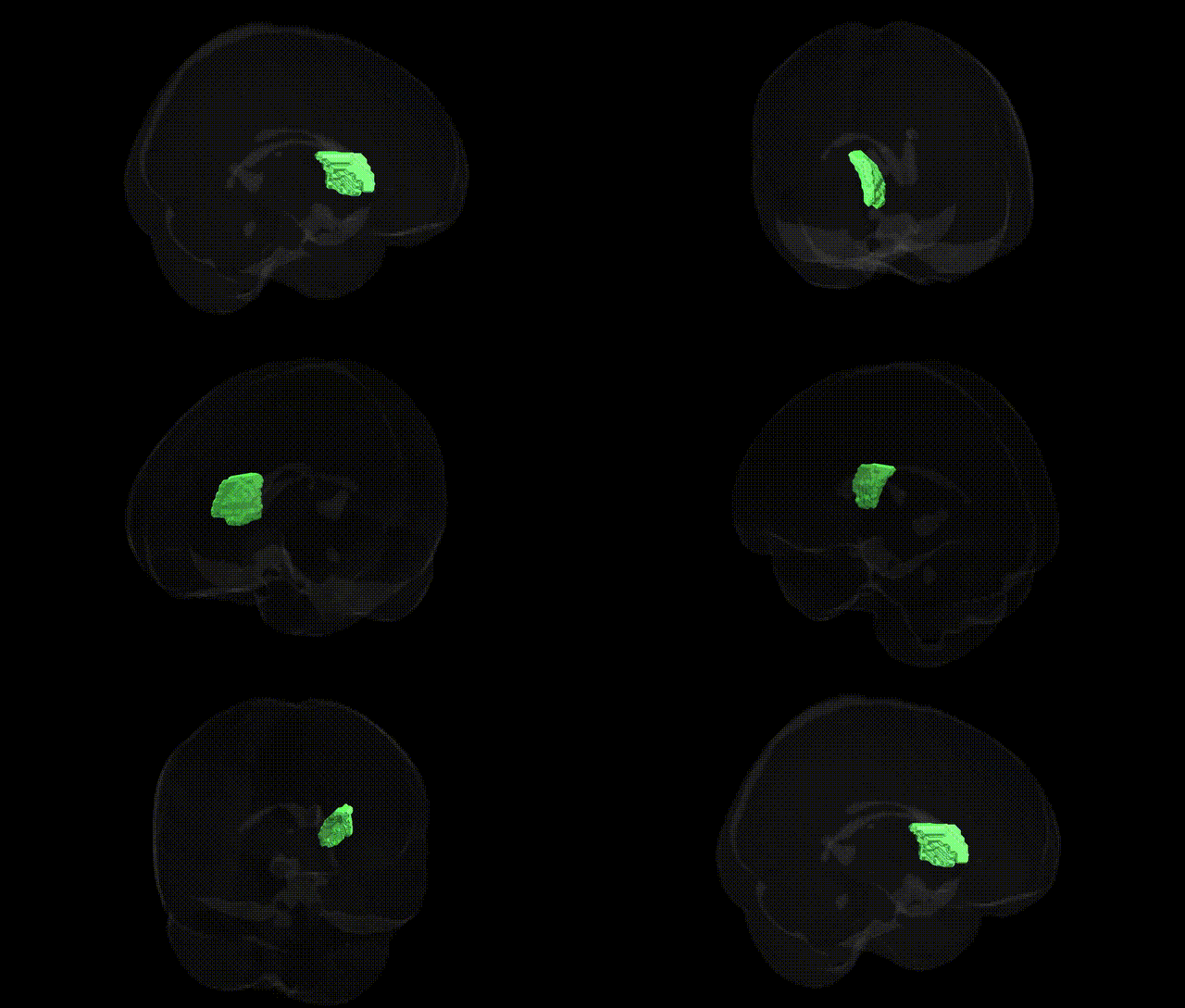
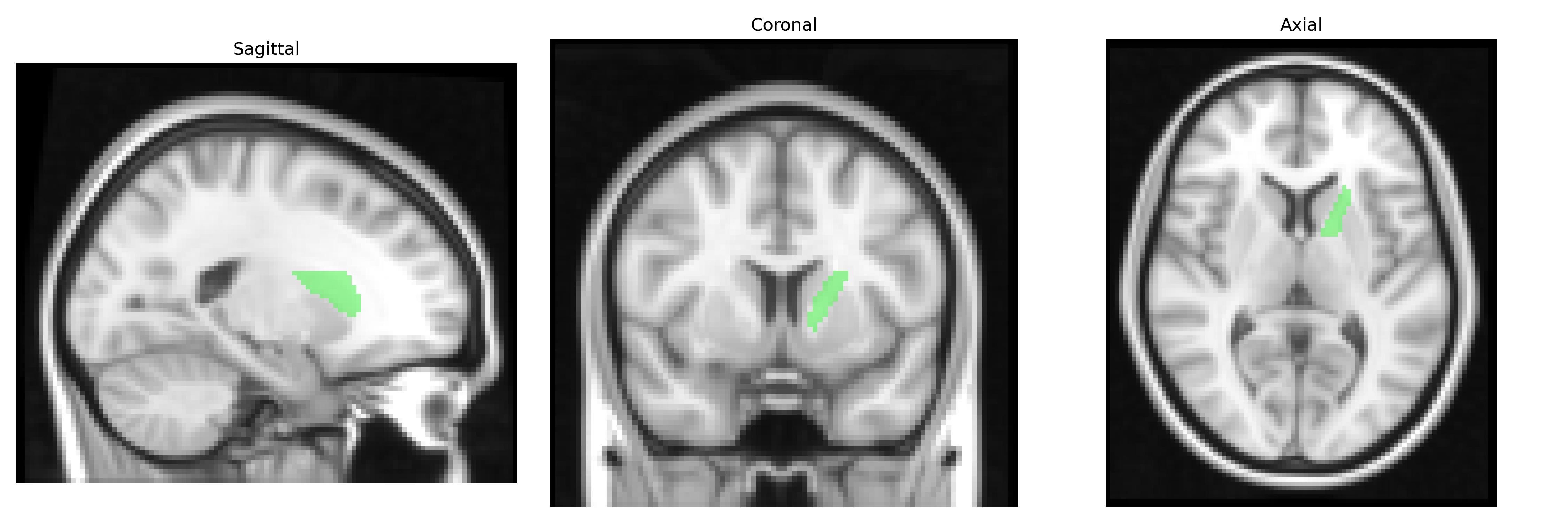
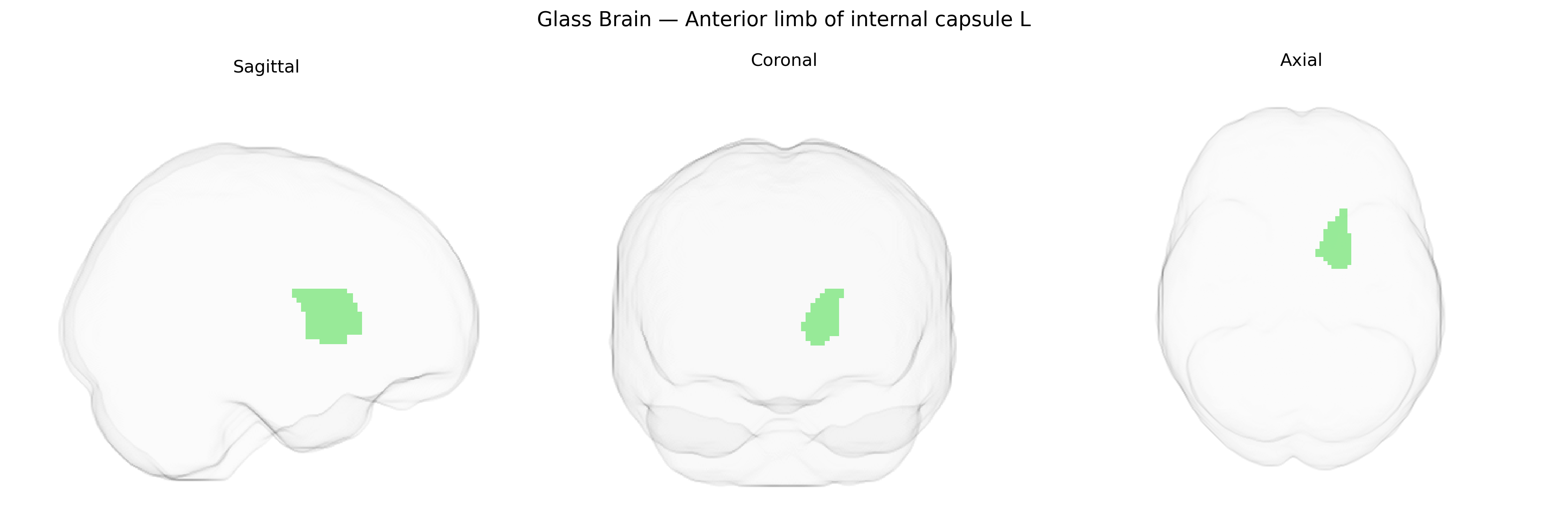
The bilateral Anterior limb of internal capsule L, as defined in the JHU ICBM 2mm atlas, is a white matter tract located anterior to the genu of the internal capsule, separating the head of the caudate nucleus medially from the lentiform nucleus laterally within the left hemisphere, and comprising fronto-thalamic and fronto-striatal projection fibers. It contains corticothalamic and thalamocortical fibers linking the prefrontal cortex with mediodorsal and anterior thalamic nuclei, as well as fibers connecting limbic and associative cortical regions with the basal ganglia, thereby contributing to executive functions, motivation, and aspects of affective regulation. By channeling information between frontal cortical areas and deep gray matter structures, the anterior limb of the internal capsule plays a key role in higher-order cognitive processing and behavioral control, and is frequently studied in diffusion MRI and tractography for its involvement in neuropsychiatric and neurodegenerative disorders. There is no direct link for the atlas-defined label; however, a related structure is the Internal capsule.
The bilateral anterior limb of the internal capsule (ALIC), as defined in the JHU ICBM 2mm atlas, has been implicated in multiple genetic and psychiatric neuroimaging findings, though direct region-specific GWAS signals are limited and often reported under broader white matter or frontostriatal circuitry measures. Diffusion MRI GWAS of white matter microstructure (e.g., fractional anisotropy and mean diffusivity) have identified common variants in genes related to axonal guidance, myelination, and neurodevelopment (such as those in the semaphorin, netrin, and cell-adhesion pathways) that influence integrity of internal capsule tracts, sometimes including the anterior limb. The ALIC, carrying frontothalamic and frontostriatal fibers, has repeatedly been implicated in genetic risk for psychiatric disorders, particularly obsessive–compulsive disorder (OCD), major depressive disorder, and schizophrenia, where risk loci in genes such as CACNA1C, GRIN2A, and others affecting glutamatergic and calcium-channel signaling have been associated with structural and connectivity alterations in this region or closely related circuits. Imaging–genetics work has further linked polygenic risk scores for schizophrenia, bipolar disorder, and autism spectrum disorder to altered internal capsule microstructure, supporting a role for distributed neurodevelopmental risk variants in shaping ALIC anatomy. The region’s importance in cortico-striato-thalamo-cortical loops has also led to its targeting in deep brain stimulation for OCD and depression, where clinical response is modulated by underlying connectivity patterns that show heritability and genetic influences. Overall, genetic associations involving the anterior limb of the internal capsule point to complex polygenic contributions to white matter organization and vulnerability to mood, anxiety, and psychotic disorders, rather than single-region, single-gene effects.
Overview generated by GPT-4o (2026).
Region ID: 18
Hemisphere: bilateral
Atlas: JHU ICBM labels 2mm
Full Quality Version: Download MP4
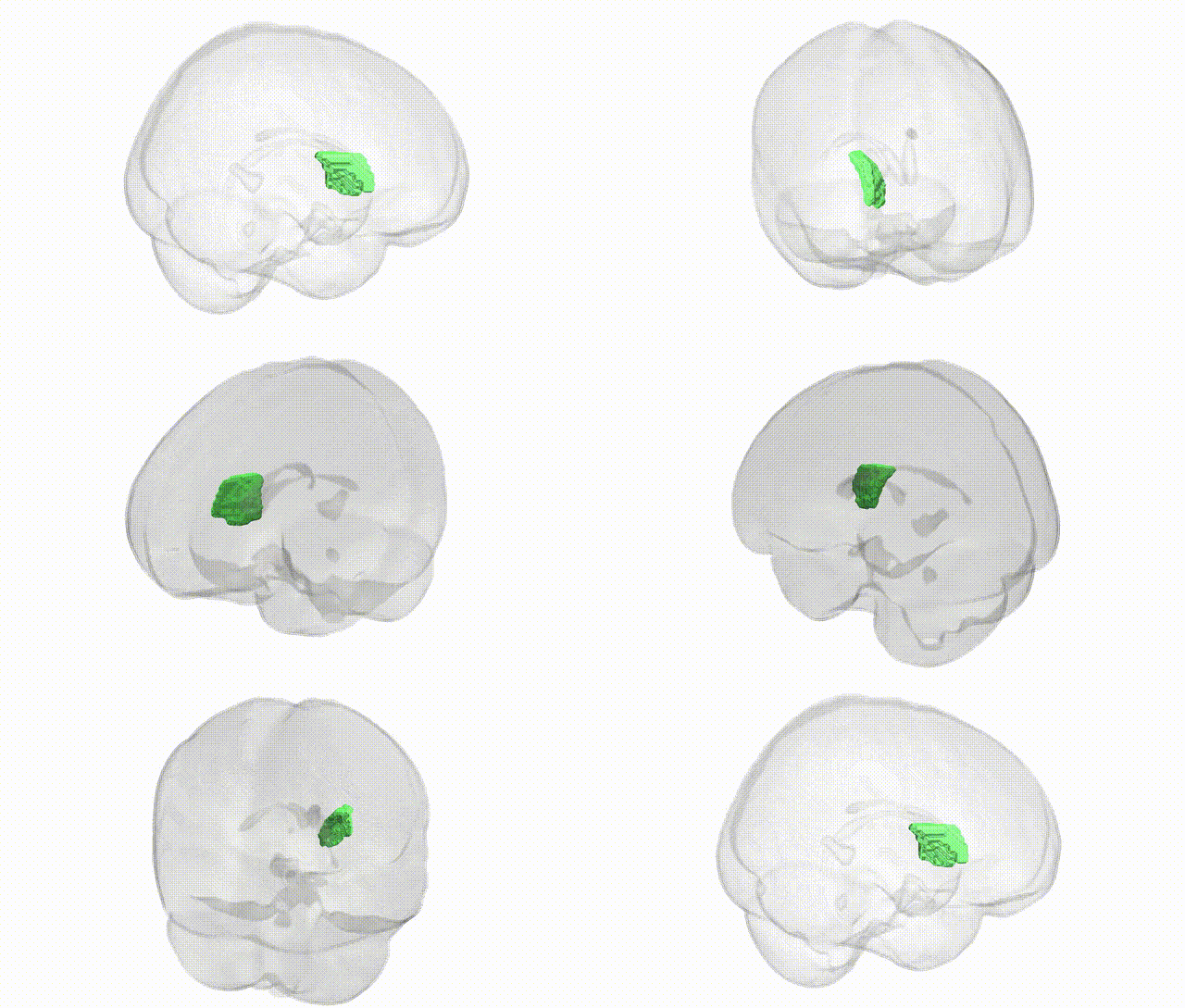
Full Quality Version: Download MP4
Wali Sidiqyar*, Gaurav Rudravaram*, Elyssa M. McMaster, Trent M. Schwartz, Adam M. Saunders, Kurt G. Schilling, Bennett A. Landman "Introducing SPINS: A Shared Public Visualization Library of Neuroanatomical Structures." Medical Imaging with Deep Learning- short paper
This resource is licensed under CC0 1.0 Universal (Public Domain).