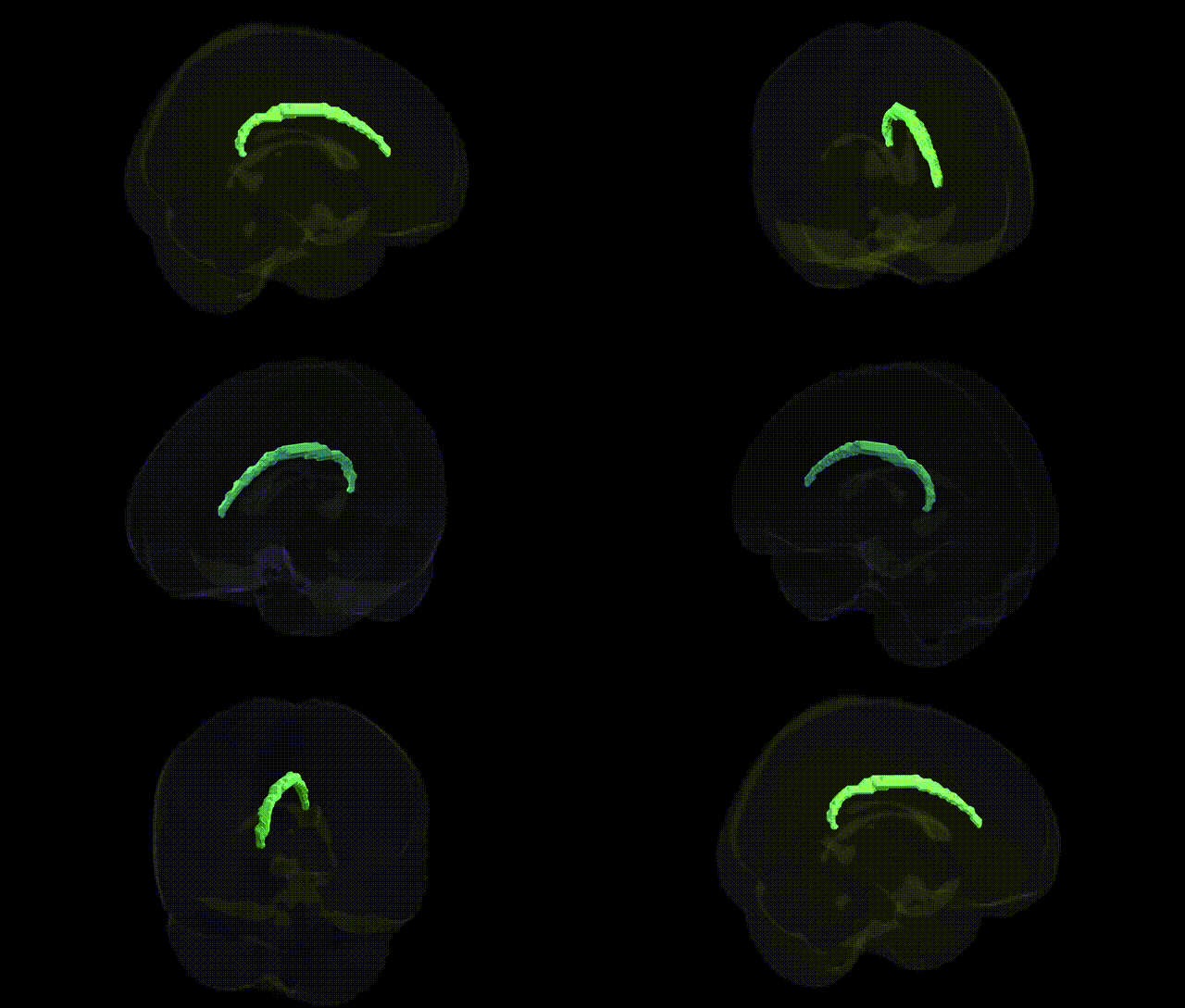
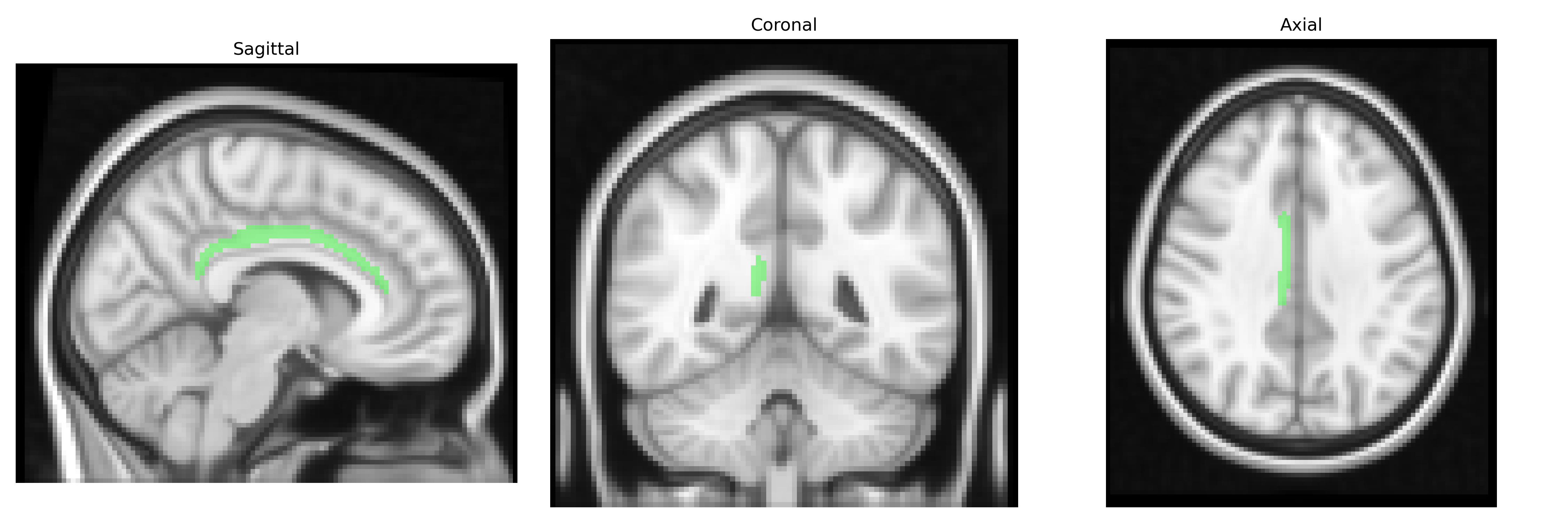
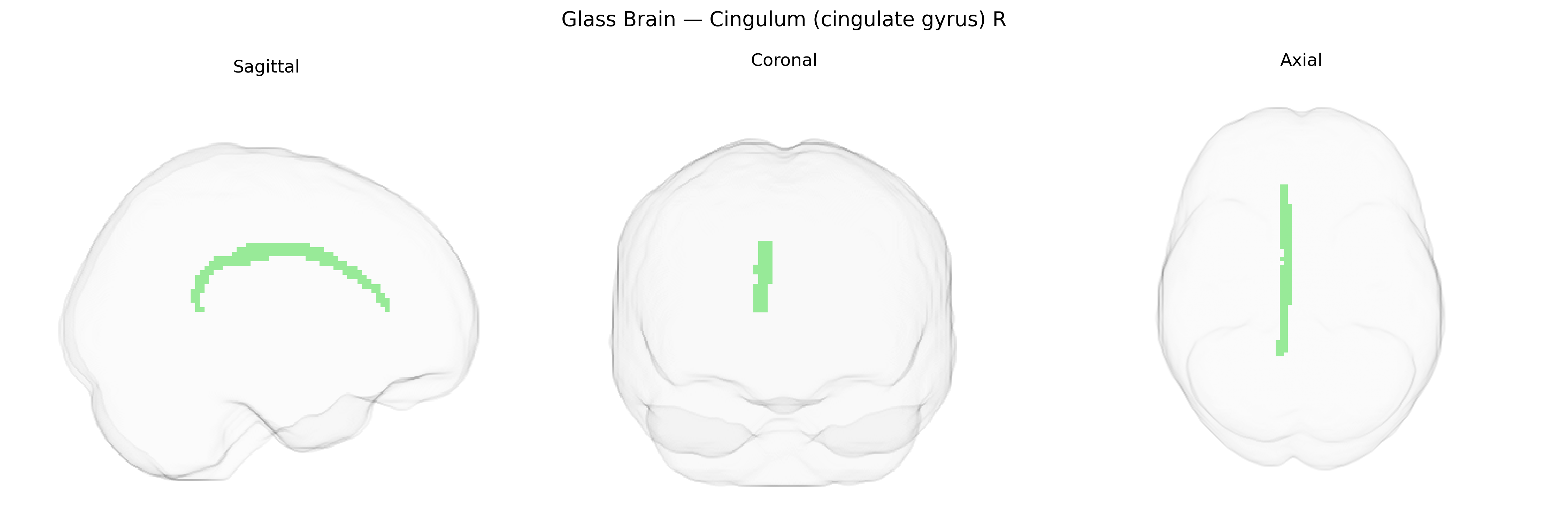
The bilateral cingulum (cingulate gyrus) R, as defined in the JHU ICBM 2 mm white-matter atlas, refers to the right-hemispheric portion of the cingulum bundle coursing within and adjacent to the cingulate gyrus. This major association fiber tract runs longitudinally above the corpus callosum, connecting medial frontal, cingulate, and parietal cortices with medial temporal structures, including the parahippocampal region, thereby integrating components of the limbic system. Functionally, it supports attention, cognitive control, emotional regulation, and memory processes by facilitating communication among prefrontal, cingulate, and hippocampal networks. The cingulum is also implicated in pain processing and default mode network activity, and alterations in its microstructure are associated with psychiatric and neurodegenerative conditions such as depression, schizophrenia, and Alzheimer’s disease. Cingulate gyrus
The bilateral cingulum (cingulate gyrus) R tract from the JHU ICBM 2 mm atlas has been repeatedly implicated in imaging–genetics and GWAS studies of white‑matter microstructure, where diffusion metrics such as fractional anisotropy and mean diffusivity show significant SNP heritability and associations with common variants in genes involved in myelination, axon guidance, and neurodevelopment (for example, variants near or within CNTNAP2, NTRK1/2, BDNF, and loci regulating oligodendrocyte function have been linked to cingulum integrity in large consortia like ENIGMA and UK Biobank). Polygenic risk scores for schizophrenia, bipolar disorder, major depressive disorder, and autism spectrum disorder correlate with altered cingulum diffusion properties, and specific risk loci (such as CACNA1C, ZNF804A, DISC1-related networks, and MHC-region variants) have been associated with reduced anisotropy or structural abnormalities in this tract, consistent with its role in fronto-limbic and default mode connectivity. GWAS of cognitive traits and educational attainment also report overlap between genetic influences on cingulum microstructure and variants affecting general intelligence and memory performance, suggesting pleiotropic effects on both brain wiring and cognition. Additionally, genetic risk for neurodegenerative and vascular conditions (including APOE ε4 for Alzheimer’s disease and variants influencing blood pressure or small-vessel disease) has been linked to cingulum white‑matter alterations, supporting a shared genetic architecture between this tract’s structural integrity and susceptibility to psychiatric, cognitive, and neurodegenerative phenotypes.
Overview generated by GPT-4o (2026).
Region ID: 35
Hemisphere: bilateral
Atlas: JHU ICBM labels 2mm
Full Quality Version: Download MP4
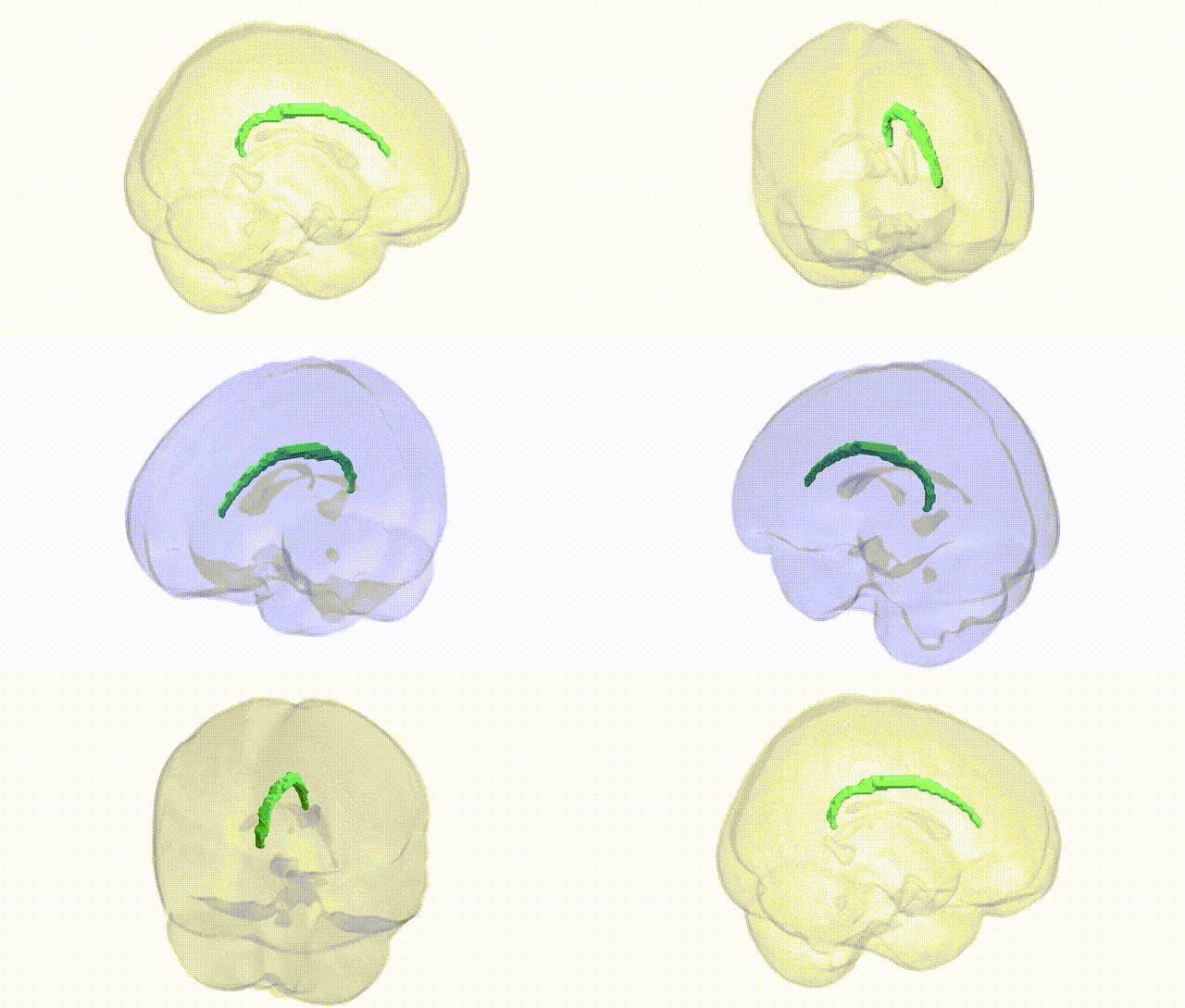
Full Quality Version: Download MP4
Wali Sidiqyar*, Gaurav Rudravaram*, Elyssa M. McMaster, Trent M. Schwartz, Adam M. Saunders, Kurt G. Schilling, Bennett A. Landman "Introducing SPINS: A Shared Public Visualization Library of Neuroanatomical Structures." Medical Imaging with Deep Learning- short paper
This resource is licensed under CC0 1.0 Universal (Public Domain).