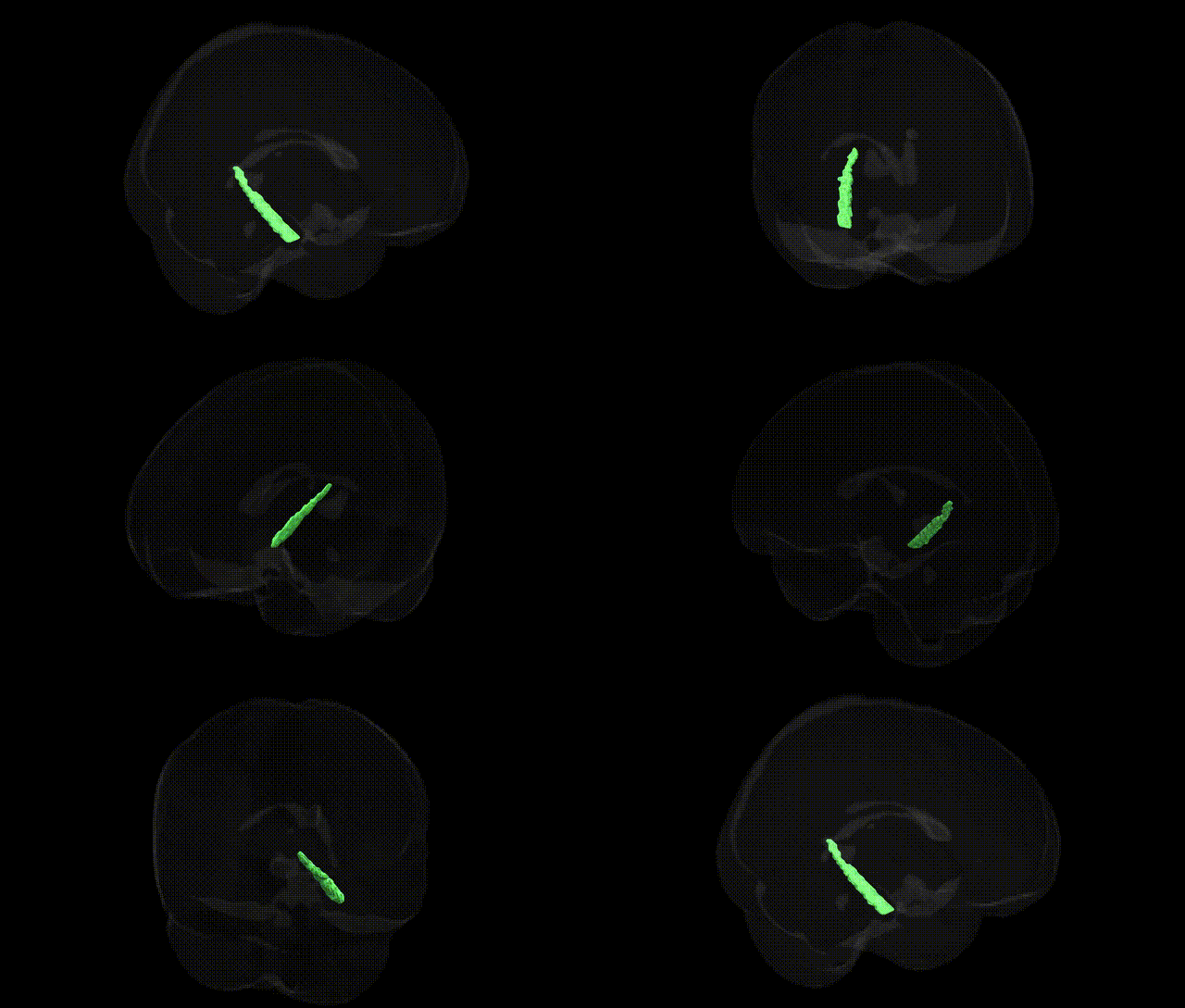
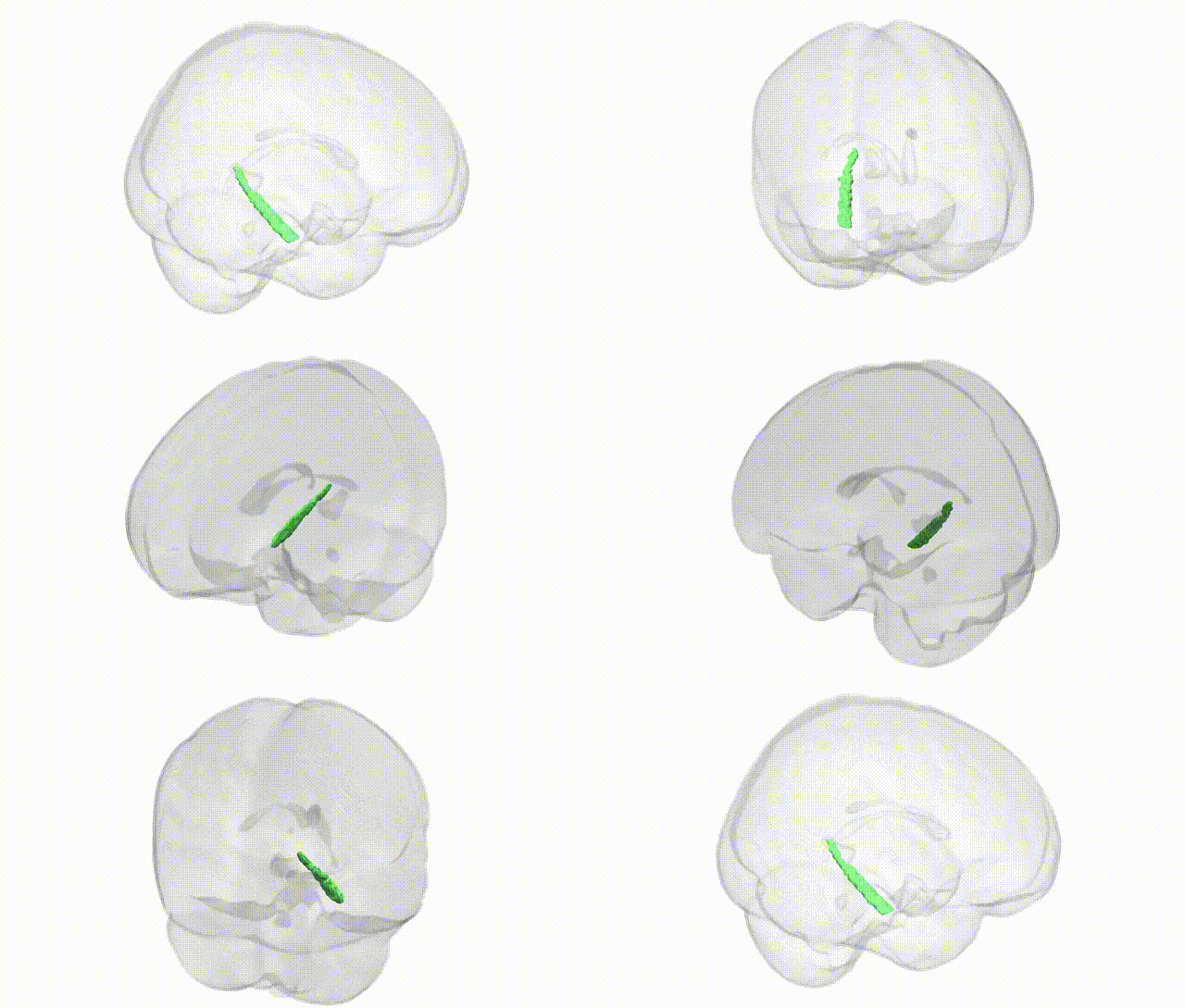
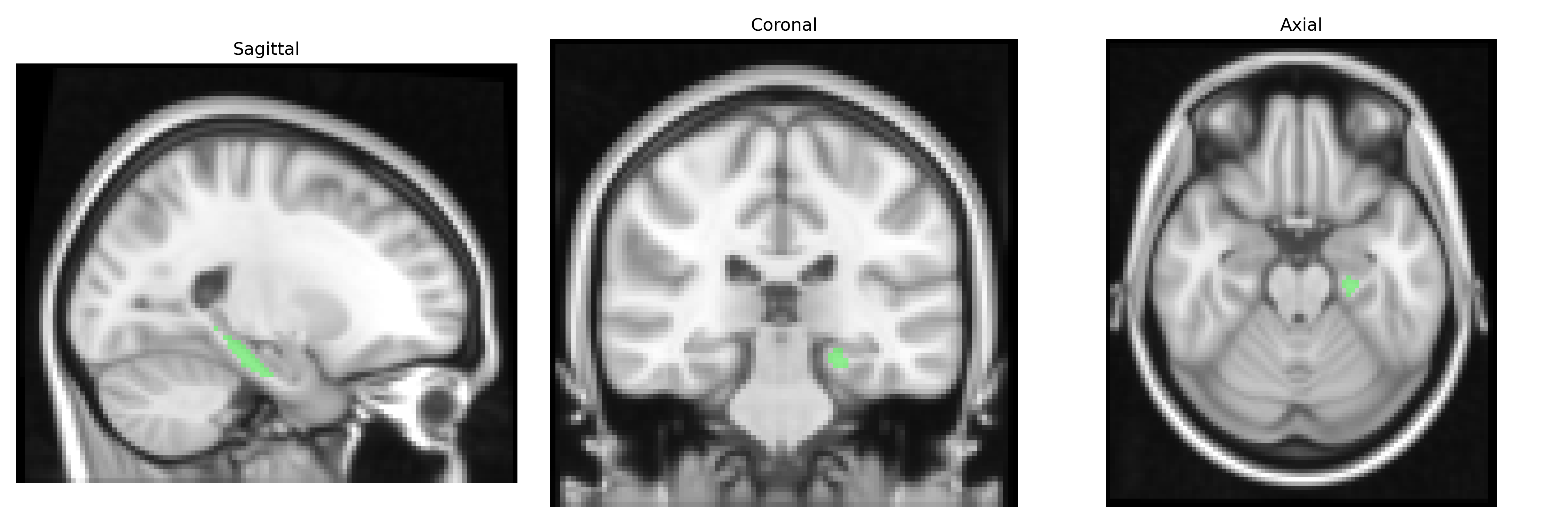
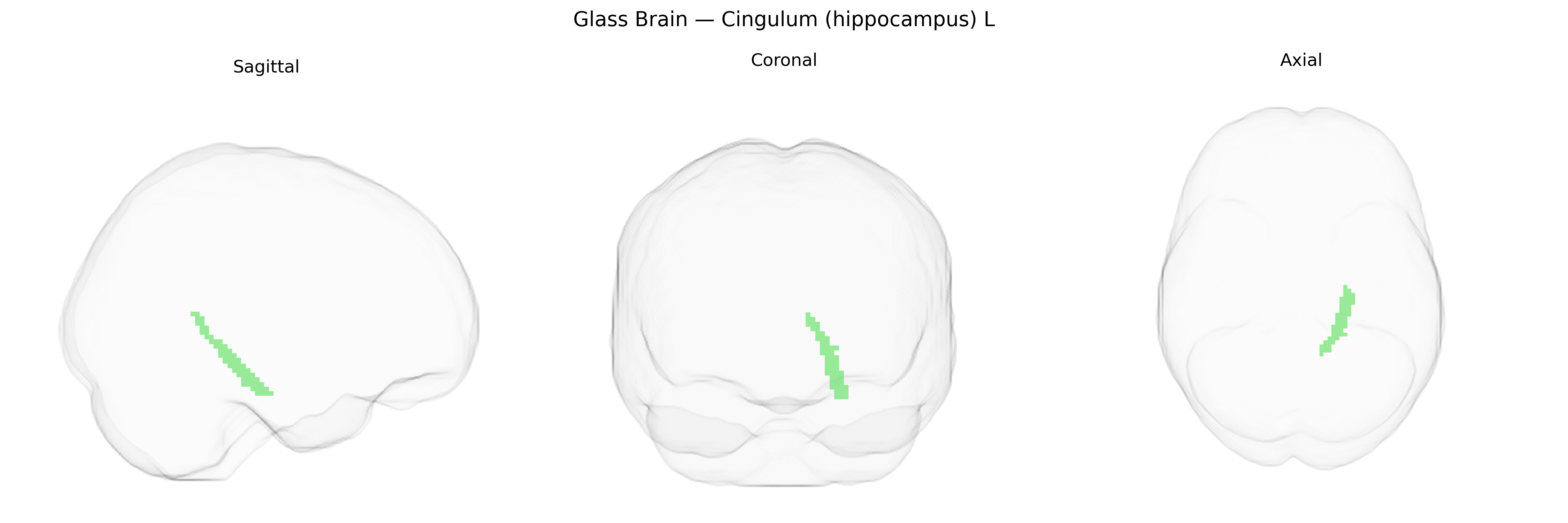
The bilateral Cingulum (hippocampus) L, as defined in the JHU ICBM labels 2mm atlas, refers to the left segment of the cingulum white matter tract coursing within the parahippocampal region and connecting the cingulate gyrus with the hippocampal formation and adjacent medial temporal structures. This tract forms a critical component of limbic circuitry, supporting integration of emotion, memory, and attention by linking anterior cingulate and prefrontal regions with medial temporal lobe structures, including the hippocampus and parahippocampal gyrus. Functionally, the cingulum bundle contributes to episodic memory, spatial navigation, and regulation of affect, and is implicated in neuropsychiatric and neurodegenerative conditions where limbic connectivity is disrupted. There is no direct Wikipedia article for “Cingulum (hippocampus)”; a closely related structure is the cingulum bundle: Cingulum bundle.
The bilateral cingulum (hippocampus) segment from the JHU ICBM labels 2mm Atlas has emerged in imaging genetics and GWAS as a key white-matter tract whose microstructural properties, typically indexed by diffusion measures such as fractional anisotropy, show heritability and robust genetic associations. Large-scale neuroimaging GWAS (e.g., ENIGMA and UK Biobank) have identified variants in genes related to axon guidance, myelination, and synaptic plasticity (such as genes in the neurodevelopmental pathways including neuregulin/ErbB signaling, oligodendrocyte function, and extracellular matrix remodeling) that influence cingulum integrity, although specific loci vary across studies and traits. Alterations in cingulum-hippocampal connectivity are genetically linked to disorders characterized by episodic memory and emotional regulation deficits, including schizophrenia, bipolar disorder, major depressive disorder, and Alzheimer’s disease, where polygenic risk scores for these conditions often correlate with reduced integrity or volume in cingulum and hippocampal networks. Additionally, GWAS of cognitive traits (especially memory performance, general intelligence, and educational attainment) and personality dimensions such as neuroticism and anxiety-related traits have implicated genetic variants that exert part of their effect through structural and functional changes in medial temporal lobe circuitry encompassing the hippocampus–cingulum pathway. Overall, the cingulum (hippocampus) region is supported by convergent genetic evidence as a heritable, disease-relevant tract that mediates the impact of neurodevelopmental and neurodegenerative risk variants on cognition and affect.
Overview generated by GPT-4o (2026).
Region ID: 38
Hemisphere: bilateral
Atlas: JHU ICBM labels 2mm
Full Quality Version: Download MP4
Full Quality Version: Download MP4
Wali Sidiqyar*, Gaurav Rudravaram*, Elyssa M. McMaster, Trent M. Schwartz, Adam M. Saunders, Kurt G. Schilling, Bennett A. Landman "Introducing SPINS: A Shared Public Visualization Library of Neuroanatomical Structures." Medical Imaging with Deep Learning- short paper
This resource is licensed under CC0 1.0 Universal (Public Domain).