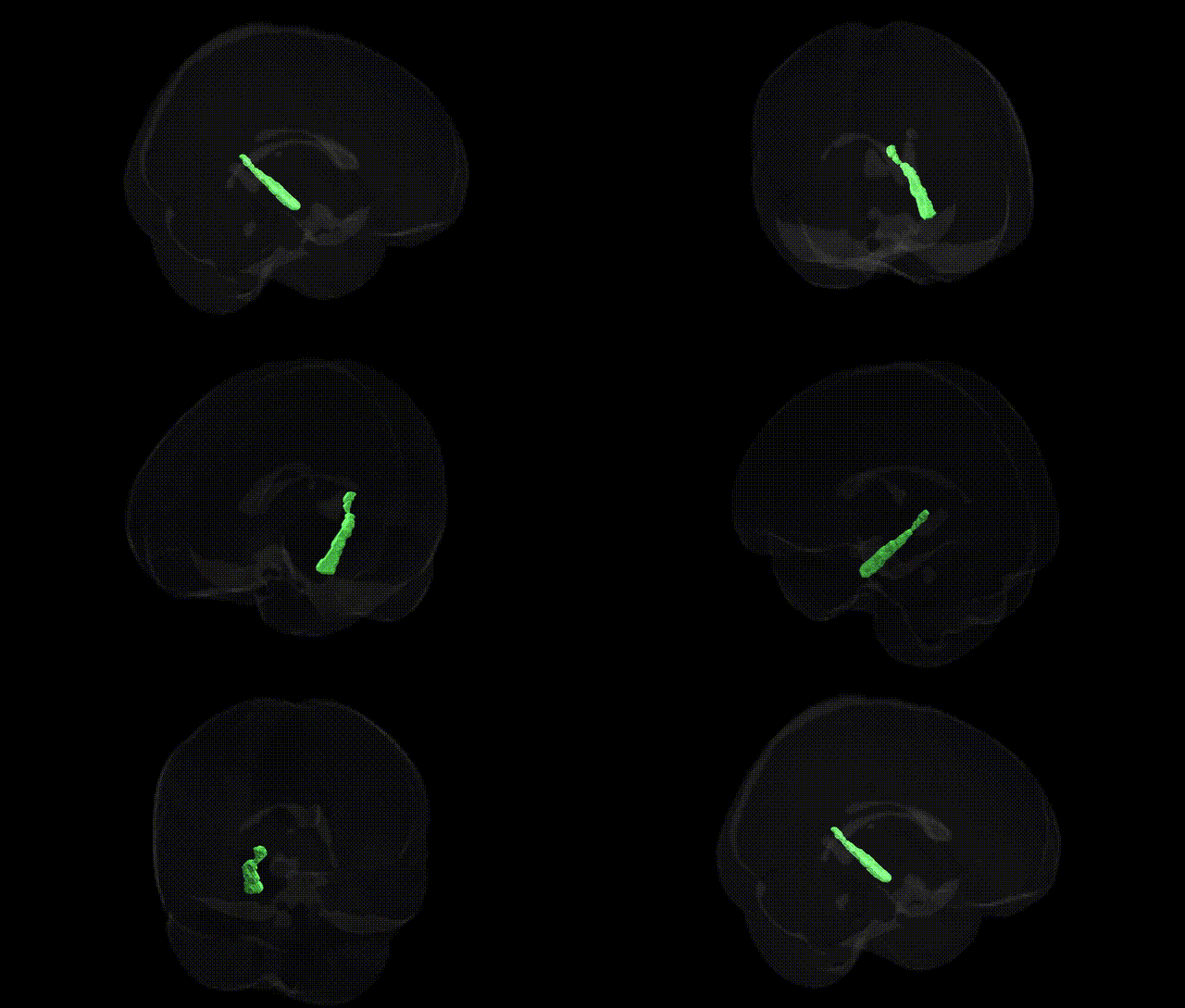
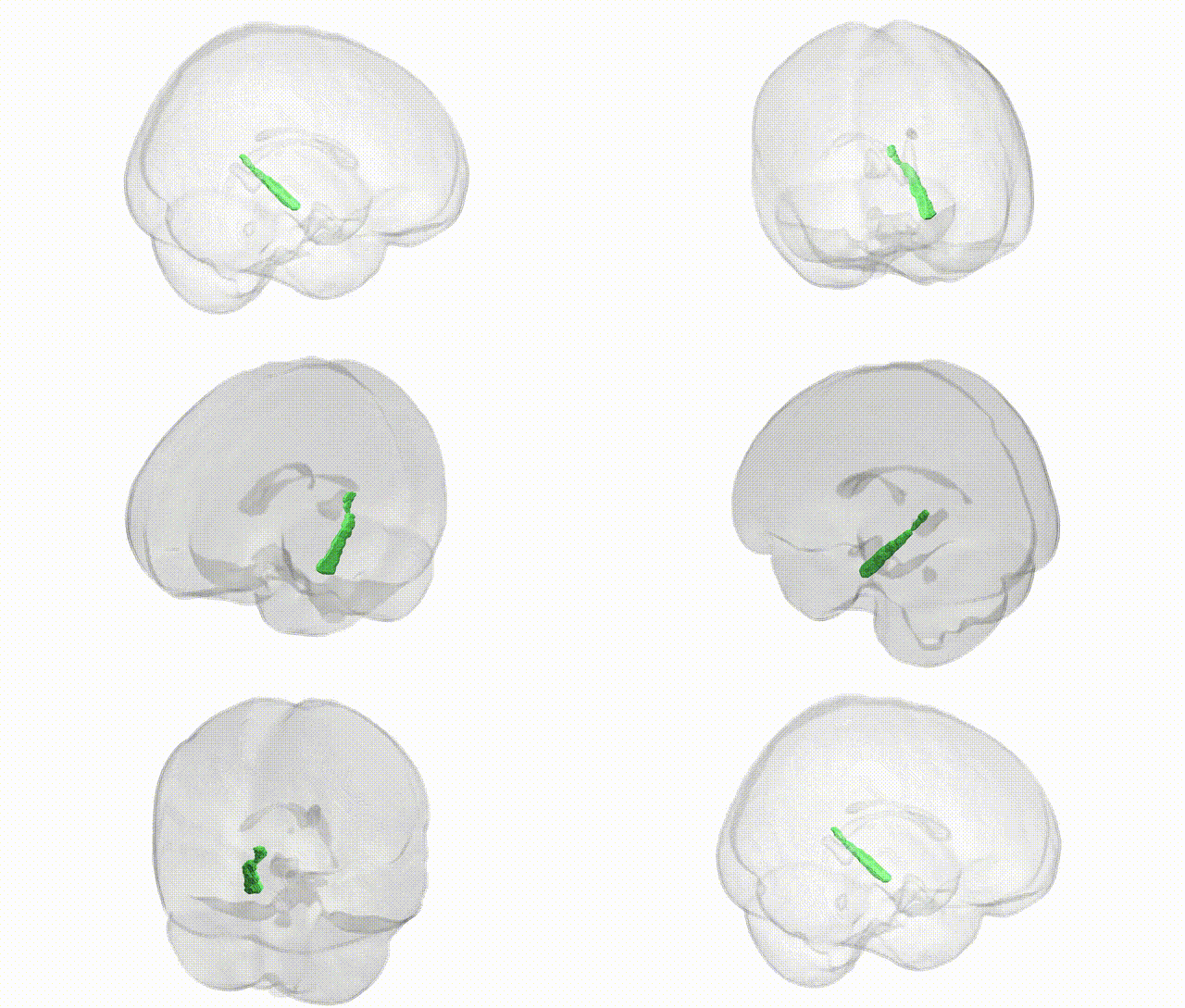
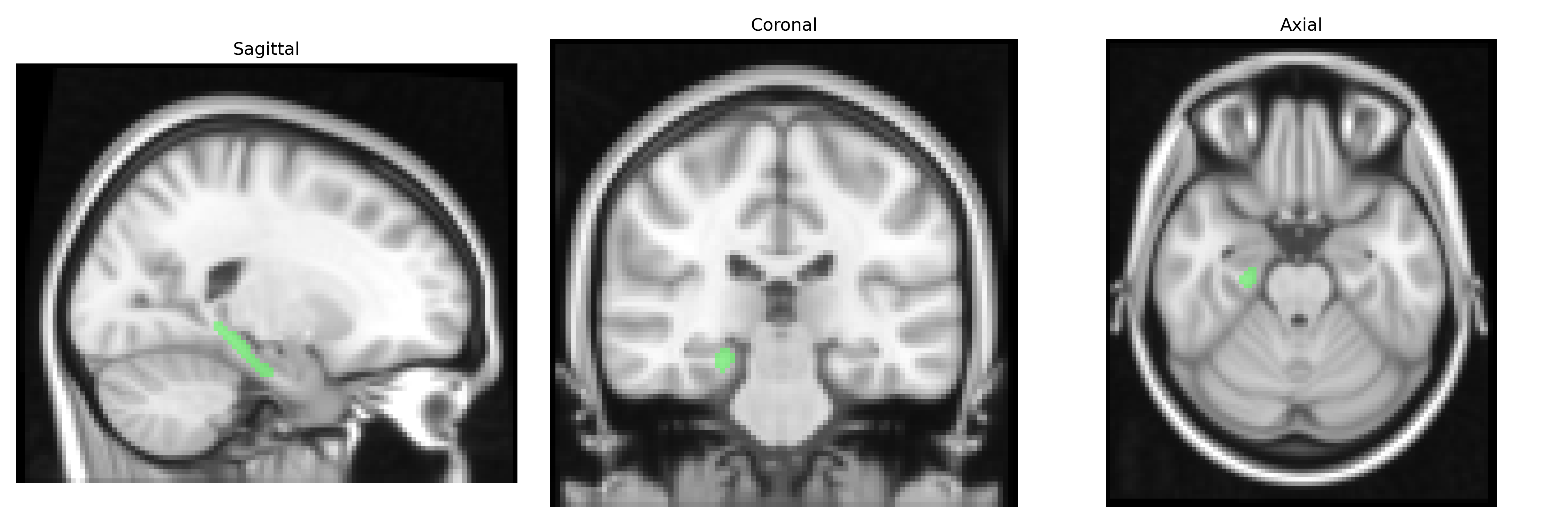
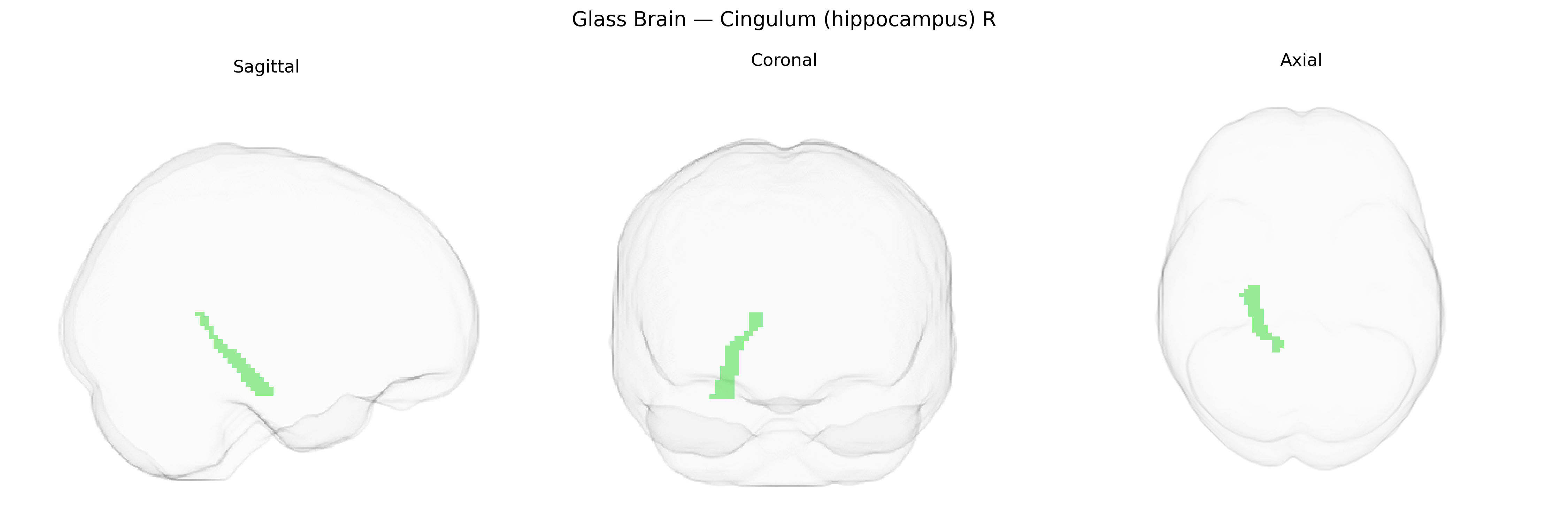
The bilateral Cingulum (hippocampus) R, as defined in the JHU ICBM 2 mm atlas, refers to the right segment of the cingulum bundle coursing in the parahippocampal region adjacent to the hippocampus, forming a major component of the limbic white matter association pathways. This tract connects the parahippocampal gyrus and hippocampal formation with posterior cingulate and retrosplenial cortices, supporting integrative functions in episodic memory, spatial navigation, and aspects of emotional processing through its role in the extended limbic network. Microstructural integrity of this segment, often quantified via diffusion tensor imaging, has been implicated in neurodegenerative conditions, mood disorders, and memory impairment, reflecting its importance in fronto-limbic and medial temporal lobe connectivity. There is no direct Wikipedia article for this specific tract segment; a closely related structure is the broader Cingulum (brain).
The bilateral cingulum (hippocampus) right tract, as defined in the JHU ICBM labels 2mm Atlas, shows heritable variation in diffusion MRI measures, with twin and family studies indicating moderate to high SNP-based heritability for fractional anisotropy and mean diffusivity in this region. GWAS of white matter microstructure have identified multiple common variants associated with cingulum integrity, including loci near genes involved in axon guidance, myelination, and neurodevelopment (e.g., NRG1, CNTN4, and PLP1 in broader cingulum-related analyses), although findings specific to the hippocampal segment are often reported in combined cingulum or limbic tract measures rather than isolated subregions. Polygenic risk for schizophrenia, major depressive disorder, and bipolar disorder has been linked to altered cingulum diffusivity and volume, and several psychiatric GWAS have reported that risk alleles for these conditions are associated with microstructural changes in limbic white matter pathways that include the cingulum (hippocampus). In addition, genetic variants associated with cognitive traits such as memory performance, general intelligence, and educational attainment show correlations with cingulum integrity, consistent with the tract’s role in episodic memory and default mode network connectivity. Neurodegenerative and neurodevelopmental disorder risk genes, including APOE in Alzheimer’s disease and various autism spectrum disorder loci, have also been indirectly tied to cingulum (hippocampus) microstructure through imaging–genetics studies, although causal pathways remain uncertain and many associations require replication and finer tract-specific analyses.
Overview generated by GPT-4o (2026).
Region ID: 37
Hemisphere: bilateral
Atlas: JHU ICBM labels 2mm
Full Quality Version: Download MP4
Full Quality Version: Download MP4
Wali Sidiqyar*, Gaurav Rudravaram*, Elyssa M. McMaster, Trent M. Schwartz, Adam M. Saunders, Kurt G. Schilling, Bennett A. Landman "Introducing SPINS: A Shared Public Visualization Library of Neuroanatomical Structures." Medical Imaging with Deep Learning- short paper
This resource is licensed under CC0 1.0 Universal (Public Domain).