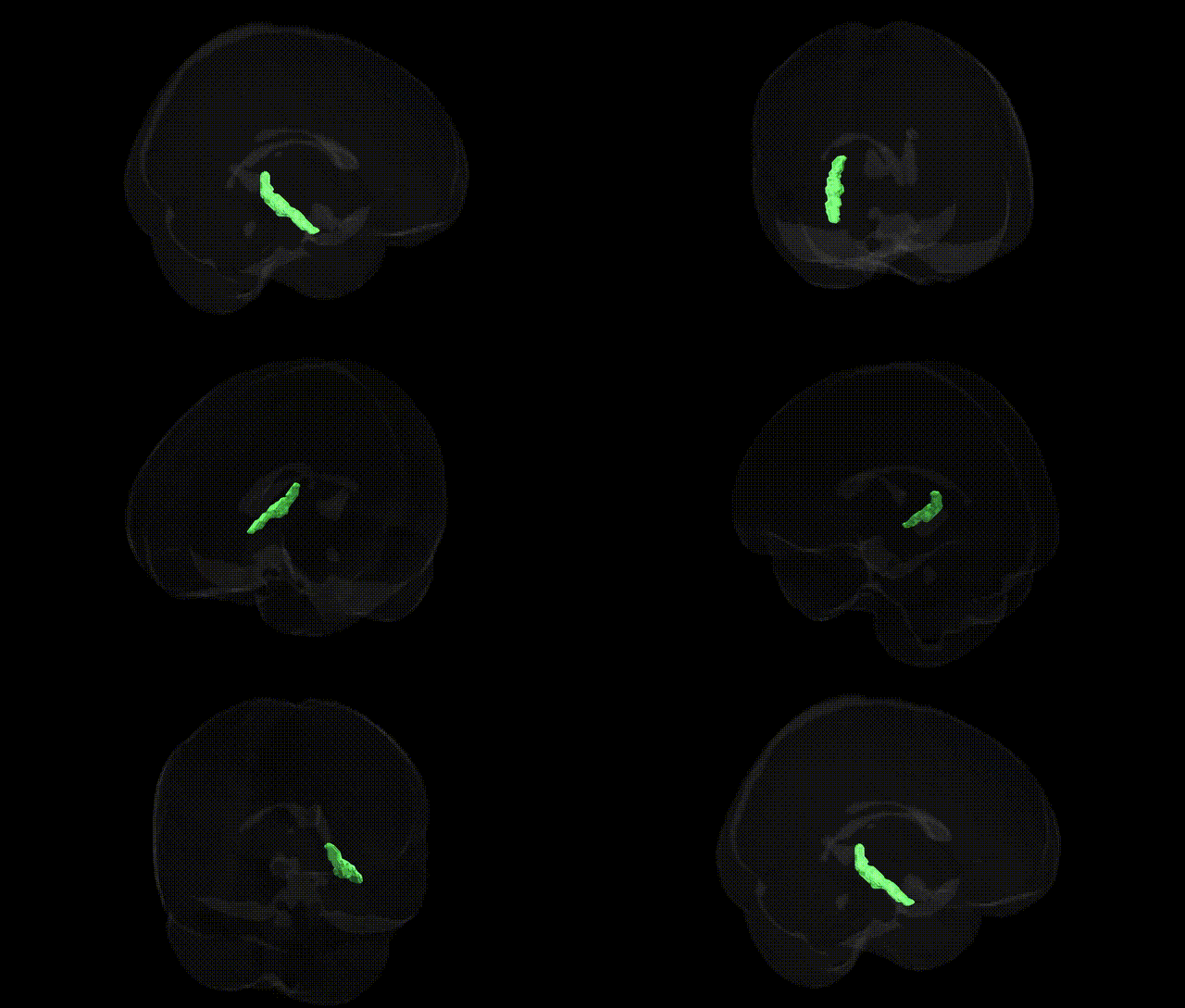
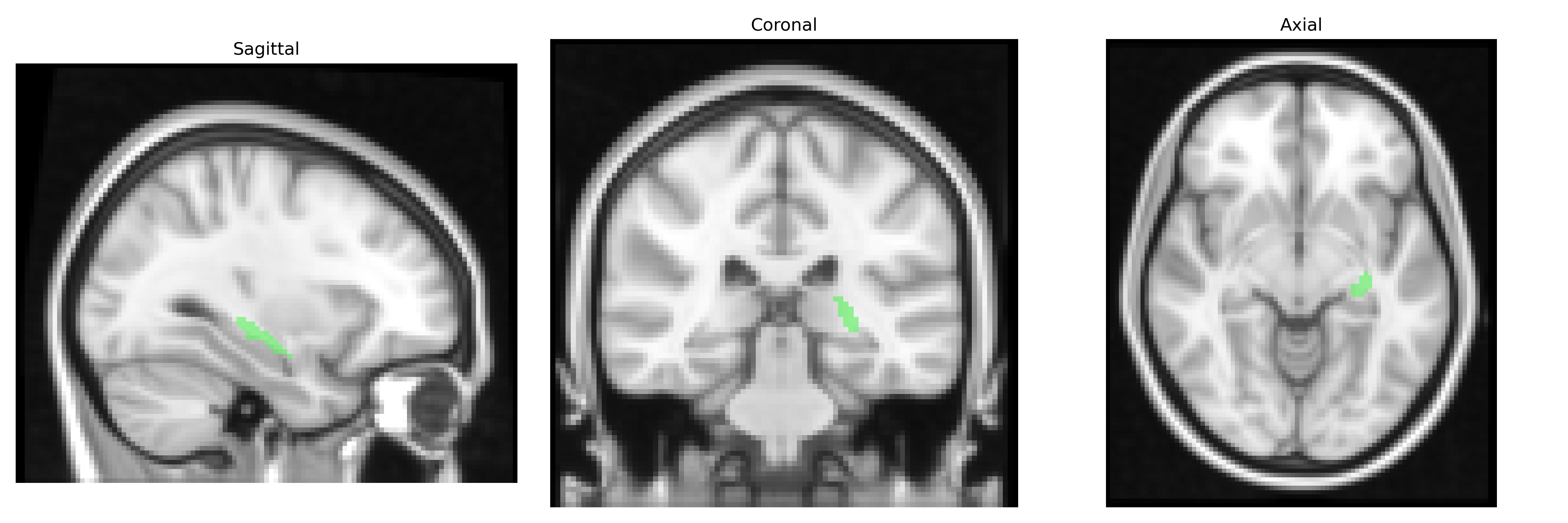
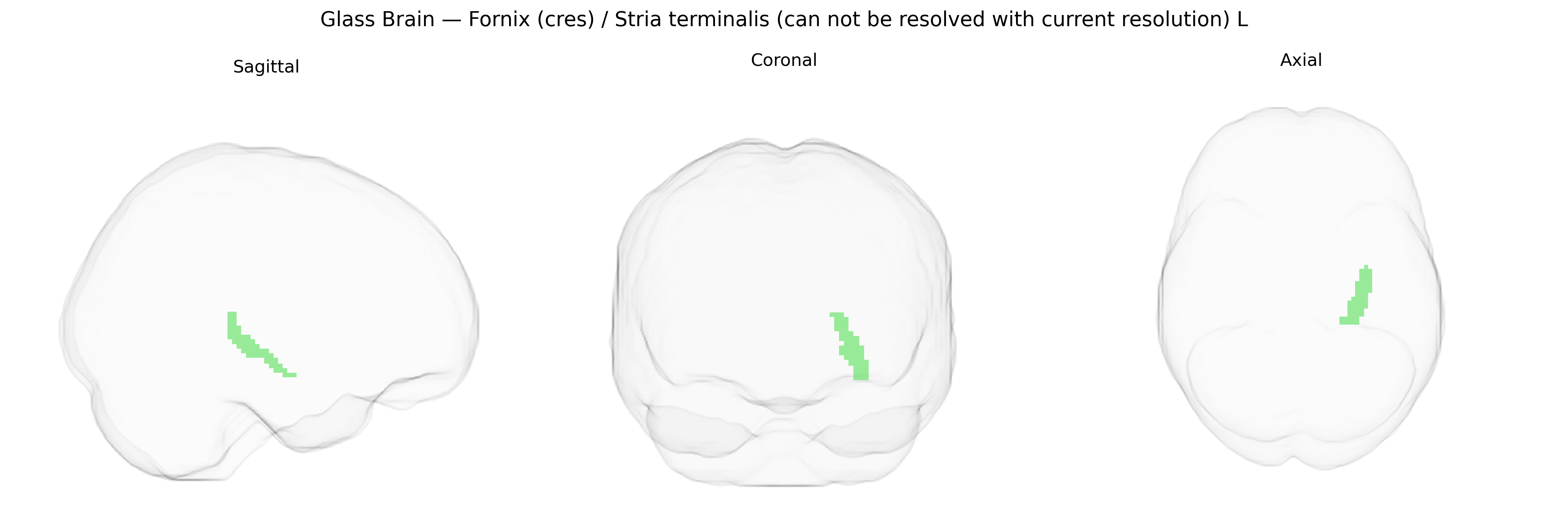
The bilateral fornix (cres) / stria terminalis (cannot be resolved with current resolution) L, as defined in the JHU ICBM labels 2mm Atlas, represents a composite label encompassing two major limbic white matter pathways that cannot be distinguished at this spatial resolution. The fornix is a prominent C-shaped fiber bundle that serves as a principal output pathway of the hippocampus, projecting to the mammillary bodies and septal nuclei and playing a crucial role in memory processing and integration within the limbic system. The stria terminalis is a long, curving fiber tract running along the lateral ventricle that connects the amygdala to the hypothalamus and other forebrain structures, and is involved in stress responses, emotional regulation, and neuroendocrine control. Together, these tracts form part of the core limbic circuitry underlying affective behavior, autonomic regulation, and mnemonic function. There is no single direct Wikipedia article for the combined label; relevant entries include Fornix (brain) and Stria terminalis.
The bilateral fornix and stria terminalis—core white-matter pathways within the limbic system—have been repeatedly implicated in imaging–genetics and GWAS-based studies linking genetic variation to microstructural integrity, particularly via diffusion MRI measures such as fractional anisotropy. Common polymorphisms in genes related to myelination and axonal integrity (e.g., NRG1/ERBB family members, BDNF, MAG, and genes within oligodendrocyte and lipid-metabolism pathways) have been associated with variation in fornix/stria terminalis structure, while large-scale ENIGMA and UK Biobank analyses have identified polygenic influences on these tracts overlapping with loci implicated in general brain development and white-matter architecture. Genetic risk scores for schizophrenia, bipolar disorder, and major depressive disorder show associations with reduced integrity of the fornix and adjacent limbic tracts, consistent with their role in fronto-limbic circuits. Furthermore, GWAS of Alzheimer’s disease and related endophenotypes (e.g., hippocampal volume, episodic memory performance) highlight variants in APOE and other neurodegeneration-related genes that correlate with fornix degeneration, supporting its status as a structural biomarker of genetically influenced vulnerability to cognitive decline and dementia. Although the JHU ICBM 2 mm atlas label “Fornix (cres)/Stria terminalis (cannot be resolved)” merges these pathways, convergent evidence indicates that genetically mediated alterations in these tracts contribute to individual differences in memory, emotional regulation, and risk for neuropsychiatric and neurodegenerative disorders.
Overview generated by GPT-4o (2026).
Region ID: 40
Hemisphere: bilateral
Atlas: JHU ICBM labels 2mm
Full Quality Version: Download MP4
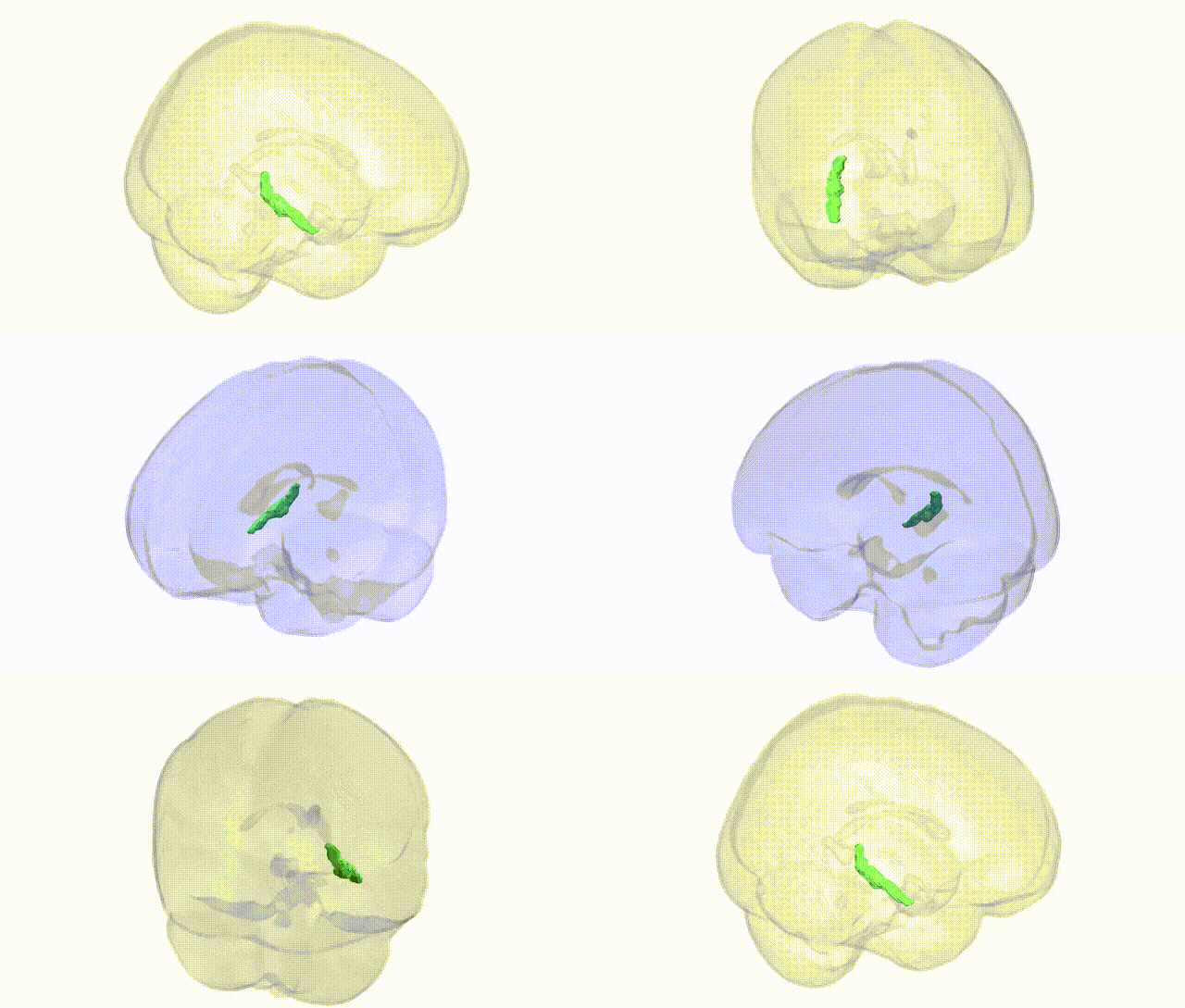
Full Quality Version: Download MP4
Wali Sidiqyar*, Gaurav Rudravaram*, Elyssa M. McMaster, Trent M. Schwartz, Adam M. Saunders, Kurt G. Schilling, Bennett A. Landman "Introducing SPINS: A Shared Public Visualization Library of Neuroanatomical Structures." Medical Imaging with Deep Learning- short paper
This resource is licensed under CC0 1.0 Universal (Public Domain).