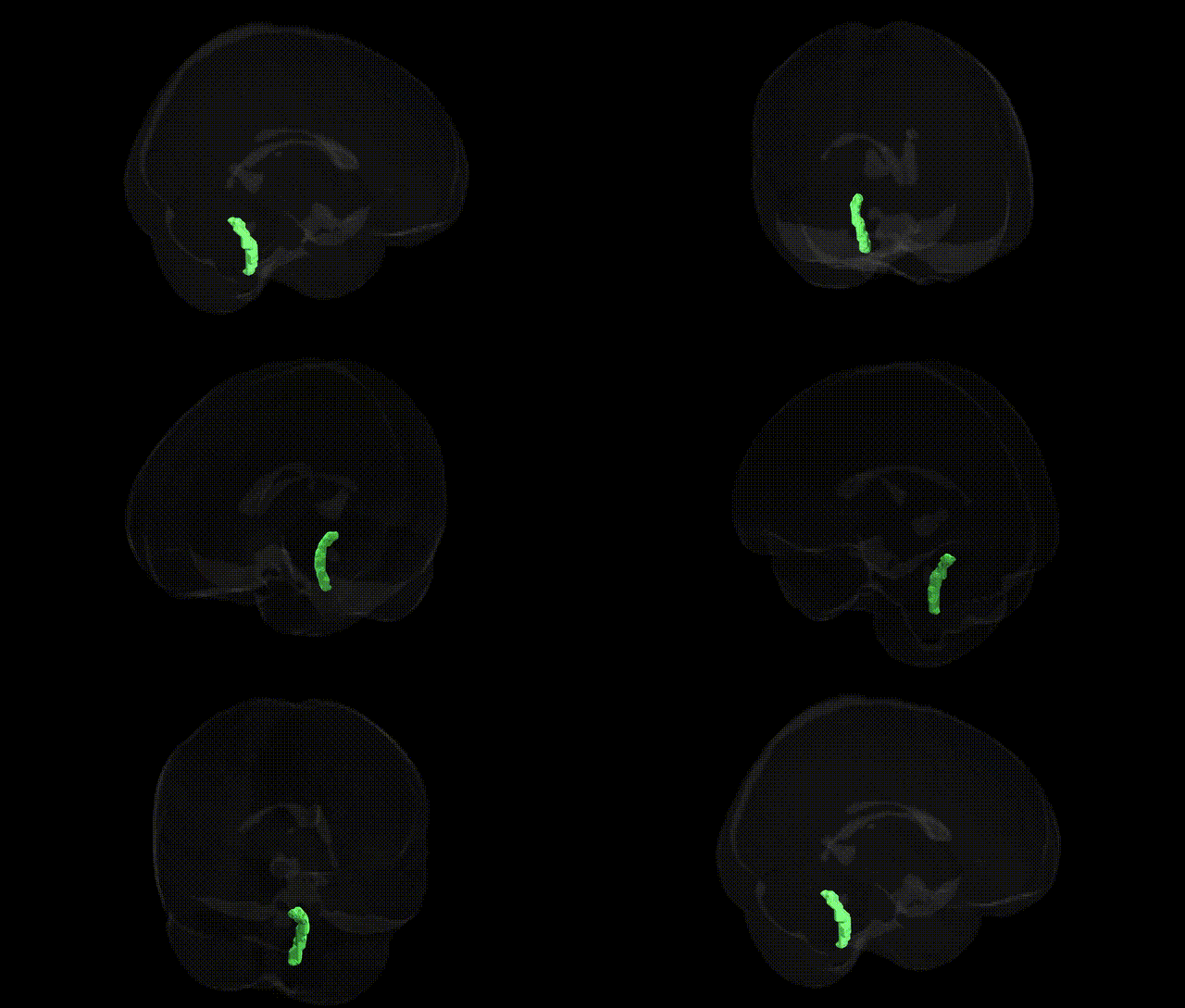
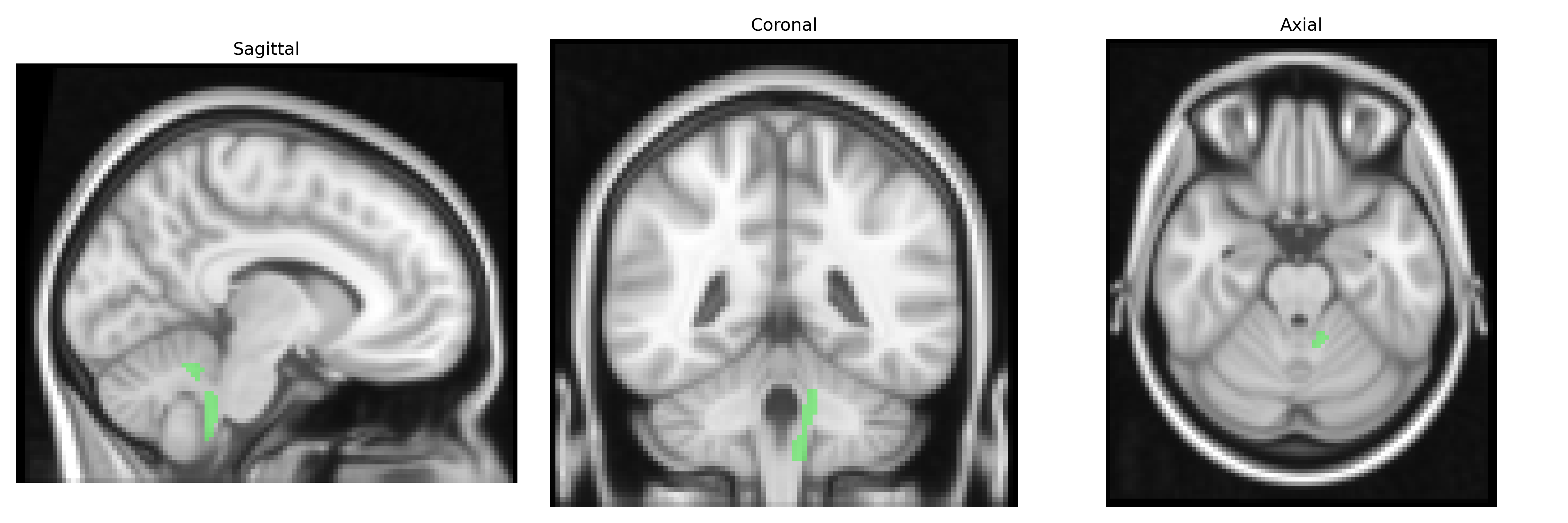
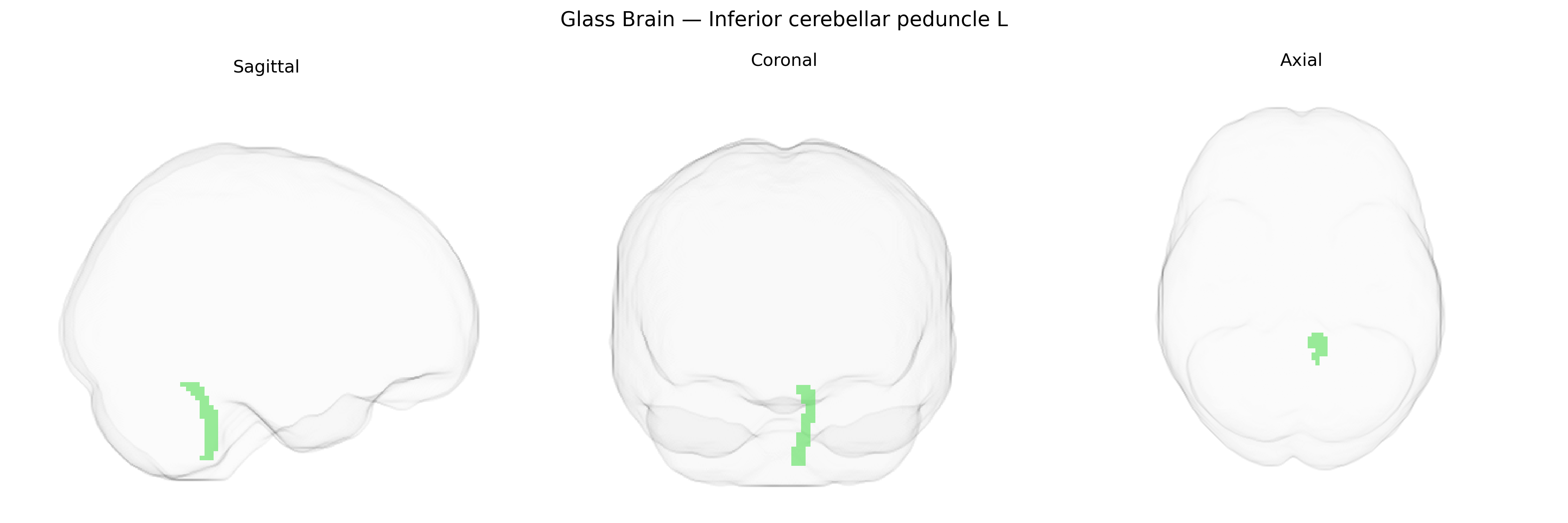
The bilateral Inferior Cerebellar Peduncle L, as defined in the JHU ICBM labels 2mm Atlas, comprises the left-sided fiber bundles that form part of the inferior cerebellar peduncle, a major white matter conduit connecting the medulla oblongata to the cerebellum. This structure carries predominantly afferent fibers, including those from the dorsal spinocerebellar tract, cuneocerebellar pathways, olivocerebellar fibers from the inferior olivary nucleus, and vestibulocerebellar inputs, thereby transmitting proprioceptive, vestibular, and modulatory signals essential for fine-tuning posture, balance, and coordinated motor activity. The peduncle also contains some efferent cerebellovestibular and cerebelloreticular fibers that influence brainstem motor circuits. In functional neuroimaging and diffusion tensor imaging analyses, this region is commonly studied as part of the cerebellar-brainstem connectivity network implicated in motor control, sensorimotor integration, and certain cerebellar contributions to cognition and eye movement regulation. There is no direct Wikipedia article for the inferior cerebellar peduncle, but a related structure is the cerebellum: Cerebellum.
The bilateral inferior cerebellar peduncle (ICP) as defined in the JHU ICBM 2 mm atlas has been examined primarily through imaging genetics studies that treat diffusion tensor imaging (DTI) measures such as fractional anisotropy and mean diffusivity in this tract as quantitative endophenotypes in genome-wide association studies (GWAS). Variants in genes related to axonal guidance, myelination, and synaptic plasticity—such as those involving oligodendrocyte function (e.g., MAG, MBP-related pathways), neurodevelopmental signaling (e.g., BDNF pathways), and broader neuronal integrity—have been associated with microstructural variation in cerebellar white matter, including the ICP, although most signals are shared across multiple tracts and are not highly specific to this peduncle. Large consortia-based GWAS of white matter integrity (e.g., ENIGMA) have identified common variants that influence FA across brainstem and cerebellar tracts, and some of these loci overlap with known risk genes for neurodevelopmental and neuropsychiatric disorders (such as schizophrenia, autism spectrum disorder, and attention-deficit/hyperactivity disorder), as well as with genetic liability for motor coordination, balance, and cognitive performance, which are functions supported by ICP connections between the spinal cord/medulla and cerebellum. Moreover, rare variant and exome studies in ataxias and other cerebellar disorders (e.g., mutations in CACNA1A, ITPR1, and various spinocerebellar ataxia genes) frequently show structural or microstructural abnormalities in cerebellar peduncles on MRI, implicating genetically driven disruption of cerebellar connectivity; however, these findings typically involve the cerebellar circuitry as a whole and do not isolate the inferior cerebellar peduncle as an independent locus of genetic effect. Overall, current evidence supports a polygenic, largely nonspecific contribution of common and rare variants to ICP structure and function, with associations emerging in the context of broader cerebellar and brainstem pathways rather than distinct GWAS signals dedicated uniquely to this tract.
Overview generated by GPT-4o (2026).
Region ID: 12
Hemisphere: bilateral
Atlas: JHU ICBM labels 2mm
Full Quality Version: Download MP4
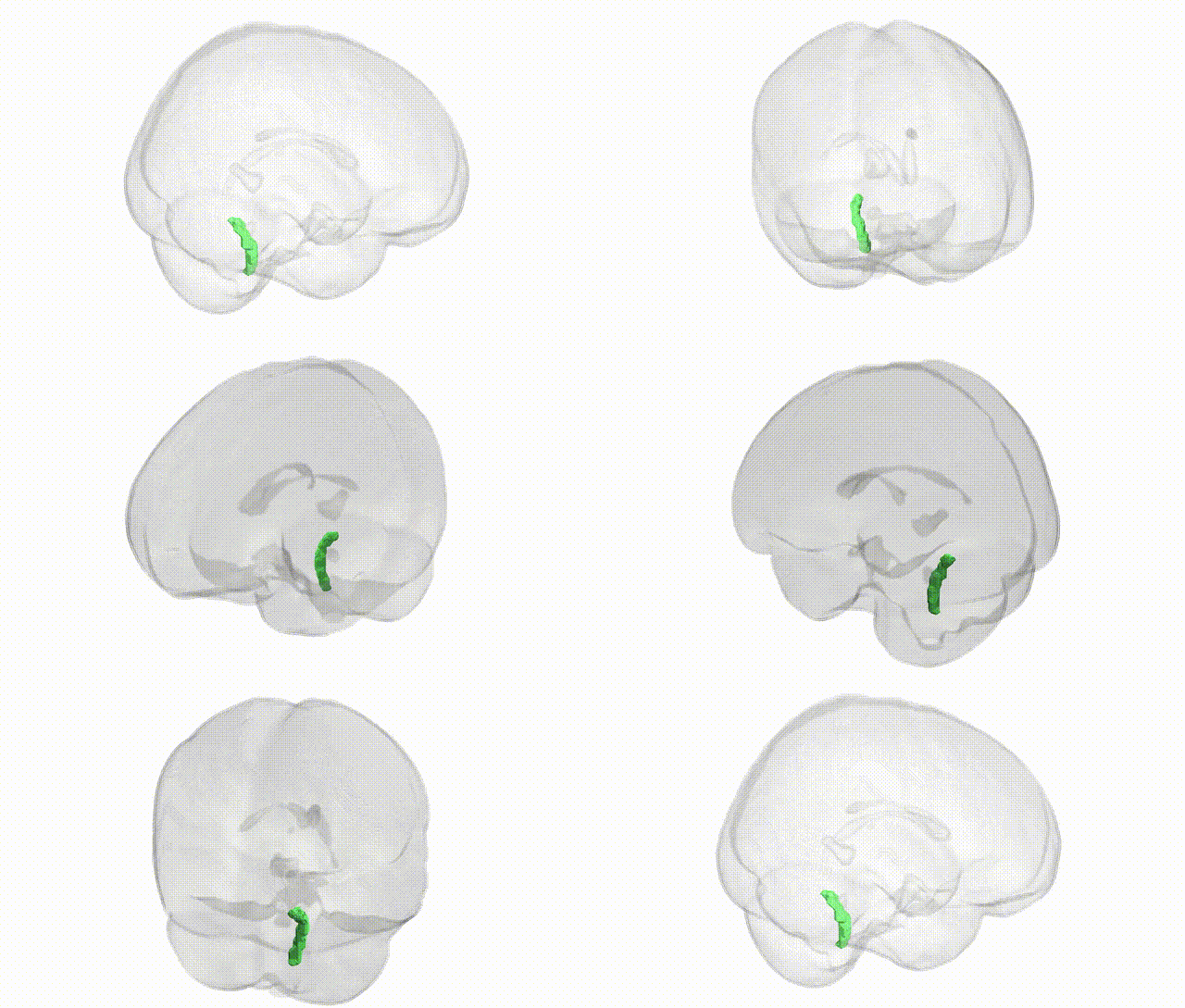
Full Quality Version: Download MP4
Wali Sidiqyar*, Gaurav Rudravaram*, Elyssa M. McMaster, Trent M. Schwartz, Adam M. Saunders, Kurt G. Schilling, Bennett A. Landman "Introducing SPINS: A Shared Public Visualization Library of Neuroanatomical Structures." Medical Imaging with Deep Learning- short paper
This resource is licensed under CC0 1.0 Universal (Public Domain).