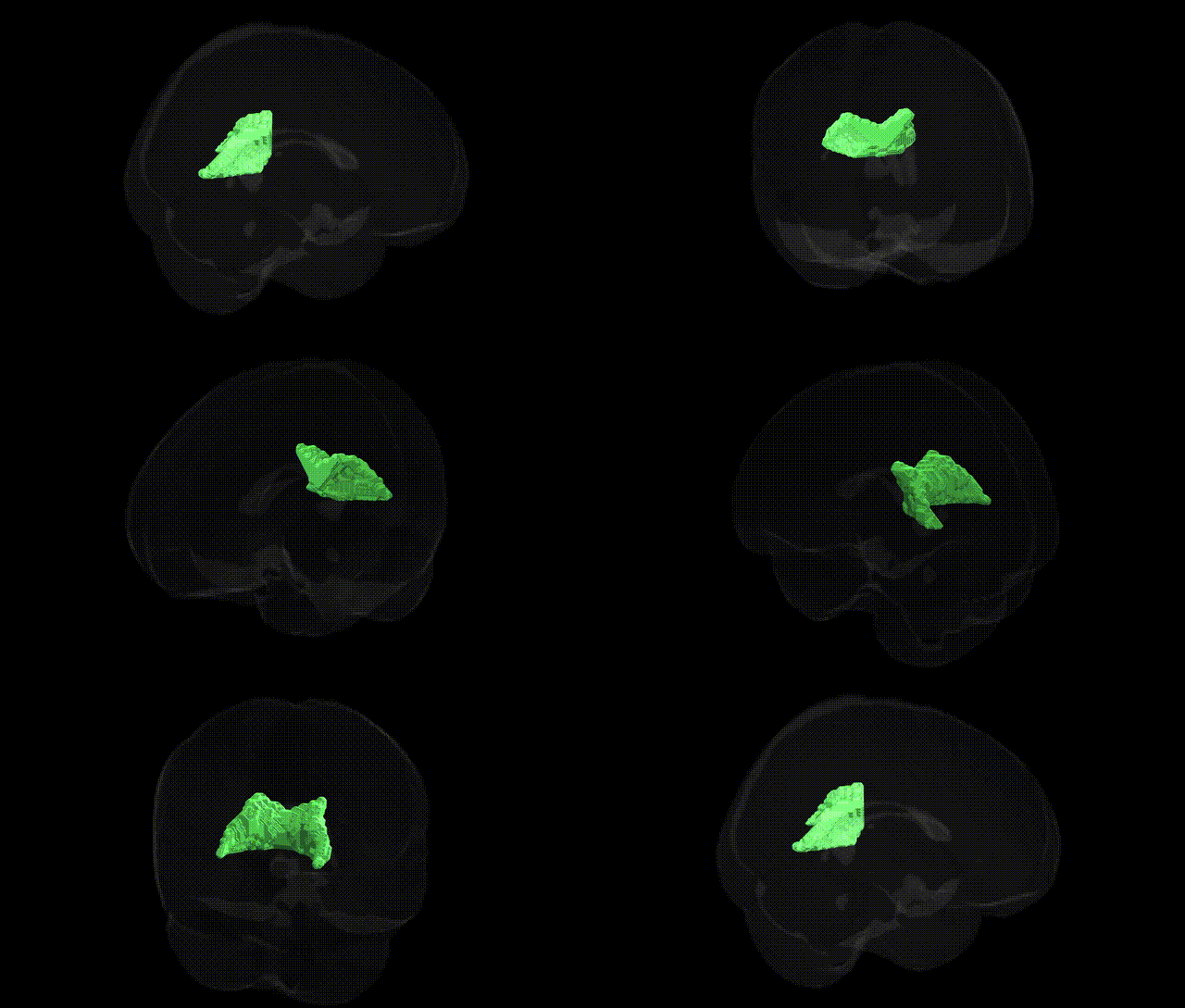
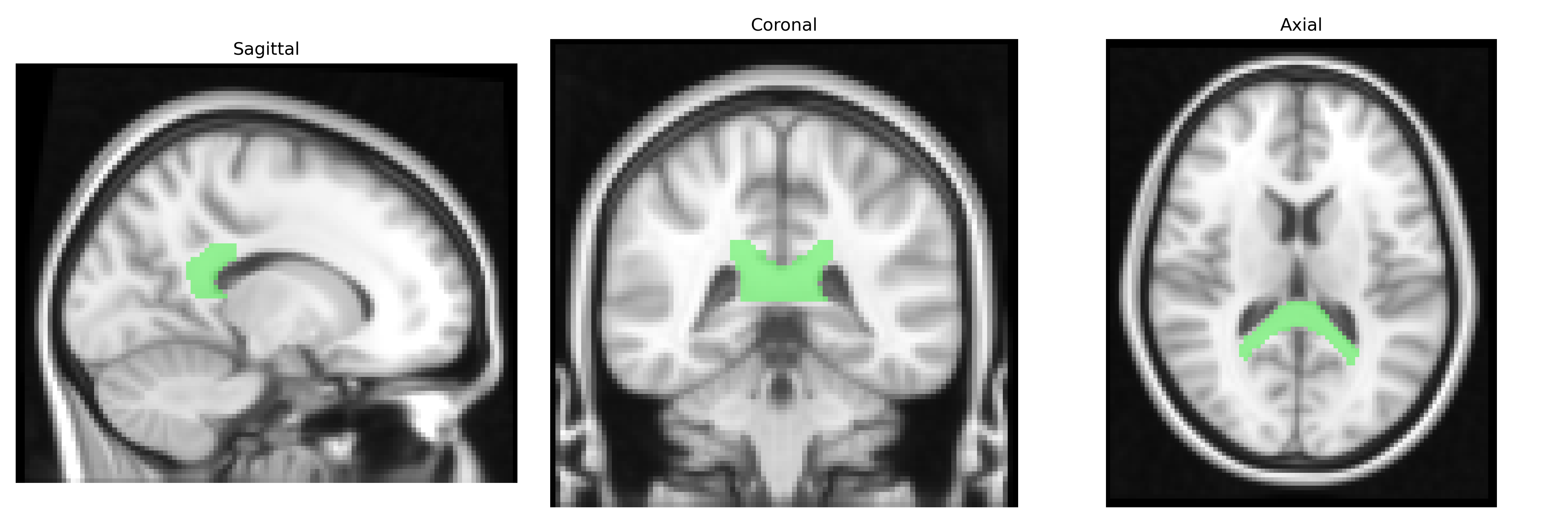
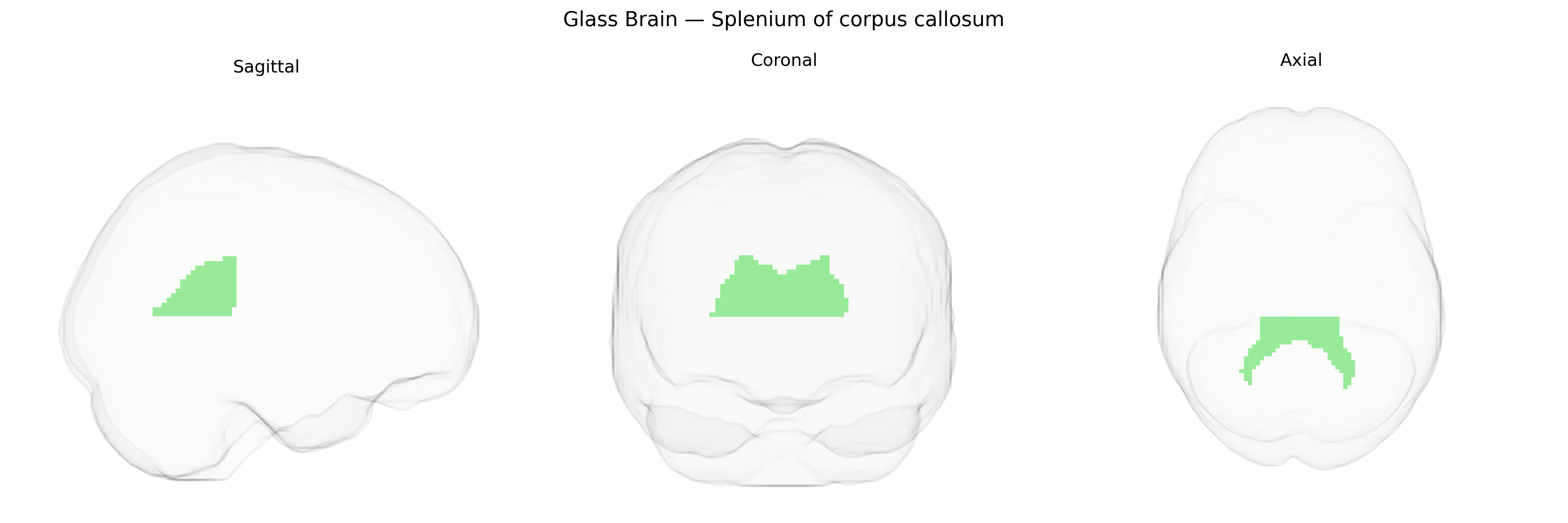
The bilateral Splenium of corpus callosum, as defined in the JHU ICBM labels 2 mm Atlas, corresponds to the posterior segment of the corpus callosum comprising densely packed commissural fibers that interconnect homologous regions of the occipital, posterior parietal, and portions of temporal cortices across hemispheres. This white matter tract is critically involved in interhemispheric transfer of visual, visuospatial, and certain auditory information, contributing to coordinated bimanual processing, visual pattern recognition, and integration of high‑level sensory inputs. Structurally, the splenium exhibits high myelin density and fiber coherence, properties that support rapid signal conduction and are commonly assessed with diffusion MRI metrics such as fractional anisotropy. Damage or disruption to the splenium can lead to disconnection syndromes, including alexia without agraphia and impairments in visuospatial integration, reflecting its central role in posterior cortical communication. Corpus callosum
The bilateral splenium of the corpus callosum, as defined in the JHU ICBM labels 2mm atlas, has been implicated in several genetic and GWAS-based findings, largely through studies of callosal microstructure (e.g., fractional anisotropy, mean diffusivity) rather than region-specific volumetrics. Variants in genes involved in axon guidance, myelination and neurodevelopment—such as NRG1, CNTNAP2, ROBO1/2, and MAG—have been associated with microstructural alterations in posterior callosal regions including the splenium, and polygenic risk for disorders like schizophrenia, bipolar disorder, autism spectrum disorder and ADHD has been linked to altered diffusion metrics in this tract. Large-scale imaging-genetics consortia (e.g., ENIGMA) have reported SNP-level and polygenic associations between white matter integrity of the splenium and depressive symptoms, cognitive performance, educational attainment, and general brain aging, with loci near genes like ZNF804A, CACNA1C and others contributing modest effects. While most GWAS aggregate corpus callosum or posterior callosal measures rather than isolating the splenium in the JHU atlas specifically, convergent evidence indicates that genetic variation influencing neurodevelopmental and psychiatric risk, intelligence and myelination exerts measurable effects on the microstructure of this posterior callosal segment.
Overview generated by GPT-4o (2026).
Region ID: 5
Hemisphere: bilateral
Atlas: JHU ICBM labels 2mm
Full Quality Version: Download MP4
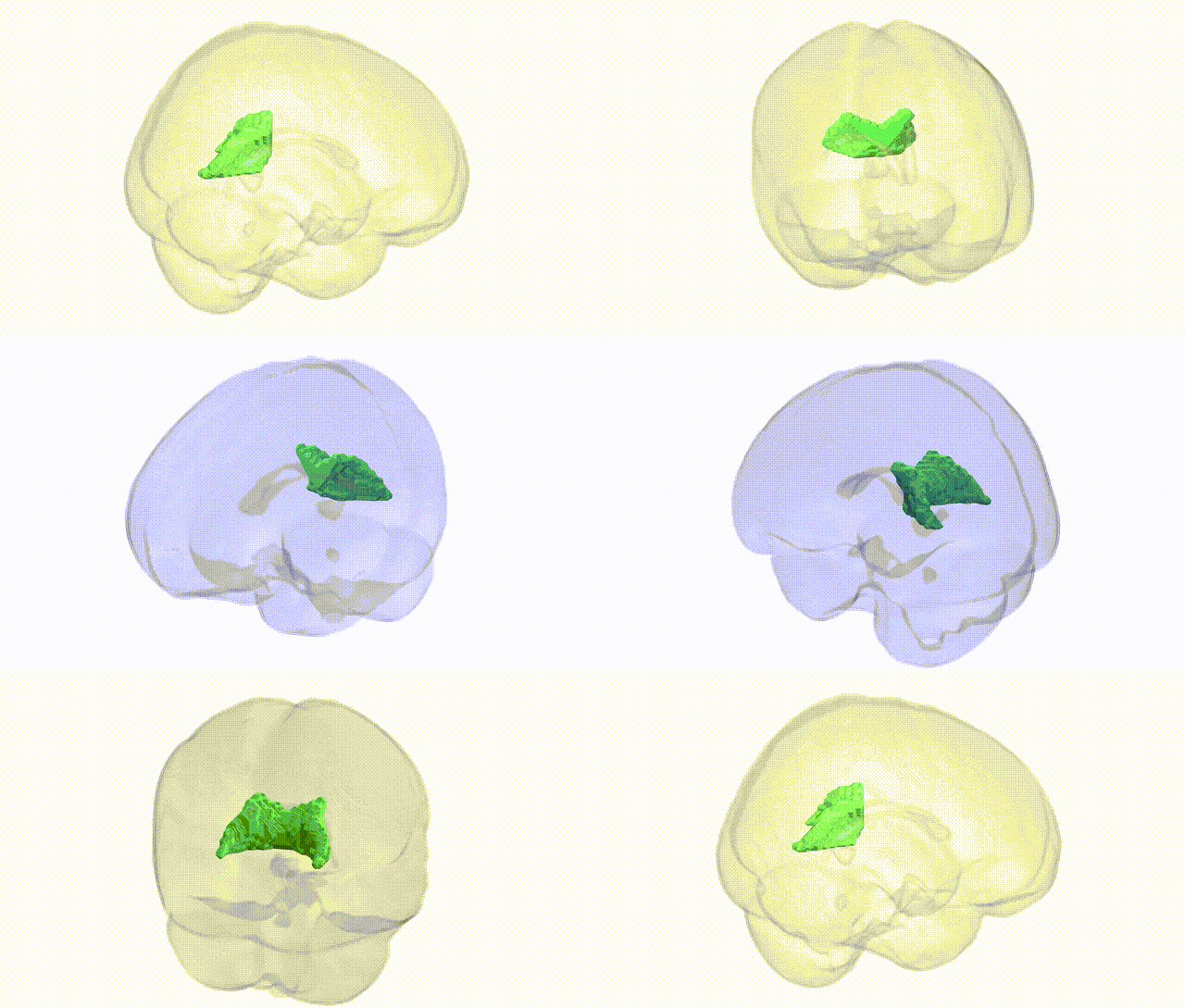
Full Quality Version: Download MP4
Wali Sidiqyar*, Gaurav Rudravaram*, Elyssa M. McMaster, Trent M. Schwartz, Adam M. Saunders, Kurt G. Schilling, Bennett A. Landman "Introducing SPINS: A Shared Public Visualization Library of Neuroanatomical Structures." Medical Imaging with Deep Learning- short paper
This resource is licensed under CC0 1.0 Universal (Public Domain).