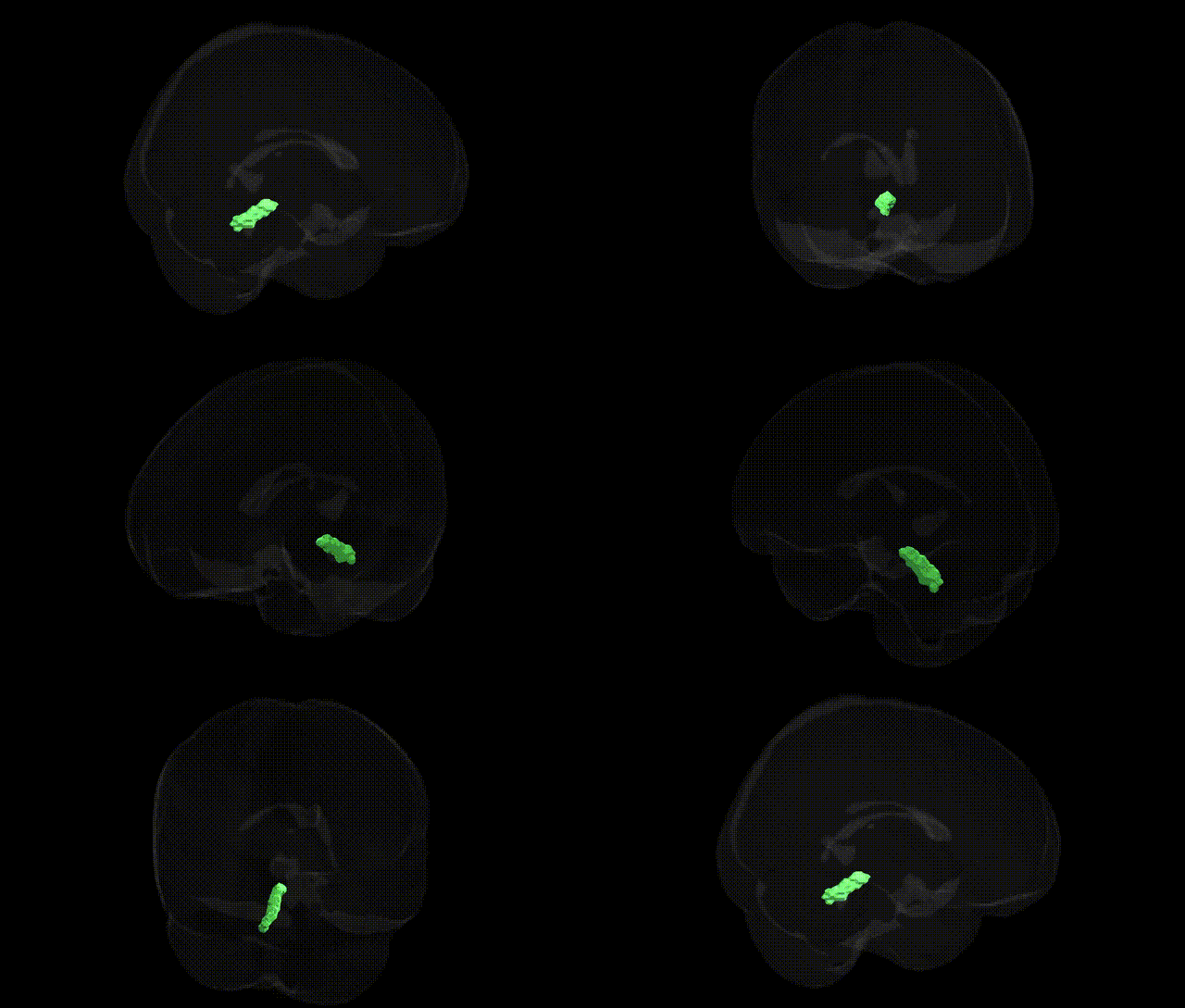
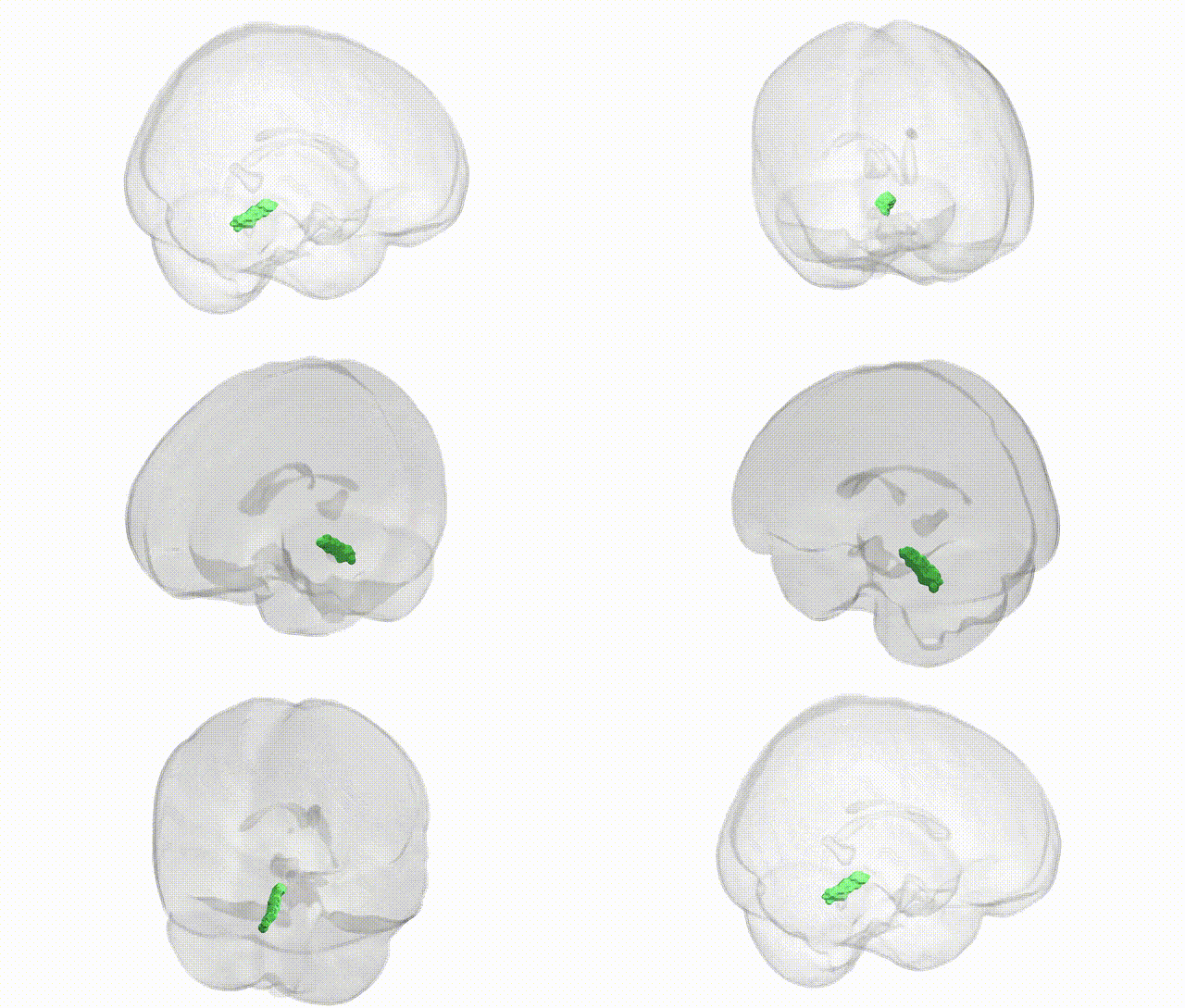
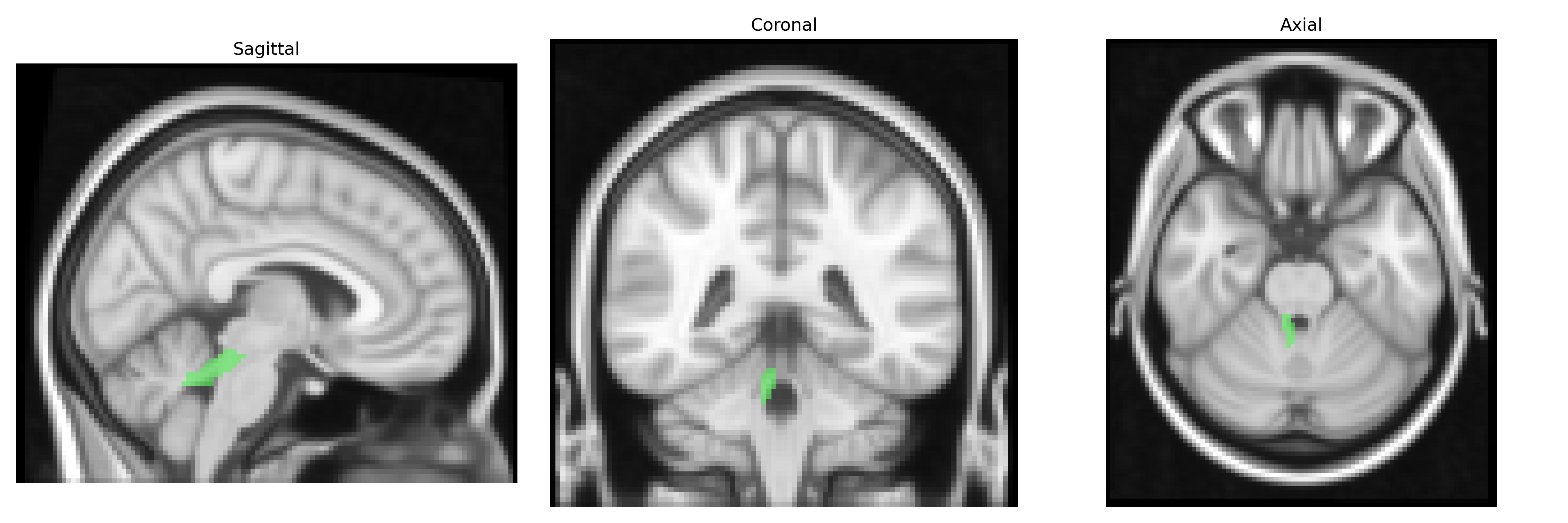
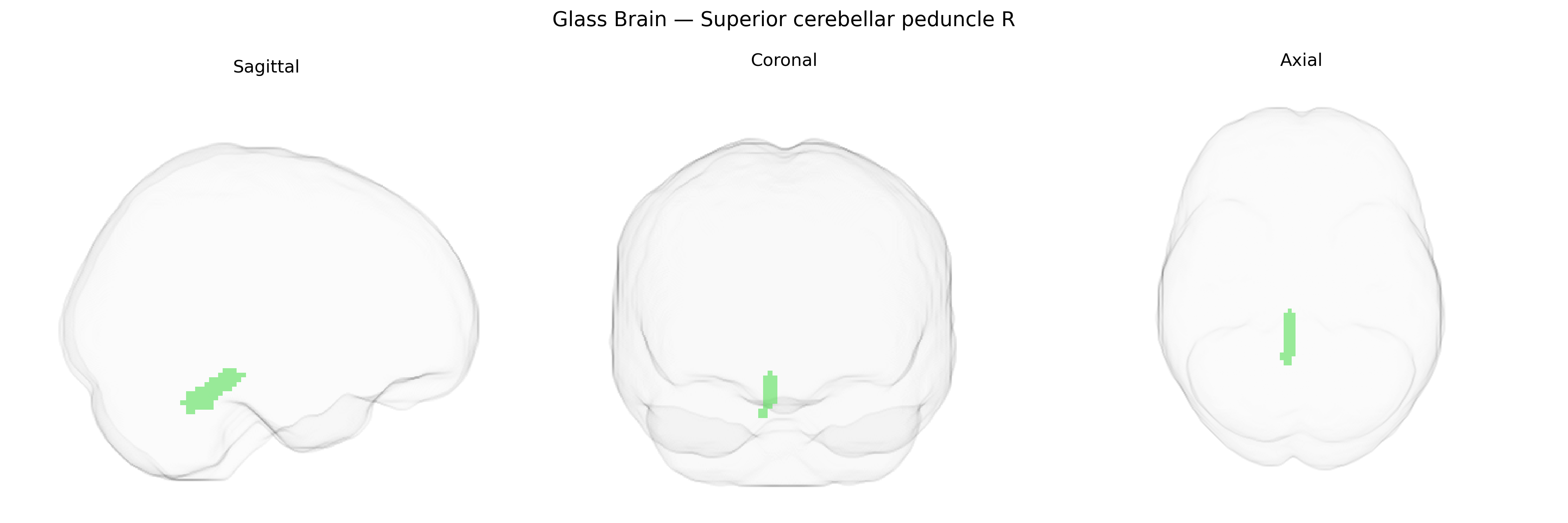
The bilateral Superior cerebellar peduncle R, as defined in the JHU ICBM labels 2mm atlas, represents the right-sided component of a paired white matter tract that forms the primary efferent pathway from the cerebellum to the midbrain and thalamus. Composed predominantly of heavily myelinated fibers originating from the dentate and other deep cerebellar nuclei, it ascends rostrally, decussates in the midbrain, and contributes to cerebello-thalamo-cortical circuits crucial for motor coordination, timing, and aspects of cognitive processing. This tract integrates cerebellar output with supratentorial motor and associative regions, influencing fine movement control, motor learning, and error correction. Lesions of the superior cerebellar peduncle are associated with ataxia, dysmetria, and impaired motor adaptation, reflecting its role in refining and relaying cerebellar signals to higher centers. There is no direct Wikipedia article specifically for the right superior cerebellar peduncle; see the related structure: Cerebellar peduncle.
The bilateral superior cerebellar peduncles, as defined in the JHU ICBM labels 2 mm atlas, are major white-matter tracts connecting the cerebellum to midbrain and thalamic structures, and genetic associations involving this region largely emerge from imaging-genetics and GWAS of brain structure and connectivity. Variants in genes related to myelination and axonal integrity (e.g., NTRK3, CNTNAP2, MAG, and oligodendrocyte-associated loci) have been linked to microstructural measures (FA, MD) in cerebellar peduncle pathways in diffusion MRI GWAS, although most findings are reported at the level of cerebellar white matter or global brain-wide tract sets rather than this tract specifically. Large-scale studies such as UK Biobank have identified polygenic influences on cerebellar white-matter microstructure that overlap with genetic risk for neurodevelopmental and psychiatric conditions (including schizophrenia, ADHD, autism spectrum disorder, and bipolar disorder), as well as cognitive traits like general intelligence and motor coordination, suggesting shared genetic architecture between tract integrity and these phenotypes. Rare and Mendelian disorders affecting cerebellar connectivity (e.g., certain spinocerebellar ataxias, Joubert syndrome, and leukodystrophies) frequently show structural abnormalities of the superior cerebellar peduncles, implicating genes involved in cytoskeletal organization, axonal guidance, and ciliary function, although this evidence is largely anatomical and not tract-specific GWAS. Overall, current genetic evidence links the superior cerebellar peduncle region to broader polygenic influences on cerebellar and white-matter organization and to risk loci for neurodevelopmental, motor, and psychiatric phenotypes, but highly specific GWAS targeting the bilateral superior cerebellar peduncle R label in the JHU ICBM atlas are still limited and typically absorbed into more global tract-based analyses.
Overview generated by GPT-4o (2026).
Region ID: 13
Hemisphere: bilateral
Atlas: JHU ICBM labels 2mm
Full Quality Version: Download MP4
Full Quality Version: Download MP4
Wali Sidiqyar*, Gaurav Rudravaram*, Elyssa M. McMaster, Trent M. Schwartz, Adam M. Saunders, Kurt G. Schilling, Bennett A. Landman "Introducing SPINS: A Shared Public Visualization Library of Neuroanatomical Structures." Medical Imaging with Deep Learning- short paper
This resource is licensed under CC0 1.0 Universal (Public Domain).