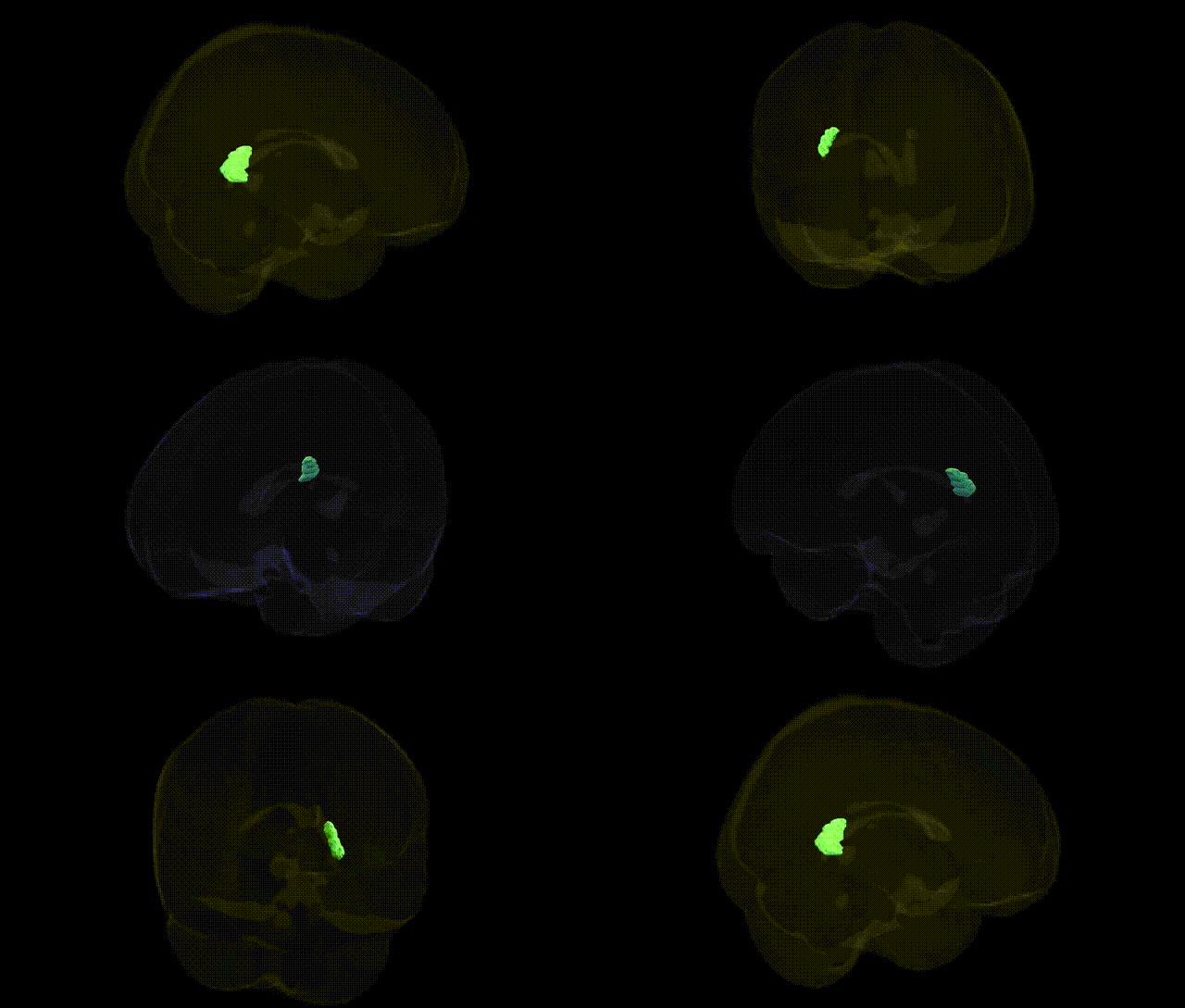
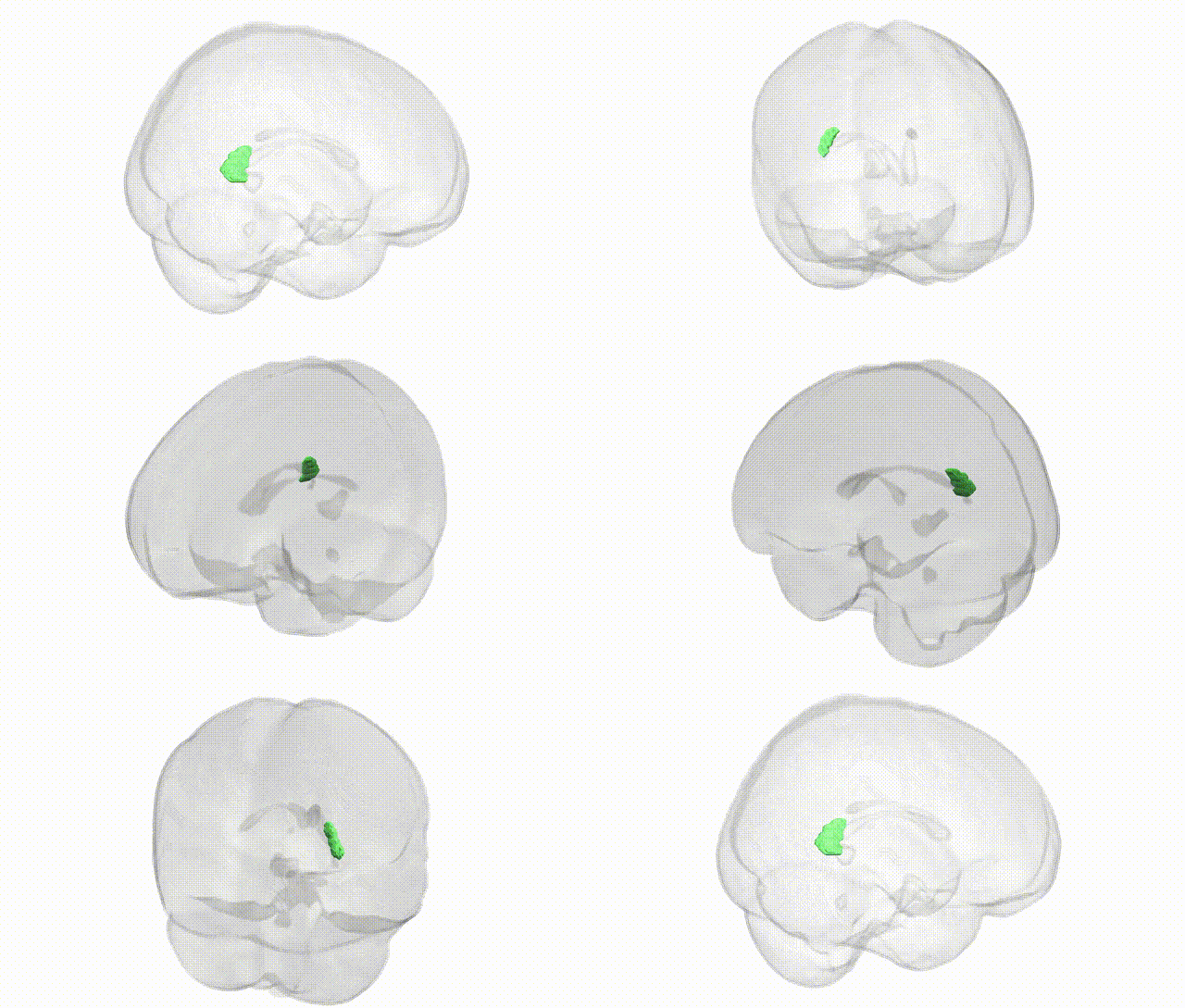
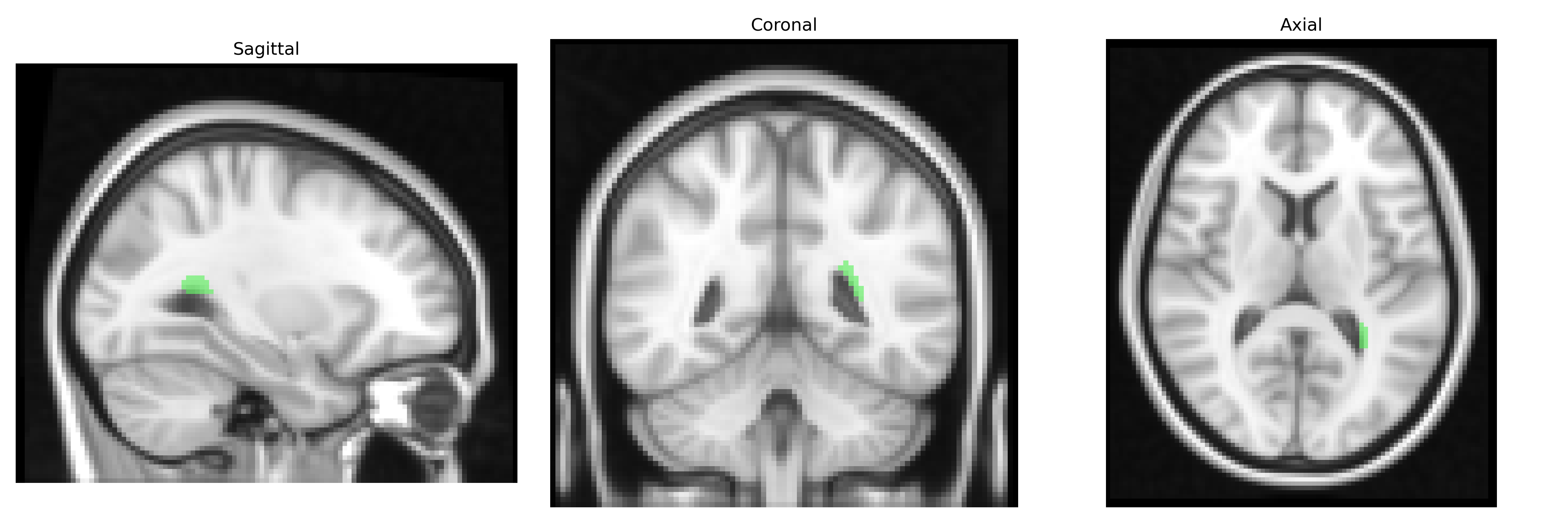
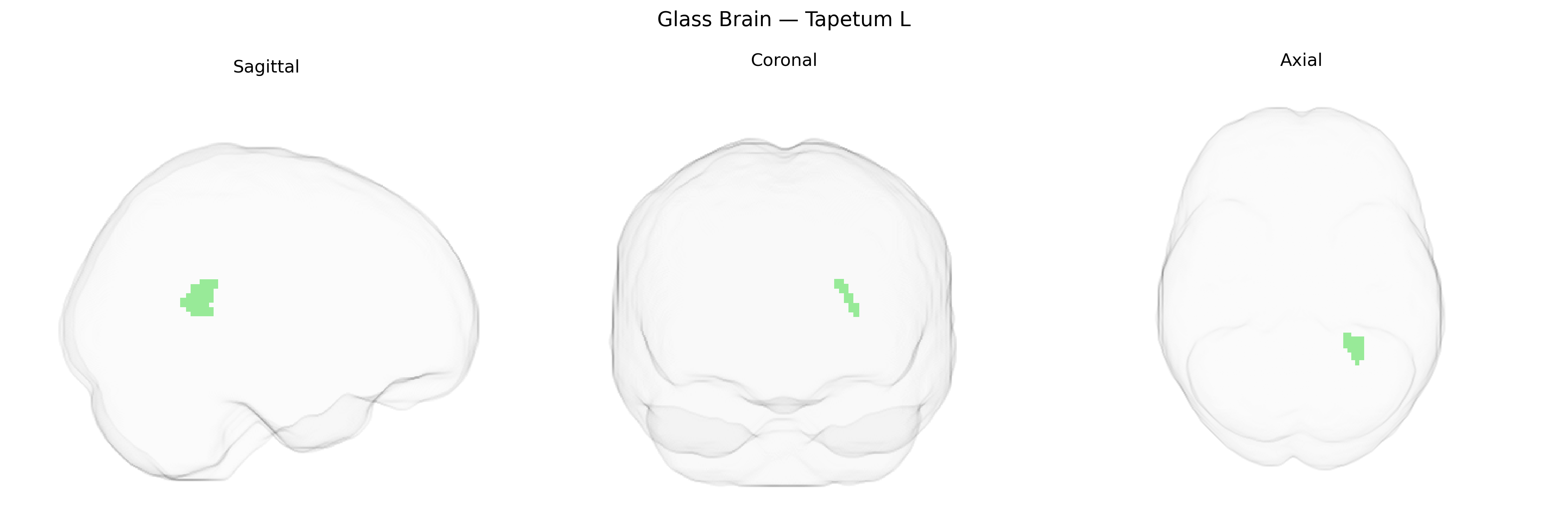
The bilateral tapetum (left; Tapetum L) is a thin sheet of interhemispheric white matter fibers within the splenial region of the corpus callosum that runs along the lateral walls of the posterior lateral ventricles. In the JHU ICBM labels 2 mm atlas, this structure is defined as a paired commissural tract coursing posteriorly and laterally, thought to connect occipital and posterior temporal regions between the two cerebral hemispheres, thereby contributing to interhemispheric transfer of visual and posterior associative information. The tapetum is part of the broader callosal fiber system and is often delineated based on diffusion MRI tractography and structural MRI contrasts distinguishing it from adjacent callosal and periventricular white matter. There is no direct Wikipedia article for the tapetum as a distinct white matter tract; a related structure containing it is the Corpus callosum.
The bilateral tapetum of the corpus callosum, as defined in the JHU ICBM 2 mm atlas, has been implicated in genetic studies primarily through its role in interhemispheric connectivity and posterior callosal integrity, with variants in genes involved in axon guidance, myelination, and neurodevelopment showing associations with its microstructure or volume. GWAS and imaging‑genetics analyses of callosal and white‑matter traits have linked common variants in genes such as NRG1, CNTNAP2, ROBO1/ROBO2, LINGO1, and multiple oligodendrocyte‑related genes (e.g., MAG, MOG, ERBB4, and other myelin pathway loci) to diffusion metrics and structural integrity in posterior corpus callosum segments that include or border the tapetum, often in the context of large consortia (e.g., ENIGMA) analyzing fractional anisotropy and mean diffusivity. Tapetum and adjacent posterior callosal alterations have been reported in schizophrenia, bipolar disorder, autism spectrum disorder, major depression, and Alzheimer’s disease, with polygenic risk scores for these conditions correlating with posterior callosal microstructure, as well as in traits such as general cognitive ability, educational attainment, and risk for psychosis, suggesting that genetic architectures influencing myelination and axonal organization contribute to individual differences in tapetum integrity. Although relatively few GWAS have isolated the tapetum as a standalone region of interest, convergent evidence from callosal and temporal‑connecting fiber studies indicates that genetic variation affecting neurodevelopmental and myelin pathways modulates its structure, and these same variants or polygenic profiles are frequently implicated in neuropsychiatric disorders and neurodegenerative disease risk.
Overview generated by GPT-4o (2026).
Region ID: 48
Hemisphere: bilateral
Atlas: JHU ICBM labels 2mm
Full Quality Version: Download MP4
Full Quality Version: Download MP4
Wali Sidiqyar*, Gaurav Rudravaram*, Elyssa M. McMaster, Trent M. Schwartz, Adam M. Saunders, Kurt G. Schilling, Bennett A. Landman "Introducing SPINS: A Shared Public Visualization Library of Neuroanatomical Structures." Medical Imaging with Deep Learning- short paper
This resource is licensed under CC0 1.0 Universal (Public Domain).