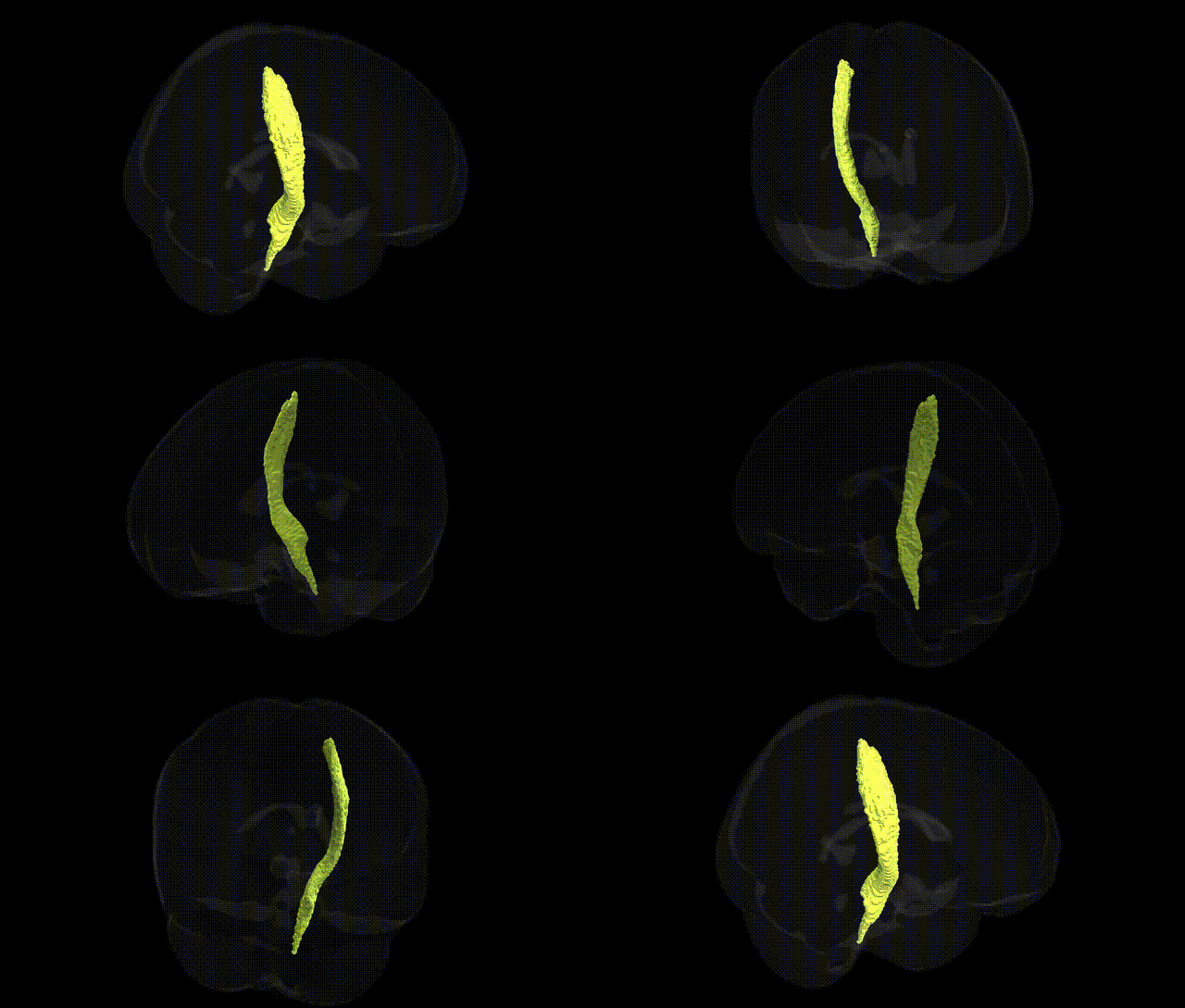
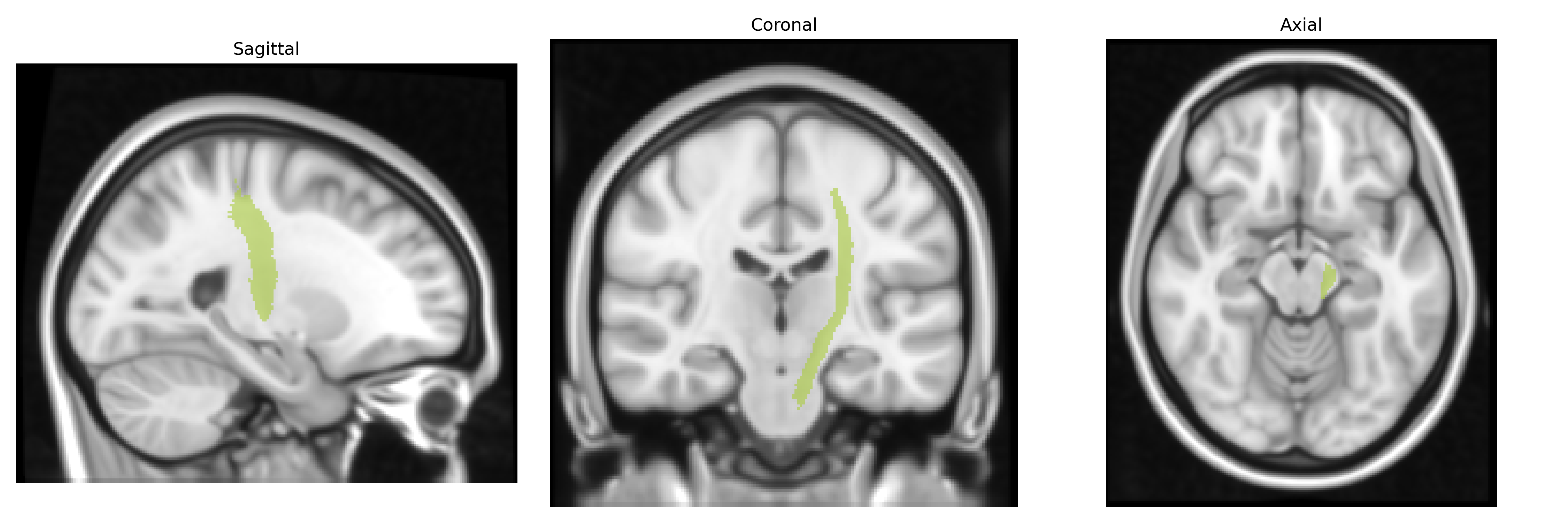
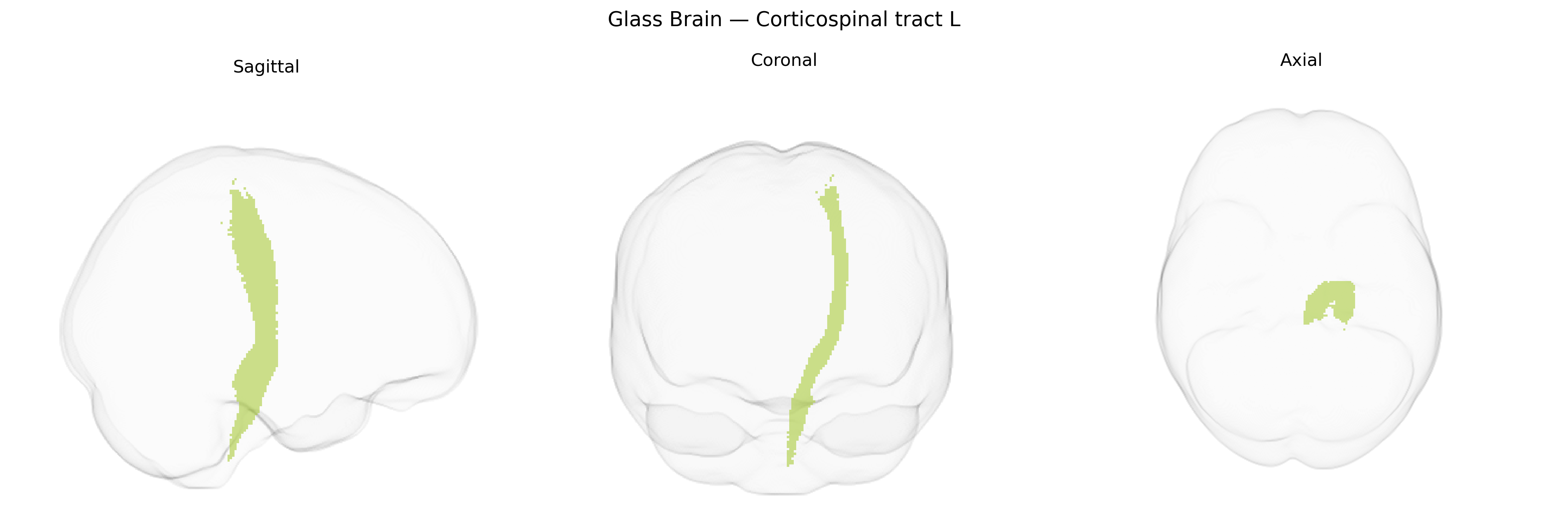
The bilateral corticospinal tract (left) is a major descending white matter pathway that originates primarily from the motor cortex and other frontal and parietal cortical areas, converges through the corona radiata and internal capsule, and continues through the cerebral peduncles, brainstem, and spinal cord to synapse on interneurons and motor neurons in the ventral horn. It is crucial for voluntary motor control, especially fine, skilled movements of the distal limbs, and is organized somatotopically along its course. Damage to the corticospinal tract can result in characteristic upper motor neuron signs, including weakness, hyperreflexia, spasticity, and loss of dexterity. There is no direct Wikipedia article for the bilateral corticospinal tract (left) entry in this atlas; a closely related and encompassing structure is the Corticospinal tract.
The bilateral corticospinal tract, as defined in the JHU ICBM tracts maxprob thr25 1mm atlas, has been implicated in multiple genetic studies linking white matter microstructure to common variants and neurodevelopmental risk. GWAS of diffusion tensor imaging (DTI) metrics, particularly fractional anisotropy and mean diffusivity within the corticospinal tract, have identified associations with loci near genes involved in axon guidance, myelination, and cytoskeletal regulation (for example, variants in or near CNTN4, NRG1, and MAG), though individual findings often vary by cohort and do not always reach uniform replication across studies. Polygenic risk for schizophrenia, bipolar disorder, and major depression has been associated with alterations in corticospinal tract integrity, suggesting shared genetic architecture between psychiatric risk and motor-system white matter. In movement and motor disorders, candidate and GWAS-based imaging genetics studies have reported links between corticospinal tract structure and variants in genes such as BDNF and COMT, as well as risk loci for amyotrophic lateral sclerosis and cerebral palsy, highlighting a genetic contribution to tract vulnerability and developmental disruption. Large-scale imaging genetics consortia (e.g., ENIGMA) further indicate that common genetic variation broadly influences corticospinal tract microstructure as part of a heritable white matter network, with this tract frequently emerging among regions where genetically driven differences in axonal integrity and myelination are observed.
Overview generated by GPT-4o (2026).
Region ID: 3
Hemisphere: bilateral
Atlas: JHU ICBM tracts maxprob thr25 1mm
Full Quality Version: Download MP4
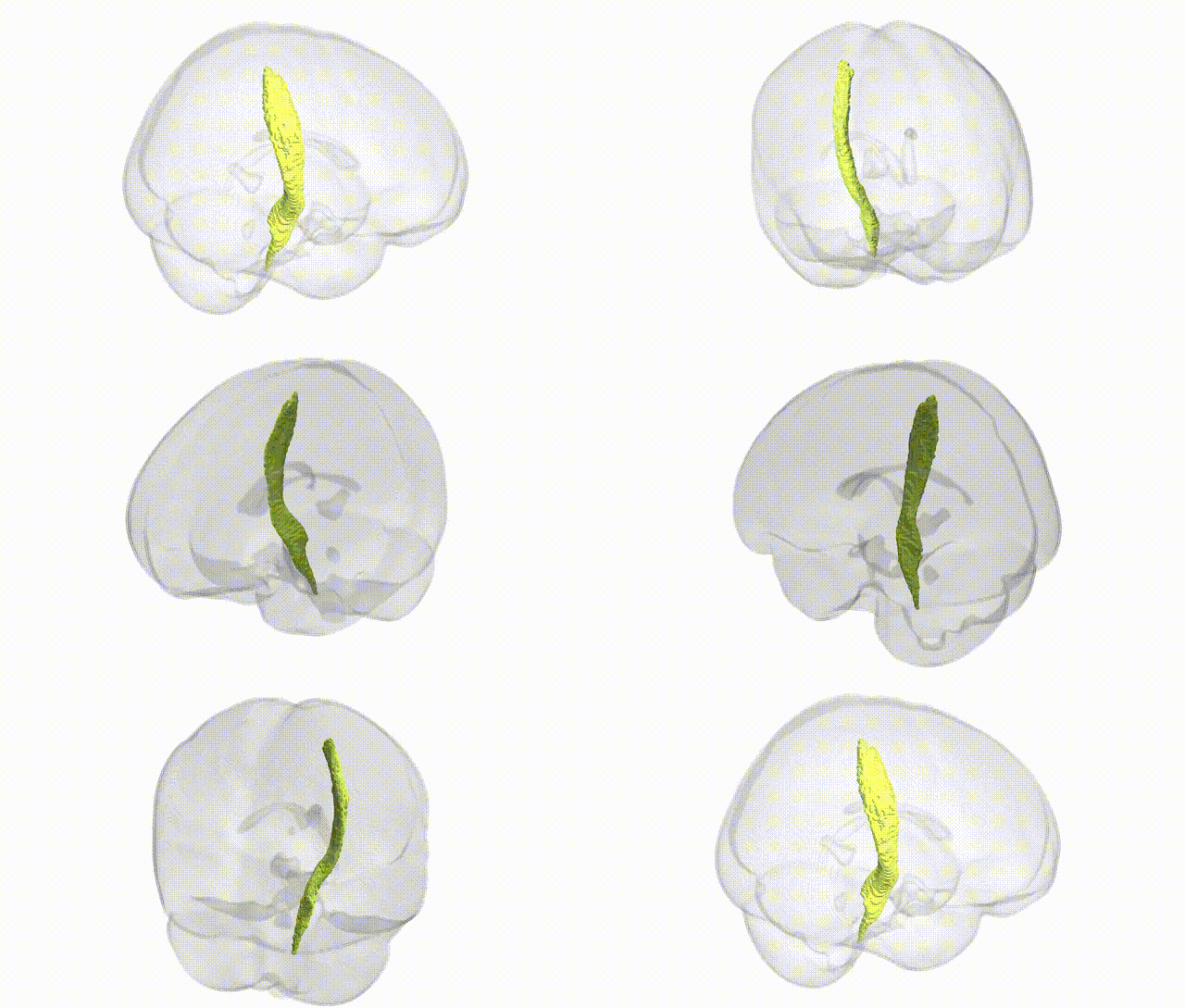
Full Quality Version: Download MP4
Wali Sidiqyar*, Gaurav Rudravaram*, Elyssa M. McMaster, Trent M. Schwartz, Adam M. Saunders, Kurt G. Schilling, Bennett A. Landman "Introducing SPINS: A Shared Public Visualization Library of Neuroanatomical Structures." Medical Imaging with Deep Learning- short paper
This resource is licensed under CC0 1.0 Universal (Public Domain).