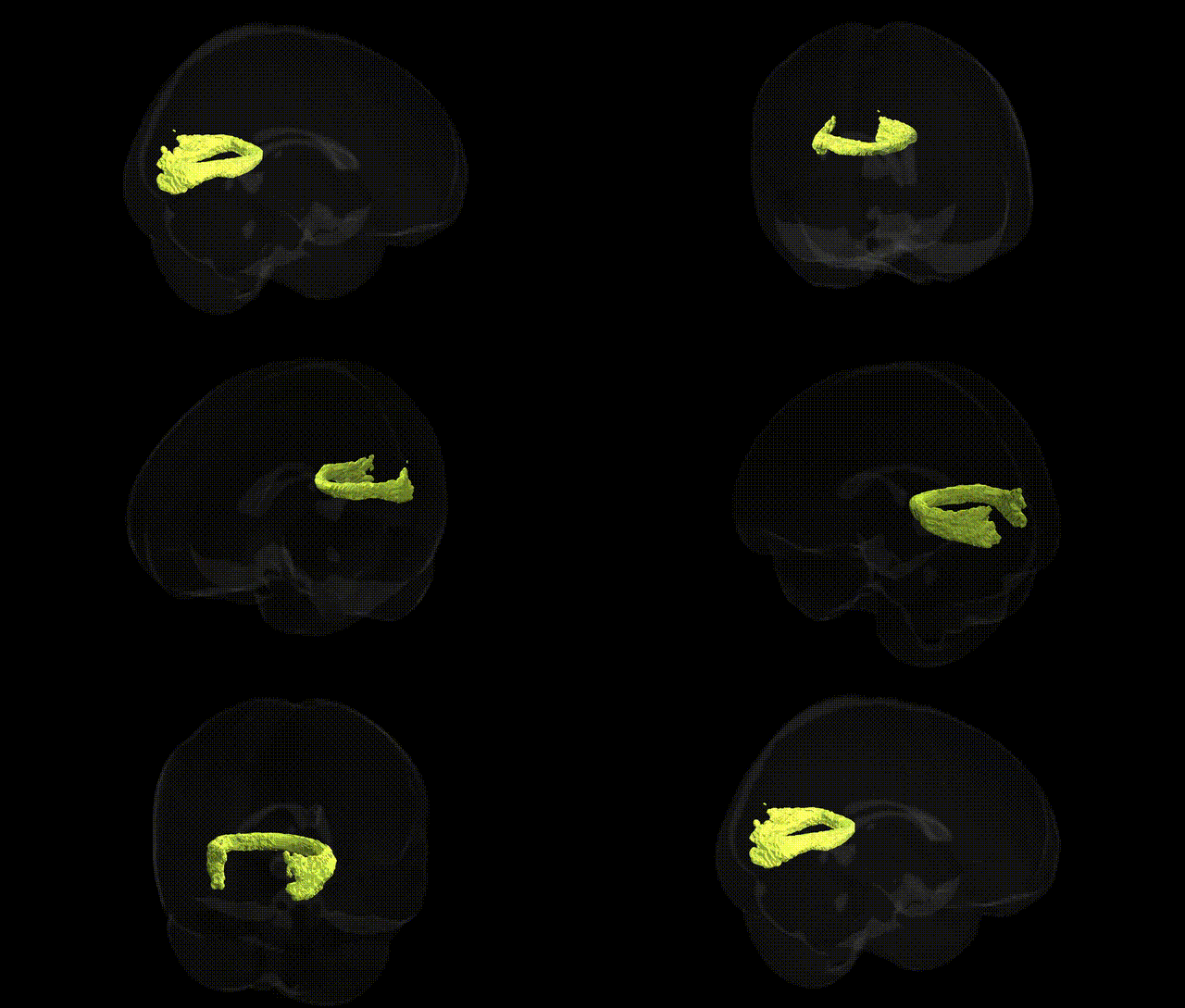
The bilateral Forceps major, also known as the posterior forceps of the corpus callosum, is a large commissural white matter tract that curves posteriorly from the splenium of the corpus callosum to interconnect homologous regions of the occipital lobes across the midline. This tract facilitates interhemispheric integration of visual and visuospatial information, contributing to coordinated binocular vision and higher-order visual processing. Anatomically, it fans out from the splenium into the deep white matter of each occipital lobe, bordering other association pathways such as the inferior longitudinal fasciculus, and is a prominent feature in diffusion tensor imaging and tractography-based atlases like the JHU ICBM tracts. There is no direct Wikipedia article for “Forceps major”; a closely related entry describing its parent structure is Corpus callosum.
The bilateral Forceps major, a corpus callosum tract connecting occipital lobes and defined in the JHU ICBM tracts maxprob thr25 1mm atlas, has been implicated in multiple genetic studies, primarily through diffusion MRI GWAS of white-matter microstructure (e.g., FA, MD). Large-scale consortia such as ENIGMA and UK Biobank have identified common variants near genes involved in axon guidance, myelination, and oligodendrocyte function (including regions near NRG1, CNTNAP2, and NCAM1, among others) that influence callosal and occipital-callosal integrity, with several SNPs showing tract-specific effects in the Forceps major. Genetic correlations and polygenic scores indicate that microstructural variation in this tract is partly shared with liability for neurodevelopmental and psychiatric disorders, including schizophrenia, autism spectrum disorder, ADHD, and major depression, as well as cognitive traits such as general intelligence and processing speed. In addition, risk alleles for demyelinating and neurodegenerative conditions (e.g., multiple sclerosis) and for vascular risk factors have been associated with reduced integrity of posterior callosal fibers encompassing the Forceps major, supporting a genetically mediated role of this tract in visual integration, interhemispheric communication, and vulnerability to brain disorders.
Overview generated by GPT-4o (2026).
Region ID: 9
Hemisphere: bilateral
Atlas: JHU ICBM tracts maxprob thr25 1mm
Full Quality Version: Download MP4
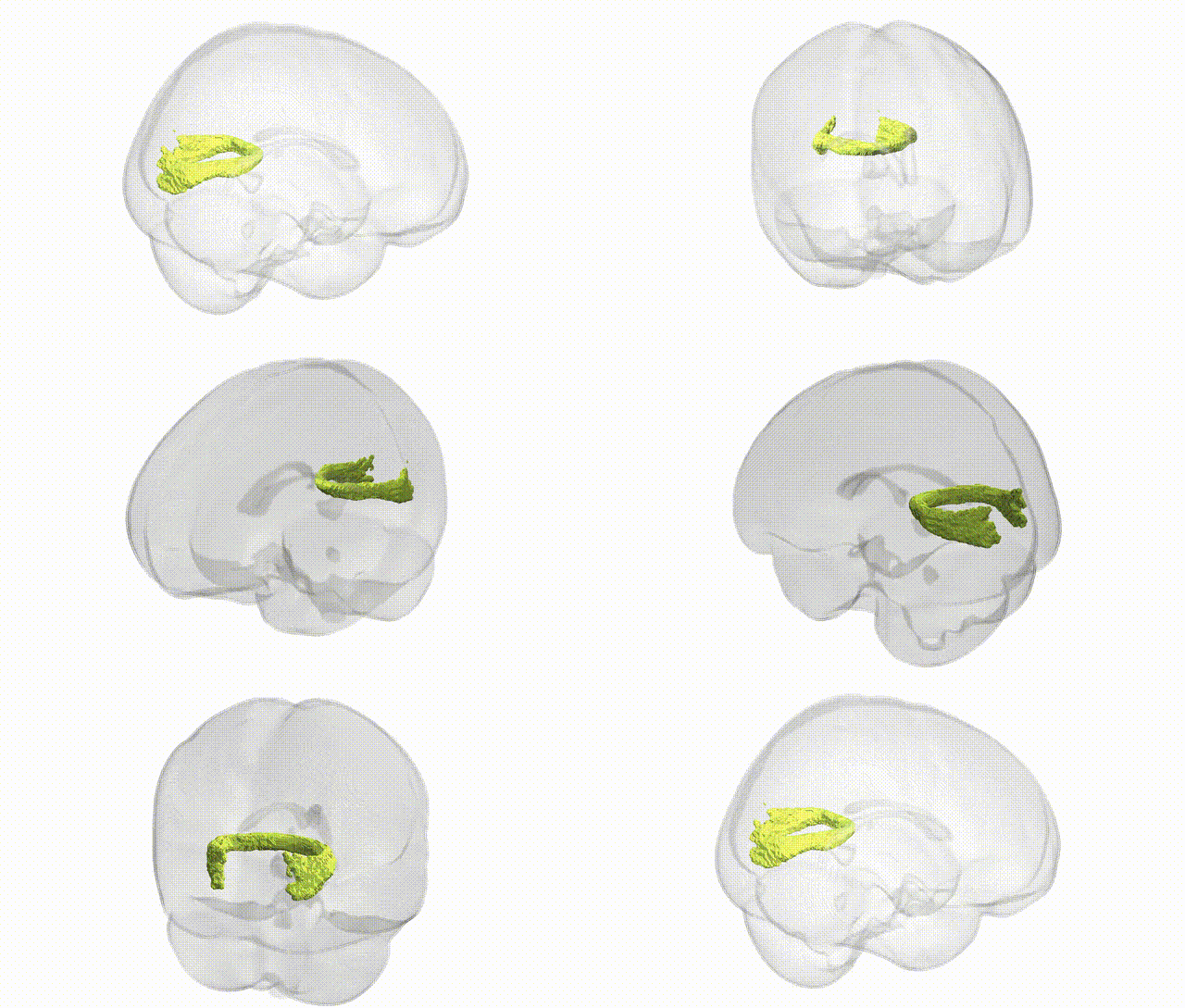
Full Quality Version: Download MP4
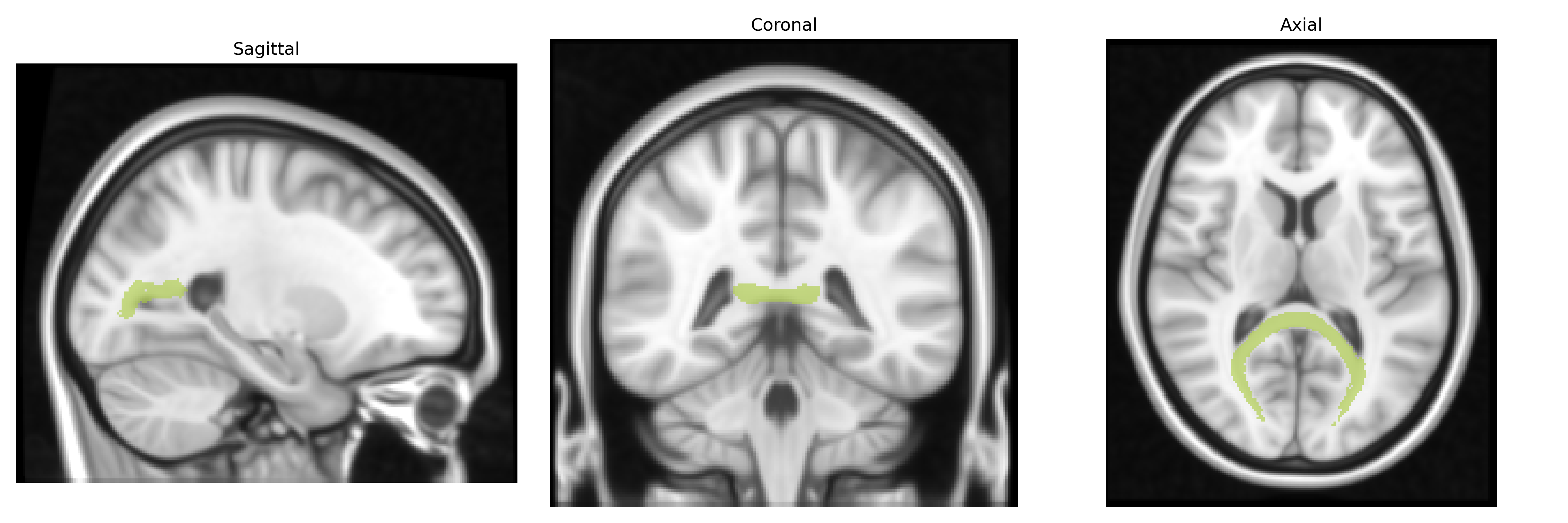
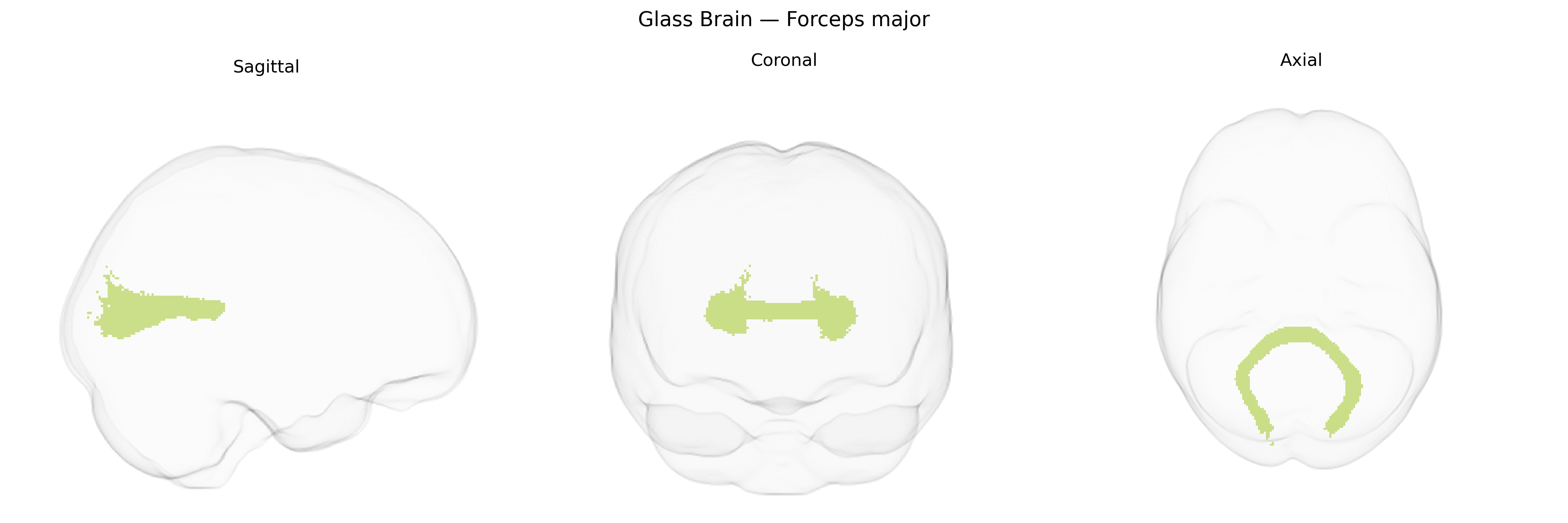
Wali Sidiqyar*, Gaurav Rudravaram*, Elyssa M. McMaster, Trent M. Schwartz, Adam M. Saunders, Kurt G. Schilling, Bennett A. Landman "Introducing SPINS: A Shared Public Visualization Library of Neuroanatomical Structures." Medical Imaging with Deep Learning- short paper
This resource is licensed under CC0 1.0 Universal (Public Domain).