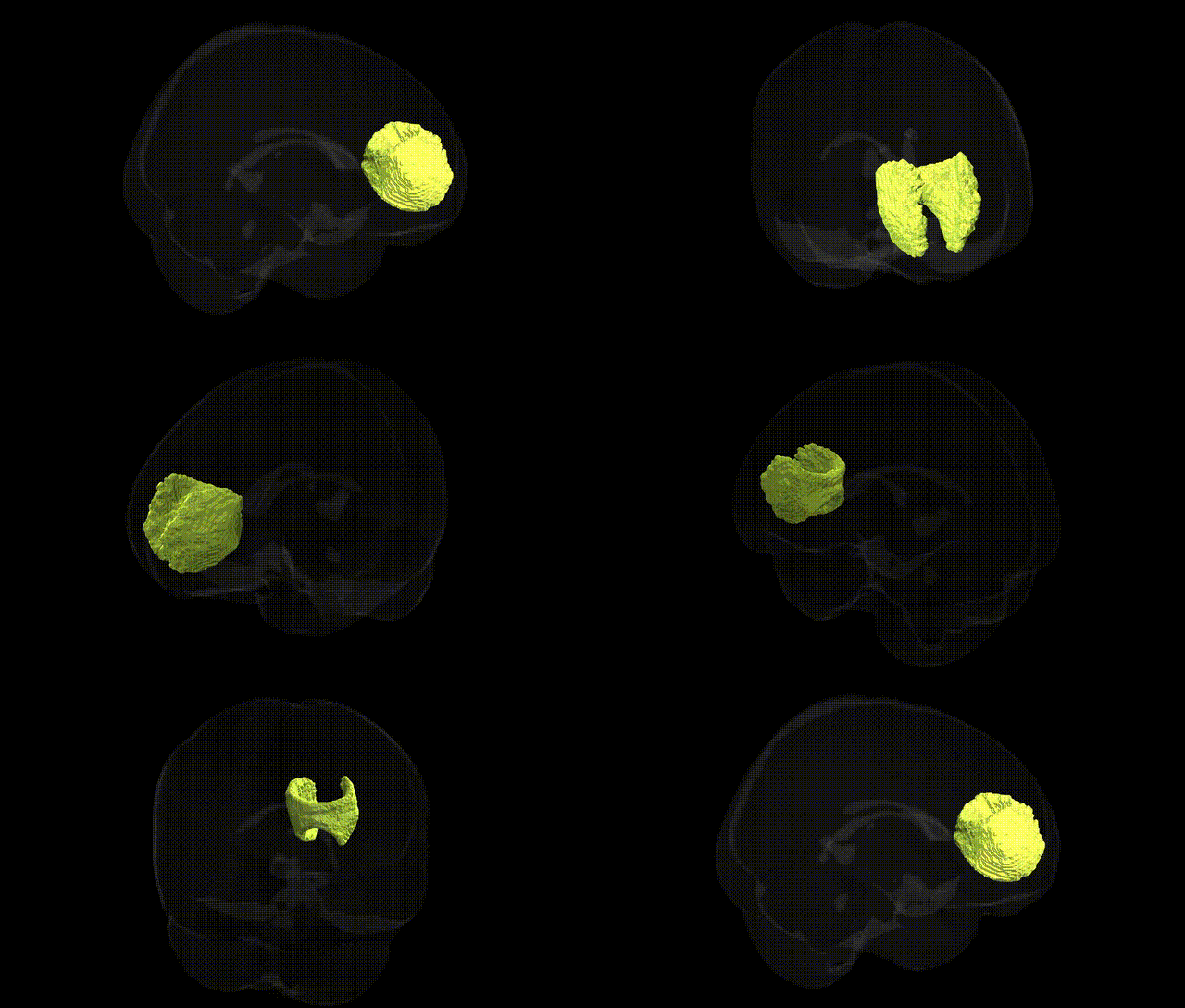
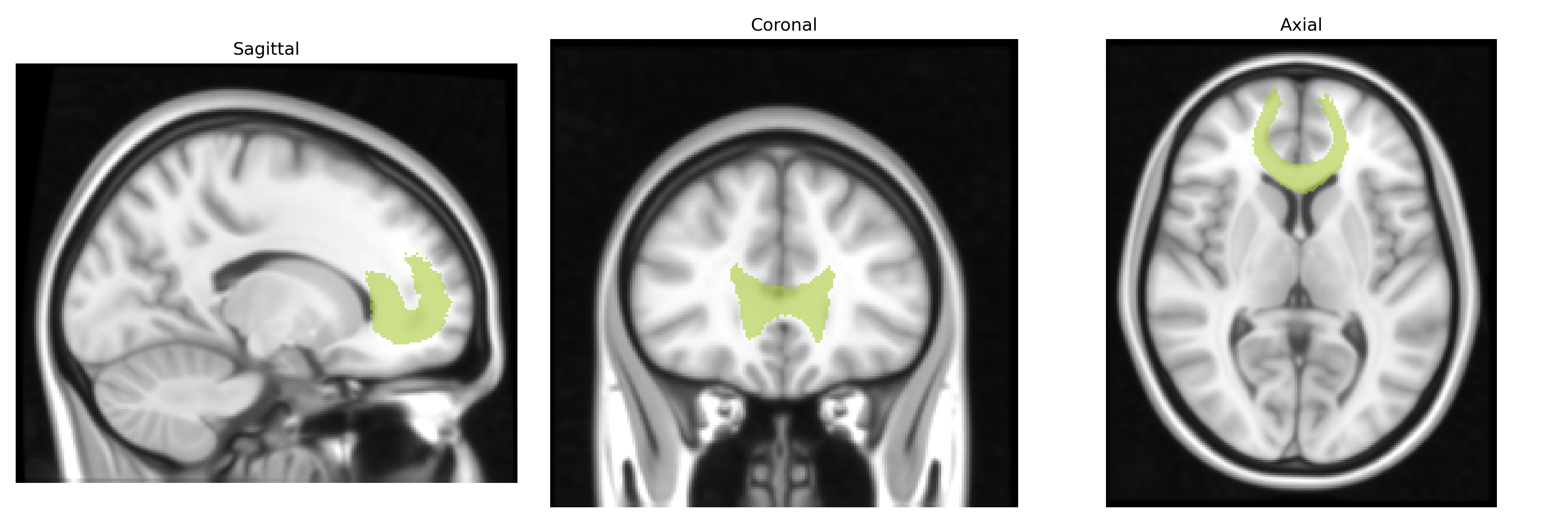
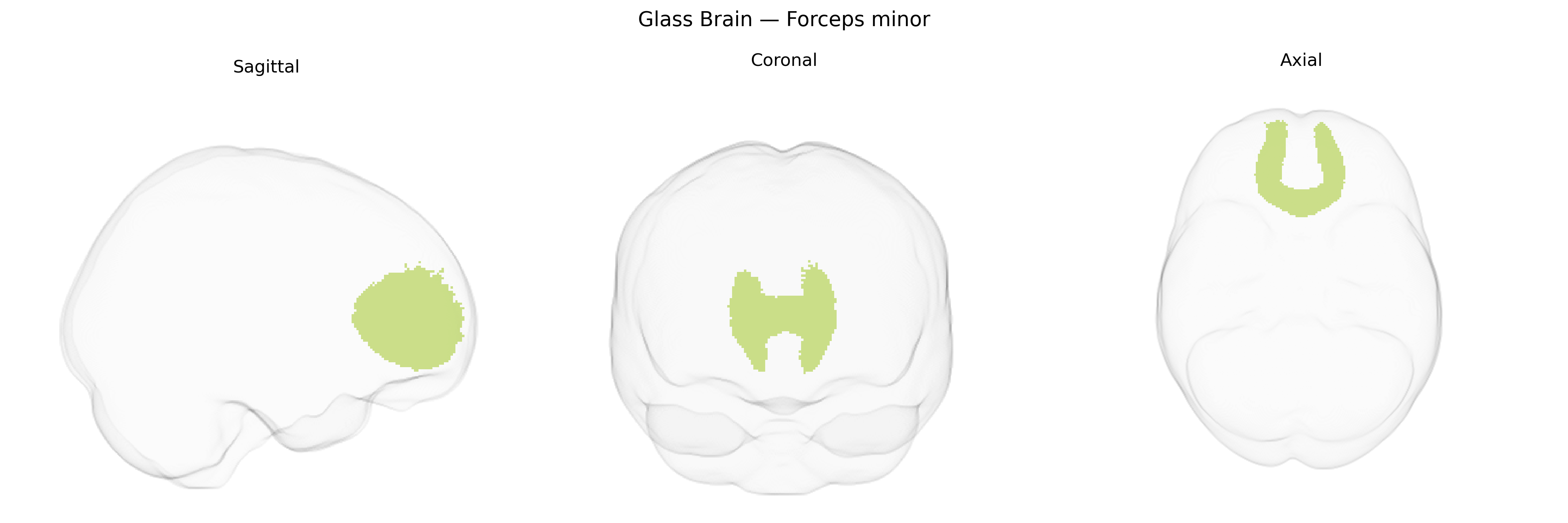
The bilateral Forceps minor, as defined in the JHU ICBM tracts maxprob thr25 1mm atlas, comprises interhemispheric white matter fibers of the genu of the corpus callosum that project anteriorly into the frontal lobes. These callosal fibers connect homologous regions of the medial and lateral prefrontal cortex across the midline, supporting integration of higher-order cognitive, executive, and socio-emotional processes between the two hemispheres. Structurally, the Forceps minor forms a compact bundle that curves around the rostral aspect of the lateral ventricles, and its microstructural integrity (e.g., assessed via diffusion tensor imaging) is often examined in studies of neurodevelopment, aging, and psychiatric or neurological disorders involving frontal circuitry. There is no direct Wikipedia article for the Forceps minor; a closely related and encompassing structure is the Corpus callosum.
Genetic associations involving the bilateral forceps minor (genu of the corpus callosum) from the JHU ICBM tracts maxprob thr25 1mm atlas largely come from diffusion MRI GWAS of white matter microstructure and callosal morphology rather than region-specific candidate-gene studies. Multiple large consortia (e.g., ENIGMA, UK Biobank–based GWAS) have identified common variants influencing fractional anisotropy and other diffusion metrics in the genu/forceps minor, with notable signals in genes implicated in axon guidance, myelination, and neurodevelopment such as NTRK3, CNTN4, ROBO1/ROBO2, and various loci near cell-adhesion and oligodendrocyte-related genes, though specific hits often vary by study and metric. Polygenic influences on forceps minor integrity overlap with risk architecture for schizophrenia, major depressive disorder, bipolar disorder, autism spectrum disorder, and ADHD, consistent with frequent reports of reduced genu/forceps minor fractional anisotropy in these conditions. GWAS of callosal size and shape also implicate loci enriched for neurodevelopmental and synaptic genes, some of which show pleiotropic effects on cognitive performance, educational attainment, and general brain structural variation, suggesting that genetic factors shaping the forceps minor contribute broadly to individual differences in cognition and vulnerability to psychiatric and neurodevelopmental disorders.
Overview generated by GPT-4o (2026).
Region ID: 10
Hemisphere: bilateral
Atlas: JHU ICBM tracts maxprob thr25 1mm
Full Quality Version: Download MP4
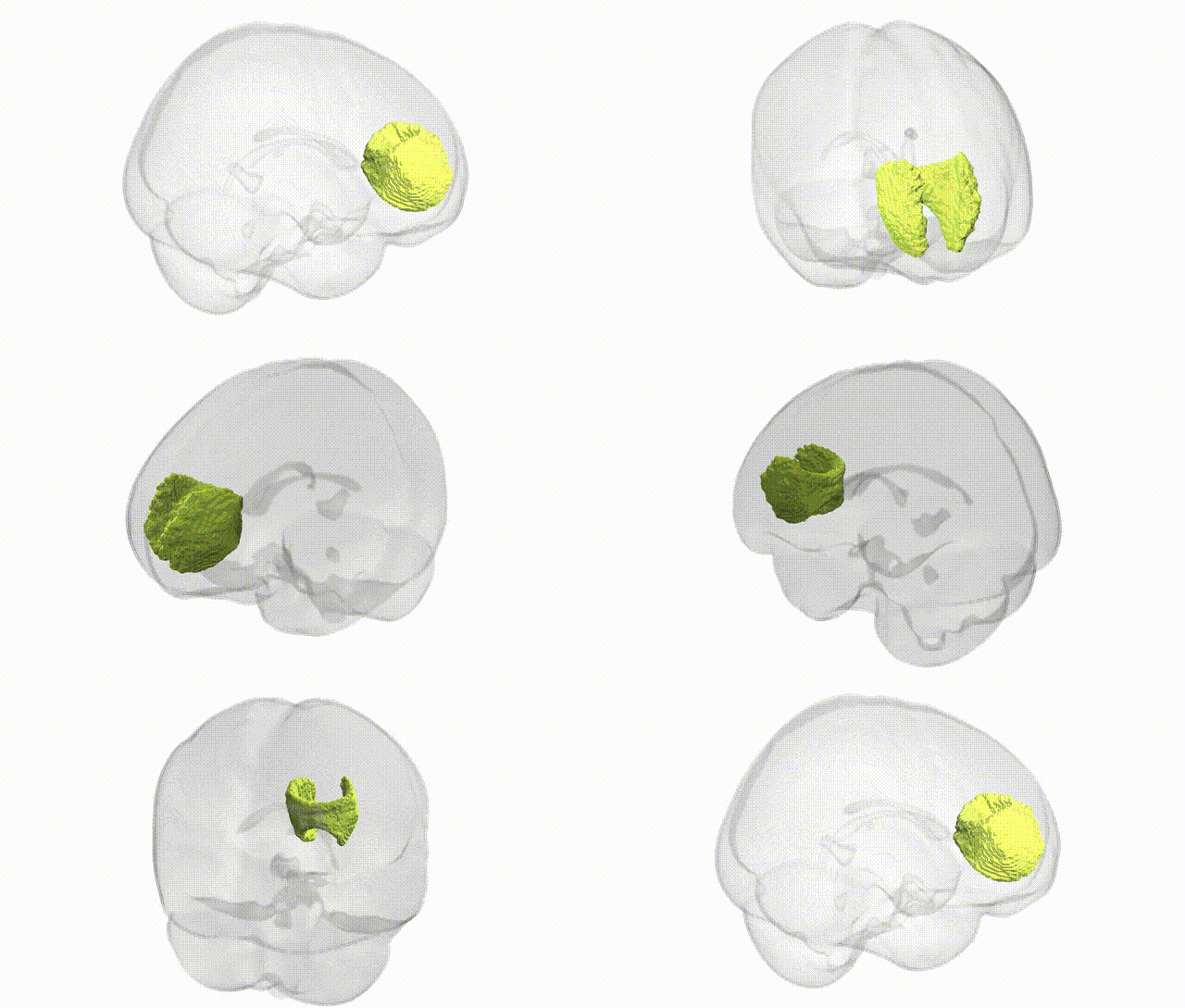
Full Quality Version: Download MP4
Wali Sidiqyar*, Gaurav Rudravaram*, Elyssa M. McMaster, Trent M. Schwartz, Adam M. Saunders, Kurt G. Schilling, Bennett A. Landman "Introducing SPINS: A Shared Public Visualization Library of Neuroanatomical Structures." Medical Imaging with Deep Learning- short paper
This resource is licensed under CC0 1.0 Universal (Public Domain).