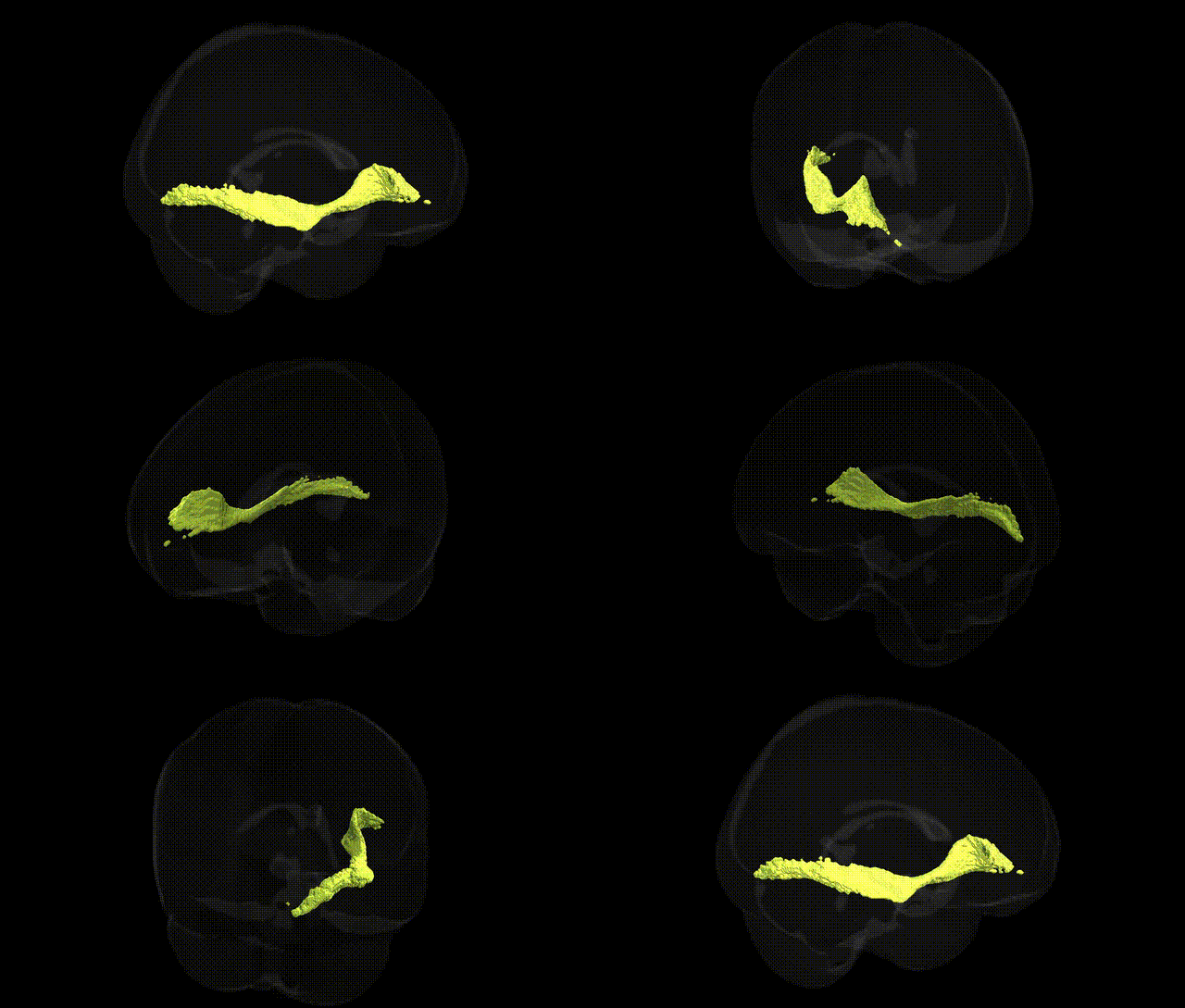
The bilateral Inferior fronto-occipital fasciculus (IFOF) is a major associative white matter tract that connects occipital and posterior temporal regions with the frontal lobe via a long ventral pathway coursing through the temporal stem and external/extreme capsule. In the JHU ICBM tracts maxprob thr25 1mm atlas, this tract is identified as a left-sided bundle that participates in a broader bilateral system, supporting integration of visual, semantic, and higher-order cognitive information by linking visual association areas with prefrontal regions involved in language, attention, and executive control. The IFOF is implicated in functions such as semantic processing, reading, and aspects of visuospatial and attentional networks, and is frequently studied in diffusion MRI research on brain connectivity and neuropsychiatric or neurodegenerative disorders. There is no direct link for the inferior fronto-occipital fasciculus; a related structure and entry is Association fiber.
The bilateral inferior fronto-occipital fasciculus (IFOF) is a major association white matter tract that has been repeatedly implicated in imaging–genetics studies, although specific tract-level GWAS for the JHU ICBM tracts maxprob thr25 1mm Atlas labels are limited. Large consortia-based neuroimaging GWAS, such as ENIGMA and UK Biobank analyses, have identified polygenic influences on diffusion MRI measures (e.g., fractional anisotropy and mean diffusivity) within fronto-occipital and inferior longitudinal fasciculi, with variants in genes related to axon guidance (e.g., ROBO1/ROBO2, DCC), myelination and oligodendrocyte function (e.g., MAG, MBP, PLLP), and neurodevelopmental patterning (e.g., PAX6, SOX genes) contributing to inter-individual differences in microstructure. Genetic liability for schizophrenia, bipolar disorder, major depressive disorder, and autism spectrum disorder has been associated with white matter alterations in IFOF territory, and polygenic risk scores for these disorders often correlate with reduced integrity in long-range fronto-temporal and fronto-occipital tracts, including the IFOF. Similarly, GWAS of cognitive traits, such as general intelligence and processing speed, report that higher polygenic scores for cognitive performance are associated with greater integrity in association tracts spanning frontal and occipital regions. In addition, genetic studies of language and reading ability have linked variants in dyslexia-related genes (e.g., KIAA0319, DCDC2) and FOXP2-regulated pathways to structural and functional differences in ventral language streams that encompass IFOF fibers. Overall, current evidence supports a broadly polygenic architecture in which genes involved in neurodevelopment, axon guidance, and myelination influence IFOF microstructure, and in turn mediate risk or resilience for neuropsychiatric disorders and cognitive traits, though region-specific associations for the labeled “Inferior fronto-occipital fasciculus L” tract in the JHU atlas remain relatively nonspecific and embedded within global white matter GWAS signals.
Overview generated by GPT-4o (2026).
Region ID: 11
Hemisphere: bilateral
Atlas: JHU ICBM tracts maxprob thr25 1mm
Full Quality Version: Download MP4
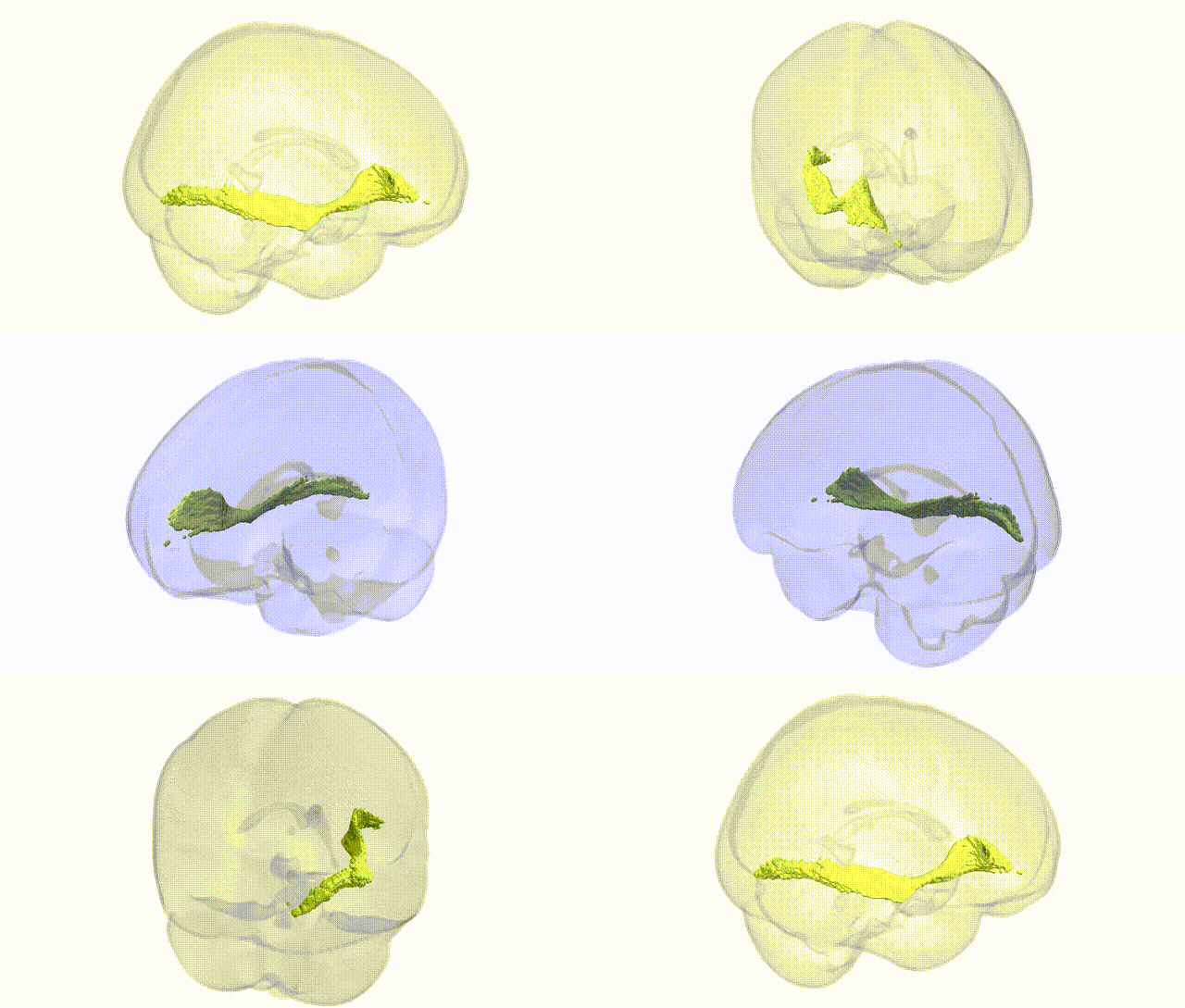
Full Quality Version: Download MP4
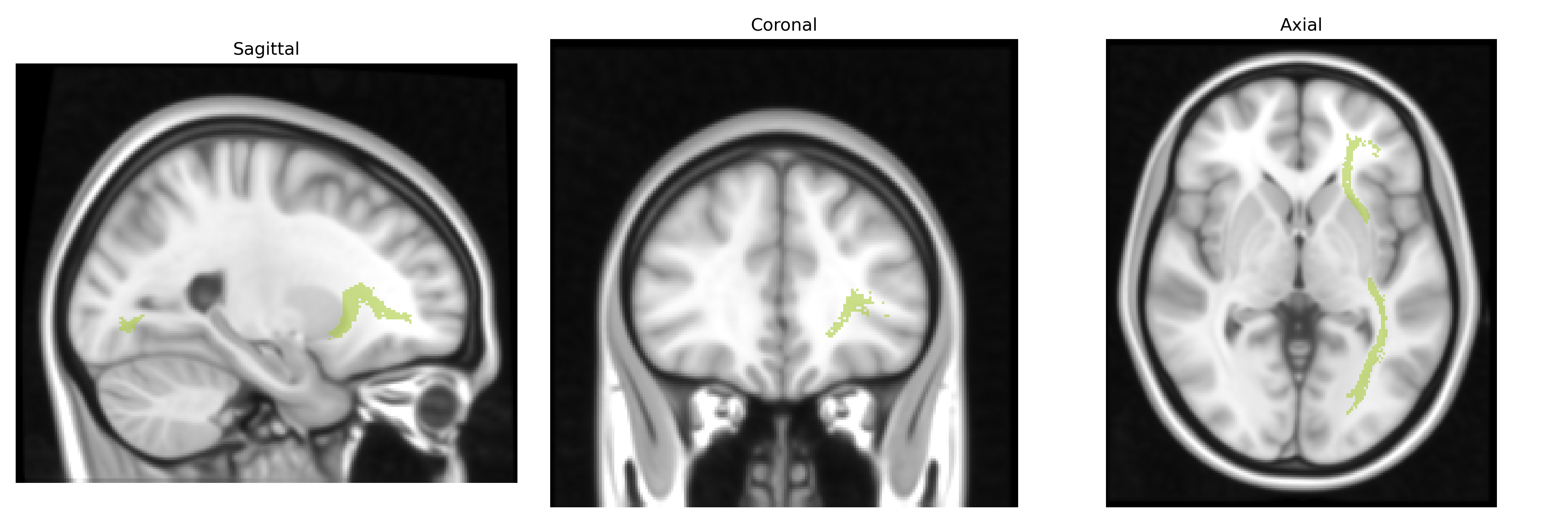
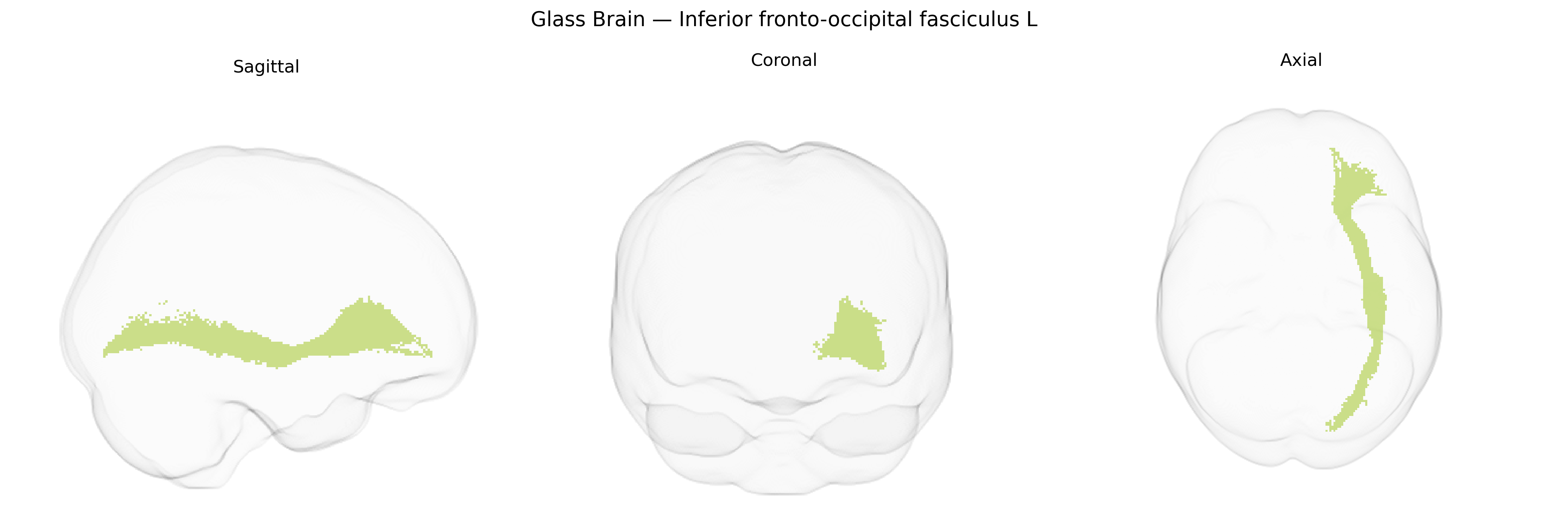
Wali Sidiqyar*, Gaurav Rudravaram*, Elyssa M. McMaster, Trent M. Schwartz, Adam M. Saunders, Kurt G. Schilling, Bennett A. Landman "Introducing SPINS: A Shared Public Visualization Library of Neuroanatomical Structures." Medical Imaging with Deep Learning- short paper
This resource is licensed under CC0 1.0 Universal (Public Domain).