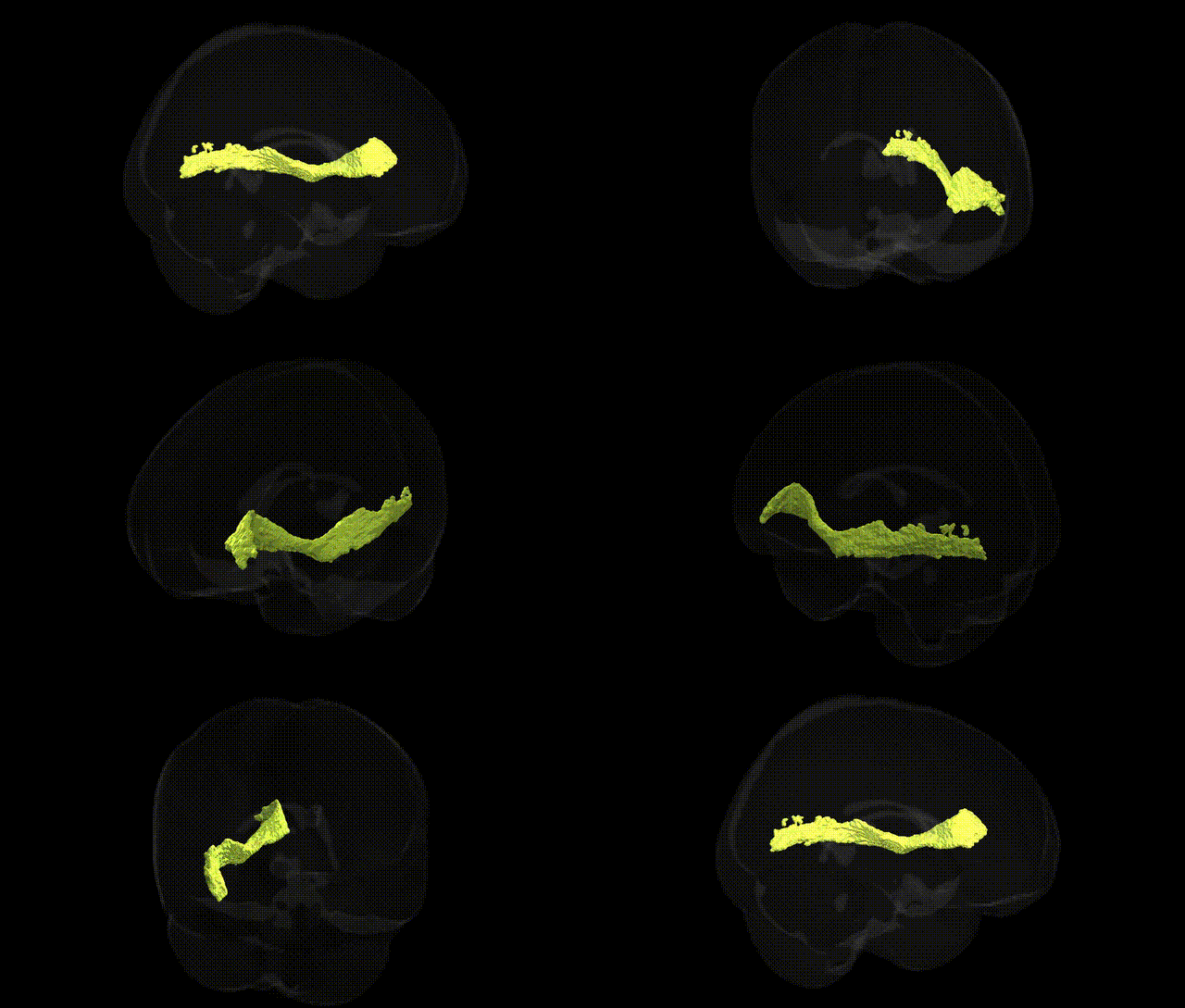
The bilateral Inferior fronto-occipital fasciculus (IFOF), as defined in the JHU ICBM tracts maxprob thr25 1mm Atlas, is a major associative white matter pathway connecting occipital and posterior temporal regions with the frontal lobe via the ventral external/extreme capsule system. It courses from the occipital cortex, passes through the temporal stem and insular region, and terminates in the orbitofrontal and dorsolateral prefrontal cortices, supporting long-range integration of visual, semantic, and higher-order cognitive information. Functionally, the IFOF has been implicated in semantic processing, reading and language comprehension, visual object recognition, and aspects of attentional control, with lateralization patterns suggesting a prominent contribution of the left IFOF to language-related functions and the right IFOF to visuospatial and attentional networks. There is no direct Wikipedia article for the Inferior fronto-occipital fasciculus; a related structure and pathway class is the Association fiber.
The inferior fronto-occipital fasciculus (IFOF), as defined in the JHU ICBM tracts maxprob thr25 1mm Atlas, has been implicated in genetic studies primarily through diffusion MRI GWAS and imaging–genetics analyses linking white-matter microstructure (e.g., fractional anisotropy) in this tract to loci involved in axon guidance, myelination, and neurodevelopment, including variants near or within genes such as NTRK3, CNTNAP2, LINGO1, and MAG, though findings vary across cohorts and often do not reach genome-wide significance in all samples. Polygenic influences on IFOF integrity overlap substantially with those for general cognitive ability, educational attainment, and schizophrenia, consistent with its role in long-range fronto-occipital connectivity supporting language, attention, and higher-order cognition. Reduced integrity or altered organization of the IFOF has been associated, in genetically informed studies, with risk variants for schizophrenia, bipolar disorder, and autism spectrum disorder, as well as with Alzheimer’s disease–related loci (e.g., near APOE and CLU) in older adults, where these variants appear to modulate vulnerability to white-matter degeneration. Twin and family designs indicate high heritability of IFOF diffusion metrics, and multivariate GWAS reveals shared genetic architectures with other association tracts and with neuropsychiatric liability, although specific, replicated, tract-exclusive genetic variants for the right IFOF remain limited and findings are best interpreted as part of broader polygenic effects on brain connectivity.
Overview generated by GPT-4o (2026).
Region ID: 12
Hemisphere: bilateral
Atlas: JHU ICBM tracts maxprob thr25 1mm
Full Quality Version: Download MP4
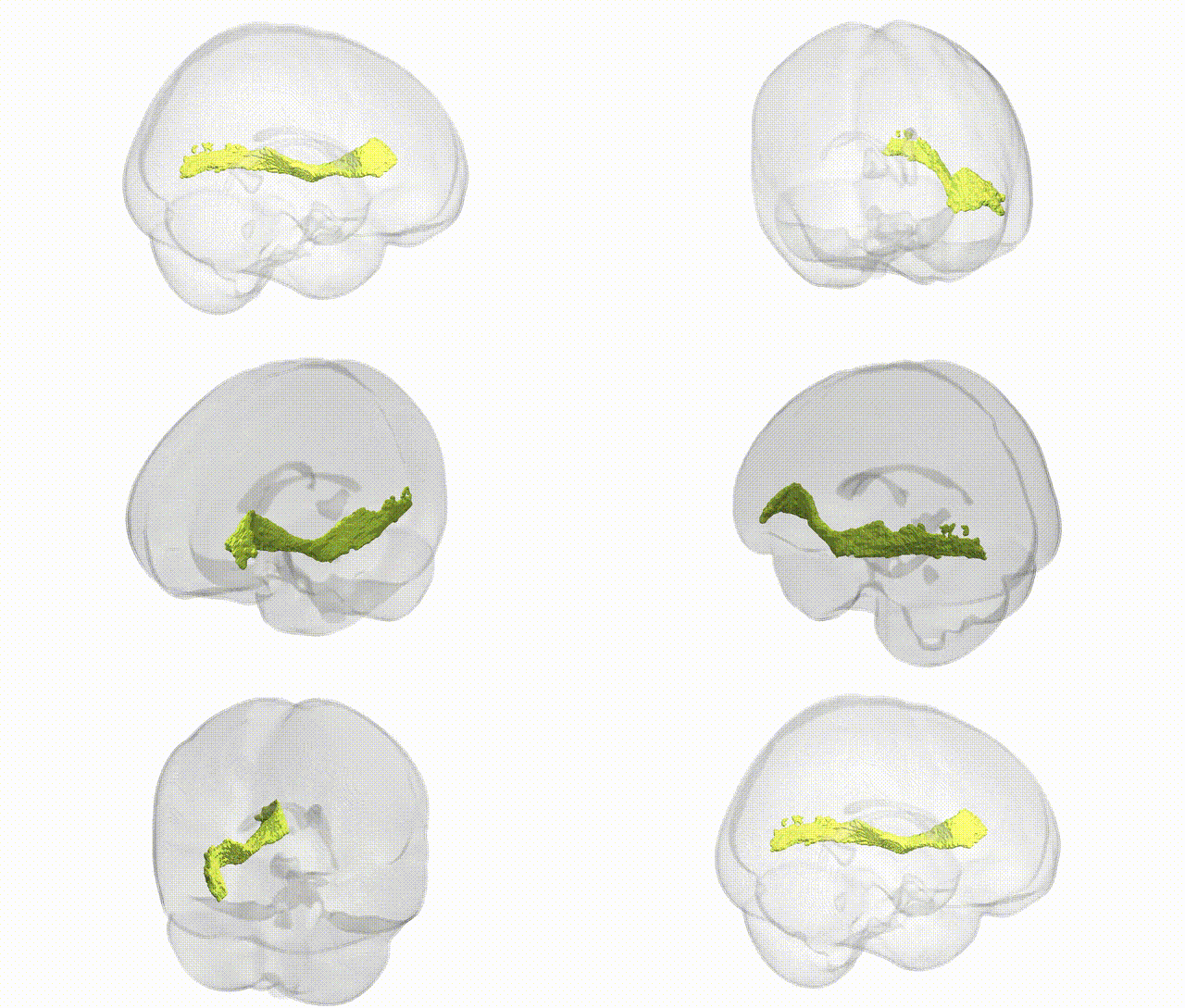
Full Quality Version: Download MP4
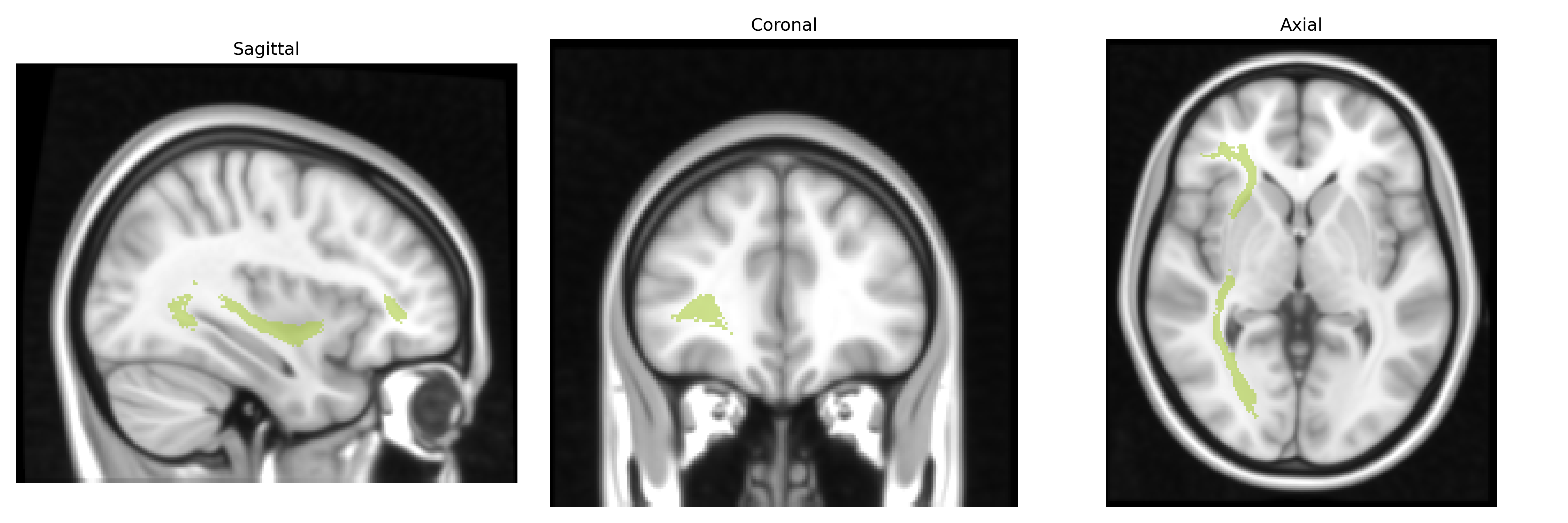
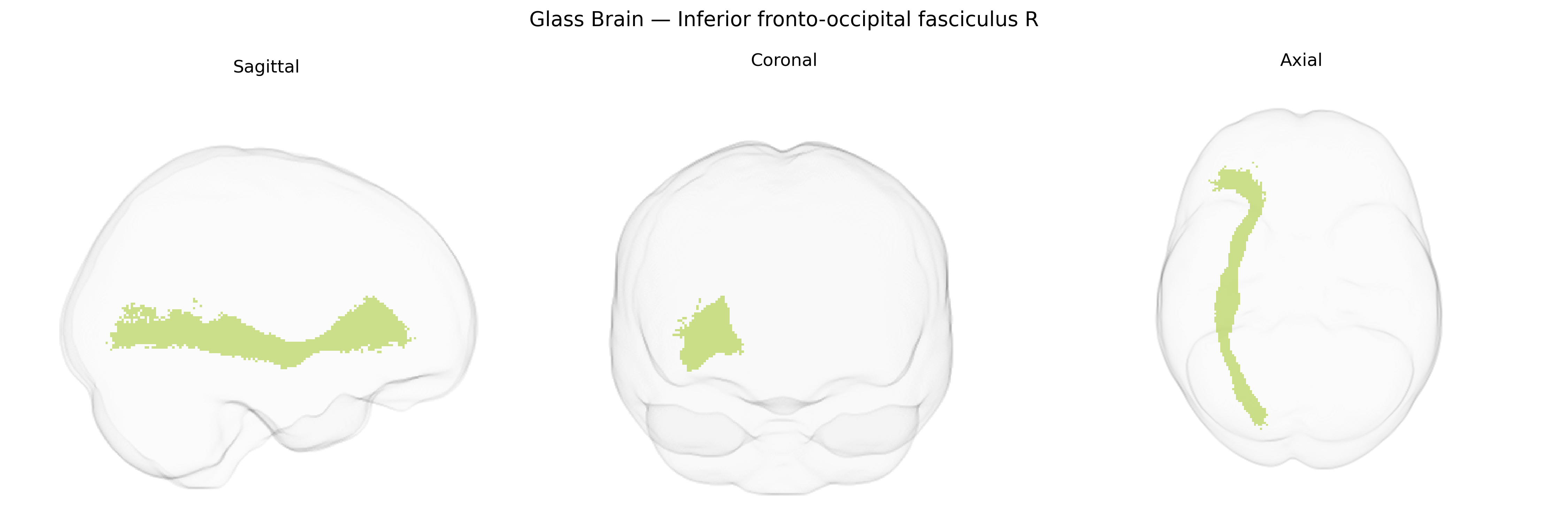
Wali Sidiqyar*, Gaurav Rudravaram*, Elyssa M. McMaster, Trent M. Schwartz, Adam M. Saunders, Kurt G. Schilling, Bennett A. Landman "Introducing SPINS: A Shared Public Visualization Library of Neuroanatomical Structures." Medical Imaging with Deep Learning- short paper
This resource is licensed under CC0 1.0 Universal (Public Domain).