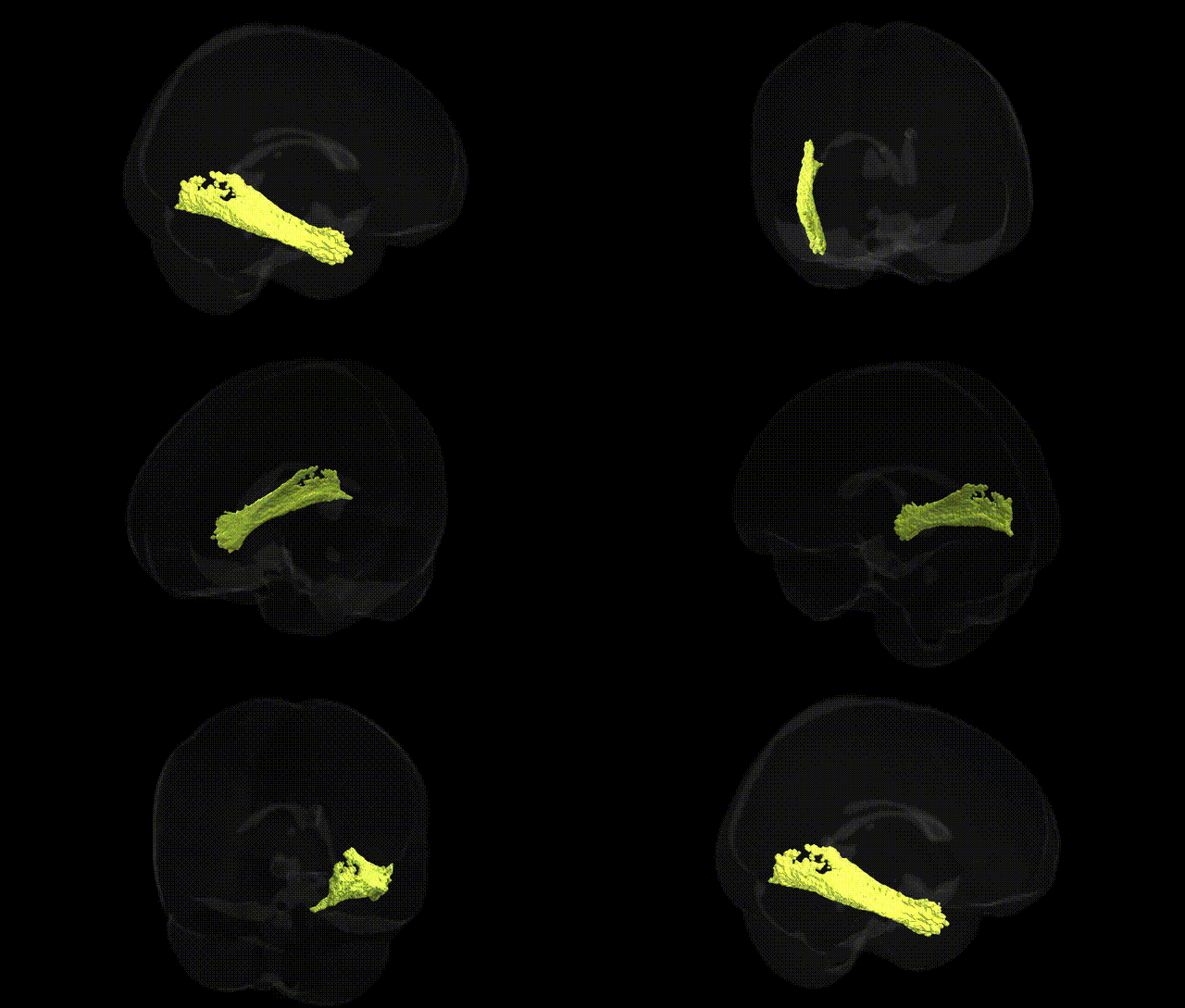
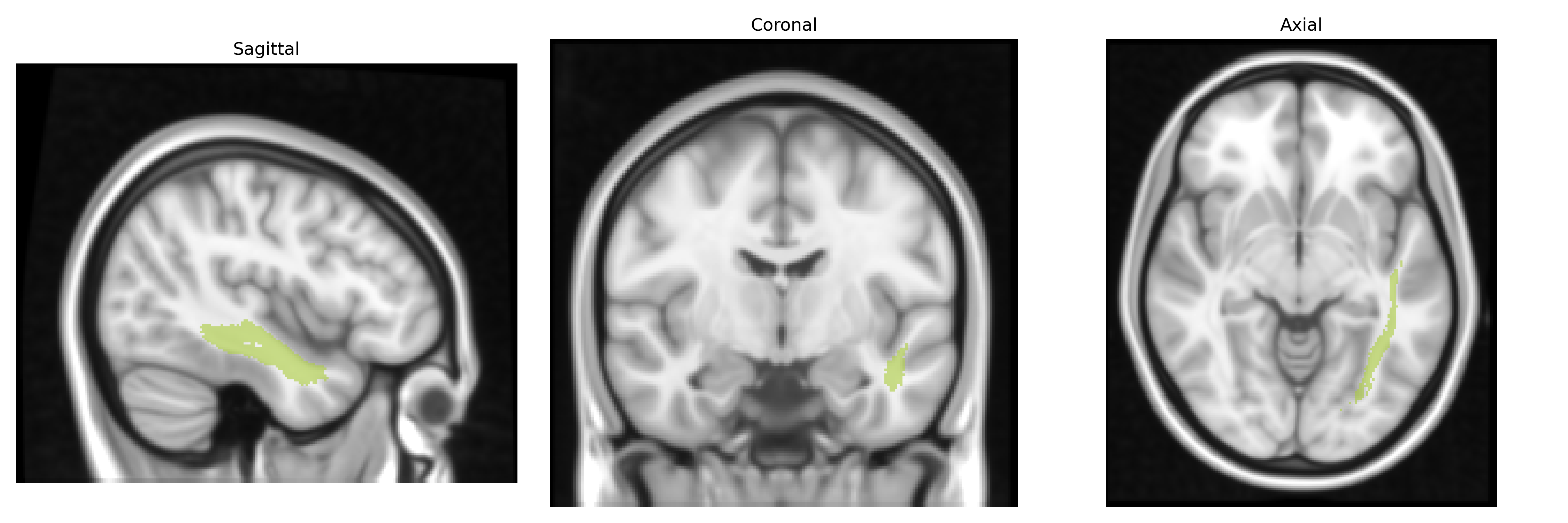
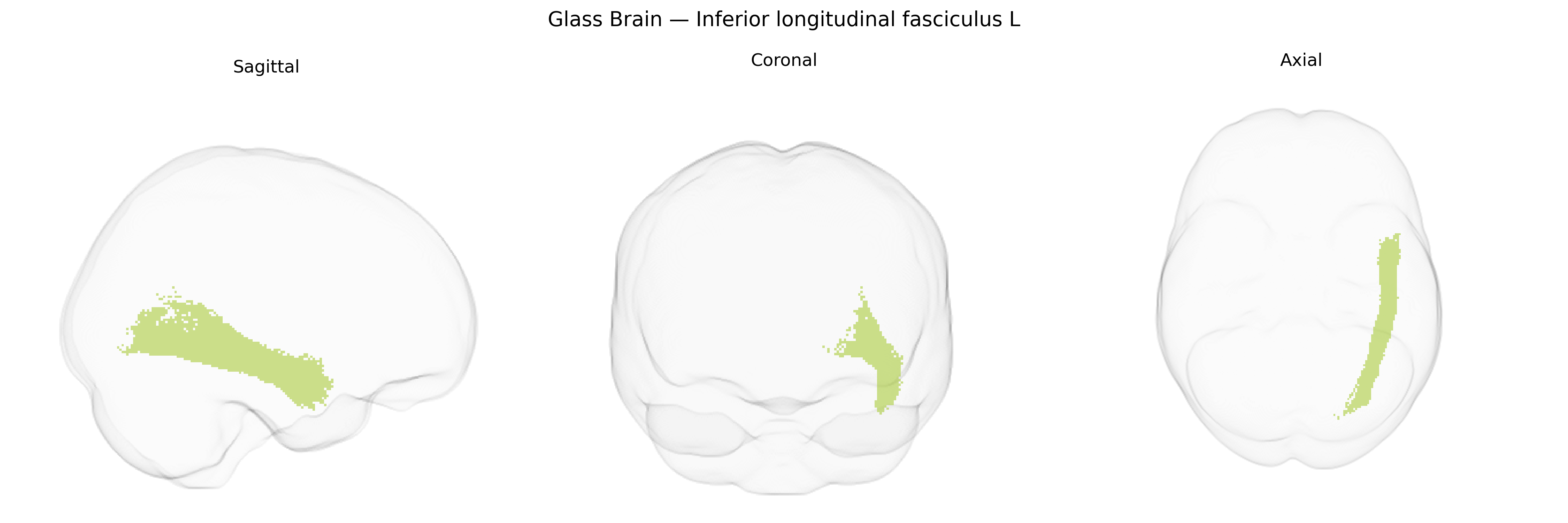
The bilateral Inferior longitudinal fasciculus (ILF) is a major associative white matter tract that extends along the ventral temporal lobe, connecting the occipital cortex with anterior and medial temporal regions, including the fusiform gyrus and portions of the parahippocampal and temporal pole areas. It follows a longitudinal trajectory deep to the lateral temporal cortex, running parallel to the inferior temporal gyrus, and is implicated in the integration of visual information with higher-order cognitive and emotional processes. Functionally, the ILF contributes to object and face recognition, visual memory, and aspects of language and semantic processing, and has been associated with reading and visuoperceptual functions. In the JHU ICBM tracts maxprob thr25 1 mm atlas, the bilateral ILF is defined probabilistically, reflecting inter-individual variability in its exact course and extent within the ventral visual stream. Inferior longitudinal fasciculus
The bilateral inferior longitudinal fasciculus (ILF), as defined in the JHU ICBM tracts maxprob thr25 1mm atlas, has been implicated in multiple imaging‑genetics and GWAS studies that relate white matter microstructure (commonly indexed by fractional anisotropy, mean diffusivity, or tract volume) to genetic variation and neuropsychiatric traits. Polygenic influences on ILF integrity are consistently observed, with heritability estimates in twin and family studies indicating substantial genetic control of its diffusion metrics. Large‑scale GWAS of brain white matter have linked common variants in genes involved in axon guidance, myelination, and oligodendrocyte function (for example, loci near MAG, CNTN4/CNTN6, and other neurodevelopmental genes) to global association patterns that include the ILF among affected tracts, although specific ILF‑exclusive loci are rarely reported. ILF measures have been associated with genetic risk for neurodevelopmental and psychiatric disorders such as schizophrenia, autism spectrum disorder, and major depression, where risk polygenic scores correlate with altered ILF microstructure, as well as with cognitive traits including reading ability, language processing, and face/object recognition, all domains known to rely on ventral visual‑temporal connectivity. In neurodegenerative contexts, variants related to Alzheimer’s disease and frontotemporal dementia risk have been linked to widespread white matter alterations that encompass the ILF. Overall, current genetic findings support the ILF as a genetically influenced tract whose structure mediates part of the effect of neurodevelopmental and psychiatric risk variants on higher‑order visual and semantic functions, though precise ILF‑specific GWAS loci and causal mechanisms remain incompletely characterized.
Overview generated by GPT-4o (2026).
Region ID: 13
Hemisphere: bilateral
Atlas: JHU ICBM tracts maxprob thr25 1mm
Full Quality Version: Download MP4
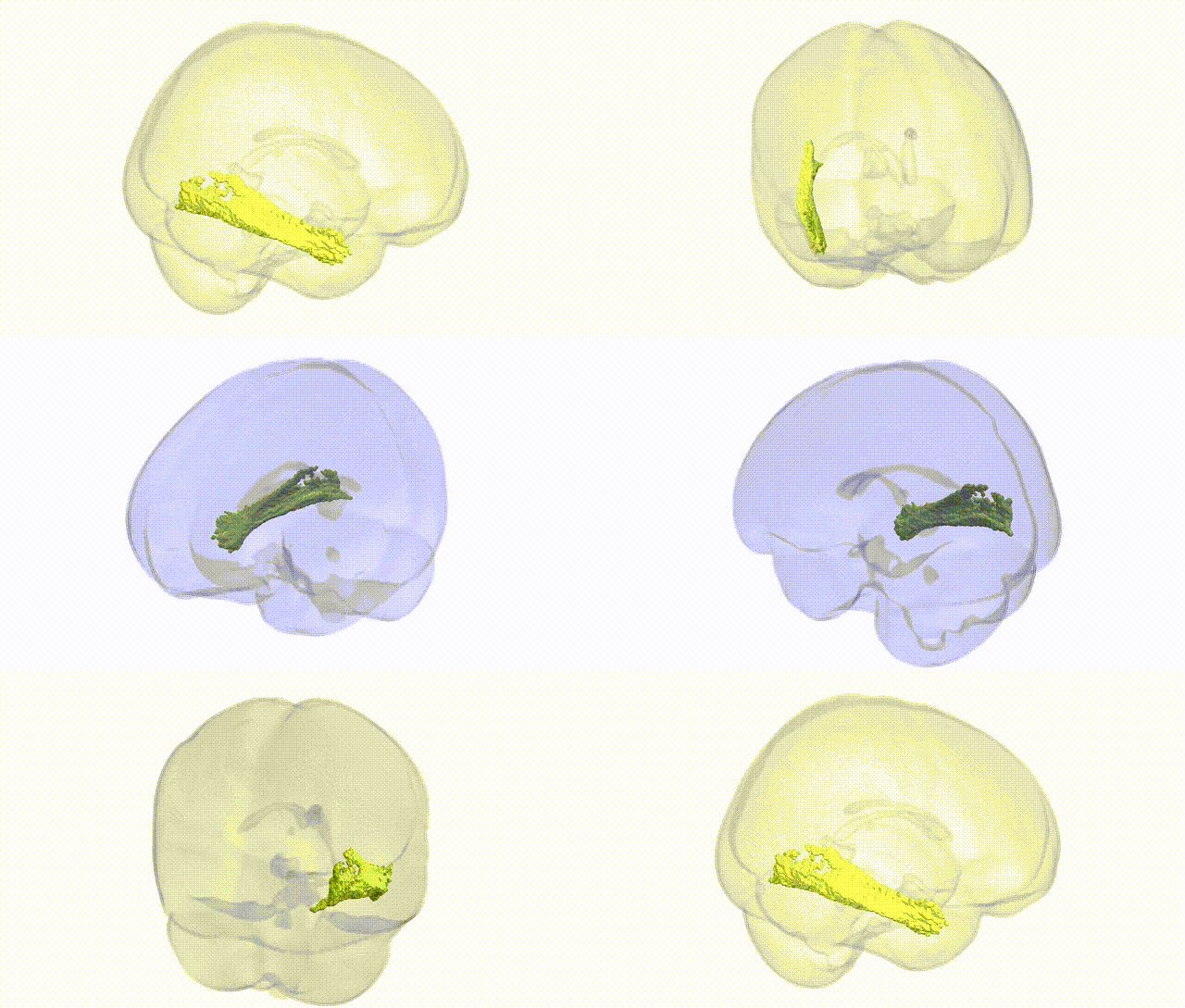
Full Quality Version: Download MP4
Wali Sidiqyar*, Gaurav Rudravaram*, Elyssa M. McMaster, Trent M. Schwartz, Adam M. Saunders, Kurt G. Schilling, Bennett A. Landman "Introducing SPINS: A Shared Public Visualization Library of Neuroanatomical Structures." Medical Imaging with Deep Learning- short paper
This resource is licensed under CC0 1.0 Universal (Public Domain).