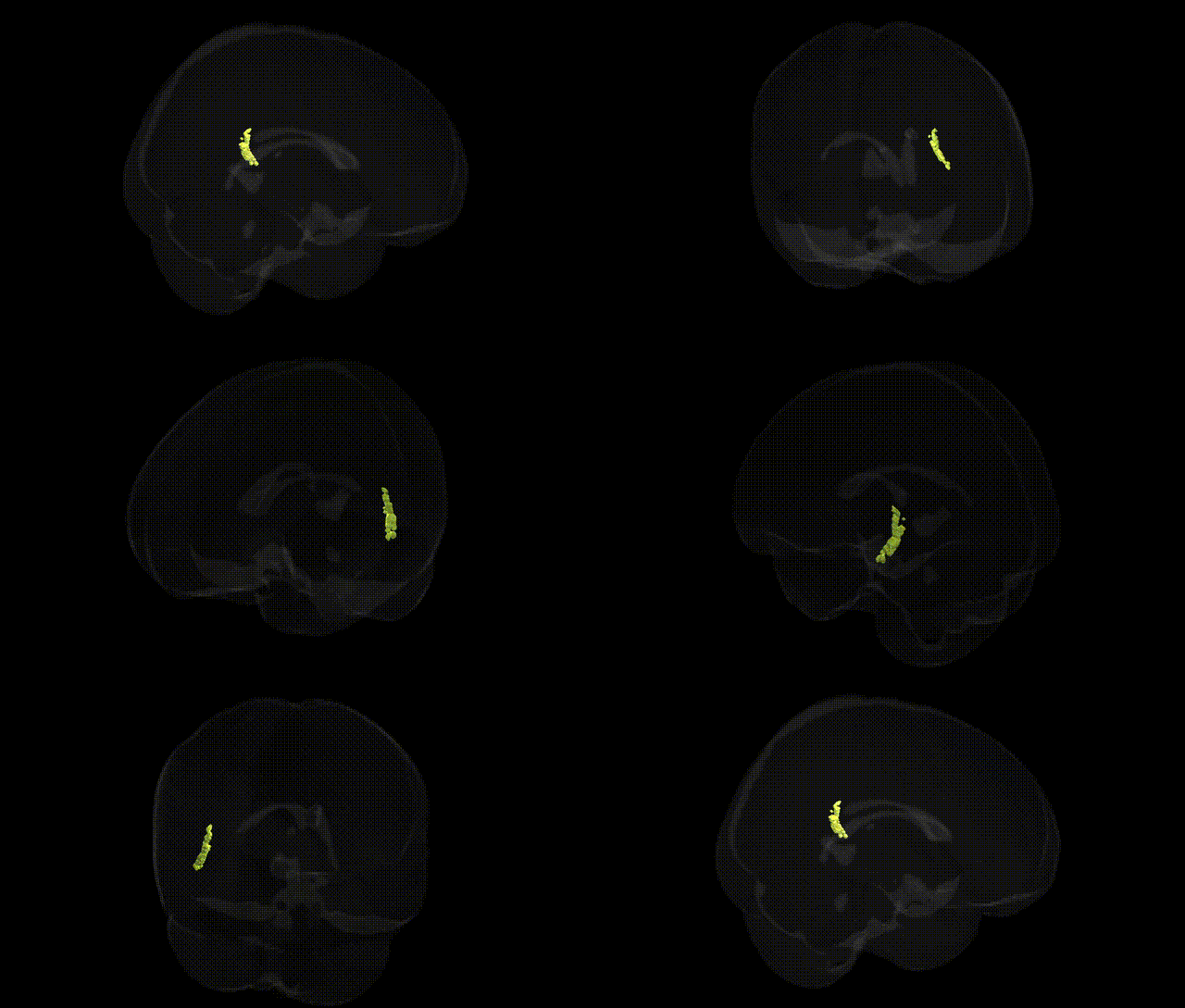
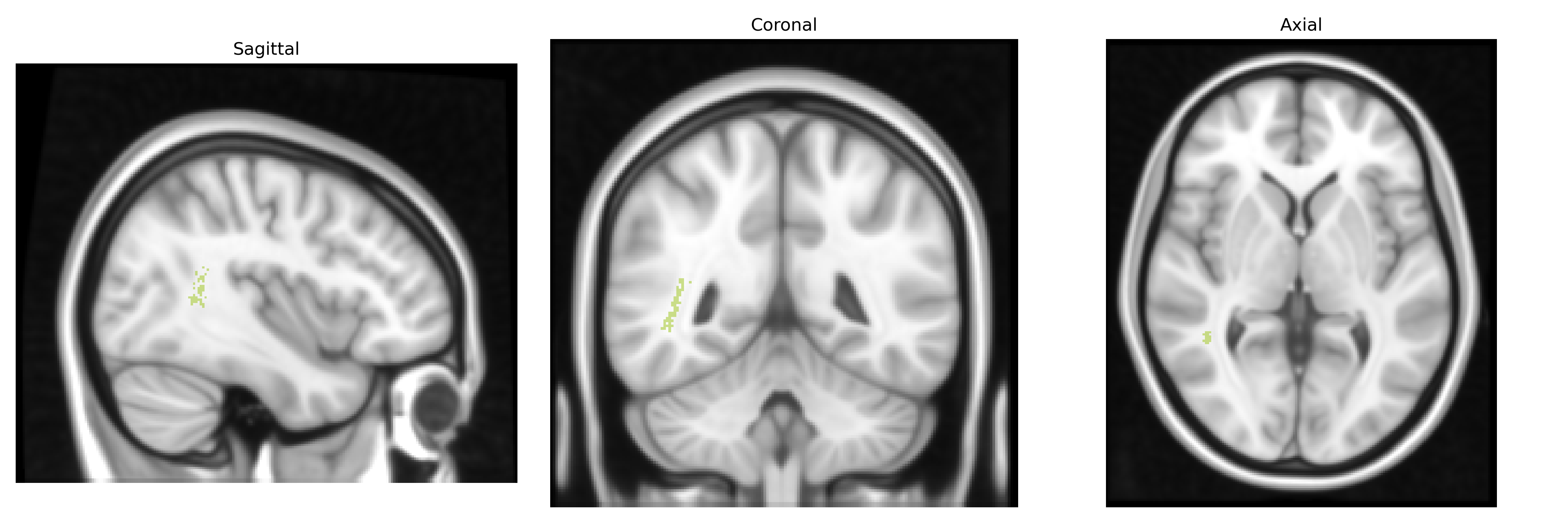
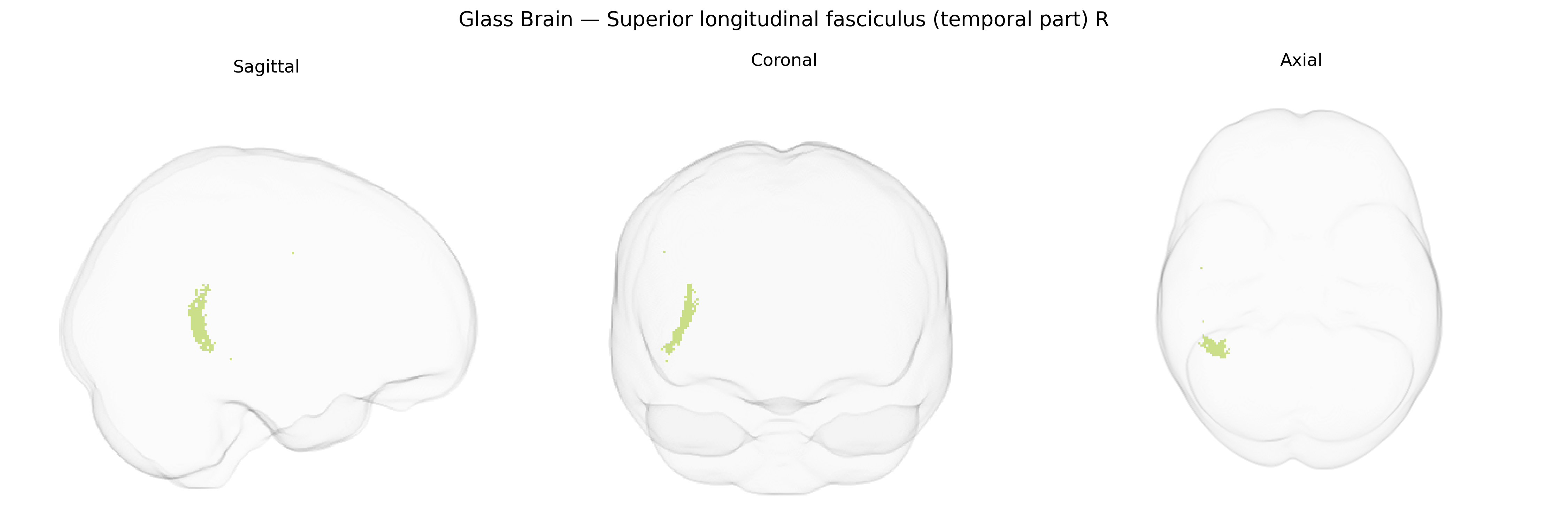
The bilateral Superior longitudinal fasciculus (temporal part) R, as defined in the JHU ICBM tracts maxprob thr25 1mm Atlas, is a major association white matter pathway connecting posterior temporal regions with frontal and parietal cortices in the right hemisphere, forming part of the broader superior longitudinal fasciculus system involved in language, attention, and higher-order cognitive integration. This temporal segment courses lateral to the ventricles, linking middle and superior temporal gyri to regions including the inferior parietal lobule and frontal association areas, thereby supporting auditory–verbal processing, semantic integration, and aspects of visuospatial attention. Microstructural properties of this tract, often studied via diffusion tensor imaging, are associated with variability in language dominance, spatial cognition, and network connectivity within the right fronto-parietal and temporo-parietal systems. There is no direct link for the “temporal part” subdivision; a closely related structure is the Superior longitudinal fasciculus.
The bilateral superior longitudinal fasciculus (temporal part) in the JHU ICBM tracts maxprob atlas corresponds to long-range fronto-temporal association fibers that have been repeatedly implicated in genetic studies of white-matter microstructure, language, cognition, and neuropsychiatric risk. GWAS of diffusion MRI measures (e.g., fractional anisotropy and mean diffusivity) have identified common variants in genes involved in axon guidance, myelination, and cytoskeletal organization—such as CADM1, NTRK3, MAG, and various oligodendrocyte-related loci—as contributors to interindividual variability in SLF integrity, with polygenic overlap with general intelligence, educational attainment, and cortical thickness in connected temporal and frontal regions. Twin and family-based heritability studies consistently show moderate to high heritability of SLF microstructural metrics, and polygenic scores for schizophrenia, bipolar disorder, major depression, and ADHD have been associated with altered SLF properties, reflecting this tract’s role in higher-order cognitive and emotional processing networks. Genetic risk for developmental language disorder, dyslexia, and autism spectrum conditions has also been linked to changes in SLF-related pathways, particularly in fronto-temporal language circuits, although specific single loci tied uniquely to the temporal segment of the SLF in the JHU atlas remain less well characterized and are typically inferred from broader tract-based or connectome-wide association studies rather than region-exclusive GWAS hits.
Overview generated by GPT-4o (2026).
Region ID: 20
Hemisphere: bilateral
Atlas: JHU ICBM tracts maxprob thr25 1mm
Full Quality Version: Download MP4
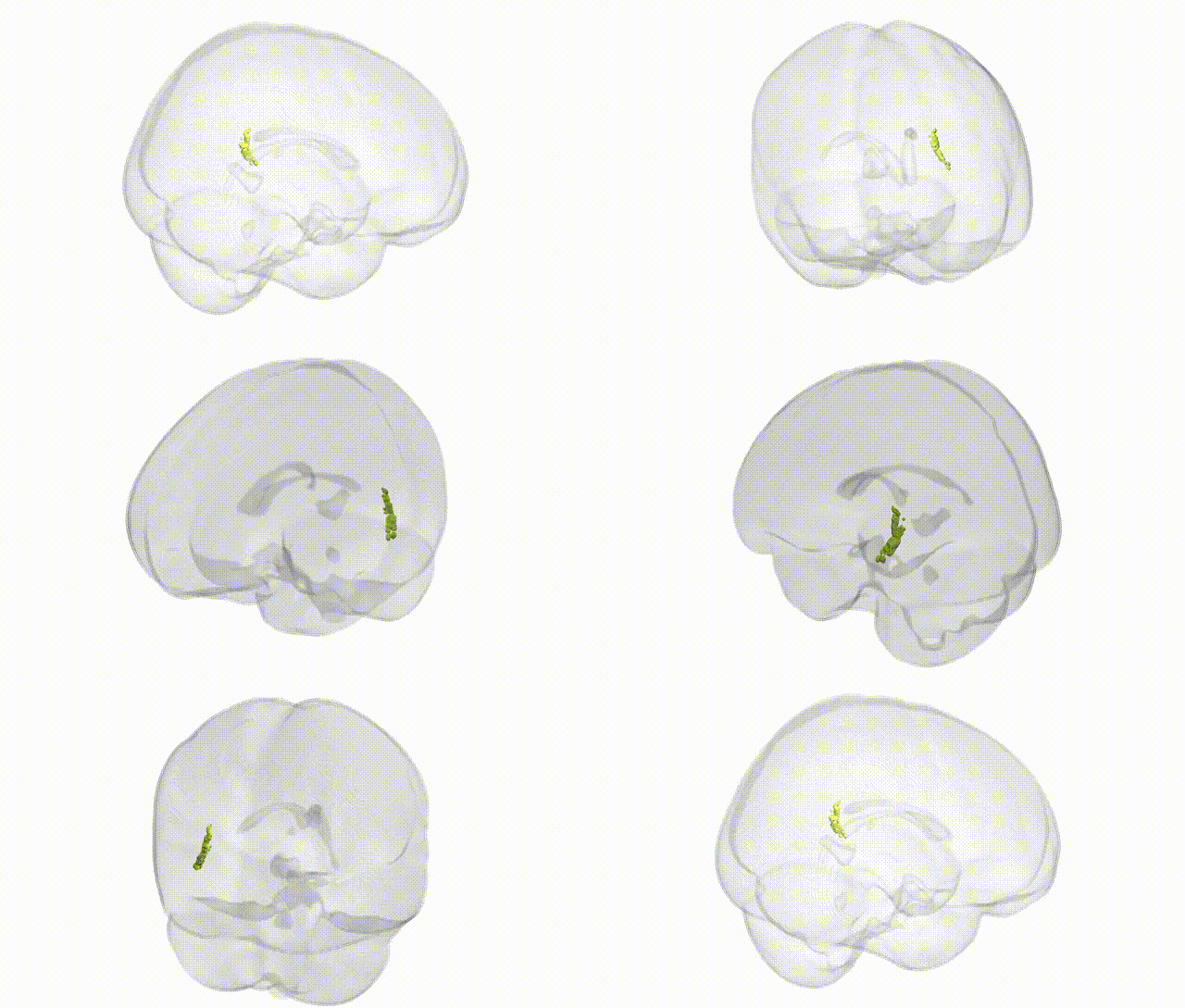
Full Quality Version: Download MP4
Wali Sidiqyar*, Gaurav Rudravaram*, Elyssa M. McMaster, Trent M. Schwartz, Adam M. Saunders, Kurt G. Schilling, Bennett A. Landman "Introducing SPINS: A Shared Public Visualization Library of Neuroanatomical Structures." Medical Imaging with Deep Learning- short paper
This resource is licensed under CC0 1.0 Universal (Public Domain).